Meeting Aurelio
By Michelle Fish
In December of 2024, we were half-way through a flurry of “first visits” with 12 potential Farm-Direct partners in Guatemala. And our brains were already buzzing with all that we had seen. The prospects had been pre-vetted by our OBIIS colleague, Dr. Jorge Ferrey. But you don’t really know what’s happening on a Farm until you go “boots on the ground.”
This was our most compressed string of first visits, ever. It’s hard to keep it all straight when you’re spending time with a different farmer, sometimes two or three, every day. It’s a good thing I take lots of notes!
It had been several days of riding in cars, SUVS, the back of pick-up trucks, and even in a 20-seater airplane. And then, we were in the town of Huehuetenango, with our host, Edwin Martinez from Onyx Coffee.
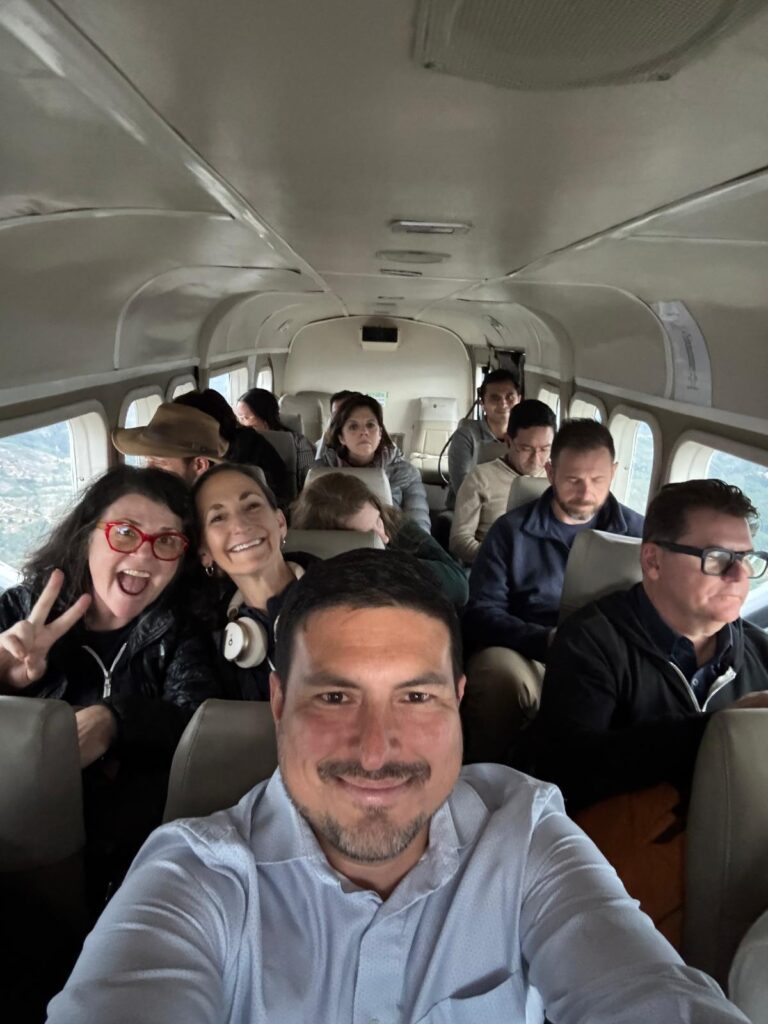
Edwin Martinez of Onyx Coffee in the foreground, on the little plane to Huehue
But, surprisingly, our first stop of the day wasn’t a coffee farm. Edwin took us to the home of Aurelio and Celli Villatoro. It’s their in-town house, two hours or so from their farm. They both come from a long line of coffee producers high in the Guatemalan mountains near the border with Chiapas, Mexico.
Edwin thought we should meet them. I thought we were missing the point if we didn’t go their farm. It turns out, we were both right.
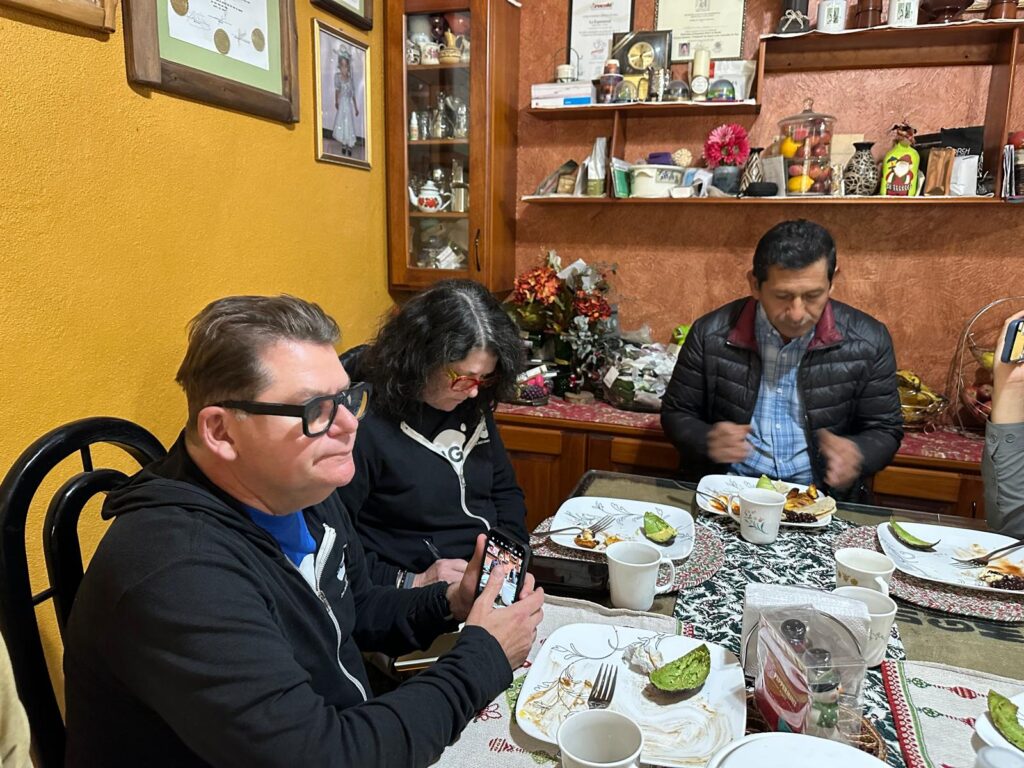
Breakfast
So, there we were in Huehue. Celli made us an incredible breakfast of eggs, pork, home-made tortillas, beans, delicious crema, fresh cheese, and fruit. And, of course, coffee.
We started by going around the room and introducing ourselves. It was hard not to stare at Aurelio. He had an air of quiet strength about him as he told his story.
He was born into a family of very limited means in Huehue. His siblings weren’t that interested in school, so their education only went to the 6th grade. Despite the challenges, his dad was able to pay for him to go through college, where he got his bachelor’s degree in industrial engineering. He then went to Panama to receive training on becoming an airline mechanic.
But his heart was always back at home with his family. And when his dad asked him to come back and help on the coffee farm, he jumped at the chance.
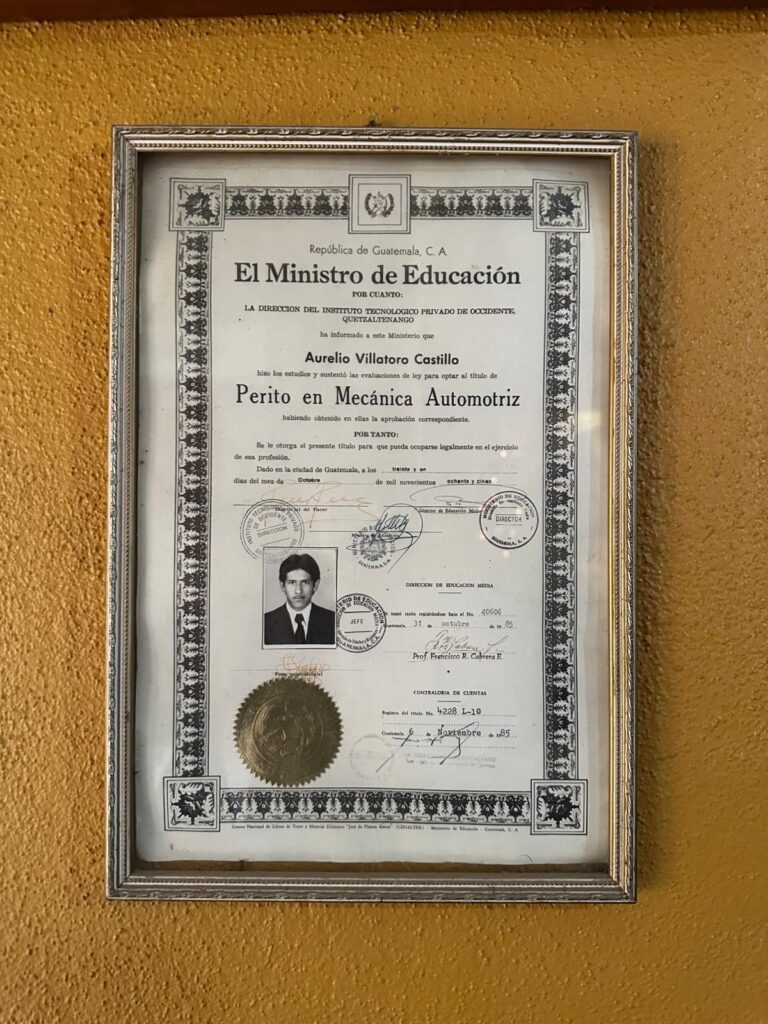
Engineering
He came home with the eyes of an engineer. And as he looked around the coffee farm, he saw the opportunity to apply his knowledge to make things better. He started with the wet mill. It turns out there’s a lot of overlap in how machines work, whether they are airplane engines or coffee de-pulpers. And his knowledge and understanding of systems allowed him to streamline and improve all kinds of process on the farm, from sorting and screening, to drying and storing.
As he looked around at how his neighbors were doing with their coffee, he saw a way of life that was changing, maybe forever. Coffee was always a hard way to make a living. But persistent, generational low prices for the crop, and the complications of farming in the age of climate change were driving people off the land, particularly the young people.
Aurelio was determined to make a difference.
Family
He married Celli two years after coming home. She also came from a long line of coffee producers and was passionate about coffee and the people who grow it. Over time, they were able to change the trajectory of their farm, adding land and better equipment.
Their focus was always on farming as a science, with a special emphasis on the health of the soil and the native ecosystems. And they helped their neigbors, and their family learn how to do the same thing.
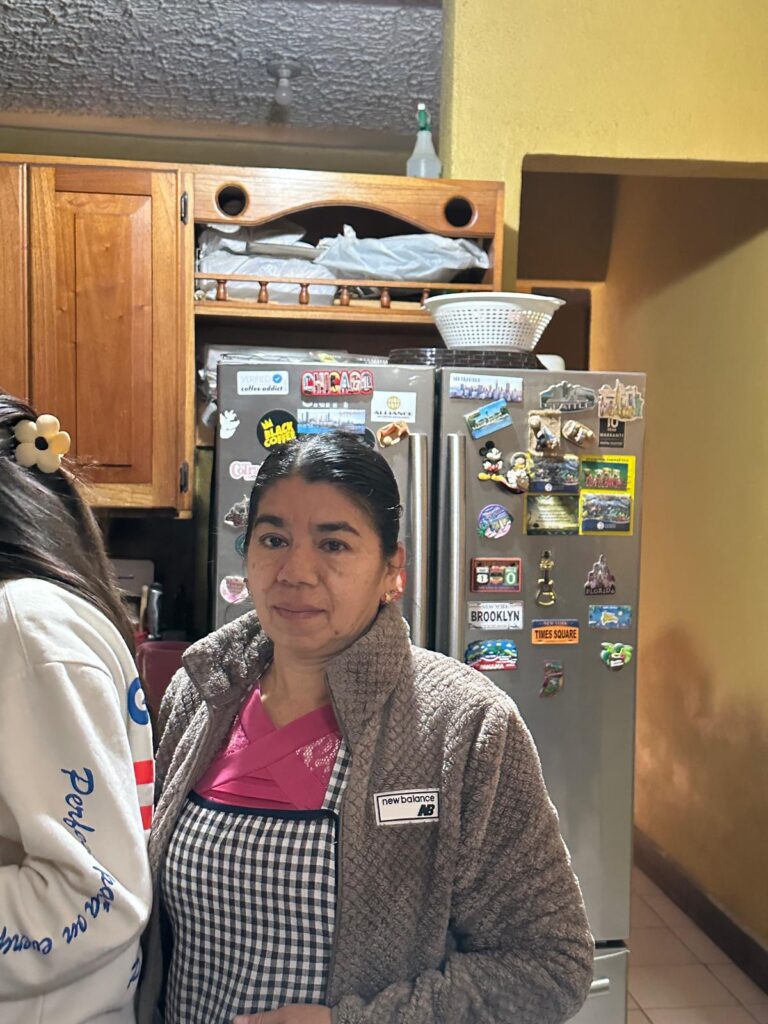
Celli in the kitchen, preparing breakfast for our team
Eventually, they banded together to find better markets, and thus better prices, for their coffee, with Aurelio leading the charge. That’s how they met Edwin, who had been working with them for many years. Their three children got a top-notch education, and it was clear that they inherited their parent’s passion for community.
Krista, their daughter, is finishing up her doctorate in dentistry. Her plan is to provide dentistry services to the under-served communities near her parent’s farm. Their youngest son, Rodin, is a trained agronomist, with a passion for the environment. When he is not tending to his own coffee farm, he is working on a project to help clean up the river near his village. And their eldest son, Jenner, is very interested in the business of coffee. He is a certified Q-Grader, and he helps the family prepare their award-winning coffee for the national Cup of Excellence competition.

From left to right: Edwin Martinez, Aurelio Villatoro and Bob Fish, and the family’s warehouse in Huehuetenango.
The Cupping Room
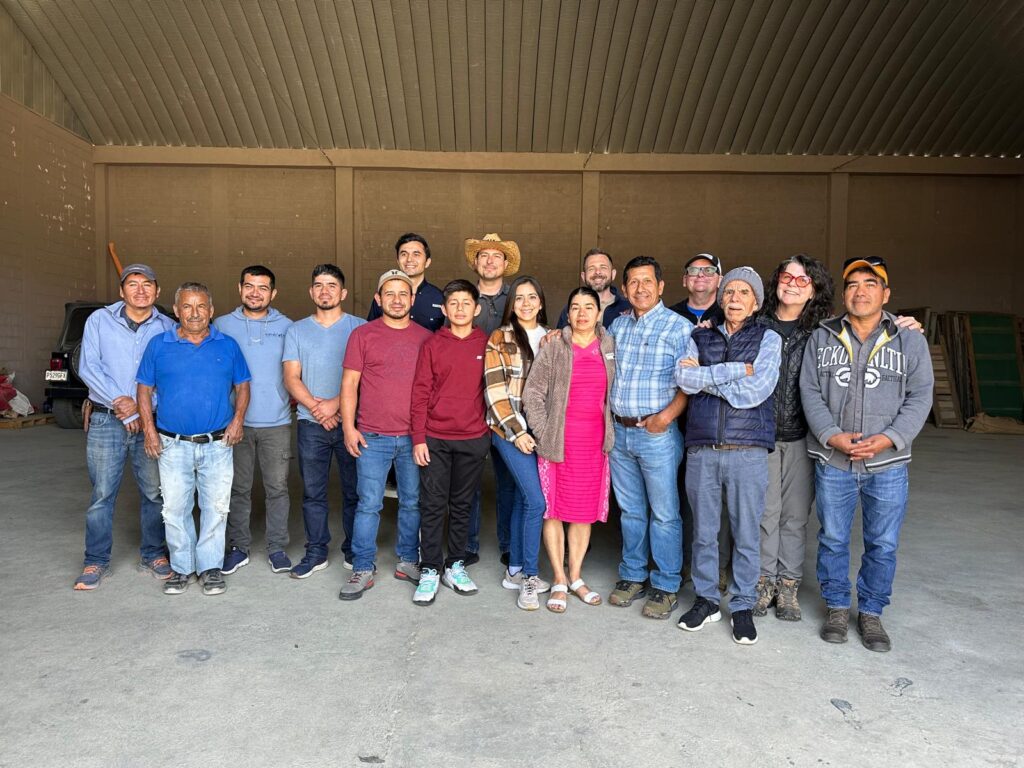
After breakfast, we travelled together to their in-town warehouse and cupping room, where we were met by even more family and friends. Celli’s dad, Don Petronillo, was there, as well as several of Aurelio’s nephews, and a few friends and neighbors from the farm.
One thing that was particularly striking to us was the mix of ages in that room. So often, the coffee producers that we meet in our travels are greying, and there isn’t anyone coming up behind them to take their place. But here was a room full of all ages, and the younger ones, in particular, were articulating a very clear vision about why they were in coffee: to improve their communities, protect the environment, and safe-guard their way of life.
It was truly inspiring.
After the Trip
As we often do, we got back from this trip and embarked almost straight away on another one. And then another one. And one more after that.
Periodically, we assemble the team to talk about what we’ve seen on all of these trips and what our next steps should be. Whenever Guatemala came up, the conversation always came back to Aurelio. There was just something about him, and about what his family was up to that intrigued us.
That’s a sure sign that we should plan a second visit.
Back to Huehue
So, in May of 2025, our merry OBIIS band took the 20-seater airplane once again to Huehuetenango, where we scooped up by Edwin’s team from Onyx Coffee and taken the two hours up the mountain to Hoja Blanco, the village where Aurelio and his family have their farms, their processing facilities, and their warehouse.
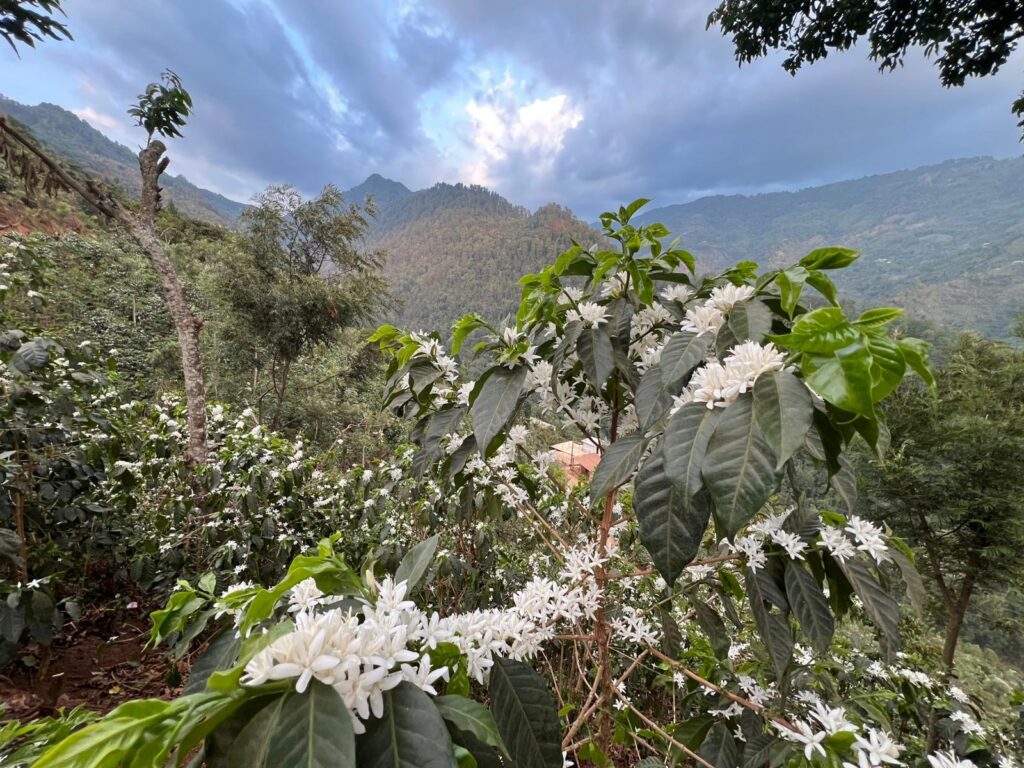
On the way up, we were treated to a very rare spectacle… an entire mountainside of coffee, all in bloom. Coffee trees flower for only 48 hours, and it’s impossible to predict exactly when it will happen. But luck was with us. We got out of our trucks and took it all in. It was so beautiful, and the air was heavy with a jasmine-like smell. Seemed like a good omen to us.
A Wholistic Approach
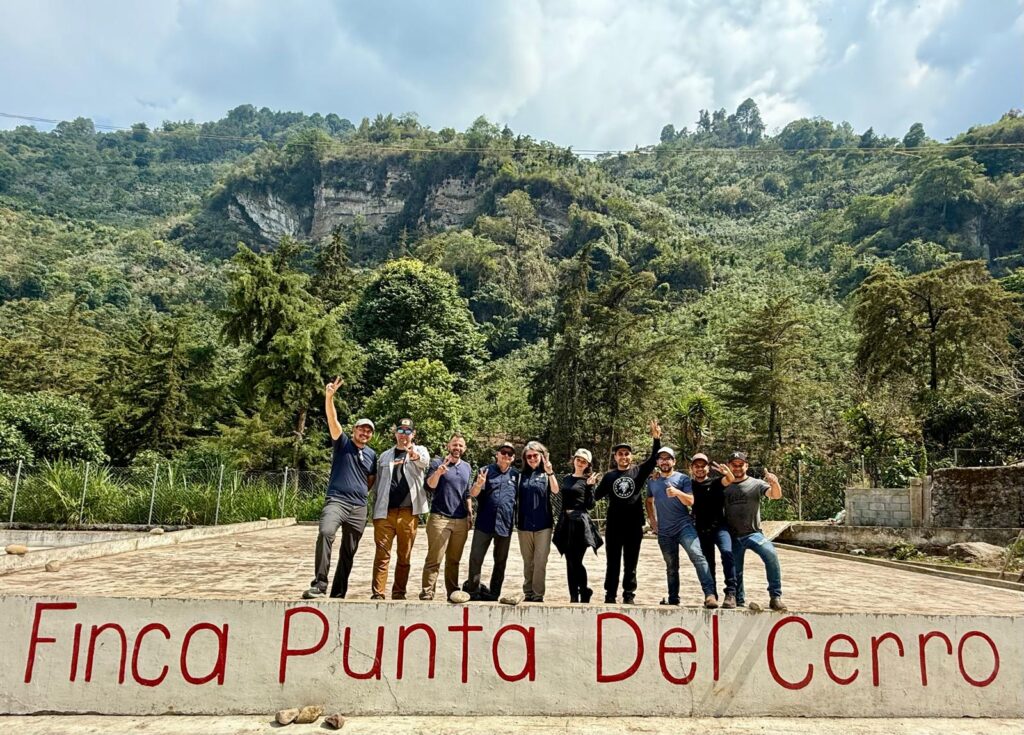
Our first stop was at Aurelio’s son Rodin’s farm, Punto del Cerro. He told us about what he and his cousin Dennis are up to, and their plans for community investment. They are developing a water treatment project that will make it possible for their neighbors to use biodigesters to treat their wastewater before it’s released into the river.
They are also hoping to build wind turbines for the community to lessen their reliance on the expensive electricity that the town currently gets from the neighbor, Chiapas, Mexico.
Rodin has big plans for his farm. He has been coaching his family and his neighbors on better agricultural practices to help them improve their soil. If their neighbors follow their practices, like not using herbicides and pesticides, and they are producing good quality coffee, then Aurelio will buy their crop at a good price. Working with Edwin and Onyx, they have been able to secure better export markets for the community. Coffee is becoming sustainable, not just for their family, but for the interconnected villages in their part of the mountain.
Rodin would like his farm to be a model for the community, to show them what is possible. His plans include adding a fish farm, and growing hydroponic food crops, using the wastewater from the fish as fertilizer for the crops. In that way, he is showing the community how to boost their income from coffee with other sustainable sources.
We also visited his Aunt Lysette on her chicken farm. She got the idea in 2019, as a way to supplement the family’s coffee earnings. She started with 12 chickens, selling the eggs to her neighbors. Now, she has 600 laying hens, with plans to expand to 1,000 in the next few years. As a bonus, the family uses the chicken manure in their coffee composting.
Always, the family is looking for ways to support each other, and to help their community through entrepreneurial activities.
COVID-19
Perhaps the best example of the family’s leadership and support of their community is the story Aurelio told us about what happened during the pandemic. Harvest in Guatemala typically ends by April. As we all know, the world shut down in March of 2020. Which meant that right at the peak of when farmers had coffee to sell, the coffee buyers stopped coming.
The town was desperate. Coffee is the primary source of revenue. And there is a shelf life on beans the they grow. They needed the cash from their crop to sustain themselves.
One by one, people from the town came to Aurelio to ask him to take their coffee, and to try to sell it with his. There is so much trust in that. They weren’t asking Aurelio to buy their coffee. They were giving him their crop and trusting that he would find the best price, and pay them when he got paid.
He rented a temporary warehouse so that he would have space to store the coffee while he searched for buyers. As always happens in times of crisis, there were buyers out there trying to take advantage of the situation to offer cut rate prices to people desperate for cash. But Aurelio held out. And in the end, not only was he able to sell the coffee, he sold it for a price that was significantly higher than the C-Market price that year.
La Basa
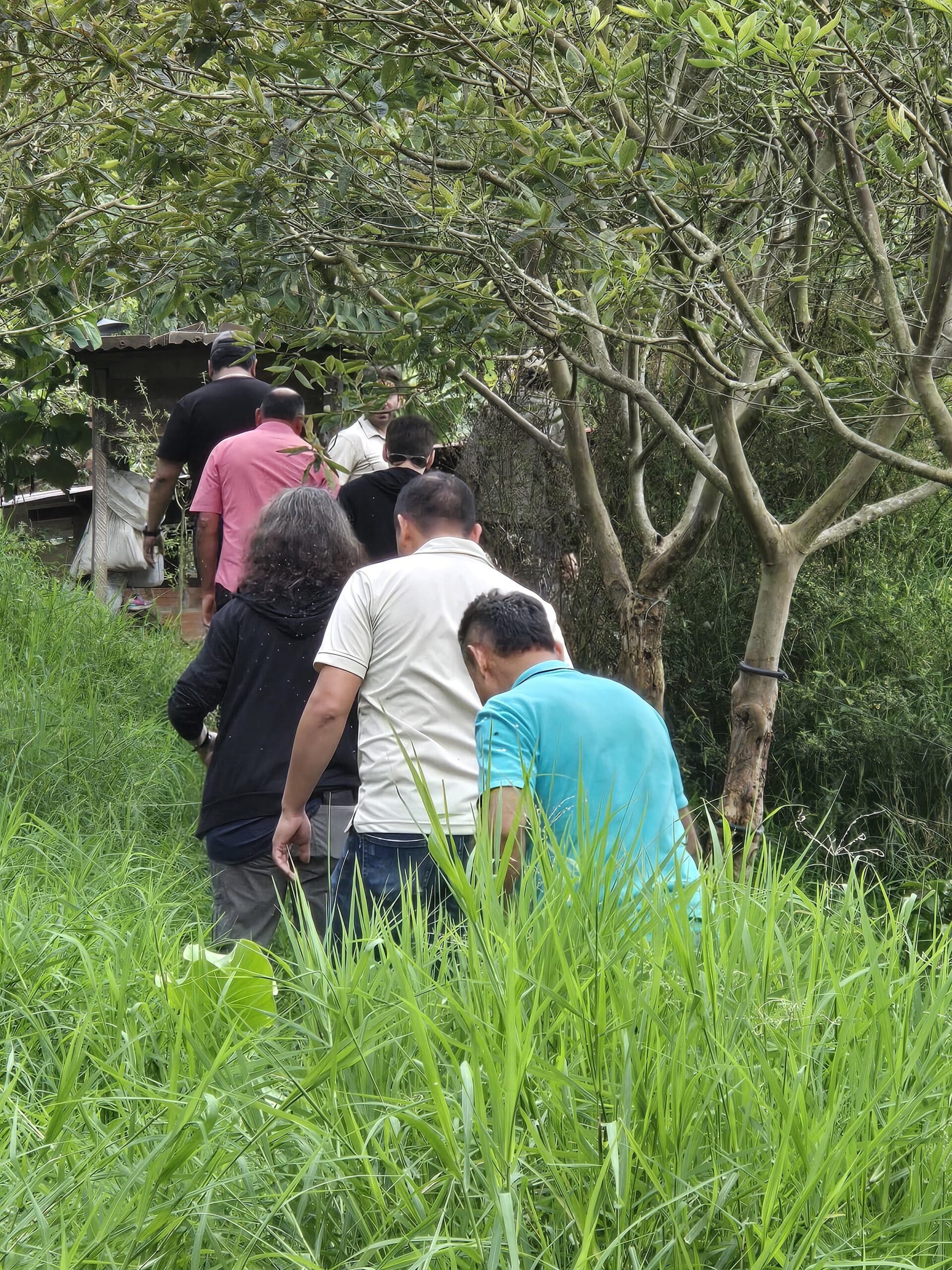
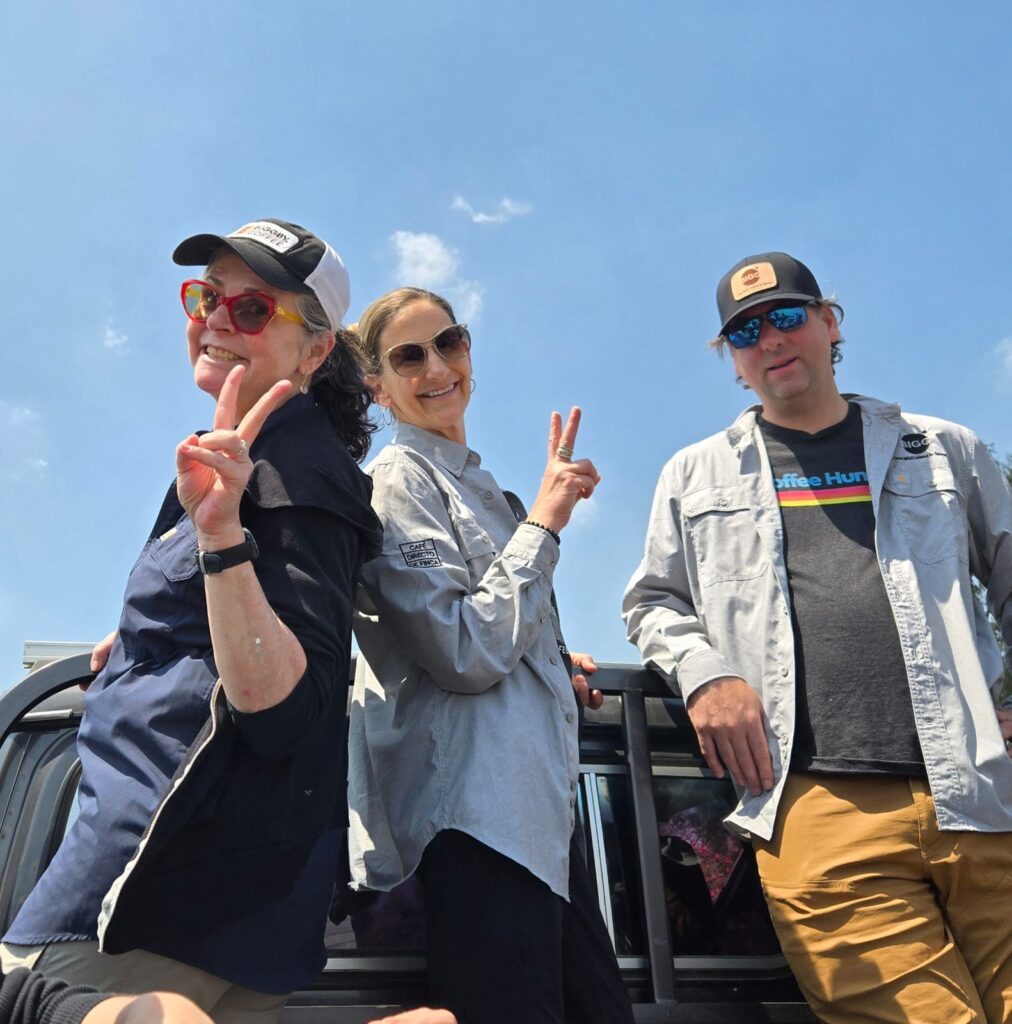
The next day, Aurelio took us up the mountain to see one of the plots of land where he grows his coffee. And when I say up, I mean up. We’ve climbed some steep slopes in our time, but this was by far the steepest. I was just grateful that it wasn’t raining.
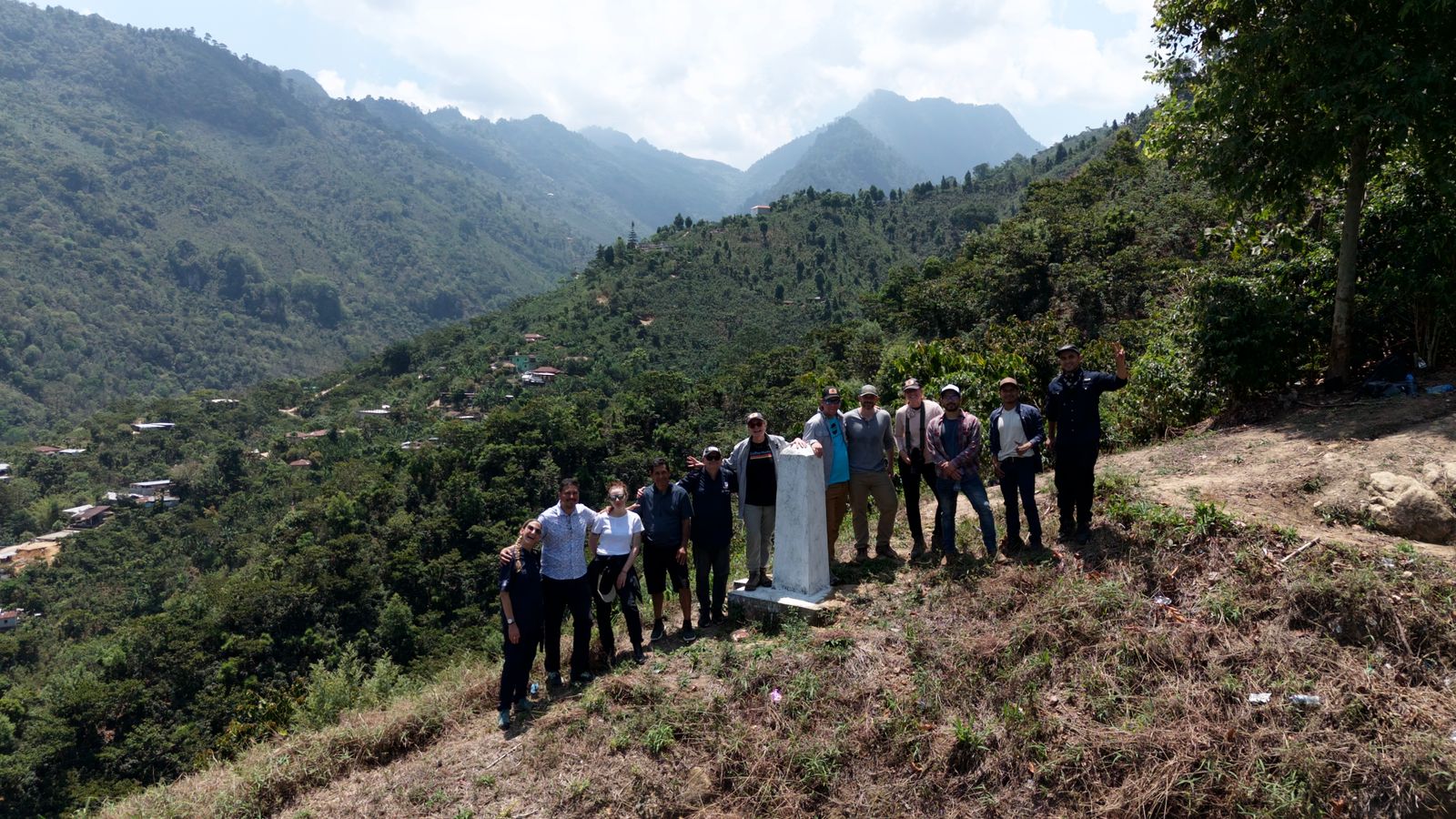
The narrow pathway emerged on an absolutely stunning ridge line, right on the border with Chiapas, Mexico. I confess our team was a little giddy, stepping back and forth between the border markers between the two countries like kids on a playground.
After walking through the fields, we sat down on the earth for a while to admire the view. The coffee was healthy and beautiful. The soil was loamy and crumbled beautifully between my fingers. There were all manner of birds soaring and singing overhead.
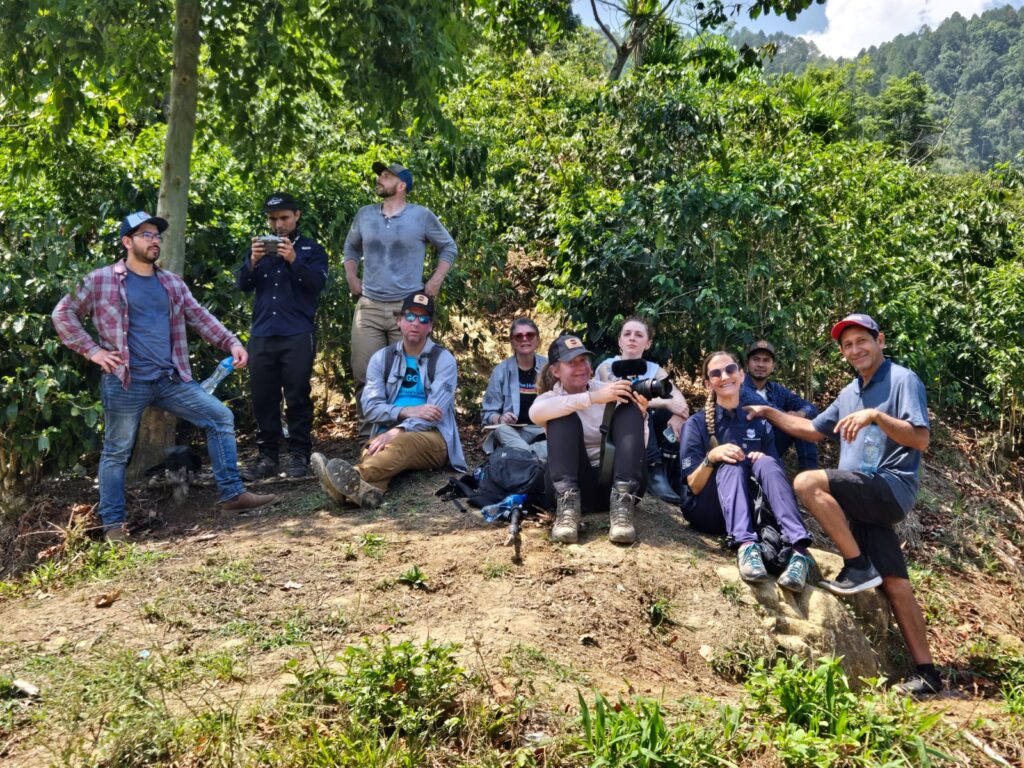
Aurelio pointed out the farm next door. It had once been the biggest in the region. But the combination of low prices for coffee, and the complications of a changing climate had driven them out of business. Now the coffee was untended. That can pose real challenges for Aurelio and other coffee farmers. If diseases or pests take hold in the untended coffee, they can easily spread.
Perhaps Aurelio will buy some of the land. But abandoned coffee land is a sign of the times.
The Last Day
Each dinner and each breakfast was prepared by Celli in the home of Aurelio’s aging mother. She is very well taken care of. Aurelio’s family takes turns living with her for a month at a time so that she is never on her own. Watching them tenderly stroke her hair and hold her hand was truly moving.
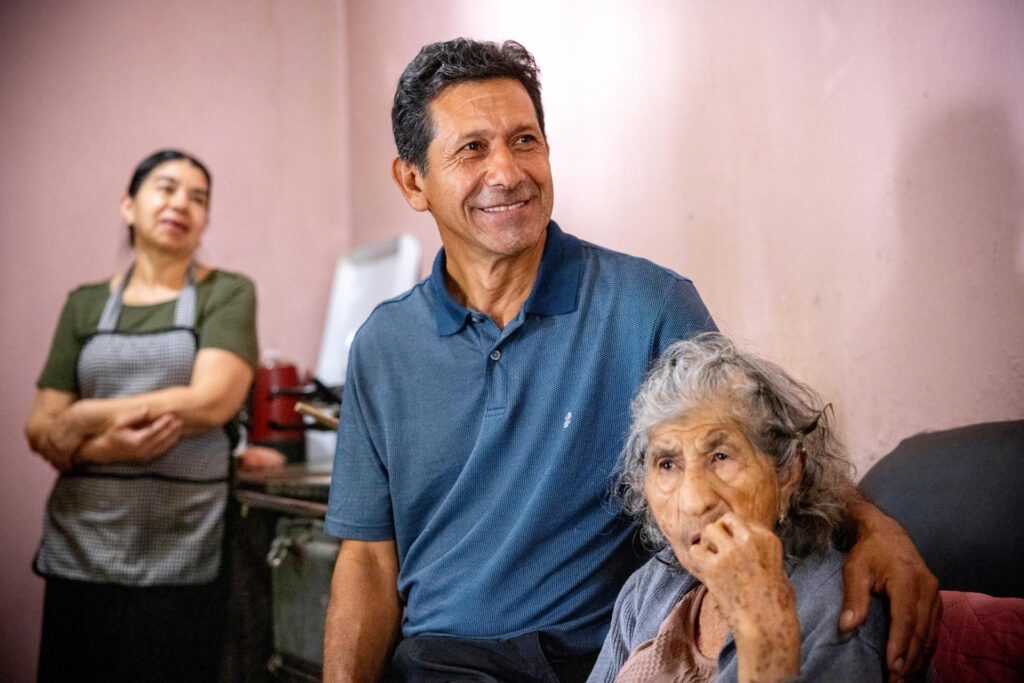
This family is up to big things. And we knew we wanted to be in the coffee business with them.
During our last breakfast together, we sat down with Aurelio to talk about how a partnership with OBIIS might work. One thing we’ve learned over the last few years is that the best way to get started is to just get started. And it’s better to start relatively small so that there’s a chance to work out the kinks along the way. And also, to make sure that the partnership works out for both parties.
Edwin Martinez and his team from Onyx will be our exporters and will help us to coordinate the logistics in Guatemala. And, starting with the harvest in 2025/2026, OBIIS will be buying up to 3 containers of coffee from Aurelio’s community.
Welcome to the family, Finca Villaure! We are looking forward to seeing what the future brings!