That Cup of Organic Coffee You’re Drinking Might Be Full of Weed Killer
By Michelle Fish
What does the word “organic” mean?
Ask ten people and you might get ten different answers. But I would be willing to bet the farm (haha) that we could all agree, at a minimum, it means crops produced without the use of harmful chemicals.
If that’s something you care about, as a consumer – and increasingly, more and more of us do – you might be willing to pay a little extra for products that promise you a chemical free experience.
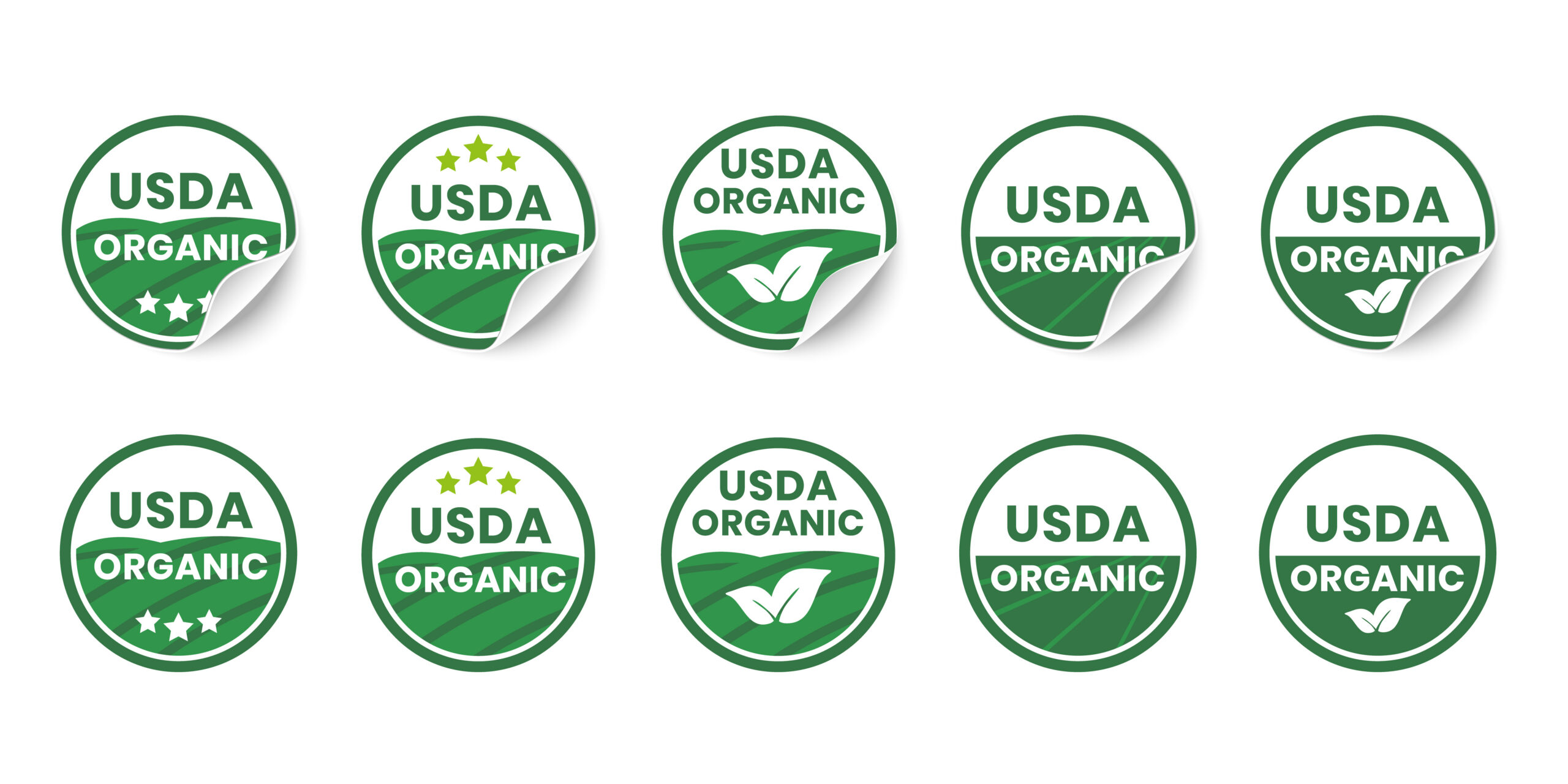
So, let’s say you’re standing in the coffee aisle at the grocery store, trying to choose among the dizzying array of colorful labels and brand names, hoping to find one that won’t give you cancer. You pick up the bag with the USDA Organic label on it and breathe a sigh of relief.
I’m sorry to say that I’ve got some bad news for you. That label doesn’t mean what you think it means. There’s a very good chance that your “organic” morning cup will come with a side of Glyphosate, often the active ingredient in the infamous weed killer known as Roundup.
The Clean Label Project
You don’t have to take my word for it. In 2025, the Clean Label Project, a nonprofit watchdog that tests a variety of consumer products for contaminants, took on coffee. They bought 57 of some of the best-selling brands of coffee and tested them.
100% of the organically certified coffee they tested came back positive for AMPA (aminomethylphosphonic acid) the residue that Glyphosate leaves behind as it breaks down in the environment.
To be clear, Glyphosate is one of the many chemicals that organic farms are banned from using. And yet, every single USDA Organic certified coffee they tested had traces of this Glyphosate residue.
What I’ve Learned About Coffee
I am disheartened by their test results, but I am not surprised. The system for USDA Organic certification for coffee, though well-intentioned, is so full of loopholes, and so vulnerable to manipulation by bad actors, that is little more than green washing.
That may sound like a very bold statement. But it is based on what I’ve seen on the ground in coffee producing countries all over the world.
To understand what’s happening, it’s useful to have a little context. Let’s start with why there is so much Glyphosate in coffee.
Weed Killers
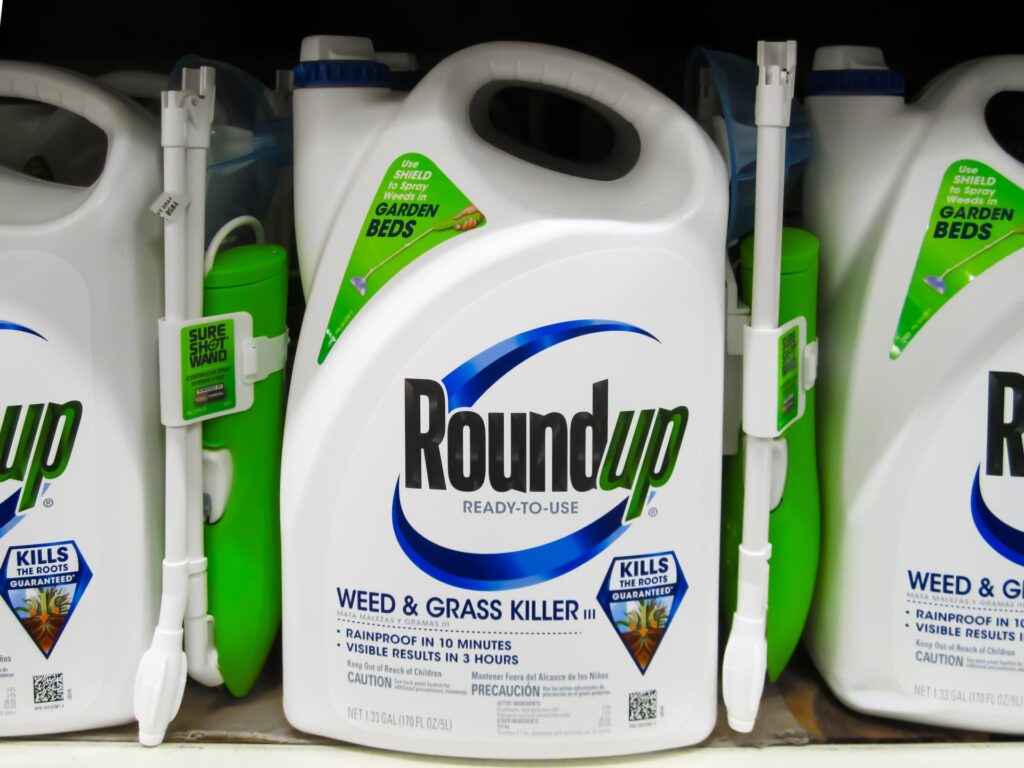
The first thing to know is that chemical use, particularly Glyphosate, is rampant in coffee production. Glyphosate is a weed killer. If you don’t control the weeds, they compete with the coffee for nutrients, and your yield (the amount of coffee cherries you harvest per tree) goes down.
As a farmer, you have three choices. First, plant cover crops that don’t compete with the coffee and choke out the ability of the weeds to grow. That is an expensive investment, requires specific technical knowledge, and is very labor intensive. In a world in which producers are paid less than their cost of production 80% of the time, that is out of reach for most of the small-holder farmers that grow 60% of the world’s coffee.
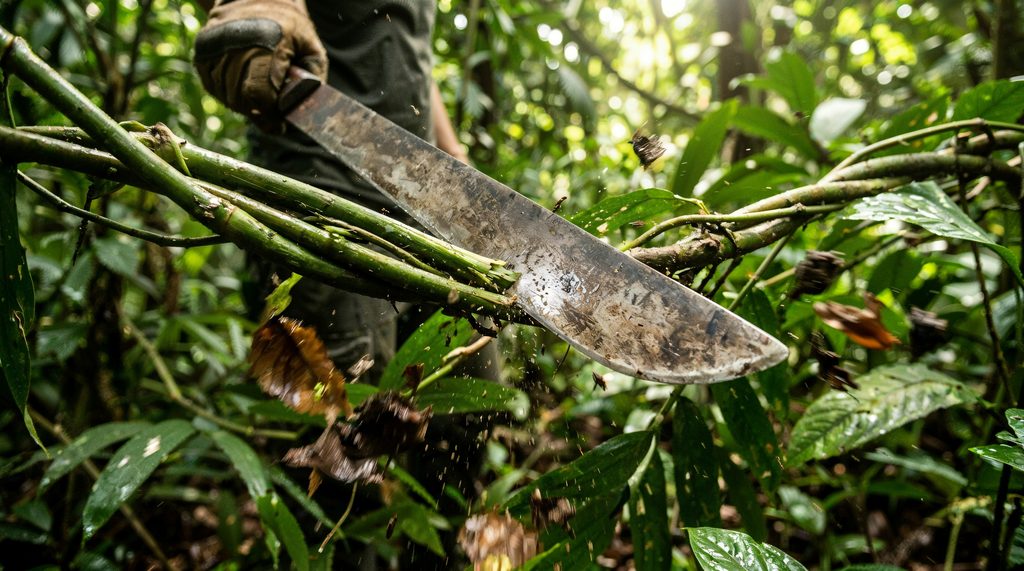
The second choice is to hire people to control the weeds manually. In most places, this is done by workers wielding machetes, slashing at the weeds between the rows of coffee. It is back-breaking work. And it’s expensive. In this age of mass economic migration all around the world, it’s getting harder and harder to find people willing to labor on farms at any price.
The cheapest and most available option is to use a chemical. And the chemical industry is very, very lucrative. You probably won’t be surprised to learn that chemical conglomerates are embedded with coffee trade associations in many countries, particularly in Central and South America, who actively promote the use of chemicals to their members.
Complicating matters, these associations are often quasi-governmental organizations that serve as the source of all agricultural learning and technology for small producers. Membership is often not optional if you want to sell your coffee through legitimate channels. And if they are telling you that using Glyphosate for weed control is a good idea, it can be hard to say no.
In every coffee-producing country that I have been to (more than 18, as of today), Glyphosate, and its many derivative products, are the go-to weed control of choice.
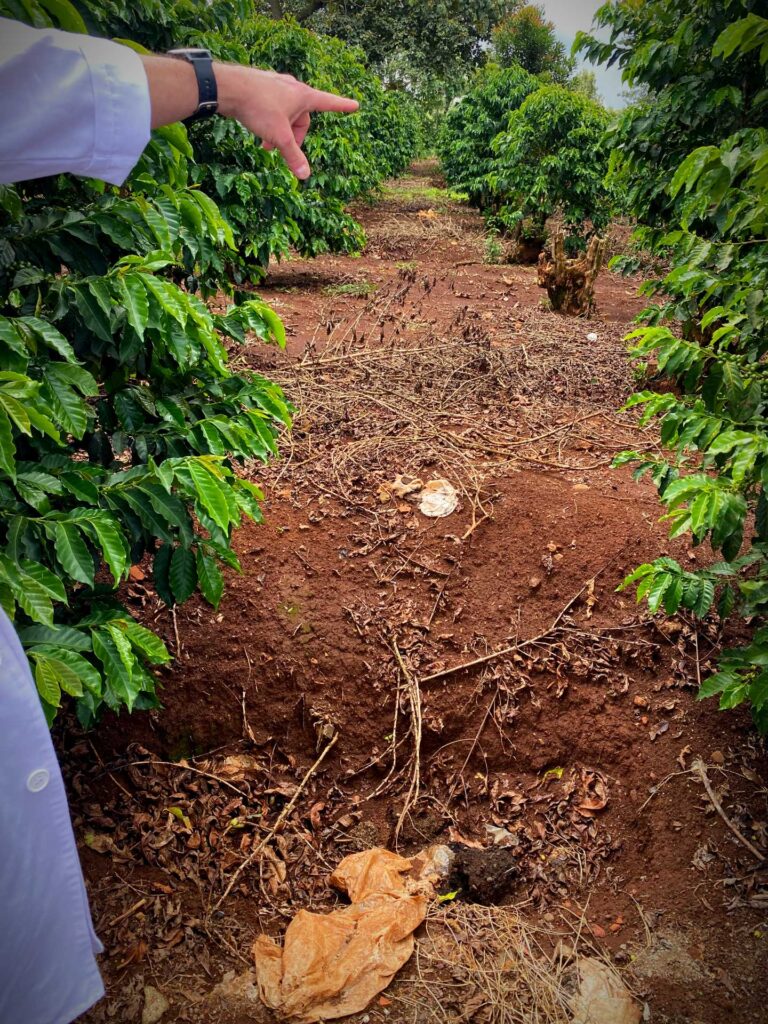
A coffee plantation we visited in Kenya, where they hesitatingly told us that were using Glyphosate in their fields
Why That’s Bad
The problem is that even when it’s used according to safety directions, it is toxic to the life in the soil – microbes, bacteria, bugs, worms, and even pollinators, denuding the soil’s ability to sustain life without even more chemical intervention in the form of fertilizers. Prolonged Glyphosate use turns rich soil into dirt.
And rarely is it used according to safety directions.
I’ve been in fields where I’ve seen it being sprayed by people that aren’t even using gloves, let alone masks or respirators. I’ve even seen it sprayed right next to a stream that is a water source for a community.
Also, Glyphosate is a systemic herbicide, taken up by the plant through the roots. Meaning that even if you don’t spray it directly onto the plant, it comes in through adjacent earth between the rows of coffee trees. And it goes all the way through the internal systems of the plant, including into the coffee cherry itself.
Lawyers have been duking it out in court for decades on whether Glyphosate causes cancer. But there are plenty of scientific studies that suggest that it does. And I am a firm believer in the idea of where there is lots of smoke, there’s probably fire. Particularly when it comes to the chemical industry and its long, litigious history of denying harm. PFAS, asbestos, and leaded gasoline come to mind. Any one fancy a cigarette?
So that’s why there’s Glyphosate in coffee. But how is it getting into Organically Certified coffee?
How it Works
This might surprise you, but USDA organic certification for coffee isn’t conducted by the USDA. Rather, the entire system is outsourced to an array of third parties, like exporters, cooperatives, and processors, based in the country of origin. In coffee, the biggest players are often the biggest exporters.
USDA Organic certified coffee fetches a per-pound premium of between $0.20 to $0.80 over the price of conventional coffee. The spread is based on the quality of the coffee, and the perceived enhanced value of the specific country from which it’s sourced. So, there is a powerful economic incentive for nefarious actors to manipulate the system.
Because coffee passes through so many hands from the farm to the cargo ship, the sheer complexity of the supply chain provides numerous opportunities to “fudge” the paperwork.
The most common is something called volume laundering, or mass-balance fraud. Let’s say an exporter is certified for a container (around 40,000 pounds) of organic coffee. They buy 80% from certified farms, cooperatives, or processors, but they mix in 20% of cheaper conventional coffee that may or may not have chemicals in it. They are the certifying body, they create the paperwork, and there isn’t much in the way of oversight.
As the exporter, they collect the organic premium on the whole container. And nobody is the wiser. Nudge, nudge, wink, wink.
Origin Laundering
There are even more brazen examples of this kind of “fudging” where people in the supply chain buy coffee from neighboring countries with lower costs of production (and lower country differentials), to be blended with, and sold as, organic coffee from a more expensive region.
Honduras, for example, is known for producing high-quality organic coffee that commands a higher premium on the market. But they border Nicaragua, where the cost of production and environmental oversight are a lot lower. The incentive for an organically certified cooperative to smuggle in cheaper coffee and pass it off as Honduran Organic is high. And because of the lax oversight, the opportunity to catch them at it is practically zero.
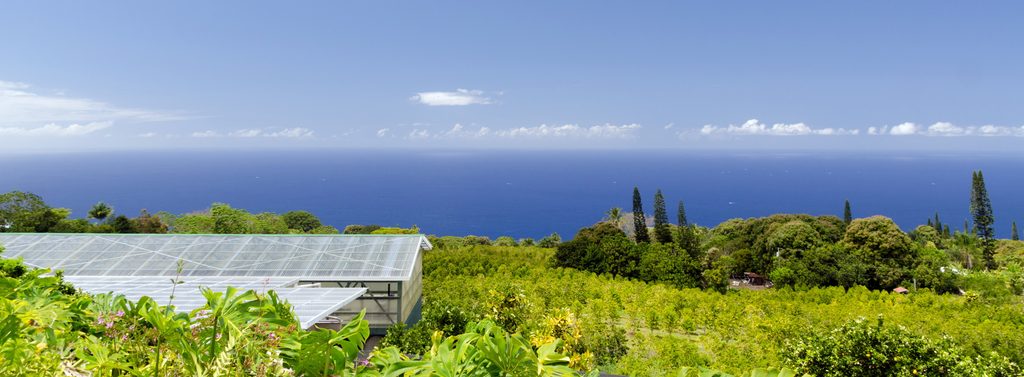
I am not singling out Honduras, here. The same is true in Ecuador, and Peru, among others. An easy-to-understand comparison is Kona Coffee. That island in Hawaii grows, on average, about 3.2 million pounds of coffee per year. But more than 20 million pounds of coffee, with the Kona label, are sold annually, at a super high premium. It doesn’t take a math genius to figure out that somebody, somewhere is lying. And the consumer is paying the price.
The Testing Paradigm
The last, and perhaps most important thing to know about USDA Organic certified coffee is that it is not tested by the Government when it comes into the US. Not unless there has been a specific complaint lodged against an exporter, and even that can take years to be actionable.
I’m going to say that again: Neither the USDA nor the FDA routinely tests imported USDA Organic coffee for herbicide or pesticide residue.
The reasoning, in part, is that it would be too complex.
But other markets do. The European Union, for example, does routinely test for compliance with their organic certification. So does South Korea, and Japan, and many others.
Nefariously inclined exporters know this. So, if you are one of the big players that exports to markets all over the world, and you have some “dirty coffee” to launder for the higher organic premium, you aren’t going to send it to Europe. Or to South Korea. Or to Japan. You’re going to send it to the United States.
Which is how we get to the Clean Label Projects test results. 100% of the organic coffee they tested showed AMPA residue.
Not Everybody is Lying
The Clean Label Project test results notwithstanding, I can’t tell you that every bag of coffee sold as USDA Organic has herbicides and pesticides in it. But no one can guarantee you that it doesn’t, either.
So, in this heavily green-washed world of Organic Certification, what is the concerned consumer to do?
There are good and honest players in the industry that have traceable and clean supply chains. There are some importers, for example, that test their organic coffee. Usually, they are the same ones that have real, and close relationships with the producers from whom they are buying. And they have a window into everyone that touches the coffee before it gets to them. That is the exception and not the rule. And it’s very hard to know who is who when you’re standing in the coffee aisle in the grocery store.
Why We Don’t Require Organic Certification
Very early on in our journey with One BIGG Island in Space, we made the decision that we would not seek out coffee producers with Organic Certification. We don’t exclude producers that have it. But we don’t require it.
I’ve already explained part of the reason for that. We think that certification, at the consumer level, is functionally meaningless.
But there are other reasons, too.
It is hard, expensive, and complicated to get, and maintain, a USDA Organic Certification for a coffee farm. There are mountains of paperwork involved. Audits, procedures, requirements. And the cost, alone, is prohibitive for most small-holder farmers who produce 60% of the world’s coffee.
Coffee, as a commodity, is very mobile. Which makes it easy to manipulate and cheat as coffee changes hands throughout the supply chain on its way to the consumer.
But coffee farms are very much not mobile. And what happens at the farm level in organic certification is the most rigorously monitored part of the system. The burden for that (especially the cost) falls on the producer.
To be certified, you can’t have used chemicals for at least three years. That is verified by soil testing. And you can only use inputs on your farm – things like limestone to de-acidify the soil, or compost and manure from approved sources, or biologics to treat pests and diseases – that come from organically certified sources. All of which are much more expensive. And you must maintain pristine paperwork on everything that you do.
Where That Gets Silly
On first blush, that sounds good and right. But applying those things often leads to situations that border on the absurd.
Consider the case of a friend of ours in Brazil. Their farm is certified USDA Organic. He needed limestone to de-acidify his soil. This is a fairly straight-forward input in the agricultural world. And unless it’s mined next door to a nuclear plant, one is as good, from a non-harmful perspective, as another.
But he could only use USDA Organic certified lime. And there is only one purveyor of that in Brazil. On the other side of the country. To deacidify his soil, he had to pay more than 10xs what the lime he could have bought from the mine down the road would cost.
He gets a premium – although, not a very big one – for his certified coffee. But most of that premium is eaten up by things like having to buy lime at 10xs the cost and maintaining audit-ready paperwork. It’s barely better than a break-even proposition, particularly since that premium is tagged to the market price of coffee. In a year in which that price drops below the cost of production (and most years, it does), he is doubly screwed.
I am just guessing, here, but I don’t think that’s what the average consumer paying extra for the USDA Organic coffee at the grocery store had in mind.
Other Things that Organic Certification DOESN’T Mean
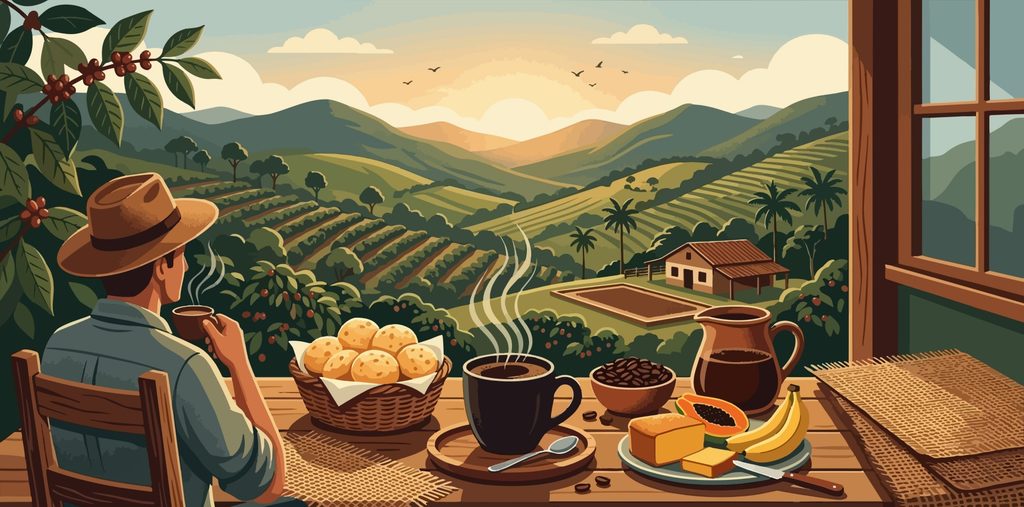
What that average consumer probably DOES have in mind, though, is an image of what an organic coffee farm might look like. It’s evocative of pristine nature and biodiversity. Perhaps there is a smiling farmer in the consumer’s mind’s eye, standing by a waterfall, petting his or her donkey, while flocks of native birds soar overhead.
None of which is guaranteed by organic certification.
All that it means is that the farm doesn’t use petrochemicals in any of their processes. It doesn’t mean that they promote biodiversity or protect their forests and waterways. I’ve been on a few USDA Organic Certified farms where they clear-cut their forest, for example. That’s not so great for the environment, not to mention their native birds. But it doesn’t make them any less certifiable as organic.
Quality and Fairness
Another misperception is that USDA Organic Certification means better, higher quality coffee. It doesn’t.
You can have really awful, low Q-Grade (the measurement of coffee quality) organic coffee. And you can have really good, high Q-Grade organic coffee. Coffee quality is determined by the variety of coffee, how and where it’s grown, and how it’s processed post-harvest. It has nothing to do with whether or not it’s organic.
Finally, because USDA Organic Certified coffee is more expensive, it’s likely that the consumer imagines that the coffee producer got paid well for their crop. Sadly, it doesn’t mean that, either.
It is true for the exporter of the coffee that collects the premium at the point of putting it on a boat. We know, exactly, what they made.
But that, in no way, guarantees what the coffee producer got paid at the Farm-Gate. That is a very elusive number to track, unless you have a direct relationship with the producer.
And, as you have already heard, producing organic coffee is much more expensive. So, even the premium the coffee farmer does receive is not a guarantee of profit.
So, What’s the Answer?
I don’t know anyone that would knowingly order an extra shot of Roundup in their Americano. I sure wouldn’t. But how can you be sure that’s not what’s happening every time you buy a cup of coffee?
From the beginning of our journey to change the way BIGGBY COFFEE sources its product, we have been looking for producers that are already taking very good care of the planet. That can look different in different places. But they all share a determination to eliminate harmful chemicals from the landscape, are committed to regenerative agricultural practices, and to protect their workers and the environment.
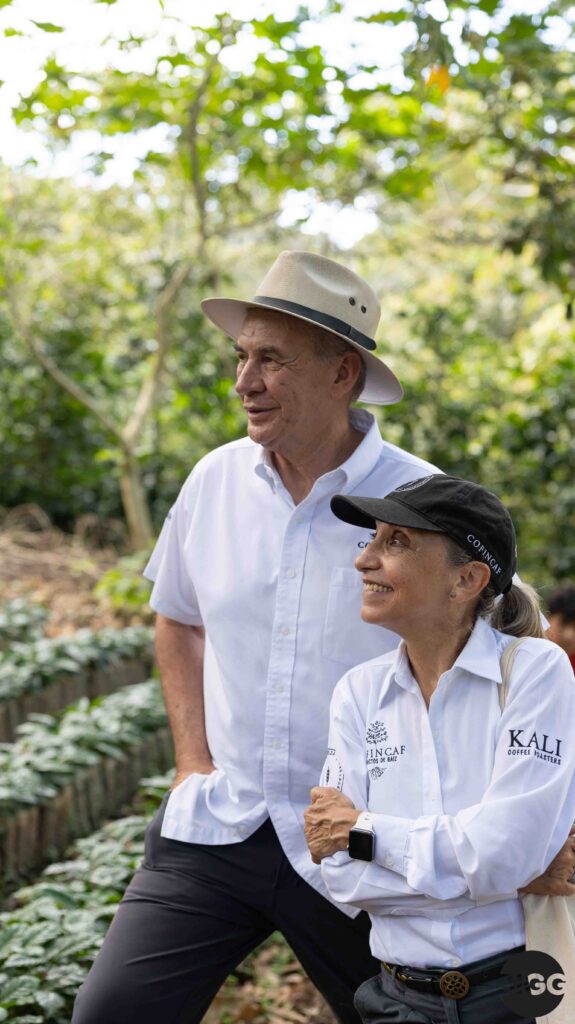
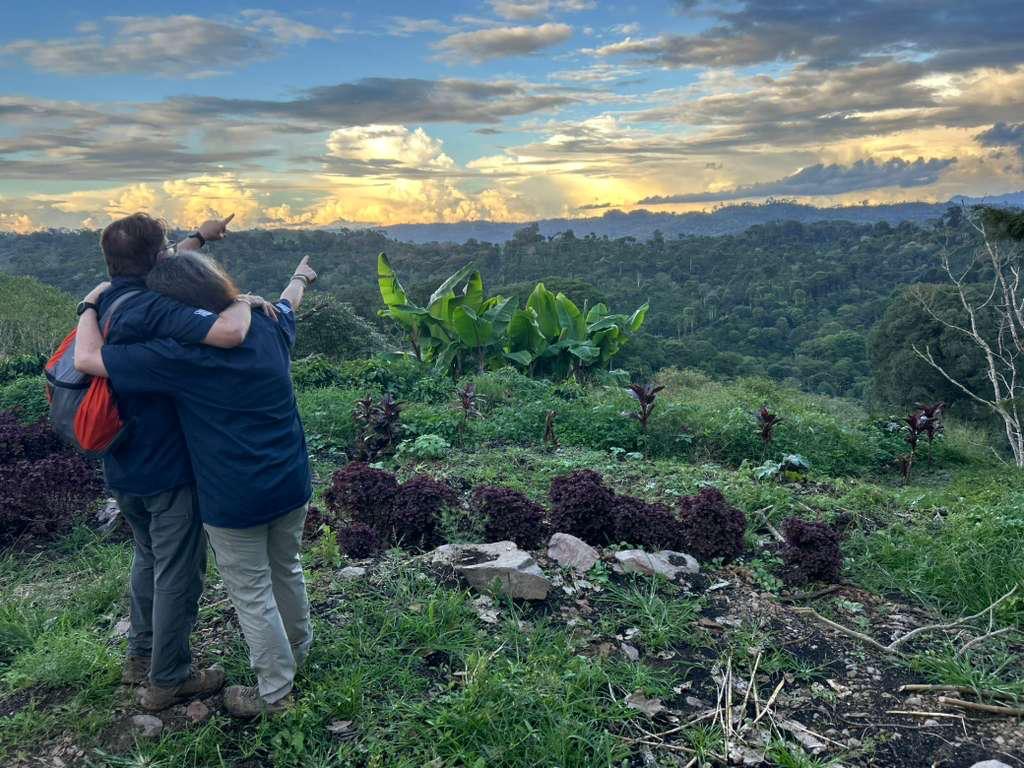
Maria Esther Saut and Pascual Castillo of Finca la Fortaleza and CofinCaf, our partners in Chiapas, Mexico who converted tree-less pasture land into a thriving agroforestry environment for coffee.\
We know that’s true because we spend lots of time, every year, on all our partner’s farms. And we know that’s true because up to this year, we randomly test the coffee we buy for an array of chemicals, including Glyphosate, that fall into that harmful category.
Never once has a shipment of their coffee “failed” the testing. That’s who our partners are.
But how can we communicate that to the consumer to rise above the noise in the grocery store aisle?
Glyphosate Free
We will be adding a “Glyphosate Free” label – our own label – to every pound of BIGGBY COFFEE and OBIIS Coffee that we sell in 2029. And to back that up, we will have an independent lab test every shipment of coffee that we receive for Glyphosate.
Why Glyphosate? In part, it’s because the US consumer knows what it is. There are literally hundreds of herbicides and pesticides used in coffee all over the world. But Glyphosate, thanks to the commercial product that often contains it, called Roundup, has name recognition. Whereas most of the other commonly used chemicals, like Chlorpyrifos, the active ingredient in several EPA banned pesticides, do not.
For us, Glyphosate is the poster child and stand-in for all those other chemicals that we don’t want to ingest into our bodies.
Why Wait Until 2029?
I can confidently say that all of our Farm-Direct coffee is currently Glyphosate Free. I know that because our partners told us that it is. And I know that because this year, we started testing every shipment of coffee specifically for Glyphosate. And every shipment passed.
But we are only 65% of the way, or so, towards our goal of being 100% Farm-Direct by 2028.
As we bring on new partnerships, we need to ensure that the movement of coffee through our supply chain is transparent, traceable, and clean. And that takes time, because we don’t “outsource” that to a third party. We invest the time in developing values-aligned partnerships all throughout the supply chain.
The Big Lesson
There are a lot of challenges in growing coffee commercially, particularly in the age of a changing climate. But the biggest challenge of all has been caused by chronic underpayment. 80% of the time, over the last several decades, coffee producers have been paid less than their cost of production.
The only way a coffee producer can survive that is to make hard choice cuts. This might include short-changing their children’s education, or foregoing health care. But it might also include giving up on taking care of the environment. Chemicals are cheaper, by far, than labor.
One of the ironies of USDA Organic certification is that it puts the majority of the burden to “fix” this squarely on the producer’s shoulders. There is nothing fair or equitable about that.
If, as consumers, we want clean, chemical free coffee that benefits people, communities, and the planet, we have to be willing to pay for it. It’s our responsibility to know a little about the companies that are putting those brightly colored bags up for sale in the grocery store. Not everybody is what they claim to be.