
The Long Road to Elevar
By Michelle Fish
We have walked more than 250 farms in at least 17 coffee-producing countries over the last seven years. And yet, we have only six Farm-Direct partners. You might wonder how that could be possible.
The answer is often frustratingly simple. Sometimes, it’s because we can’t find a fit. Either our values don’t align, or what was described to us is not what we find to be true when we go boots on the ground. Sometimes, though, it’s just a matter of the potential partner not being ready for us… yet.
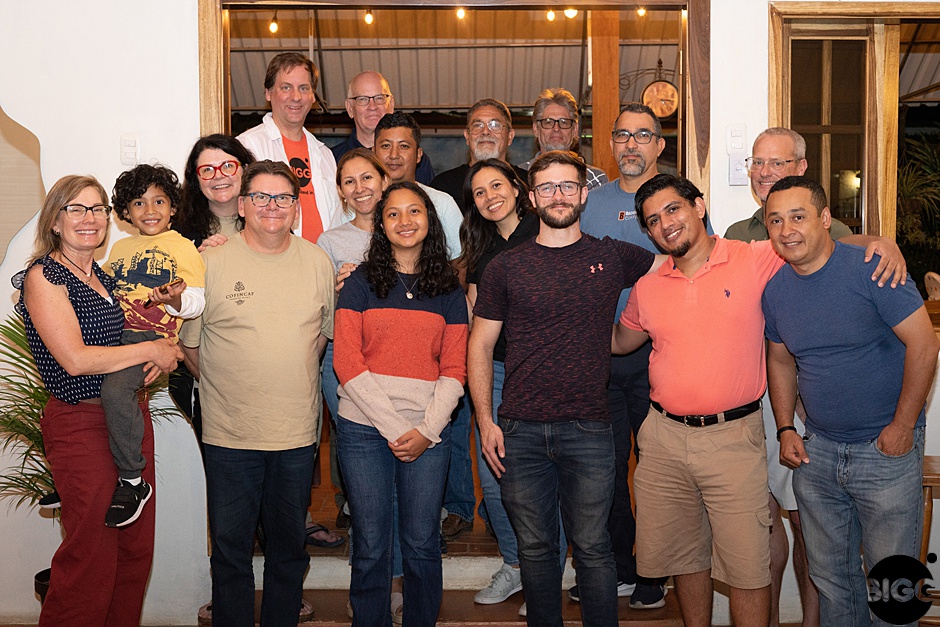
Some of the men and women of Partners Worldwide and Elevar from our trip to Olancho in 2023.
Meet the men and women of Elevar. They are an association of small producers growing coffee in the Olancho region of Honduras. And we first met them four years ago. They are our newest, newly-minted Farm-Direct partner. And soon, Paramount Coffee will be receiving the first shipping container of coffee from their farms. But it’s been a long road to get here.
Lance and Lisa Buffinga
That road starts in Grand Rapids, Michigan. In late 2021, Bob got a cold call from Lisa Buffinga of Galana Coffee in Grand Rapids. She had read all of our blog posts up to that point, and you know it warmed the cockles of my heart to know that somebody had. She thought that she might have a story that would interest us.
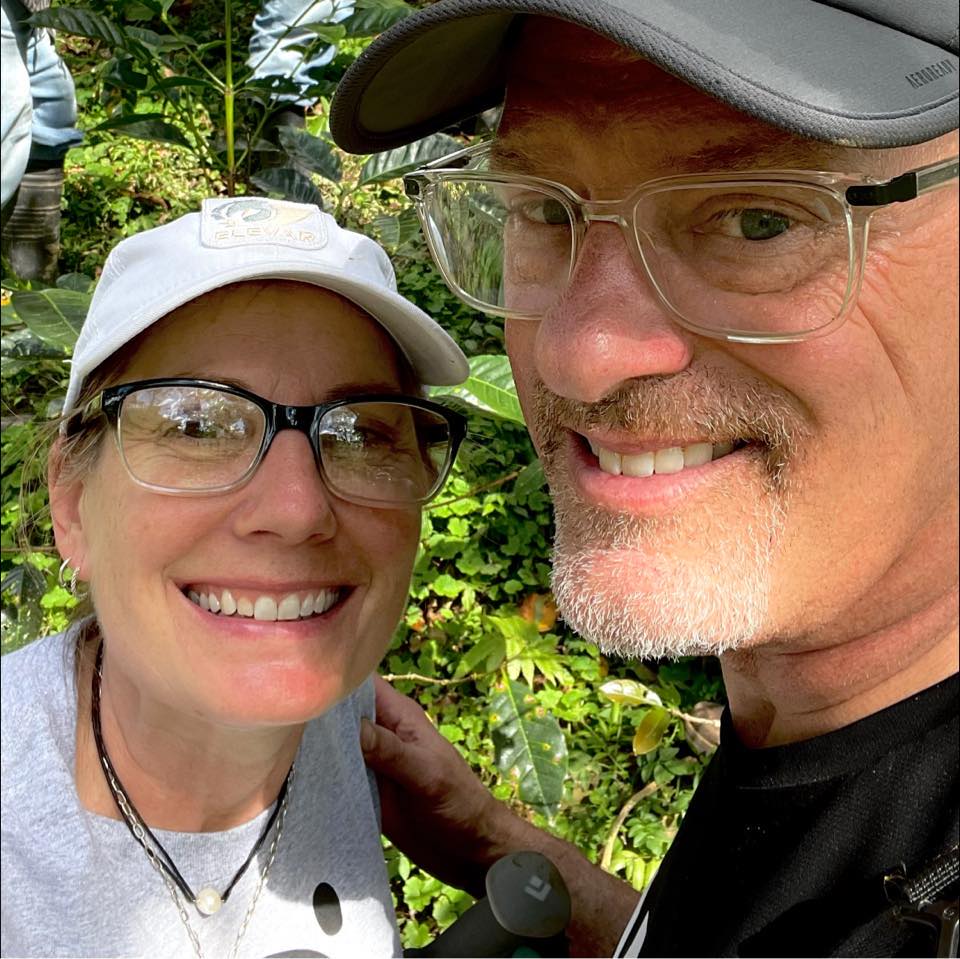
Lisa and Lance Buffinga
She and her husband, Lance, were volunteers for an organization called Partners Worldwide (PW). They are a faith-based organization that believes that business, and business coaching and mentorship, can be powerful solutions to systemic poverty in the under-resourced parts of the Global South.
It’s an approach rooted in ethical capitalism, not charity, as a long-term, self-sustaining solution to poverty. And that is something that really resonated with us.
In the course of their volunteer work, they had come across a group of very small coffee producers in Olancho, Honduras. That group, led at the time by a very charismatic young coffee farmer named Arturo Colindres, was working with PW to get the structure and the legal paperwork together to start an Association called Elevar.
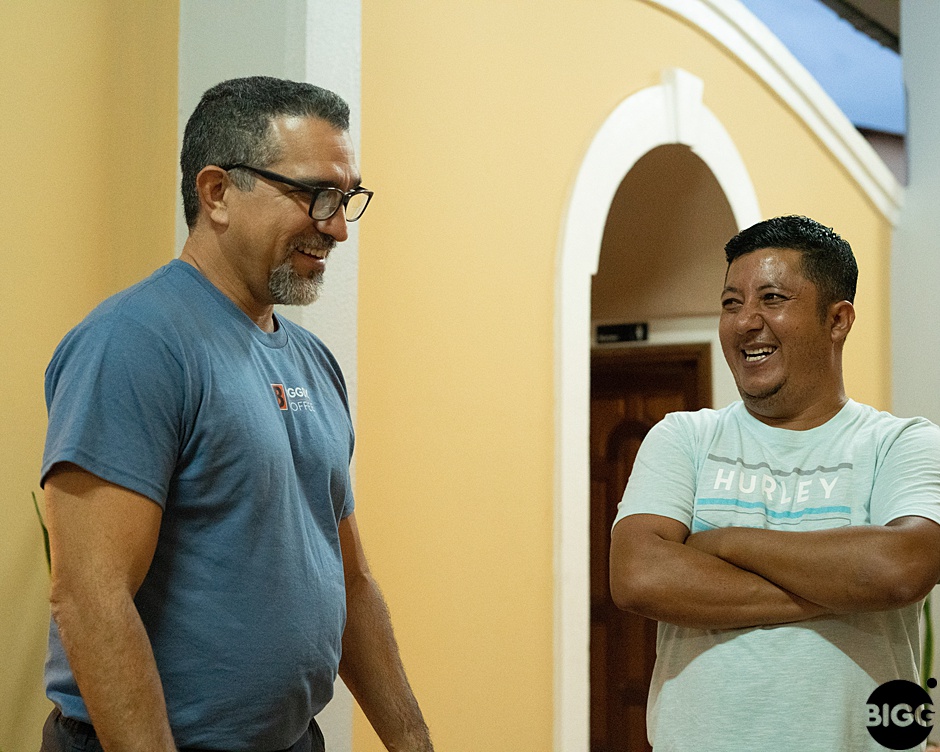
Dr. Jorge Ferrey and Arturo Colindres
Translated from Spanish, Elevar means to raise, elevate, heighten or lift. And his goal was to do that for the small producers in his community.
Lance and Lisa were already in the coffee business, thanks to the missionary work of Lisa’s father in another small community in Honduras. He had started Galana Coffee in Grand Rapids to import and sell their coffee. Lance and Lisa were so taken by Arturo and what he was up to, that they agreed to import coffee from Elevar that they would then try to sell, one bag at a time, to coffee shops and roasters in the United States. All, of course, at a premium over what the Elevar producers would be able to receive domestically.
They were making progress, although the pace felt glacial. And they wondered whether we would be interested in making the trek to Olancho to see what they were up to.
The First Visit
Lance and Lisa offered to meet us there in February of 2022. I couldn’t go, but Bob could. And he took our good friend and partner, Rich Schaasfma, from Paramount Coffee with him.
They spent about a week meeting with small producers, walking their fields, and sharing meals with them. Bob came home full of energy and full of ideas. He was also covered in bed bug bites, but that’s another story.
What he described to me sounded like a fair degree of chaos. The producers were all at very different levels in terms of how they were farming, and their knowledge of processing. And there wasn’t, yet, cohesion around a central vision among the members, nor much in terms of structure to bring them together.
And yet, Bob felt that there was something there. There was so much energy and hope. And most of all, there was Arturo. Bob told me that he didn’t know how or when, but he knew he wanted to be a part of what was happening in Olancho. Even if it took a while.
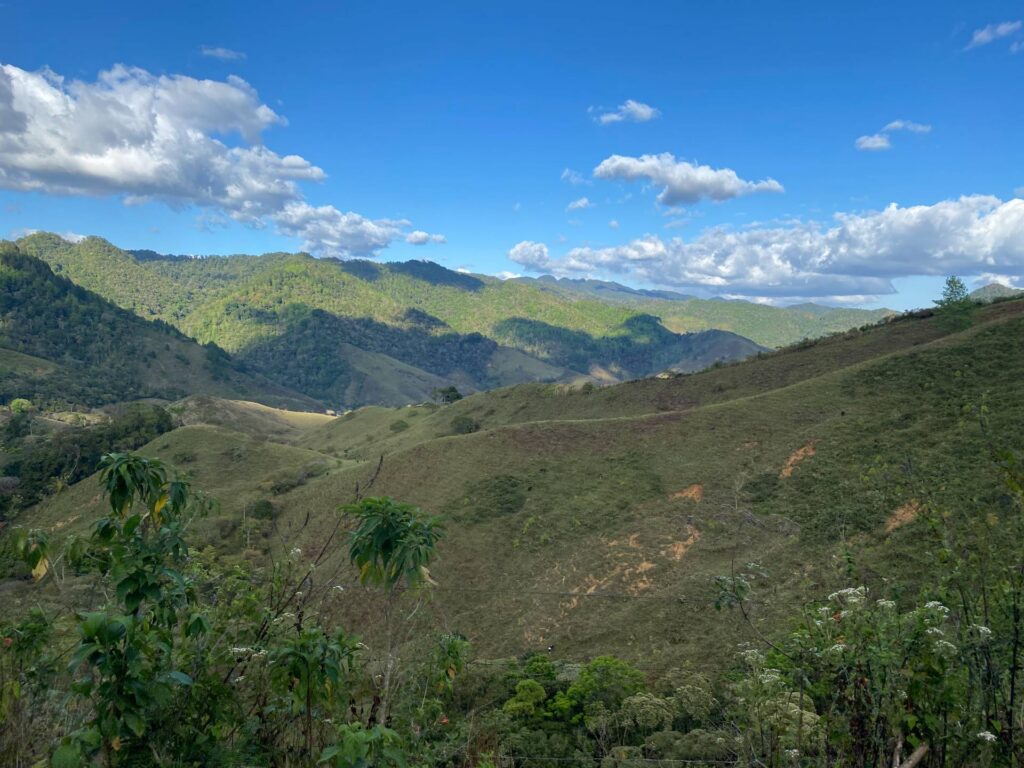
One of the many beautiful vistas in Olancho.
What Arturo Was Up To
Arturo was a small land holder whose family had been involved in coffee for generations. He has a beautiful wife, Zandy, and a young and growing family. And he has big dreams.
Arturo’s vision for Elevar was three-fold. First, the small producers of Olancho were making their living from coffee on very small plots of land. For many of Arturo’s friends and neighbors, the struggle to sell their crop at a decent price had already proven to be too much.
Land was being abandoned at an alarming rate, as farmers made the difficult decision to migrate in search of better opportunities. That migration was tearing apart families and communities and changing the way of life in the small towns and villages of Olancho.

Arturo Colindres
Arturo believed that if they could band together as producers, they would have more power in the marketplace. They would be able to negotiate better prices and get more help in terms of technical assistance and access to inputs like fertilizer, from the national coffee association, IHCAFE.
Better prices and more assistance would mean earning a better living. And, if they could make coffee farming financially viable again for small land holders, then those producers would have a powerful reason to stay.
In Search of Recognition
His dream was to put Olancho coffee on the map. Honduras is well known for quality coffee production. But most of the big stories about coffee come out of the Copan region, even though coffee has been farmed in Olancho for generations. In fact, the very first coffee that was ever planted in Honduras was in Olancho, in 1835. But it’s as if no one in the coffee world had noticed.
That matters when it comes to the price your coffee can fetch on international markets. Arturo believed that coffee from Olancho could compete on quality at the highest levels. But he needed help getting the coffee from his and his neighbors farms onto a bigger stage.

“Cuidemos los Bosques” translates to “Let’s Take Care of the Forests.”
The Threat to the Environment
Finally, he was heart-sick about watching the natural environment around him change. Olancho is part of the Sierra de Agalta Mountain range, a canopied tropical cloud forest known for its fertile soils, diverse microclimates, heavy rains and high altitudes.
When coffee farmers abandon their land, it often goes to cattle production or growing crops like corn or beans. The beautiful, precious rainforest in the mountains of Olancho was being deforested at an alarming rate. And the use of pesticides and herbicides was increasing. Taken together, it was a real threat to their water, as rivers and streams dry up or become polluted. And it represented a devastating destruction of natural habitat for whole range of species that are only found in Honduras.
The best coffee in the world is grown under shade. And Arturo believed that a natural, environmentally sensitive approach to farming would both help heal the forest around him and give coffee from Elevar a point of differentiation. And he was determined to build Elevar around those principals.
It was a pretty convincing vision. But they had a long way to go.
Back Again in 2023
We kept in touch and planned another visit. This time, we brought a bigger team with us, including Dr. Jorge Ferrey, who was then still the primary producer with our partner farm, El Recreo, in Nicaragua.
And we brought our friend Kathya Irias, the founder and owner of Spirit Animal Coffee in San Pedro Sula, Honduras. Kathya’s business model was built around finding small producers of very high-quality coffee in Honduras, and bringing their crop to an international marketplace at higher prices. She had never considered Olancho before, but was intrigued by the potential.
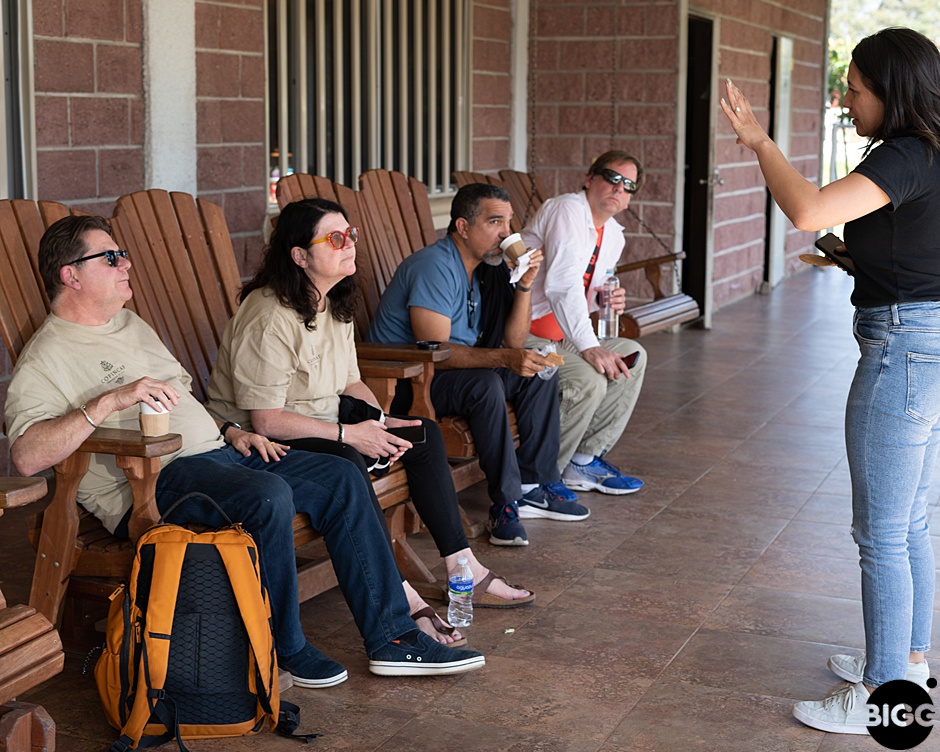
The OBIIS Team from L-R: Bob, Michelle, Dr. Jorge Ferrey, Rich Schaafsma of Paramount Coffee, and Kathya Irias from Spirit Animal Coffee.
We spent about four days with the producers. It was my first look at it from the ground. And I could see what Bob meant. There was something good happening on the ground. And a lot of energy. But it still didn’t seem that the producers were fully united in their vision.
We met some amazing people, including Juan Rosales whose farm has about eight and a half acres of coffee. He bought it in 2008, after working for years in the United States to save up the money. When he first started out, he was looking for technical assistance in agronomy from the Honduran Coffee Alliance (IHCAFE). And he became so interested in the process that he trained to become a TA himself. Now, he helps all of the members of Elevar.
But perhaps the most dynamic team member was Arturo Colindres, himself, and his lovely wife, Zandy. By the way, Zandy makes the best friend chicken I have ever tasted. We spent a couple of days just walking member farms with Arturo. And his vision for what Elevar could become was so tangible, and so clear, and frankly inspiring.

Dr. Jorge Ferrey and Zandy Colindres, cooking her amazing friend chicken.
It takes a lot, though, to transform a vision into a business model. And they were just getting started. They still needed to fully develop the structure of the Association, and put it on a sound, legal footing. And they needed to get all of the members on board in terms of their approach to coffee farming, their agronomy, and their relationship to the natural environment. And they needed a lot of business coaching on everything from figuring out their cost of production, to developing a financial structure for their new Association.
I was glad we went. But they weren’t ready for us… yet.
Keeping Tabs from afar
Over the next couple of years, we would check in periodically with Lance and Lisa to see how things were going with Elevar. The Association was growing and becoming more professional. And the quality of the coffee was going up.
Sadly, though, Arturo ran into some trouble and had to leave his farm. He had spread himself out a little too thin, investing in a home roaster so that he could develop his own coffee brand for the domestic market. His dreams were big, but his cashflow couldn’t quite keep up. And he needed to go in search of better paying work so that he could pay off his debts.
For the man who had started Elevar as a way to help small coffee producers stay on their land, it was a painful irony that he had to leave.
But his legacy, in terms of his vision for what Elevar could become, was on a solid trajectory, and in the hands of the leadership team he had helped bring together.

Having lunch with the Elevar team at PRF in 2025.
PRF 2025
The Producer Roaster Forum is an annual coffee tradeshow designed to bring coffee producers from Central America together with Roasters and other players in the coffee industry. In order to make it easier and more economically approachable for producers, it is hosted in a rotating succession of countries in Central America. And in 2025, it was in San Pedro Sula, Honduras.
As it happens, OBIIS has been a co-sponsor of the event for the last several years. So, we were there with our team. Elevar was there, too, with their leadership team, and several of their members to showcase their coffee to producers from all over the world.
It was a great opportunity to catch up.
BIGG Leaps Forward
The first thing we learned is that the ink was finally dry on all of the legal paperwork to solidify Elevar’s status as a fully-fledged Association. And they had been successfully recruiting new, like-minded small producers to the Association. In fact, they were up to close to 90 members, many of whom were relatively young, third or fourth generation producers who had chosen to stay in the family business of growing coffee, rather than leave their land for other opportunities.
We met the new leadership team, which included Eduardo Acosta, the Executive Director, our old friend Juan Rosales who is the Technical Coordinator, as well his colleague on the Technical Assistance team, Nelson Figueroa. And we met a new face on the leadership team, Sandra Rivera, a very dynamic and determined young coffee farmer who serves the association as their Operations Coordinator. Sandra was very impressive. She is the first female coffee producer in her family, and so clear about her goals for her own farm, and for recruiting and supporting other women in coffee.

Elevar’s Leadership Team, from L-R: Juan Rosales, Eduardo Acosta, Sandra Rivera and Nelson Figueroa.
We had a long, joyful catching up at lunch. Mostly, Bob and I listened to the team unfold their successes, their challenges, their vision, and their dreams. For the first time in all of our previous interactions, it was clear to us that they were moving forward as a unified force, clear about their direction, and with the skills and framework they had worked so hard to build finally in place. It was a wow moment for us. We knew we had to go back to Olancho.
December 2025
On December 7, 2025, the OBIIS Team (Bob, Michelle, Janee Hartman, and Nathan Havey) landed in the late morning at Tegucigalpa airport in Honduras. We loaded up into SUVs with our friends from PW and made the five-hour drive northeast towards Olancho. The town felt very familiar to us, almost like a homecoming. We dumped our bags in our hotel rooms and headed out to meet up with the Leadership Team for dinner at a local restaurant.

Eduardo, Juan, Nelson and Sandra greeted us with big hugs and hellos. Among the new bits of news we heard was that Arturo’s father had taken over production of his farm. It was good to know that his land is still a working coffee farm, and it will be here waiting for him whenever he can come back to it.
Juan also had big news to share. He has spent the last seven years focusing on improving both his agronomy and his processing. This is knowledge that he shares with all of the members of Elevar. And it’s starting to get attention. A micro-lot from his farm won first place in a competition run by IHCAFE. That’s an accomplishment in and of itself. But more than garnering accolades, it opened up the door for him to sell that coffee to a local roaster at a very good price. And, from the perspective of the Elevar team, it means that Olancho coffee is finally starting to get recognized as a source for quality coffee.
We talked about who we would be visiting during our 48 hours on the ground and were delighted to hear that we were going to be meeting some new Elevar members. These are small producers that had sought out Elevar specifically because of their focus on agroforestry and regenerative practices in coffee farming.
Meeting the Team
The next morning started with a breakfast meeting with the Elevar leadership team and some of their producers. It was great to hear them lay out their vision for Elevar in clear, concise terms.
They pointed out the many overlapping missions we both have, like keeping producers in coffee and on their land, shortening the value chain, and bringing the producer closer to the consumer.
Rather than a traditional coffee Co-Op, they see themselves as a service organization. Their model is to provide their members with agricultural training, access to capital, and promotion and marketing materials to a broader, international audience.
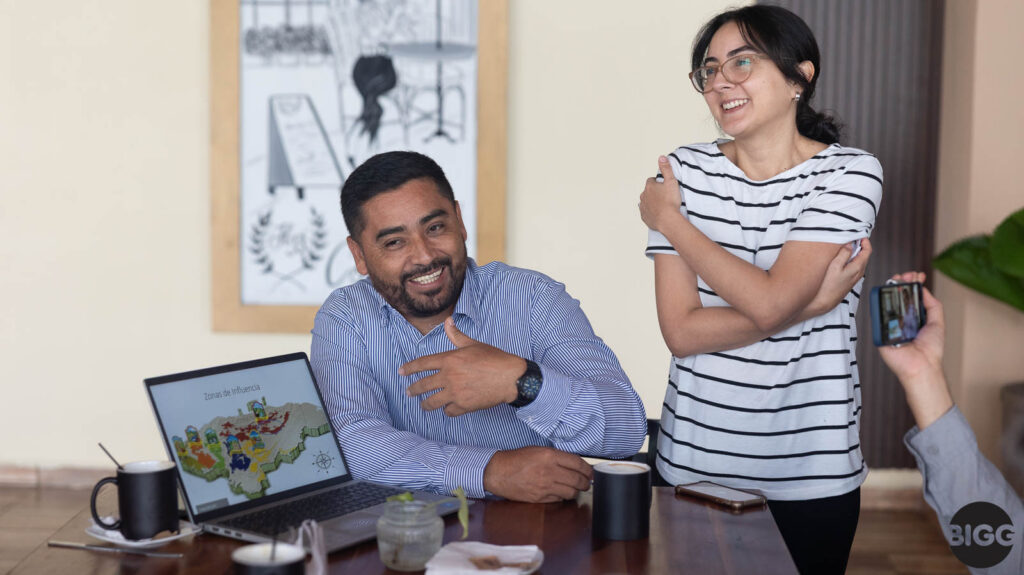
Eduardo Acosta of Elevar with Andrea Lagos of Partners Worldwide
They have 92 members, most of whom would be considered micro producers, farming less than 5 acres. Their goal is to facilitate the export of at least 1,000 lbs of coffee for each of their members. To do that, they work closely with each member to focus on improving their agriculture and their processing so that they can produce coffee of a high enough quality to export. And they do all of this within the framework of promoting agroforestry and regenerative farming techniques.
It was truly inspiring to see how far they’ve come and how clear they are about where they are going.
Yaneth and Wilten
After the meeting, we hit the road for a succession of farm visits, including meeting a few brand new producers, like Yaneth and Wilten. They bought their farm, which they named Esperanza, meaning Hope, during the COVID-19 Pandemic, after leaving their careers in the city.
They have a real passion for environmental stewardship and were determined to be as organic as possible in growing coffee, even though they had no real experience. So, they sought out as much training as they could find to help them convert what was an old coffee farm, into an agroforestry project.
They got their initial training from a program produced by our good friends at Heifer International, that taught them about how to take care of their soil and work with the seasons, using organic methods. And they have also participated in every IHCAFE seminar that they could get to.
Since 2020, they have planted 11,000 new coffee trees and they are very excited about their future, and the potential of partnership with OBIIS.

Yaneth and Wilten
Yaneth told us that she wished she had known how rewarding the country life could be, because she would have left the city long ago.
After a lovely snack of coffee and Rosquillas en Miel, corn donuts soaked in a rich sugar syrup, we headed out to walk their fields. Their enthusiasm was contagious as they showed us around their 10, or so, acres in production. Juan was with us, pointing out some of the new techniques they are trying out in their fields in terms of pruning and plant spacing. And it was clear that there was still much to do, and much to learn. But they are on a good trajectory of growth, and looking forward to a strong harvest this year.
Sandra
The last stop of the day was Sandra Rivera’s farm, Finca El Cedral, where her entire family, including her grandmother, Julia Alfaro, was waiting for us.
Sandra is a sixth-generation coffee farmer. But for all of those generations, she is the first woman. She started in coffee at the age of 16 and always knew that she wanted to make it her life. She went to the National Agricultural University to study and ended up getting her cupping certificate. She was captivated by the idea of what you could do with flavors and processing, but understood that it all started with the plant, itself.
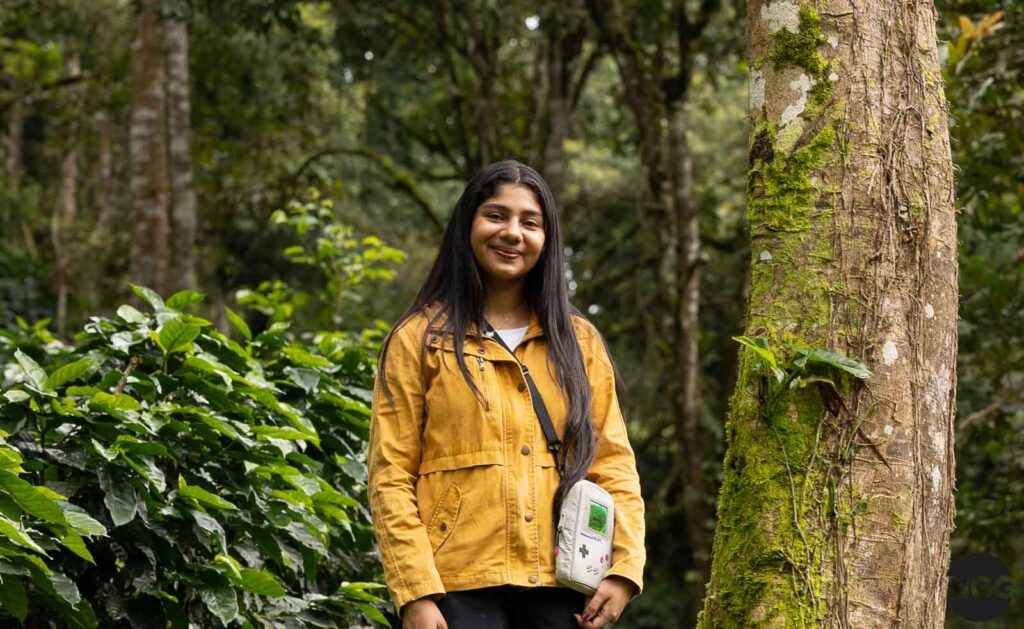
Sandra Rivera
So, she asked her dad, and he gave her about five acres of family land that was not currently in production. And in 2023, she got to work. Their neighbors thought she was crazy. But her vision for her farm was clear. She had faith that if she did the work, buyers would come. She looked at us and said “and here you are.”
Her farm was absolutely beautiful. Unfortunately for us, it was also very slippery, thanks to all of the rain. Almost all of us took at least one tumble. Poor Janee Hartman fell three times! But our spirits were high, and we knew, even covered in mud, that Elevar was, at last, ready for us.
Striking the Deal
Over the next couple of months, our OBIIS team and BIGGBY COFFEE worked with the Elevar Leadership to determine their cost of production, which would be the basis of our price. It took some time, but at last, we formalized our partnership and ordered our very first container of coffee.
In March, we had the opportunity to travel with Elevar to the Producer Roaster Forum in San Salvador. We also brought members of the Villatoro family with us from our partnership in Honduras.
It was great to have the opportunity to spend time together and deepen our relationship. We are excited to welcome Elevar to the Farm-Direct family, and we are looking forward to growing together.