Going Back to Sierra Leone
By Michael McFall
In a year overflowing with milestones, my trip to Sierra Leone with One BIGG Island in Space (OBIIS) rose above them all as the defining highlight—an experience so singular it will never be replicated.
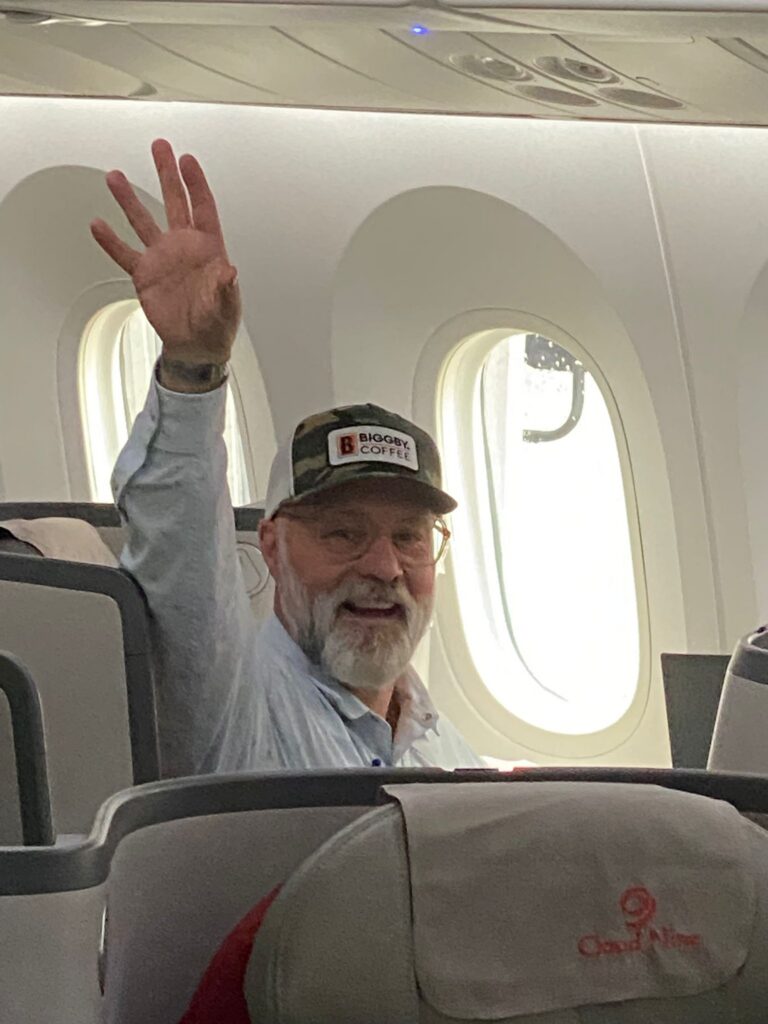
On the flight for the first leg to Sierra Leone in May of 2025.
Returning to Sierra Leone in May felt like stepping into a vivid, living memory and discovering the intensity of evolution and how much things change but also the importance of what remains the same. Thirty years is a long time for a memory to hang on, and it is fascinating to see how memory morphs reality and how our truths from the past are not airtight transcripts but more historical fiction.
The trip brought together my past as a college student, my present as a coffee entrepreneur, with people from both past and present whom I cherish. Visiting Sierra Leone not as a tourist but as an entrepreneur attempting to solve a problem and bring value to our collective communities was an inspiring way to visit such an important part of my history and re-connect with a place near and dear to my heart.
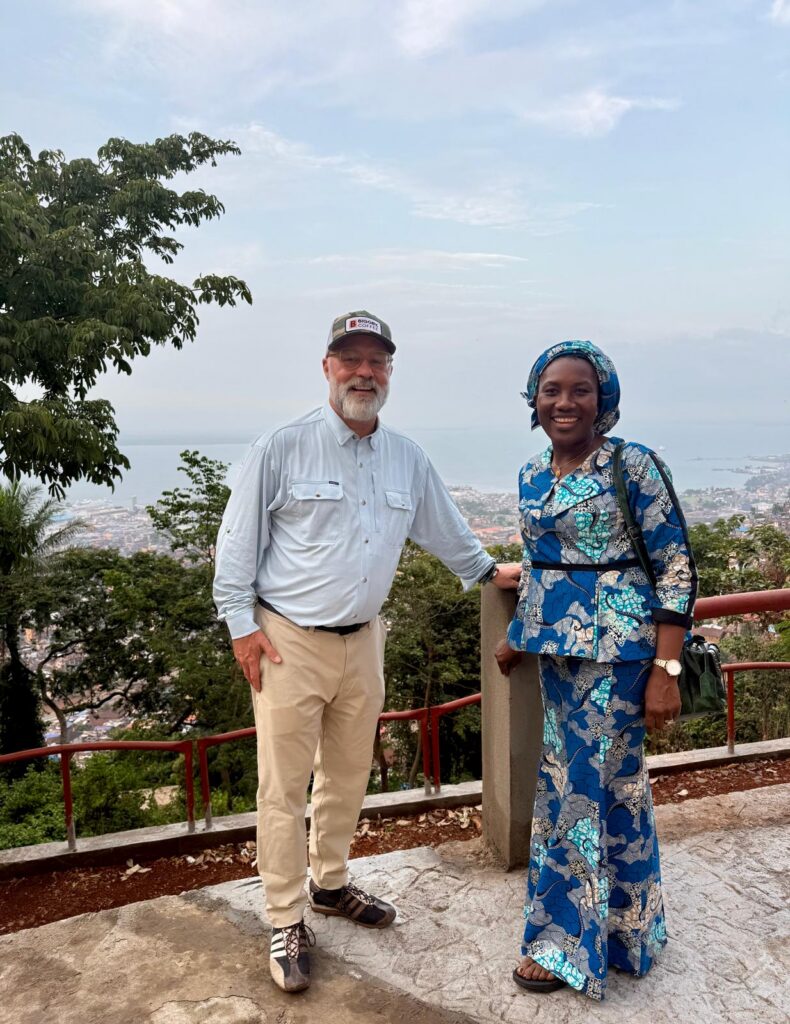
Full circle with Kadiatu
More than 30 years ago, as a college student studying in Sierra Leone, I shared classrooms, conversations, and dreams with a student named Kadiatu. We studied together in Freetown, and she later returned with me and our group to Kalamazoo College, where our friendship continued to grow. Being back into Sierra Leone with her this past May, was boggling to my mind the roles we are playing in one another’s lives 30 years later.
Today, Kadiatu Allie is the Deputy Minister of Finance for Sierra Leone, working at the center of the country’s efforts to rebuild and grow after decades of hardship. Spending time with her again, not as students but as potential partners in shaping a small piece of Sierra Leone’s future, was a powerful full circle experience. Our reunion was more than nostalgia; it was a reminder that relationships formed decades ago can echo forward in ways impossible to predict.
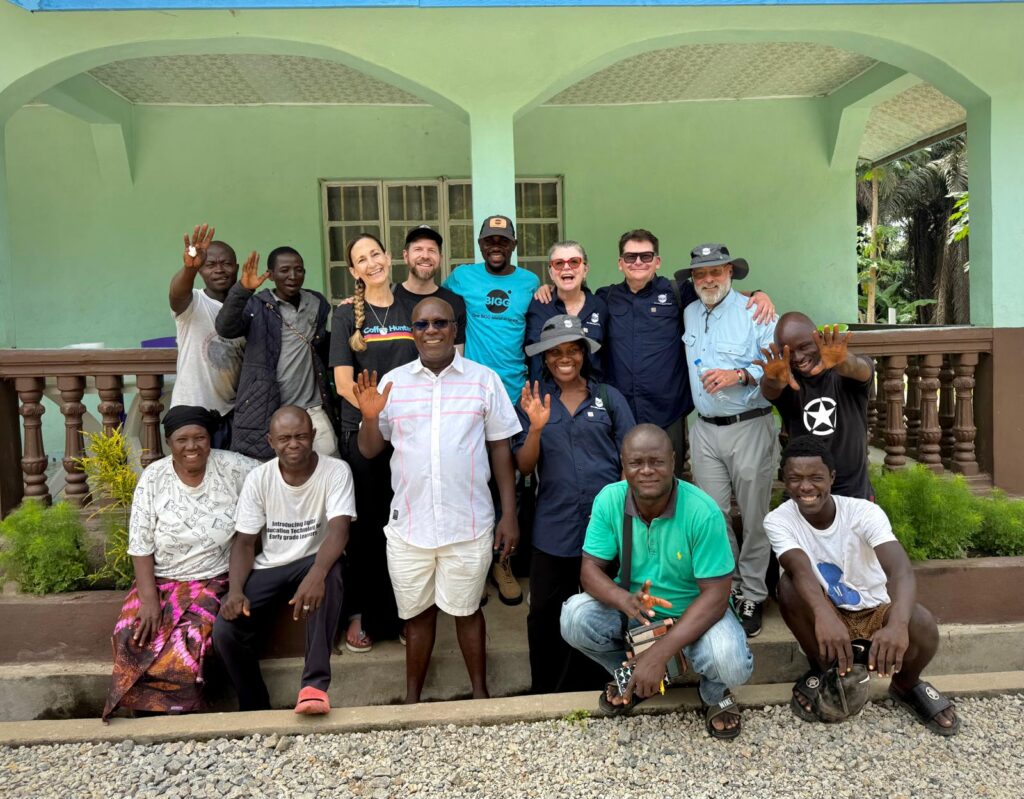
The OBIIS group with Minister Allie’s family and friends at her brother Junior’s house in the upcountry.
Bob, Michelle, OBIIS, and the future
My business partner, Bob Fish, and his wife, Michelle, have devoted the last many years to reshaping how our company, BIGGBY COFFEE procures coffee while setting an example for our industry through OBIIS, the organization they founded to build direct, long-term relationships with farmers around the world. Their mission is as ambitious as it is important: move BIGGBY to 100% Farm-Direct coffee by 2028, ensuring that coffee is a truly sustainable cash crop—economically viable for farmers, safe for the planet, and supportive of healthy, thriving communities.
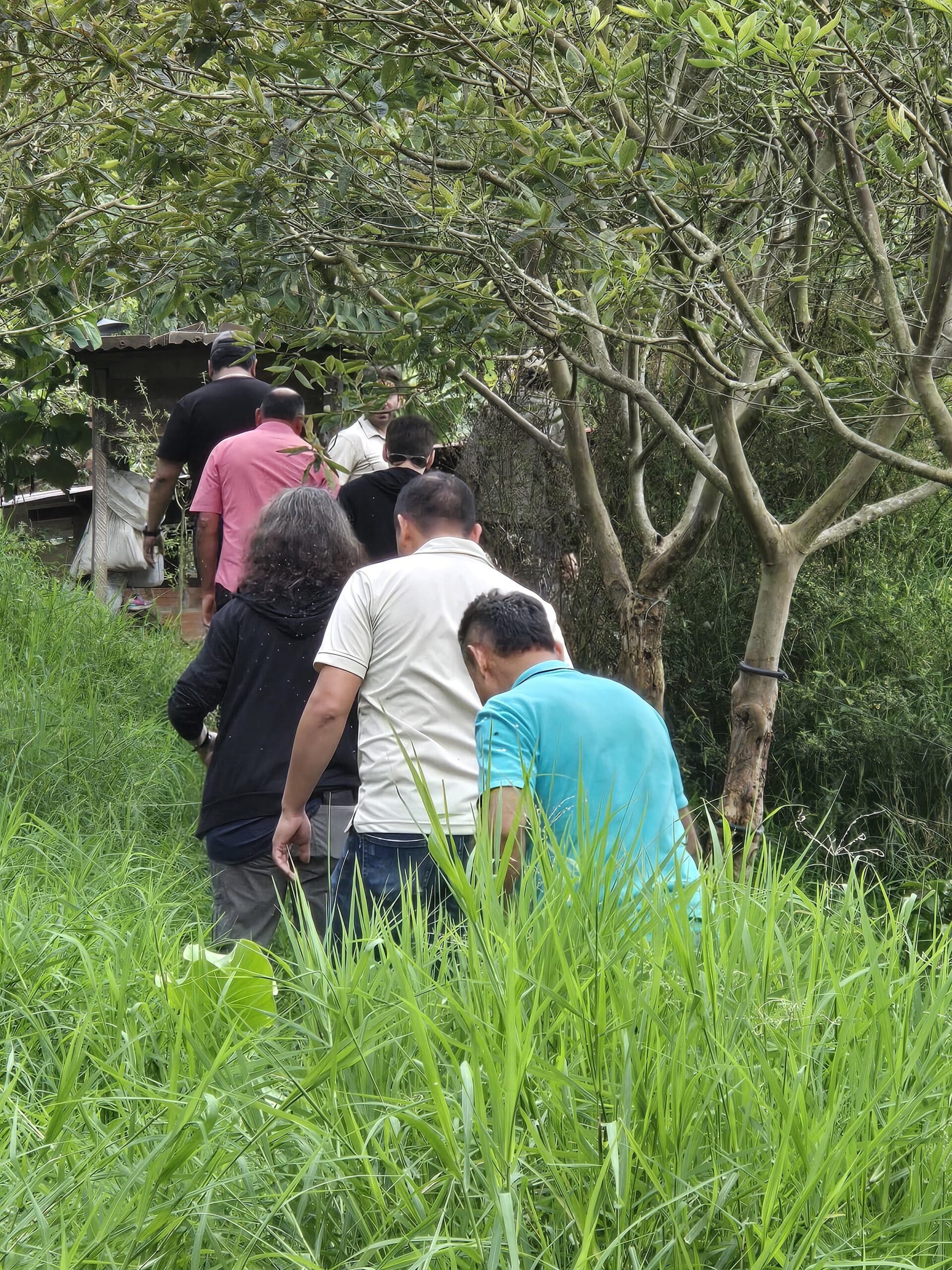
In Sierra Leone, that mission converges with Kadiatu’s vision. Bob and Michelle have been partnering with her to build a coffee farm and attempt to bring coffee back as a meaningful cash crop in a country where coffee production was once significant but devastated by years of conflict and underinvestment. Visiting the community with them where the farm will reside, talking about getting seedlings in the ground and farmers building something durable and hopeful, made the abstract idea of “sustainability” very real. It was my first farm trip with Bob and Michelle as part of OBIIS, and it felt like stepping into the beating heart of what our company stands for: connecting our retail stores directly to the farmers who grow our coffee and making sure that everyone in the process can thrive by building community one farm at a time throughout the world.

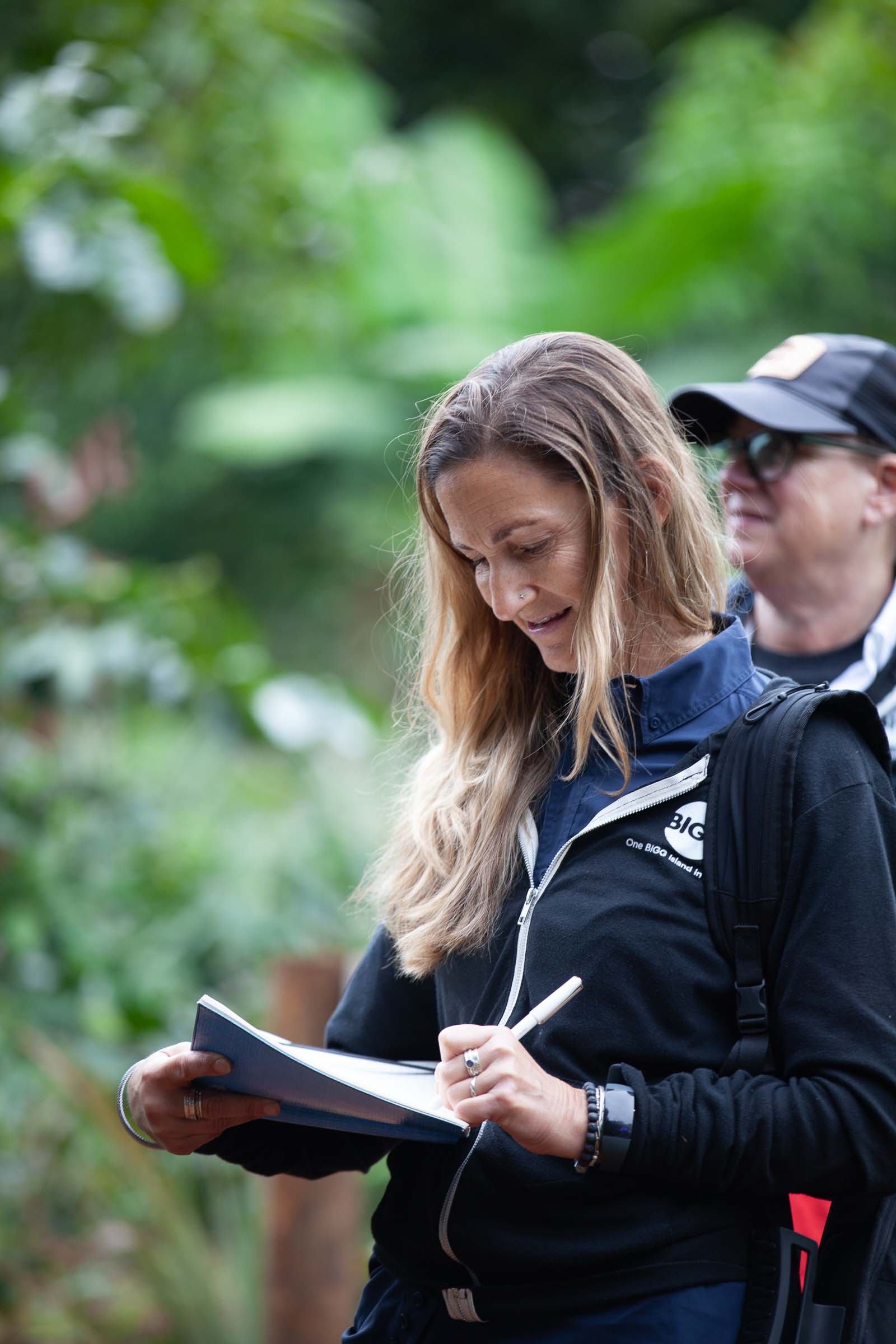
Minister Allie with one of her coffee seedlings in the nursery she built for her project.
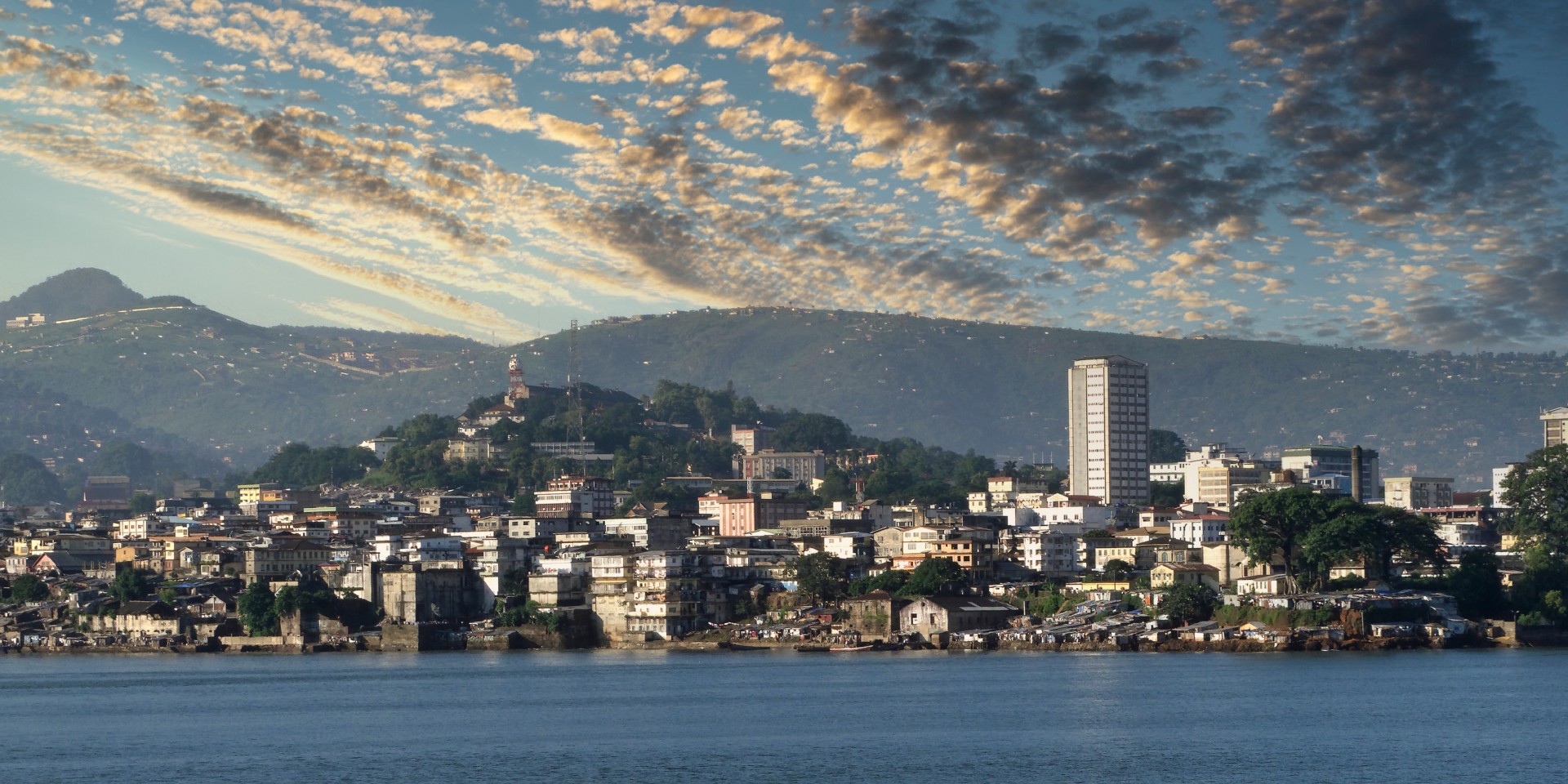
Walking back through Freetown
Returning to Freetown was emotional in ways that are difficult to describe. In college, the city was my classroom, my playground, and my window into a wider world. I walked the streets again on this trip, visited my former campus and dorm, and retraced paths that shaped my early adulthood. Every corner seemed to hold a memory: late-night strolls and conversation, the sounds and smells of a city with little power and running water, the feeling of being young and living in a place as foreign to my sense and sensibilities as anywhere on the planet. My memories are full bodied, romantic, and real.
But Freetown today is not the Freetown I remember. Sierra Leone endured a brutal civil war from 1991 to the early 2000s, one of the bloodiest in Africa, which left more than 50,000 people dead and displaced roughly half the population. The scars of that conflict are visible. Overpopulation in Freetown is overwhelming; the city is bursting at the seams. Rivers that once flowed from the mountains are now dried up and choked off. Buildings I remember are now hidden behind an unbroken line of tents and shanties that crowd the streets. Traffic and congestion are dangerous.
The beaches that once felt like open, airy spaces of calm are now buried under trash. You can hardly walk on the sand. The physical environment tells a story of a city and a country that have been battered by war, poverty, and rapid, unmanaged growth. Yet moving through that reality with Kadiatu at my side—a woman now charged with helping steer the country’s economic future—added a layer of hope to what might otherwise have felt purely tragic.

Social commentary and quiet hope
When I first lived in Sierra Leone in 1992, it was considered by the World Bank to be the least developed and poorest country in the world, and in many ways the decades since have been unkind. The civil war not only destroyed infrastructure and lives, it also disrupted rural economies, undermined agriculture, and drove people into the capital in search of safety and survival. Coffee, once a meaningful cash crop, never fully recovered, and many farmers turned to other crops or left their land altogether. Today, Sierra Leone is still working to rebuild its cocoa, coffee, and cashew sectors, with international partners and local leaders trying to make these crops competitive and sustainable again.
Against that backdrop, the environmental degradation in and around Freetown feels like both a symptom and a warning. Overcrowding, lack of infrastructure, deforestation, and poor waste management have taken a visible toll on rivers, hillsides, and beaches. Yet despite all this, what has not changed is the character of the people. Sierra Leoneans remain among the kindest, most warm-hearted, and resilient people anywhere. The generosity, humor, and warmth that drew me in as a college student are still there, perhaps deepened by all that they have survived.
That is part of why the work with Kadiatu, Bob, and Michelle feels so important. The goal is not simply to grow coffee; it is to rebuild a value chain in a way that respects farmers, protects the land, and strengthens communities. Projects like the ones emerging in Sierra Leone aim to create coffee systems that are climate resilient, economically stable, and rooted in agroforestry and environmental stewardship—priorities that are increasingly central to the country’s agricultural strategy.
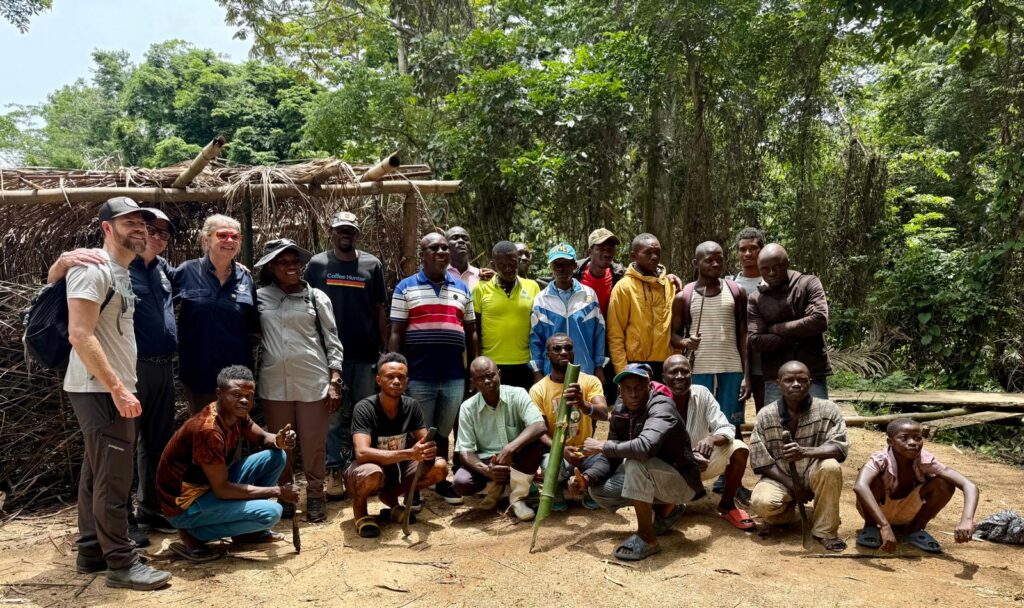
With the Minister Allie’s farm workers, and neighboring farmers at her project in the upcountry.
Gratitude and responsibility
Spending time in the rural community, in Freetown, with Bob, Michelle, and Kadiatu reminded me that their work is about much more than business/entrepreneurship as has been defined traditionally. It is about defining the new way business/entrepreneurship will be done in the future. It is about respect and responsibility; to past, present, and future relationships, to communities around the world that haven’t been given a fair shake, to farmers who grow the food stuffs that fuel our gluttony here in America, to this One BIGG Island in Space we all have the honor of sharing and traveling upon together for a few short years. Bob and Michelle’s commitment through OBIIS is not theoretical. The hard work they are doing is an example of a new and different way for American companies, and companies worldwide to do business. I am honored to play a part in what they are doing and to support them in their pursuit of this honorable quest.
The synergy between Kadiatu’s coffee farm and the efforts of Bob and Michelle created a palpable sense of momentum. Here, collaboration is not lip service, but a living ethic. By working with, not merely for, the community, new hope is taking root. When we shared evening meals with farmers and their families, I glimpsed what true partnership looks like: mutual respect, listening, and shared resolve.
This trip left me feeling honored, humbled, and energized. Honored to reconnect with Kadiatu and see the incredible leader she has become. Humbled by the resilience of the Sierra Leonean people and the scale of the challenges they face. Energized by the knowledge that, through the work Bob and Michelle are leading, I get to play a small part in an effort that is not only changing how coffee is bought and sold, but also, in so many ways, changing the world.