
Good News from Gorongosa National Park
By Mike Shaw
Some good news is easy to understand in just a few words: The doctor said I don’t need surgery. We finally paid off our mortgage. They had a healthy baby girl. Or perhaps the best good news of all: I love you!
Other good news, however, is not quite so simple. To fully savor and appreciate it, you sometimes need to understand a series of related events, processes, and realities.
I recently traveled with the One BIGG Island in Space team to Gorongosa National Park in Mozambique to visit coffee farms and learn more about its partnership with the park. After serving in the Peace Corps from 1990–1992 in another former Portuguese colony, Guinea-Bissau, I finally had the opportunity to return to Africa. I loved every minute of it. Along the way, I also learned more about an absolutely fascinating story that deserves to be told.
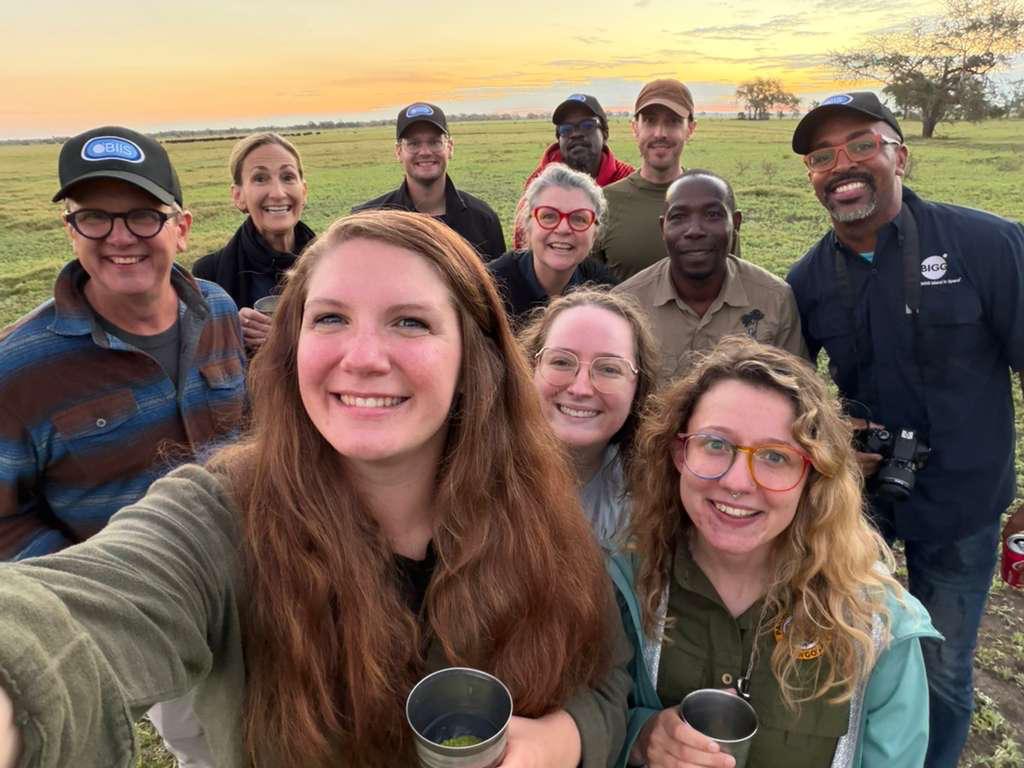
My traveling companions: in front, Brittney Kloosterhouse; second row, Mike Shaw, Erin Mortimer, Anna Wincek; third row, Michelle Shaw, Michelle Fish, Silver (our guide), Rod Carpenter; fourth row, Michael Wood, Karemba Warioba, and Josh Kildea
The Short Version
For anyone who may not have the time or inclination to read an entire blog about said good news, here is the simple version of an extraordinary story unfolding in and around Gorongosa National Park:
- After decades of war and the near-total devastation of its wildlife, Gorongosa National Park is experiencing one of the most remarkable ecological recoveries in the world.
- One important part of that recovery has involved persuading people living on Mount Gorongosa to grow coffee beneath native shade trees rather than relying exclusively on more destructive forms of agriculture.
- Through its innovative Farm-Direct initiative, BIGGBY COFFEE is purchasing coffee from Gorongosa at an equitable price—supporting local farmers, encouraging reforestation of the mountain, and bringing Gorongosa-grown coffee into BIGGBY COFFEE’s French Roast blend.
First, the Tragic History
Mozambique suffered heavily under centuries of Portuguese colonialism, a ten-year struggle for independence that ended in 1974, and then a particularly brutal civil war that began soon after independence and lasted until 1992.
Approximately one million Mozambicans died during the civil war, and the ecological consequences were devastating as well. By the end of the conflict, an estimated 80 to 90 percent of the large wildlife in Gorongosa National Park had been killed. Animals were slaughtered for bush meat to feed soldiers and civilians forced by the chaos of war to live off the land. Elephants were also killed for ivory, which could be sold to help finance the conflict. Because the park lay near headquarters used by RENAMO forces, it became a frequent battleground. By one account, Gorongosa had been reduced to little more than “mosquitoes and landmines.”
In Harvard biologist E.O. Wilson’s book A Window on Eternity: A Biologist’s Walk Through Gorongosa National Park, he describes the collapse in stark numerical terms:
“Between 1972 and 2001, the number of Cape buffaloes counted in the park fell from 13,000 to just 15; the wildebeest fell from 6,400 to 1; hippos went from 3,500 to 44; and instead of 3,300 zebras there were 12. Elephant herds and lion prides were reduced by 80 to 90 percent. Of hyenas, black and white rhinos, and wild dogs, there were none.”
As those numbers make painfully clear, the park was teetering on the edge of ecological collapse.
The Mountain That Makes the Park Possible
At the same time, another threat was developing.
As the human population grew, local farmers increasingly relied on slash-and-burn agriculture farther and farther up the then-unprotected slopes of Mount Gorongosa. That threatened not only the long-term fertility of individual plots, but also the delicate hydrological system that makes the extraordinary biodiversity of the park possible.
The process works something like this:
- Moisture-laden winds from the Indian Ocean sweep westward across Mozambique and rise over Mount Gorongosa.
- The mountain wrings moisture from the air through orographic uplift.
- An intact rainforest captures and holds much of that rainfall.
- Healthy soils absorb and filter the water.
- Rivers carry it down the mountain into Mozambique’s Rift Valley.
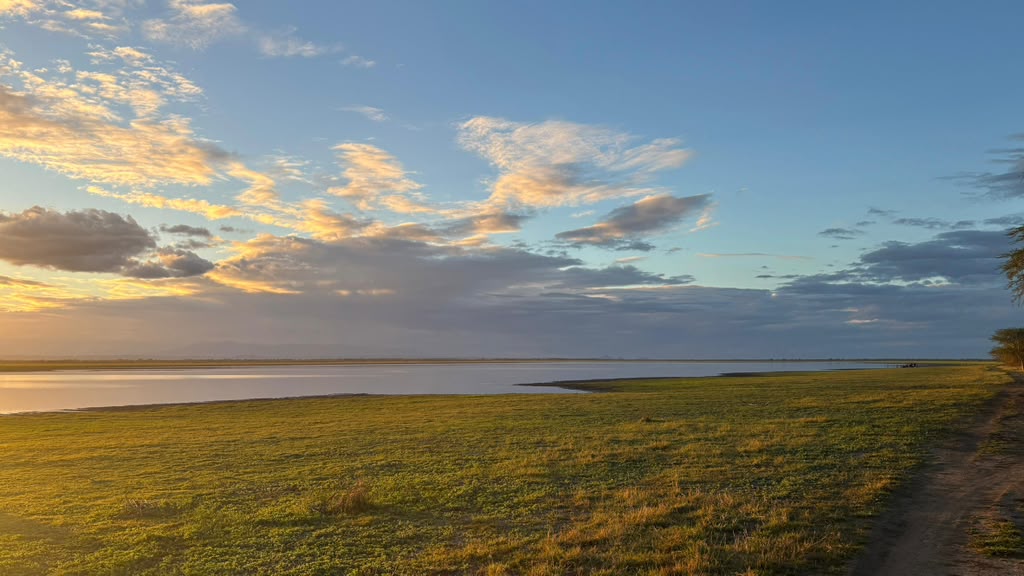
- Lake Urema and its surrounding floodplain then sustain the park’s remarkable concentration of wildlife.
When the ecosystem falls out of balance, however, each part of that chain can be compromised. Forest loss increases runoff and erosion, reduces the ability of soils to retain water, and weakens the watershed that ultimately supports both people and wildlife below.
Why Should We Care?
So why should anyone in Michigan—or anywhere else—care about a national park in a country so far away, along with its people, wildlife, ecosystems, and agricultural practices?
Again, E.O. Wilson offers an answer:
“Wildlands maintain the stability of the physical world. They are our birthplace. Our civilizations were built from them. Our food, most of our dwellings and vehicles were originally derived from them. Our gods once lived in them. Nature is the birthright of everyone on Earth. The millions of species we have allowed to survive are our phylogenetic kin. Their long-term history is our long-term history. Despite all of our fantasies and pretensions, we always have been and will remain a biological species tied to this particular biological world.”
In the 21st century, it is remarkably easy to lose sight of that last sentence. In the end, the more we remember where we came from, the more clearly we can understand that the fate of the ecosystems around us is inseparable from our own.
Wilson offers another perspective that is equally worth remembering: “Looked at from a purely zoological viewpoint, the people of the mountain and all humans in the world are as much part of the indigenous fauna of this continent as its lions, elephants, and antelopes.”
Now that is taking the long view of history!
How the BIGGBY COFFEE–Gorongosa Partnership Began
The relationship between One BIGG Island in Space and Gorongosa National Park began almost by chance.
Bob and Michelle Fish saw a 60 Minutes story about the restoration of Gorongosa and its efforts to use coffee farming to improve the lives of people living around the park. Intrigued, Bob sent an unsolicited email to the Gorongosa Project. That cold email eventually led to a Zoom conversation with Sofia Molina of Gorongosa Products.
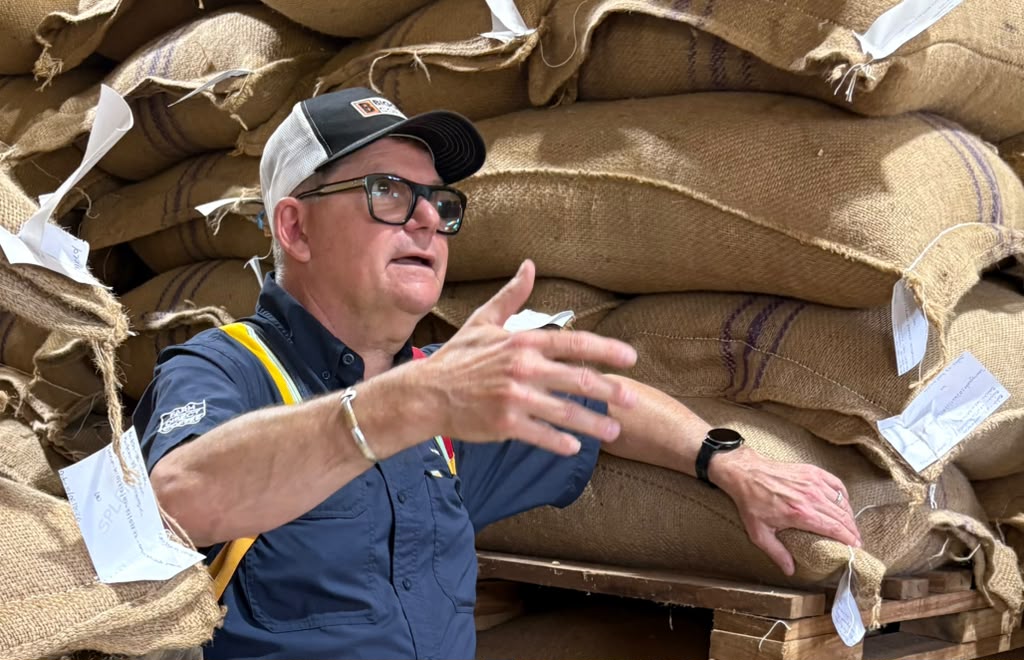
They learned that Gorongosa had helped roughly a thousand small farmers begin growing coffee on Mount Gorongosa but faced a critical challenge: finding a dependable market willing to pay a sustainable price for their crop.
Seeing a natural connection with BIGGBY COFFEE’s Farm Direct philosophy, Bob and Michelle organized an evaluation trip to Mozambique in July 2023. The team included Zambian coffee farmer Wana Chipoya, who developed a valuable farmer-to-farmer relationship with Gorongosa agronomist Julius. They shared techniques for dealing with pests and other challenges common to coffee farming.
What began with a television program and a cold email gradually grew through repeated visits, due diligence, and the complicated work of figuring out how BIGGBY COFFEE could purchase coffee produced by hundreds of smallholder farmers.
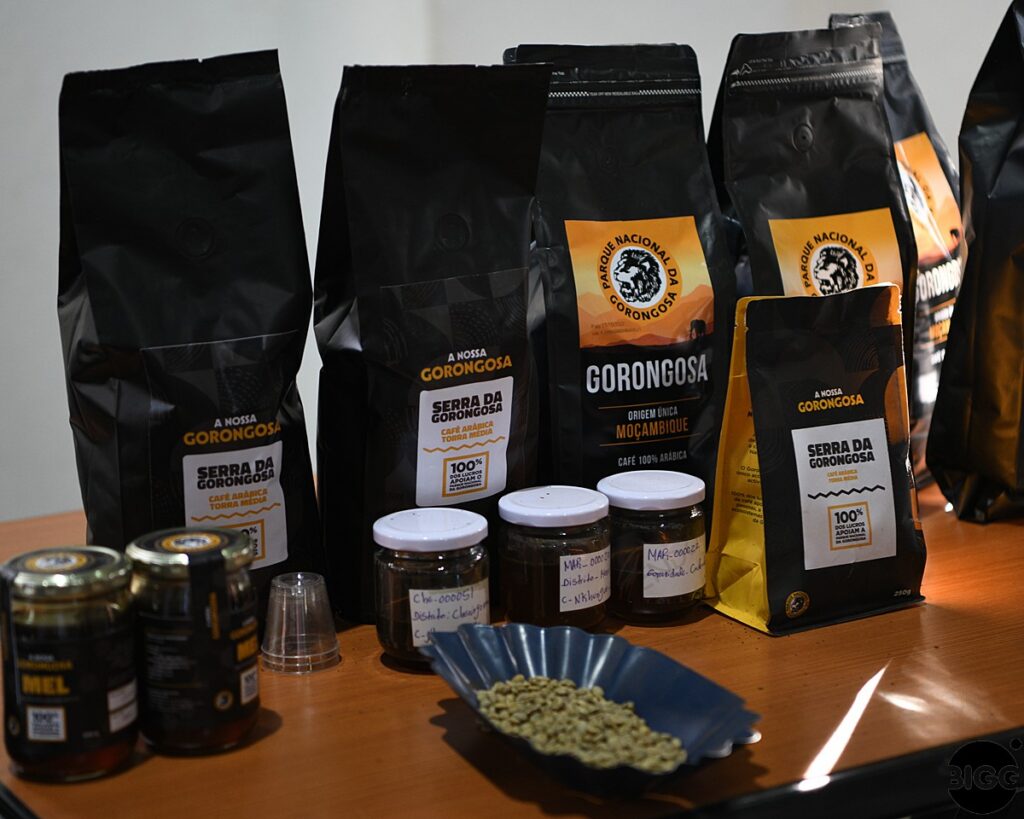
Over the next several years, that initial connection developed into a genuine partnership—creating a growing market for Gorongosa coffee while bringing Gorongosa and One BIGG Island in Space together in their shared work in Mozambique.
Coffee as a Tool for Restoration
Coffee has become an ingenious tool for connecting the well-being of the people living around Gorongosa with the restoration of the park itself.
Coffee provides smallholder farmers with a valuable source of income, while the crop’s need for shade gives farmers an economic incentive to plant and protect native trees on the slopes of Mount Gorongosa. Those trees help restore the mountain’s forest, capture rainfall, protect soils from erosion, and strengthen the watershed that feeds the rivers flowing into Lake Urema and the park below.
At the same time, revenue generated by coffee helps support schools, health programs, and other community-development efforts.
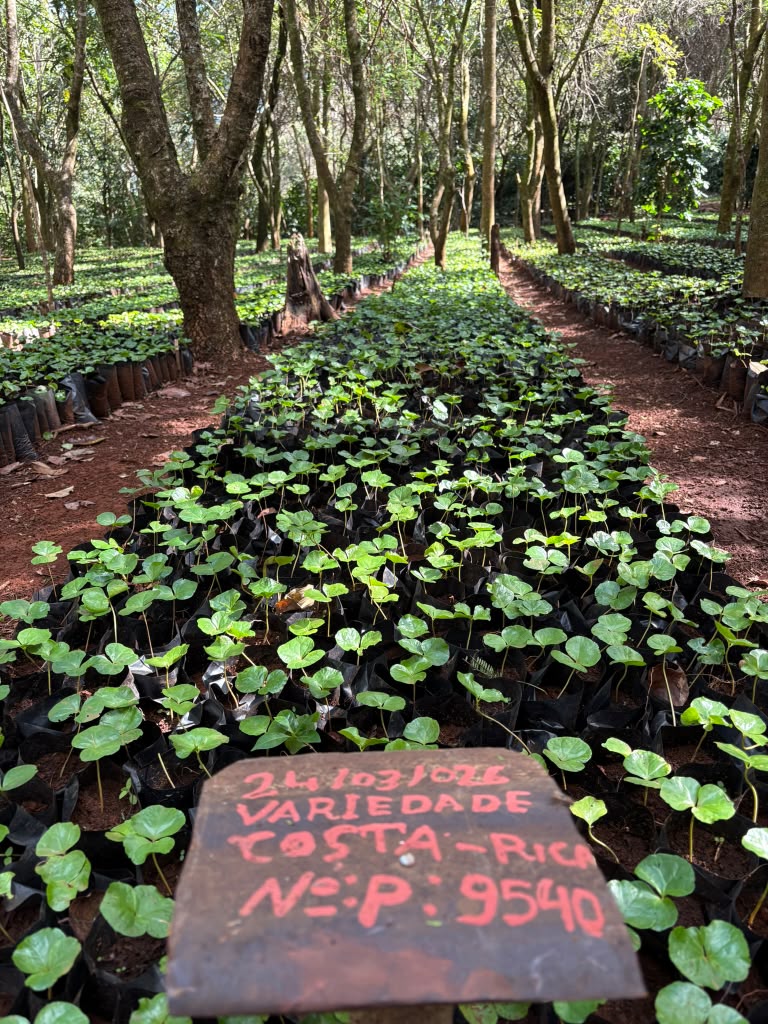
The result is a powerful cycle:
Better livelihoods → more incentive to plant trees → reforestation → a healthier watershed → stronger wildlife habitat → a healthier park → more opportunities for surrounding communities
In other words, the restoration of Gorongosa is not simply about saving wildlife. It is about finding ways for people and wildlife to thrive together.
A Remarkable Wildlife Comeback
And finally, an update on the park itself.
Over the past 25 years, Gorongosa National Park, under the leadership of American philanthropist Greg Carr and an extraordinary Mozambican conservation team, has undergone one of the most remarkable wildlife recoveries in Africa.
From the near-collapse of many of its iconic large mammals around the turn of the century, the park has rebounded dramatically. By 2024 and 2025, surveys counted nearly 2,000 buffalo, more than 1,500 wildebeest, over 1,100 hippos, 873 elephants, 256 lions, 21 hyenas, and nearly 250 African wild dogs.
Even more striking is the resurgence of other herbivores: more than 65,000 waterbuck, 16,000 impala, 4,600 warthogs, 4,100 nyala, and 4,000 reedbuck.
Zebras remain far below their historic numbers, and rhinos have not yet returned, but the broader recovery is extraordinary. In 2024, researchers counted more than 110,000 large animals in the surveyed portion of the park—the highest total ever recorded.
Gorongosa today is not simply a recreation of the ecosystem that existed before the civil war. It is a recovering, evolving landscape in which some species have rebounded spectacularly, others remain scarce, and the balance of wildlife continues to shift as the ecosystem rebuilds itself.
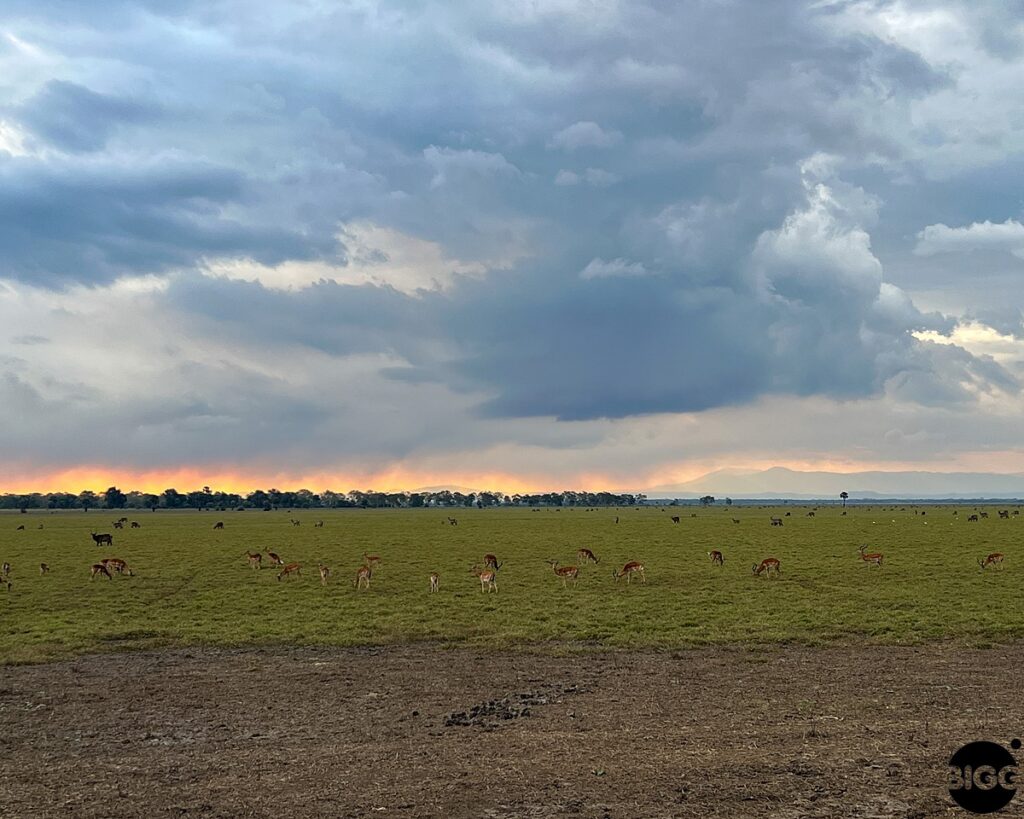
Gorongosa National Park today.
Good News Worth Understanding
In the end, it was truly a pleasure to witness one small moment in this incredible good-news story at Gorongosa National Park.
Although I religiously begin each day with two cups of coffee, before this trip I had never seen a coffee plant, met a coffee farmer, watched coffee beans being harvested and transported down a mountain, or had a conversation about getting a shipping container through customs from Mozambique into South Africa and then onto a cargo ship bound for the United States.
One of my biggest takeaways is simply that I have a lot more appreciation for everything that has to happen before I can enjoy those two cups of coffee every morning.
And if I can support a product that has been responsibly sourced while also contributing to a much larger good-news story involving farmers, forests, rivers, wildlife, schools, communities, and the restoration of one of Africa’s great ecosystems?
Count me in.