Losing Hope (Part 1)
By Michelle Fish
In November of 2024, Bob and I were enjoying the last croissants we were likely to get for a while, hanging out in the Air France Lounge on our way home from Paris. Man cannot live on croissants alone, however, so Bob went to the buffet to get some eggs and sausage. And when he came back, he looked at me and said “I don’t want you to freak out, but the Cookes are here.”
He had, almost literally, run into Kim Cooke on his way back from the buffet. They said a few words, and Kim introduced Bob to his wife, Kathy. When she heard his name, Bob said she visibly blanched.
We were all on the same flight back to Detroit. Not only that, Kathy Flowers was on the same plane, too, somewhere back in coach. They were returning from a visit to Living Hope in Ndola, Zambia. What are the odds.
When we got on the plane, I could see that the Cookes were several rows behind me, but in clear eyesight. Kim walked by my seat several times over the course of the flight, on his way to the restroom. But he didn’t once look at me or say a word. It was all very awkward. Almost comical, really, if it wasn’t so sad.
But this is the end of the story. I need to take you back to 2018, to the very beginning.
Meeting Hope
2018, when everything was business as usual at BIGGBY COFFEE. Farm-Direct was not even a twinkle in our eyes.
In October, BIGGBY COFFEE’S then Marketing Director, Jamie Stepanian Bennet, asked Bob if he would meet with members of the Oak Pointe Church in Novi, Michigan. They had started an orphanage in Ndola, Zamba with a unique twist. They had also started a coffee farm.
The idea was that growing and exporting coffee would both create jobs for the local community and generate revenue to make the orphanage less donor-dependent. And it was working, sort of.
They were growing about 25,000 pounds of coffee a year. And they were providing good, year-round coffee farm jobs to around 20 people. And that didn’t include all the local people that worked at the orphanage. And, of course, the 36 children that they had taken out of crushing poverty and neglect.
But they were having trouble selling enough coffee, one pound at a time, through their network of churches.
Bob was intrigued, and so he found himself in a room with Kim Cooke, Lee Davis and Jamie Flowers, the State-side principles of the Living Hope International project. Lee, together with his wife Trina, was the visionary founder of the project. Kim was passionate about the orphanage and a “business maven.” And Jamie brought a deep love of coffee and curiosity about its production.

Do you want to go to Zambia?
Although it might sound like a lot of coffee, 25,000 pounds was literally a drop in the bucket compared to the 1.8 or so million pounds that BIGGBY COFFEE was buying in 2018. We were buying it the same way that most people in the coffee business do it. We were using brokers, through our Roaster Partner, Paramount Coffee. Which, of course, meant that we knew absolutely nothing about the people that grew our coffee, anywhere in the world.
Bob liked what he heard about Living Hope’s approach to the mission: By Zambians, for Zambians, with American Support.
So, the opportunity to see the impact that growing coffee was having in a community faced with so many challenges really sparked his curiosity.
He came home and asked me if I wanted to go to Zambia.
We didn’t know it yet, but that was the beginning of our Farm-Direct mission.
Davies Chipoya
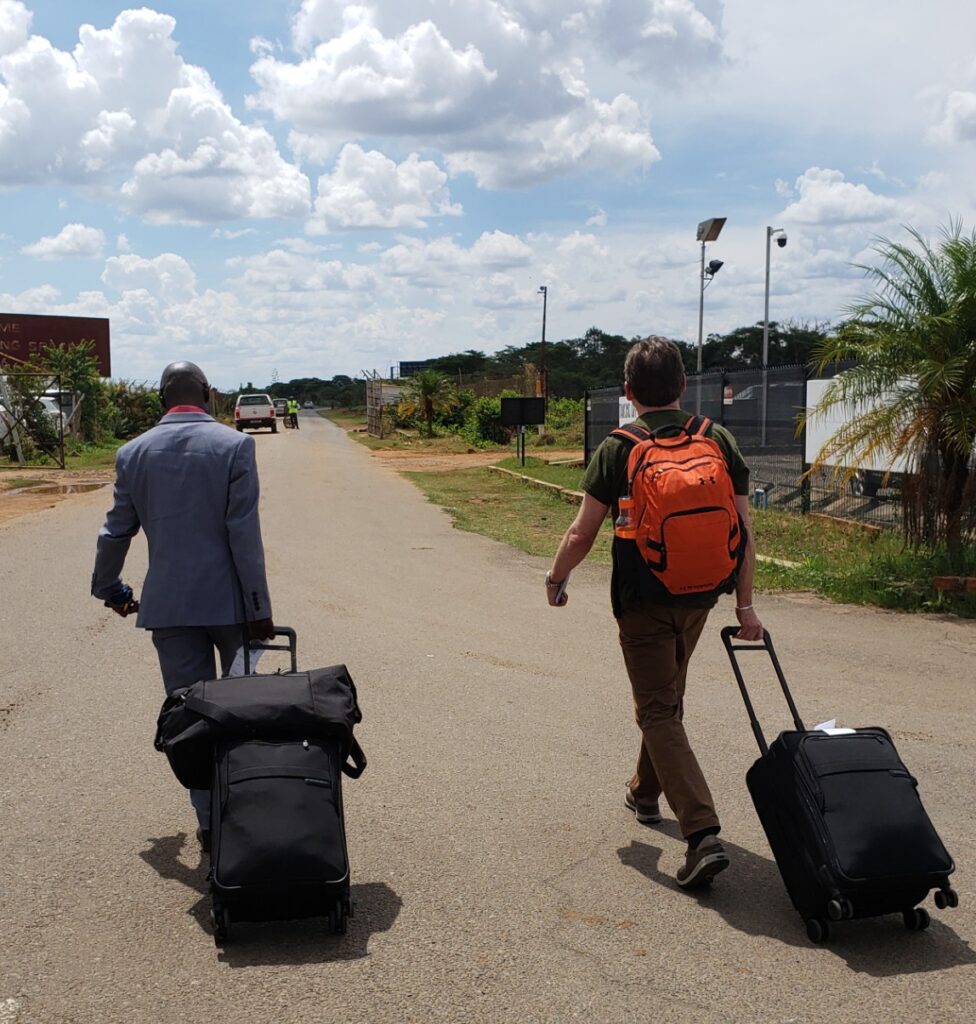
Early in December of 2018, after a 24+ hour journey, we landed at the Ndola airport and were met by Davies Chipoya, the Living Hope Executive Director. He scooped us up into his late model Land Cruiser and drove us on the red dirt roads to the orphanage to meet Lee Davis, Kim Cooke, and their friend, Leo Fox. We timed our visit with theirs so they could show us what they were up to.
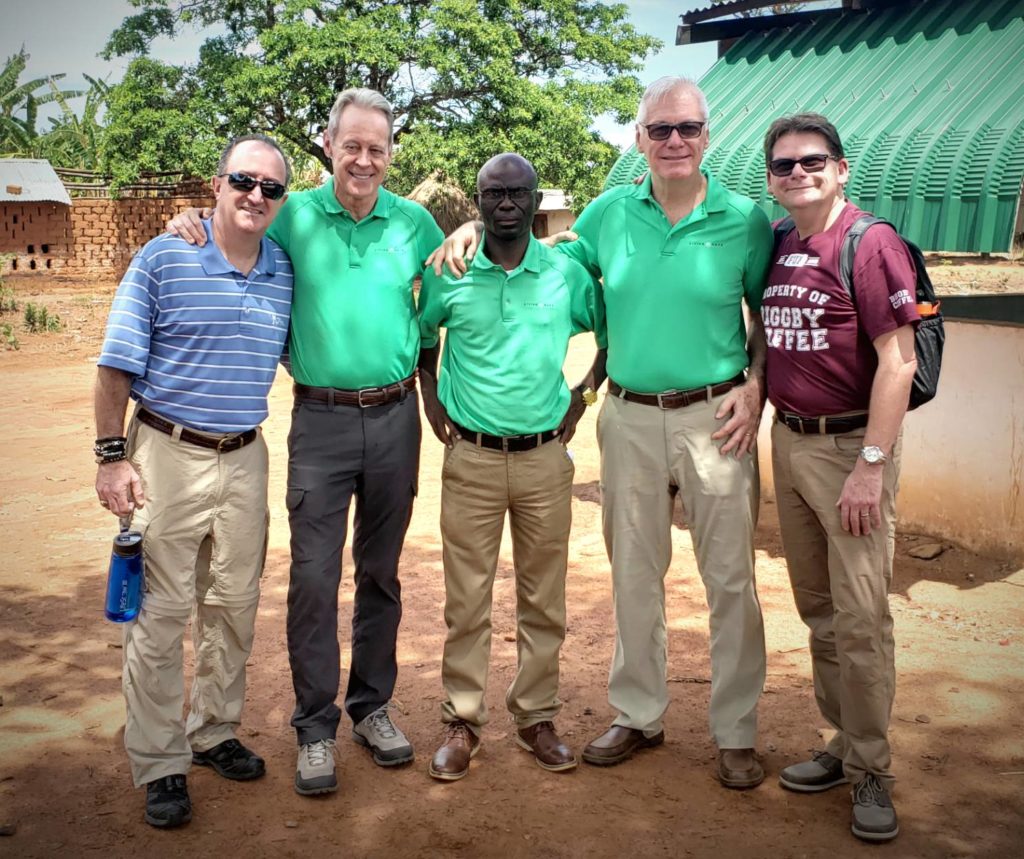
From L-R, Leo Fox, Kim Cooke, Davies Chipoya, Lee Davis and Bob Fish, on the ground in Zambia in 2018.
But Davies was the main attraction. He was the nexus of the whole “by Zambians, for Zambians” mantra. And, as we understood it from Kim and Lee, there would have been no Living Hope Orphanage without him.
He is a vet by training. In the 90s, he worked for the national vet service, traveling around the Western and Copper Belt regions of Zambia to care for the large animals that work in the mining industry. That was his day job. His Christian faith was (and is) central to his life. And at night and on the weekends, you would find him crisscrossing his part of Zambia to share his love for Jesus Christ and he did a lot of Jesus Film Crusades.
That’s how he first met Lee and Trina Davis. They had come to Ndola in 2008 with the dream of building an orphanage to save vulnerable children in the rural communities. They asked Davies to be their Executive Director for Living Hope International, and a powerhouse partnership was born.
Finding Hope
I could describe that first three-day visit as a whirlwind crossed with a family reunion crossed with a fever dream, but even that doesn’t fully capture the impact that it had on us.
What was happening on the ground in Ndola was truly exceptional. We started our visit at the orphanage in the Insaka, which is a central circular hut with open sides where a large group can gather, share meals, and talk.

In the Insaka
We were introduced to Davies’ wife, Josephine, and several of the house mothers. Then we met the kids, and they sang a song of welcome to us. We were bone tired, strung out from the travel, hot, dusty and far from home. But I felt that song in my soul.
The Orphanage
They had 36 children in their care, a mixture of boys and girls, ranging in age from around six to sixteen. Some of them were orphans whose parents had died from AIDS, or Malaria, or alcoholism. These are all common causes of death in the rural areas that Davies referred to as the bush.
Some of them might have a living parent who was in no fit condition to care for the child (see above). Some of them had been victims of abuse. Many were sick with malaria. All of them were traumatized, malnourished, and terrified when they arrived.
They all came to the orphanage the same way. Davies got a call from a pastor, or some other community member, about a vulnerable child. And then he would go out, talk to the caregivers, and arrange to bring the child into the orphanage.
Lee explained to us that it takes a lot of time and love to start to unravel the trauma these young children had experienced. They came in shell-shocked and withdrawn. Some might even come from different tribes and have different native languages.
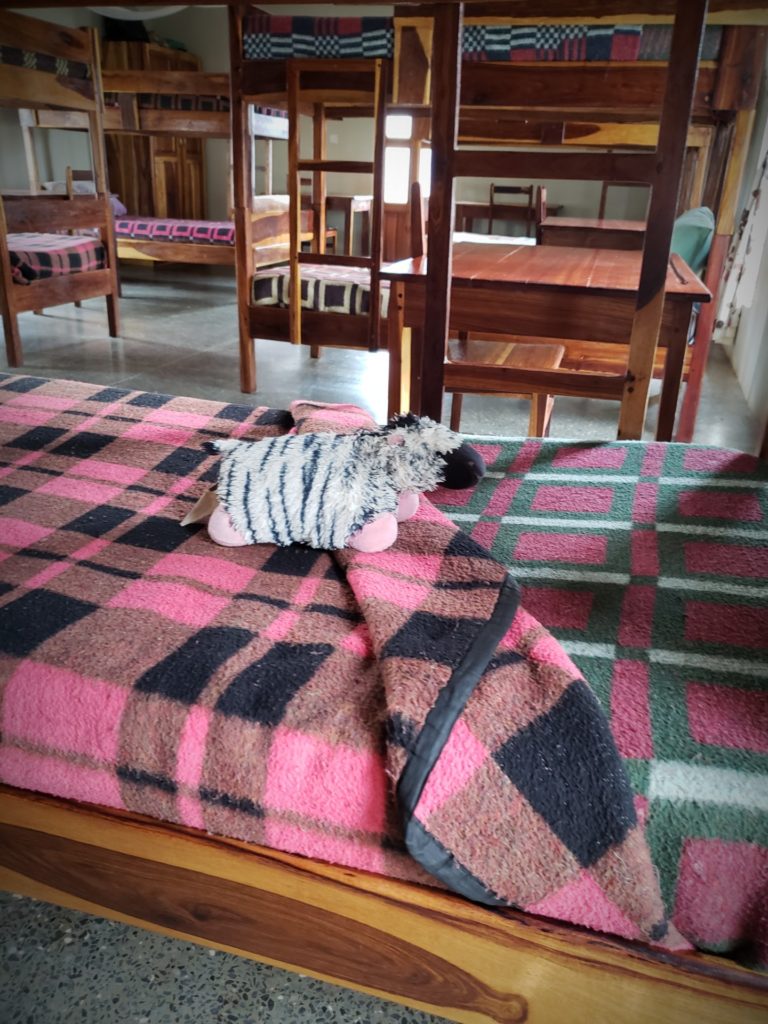
At the orphanage, though, they were equal, and equally loved. And their cultural identity as members of multiple tribes was honored. They lived together, in groups of eight, each with a house mother, who was with them full-time. And until they graduated high school, that pod of eight became their new micro family structure in the context of the larger community family bof the orphanage.
Structure
Speaking of structure, there was plenty of it. Davies and his wife Josephine ran a tight ship. But that was, in their view, what these kids needed. A pathway to understanding and moving into their rightful place in the world, with love, discipline, and expectations of them that they were given the tools to fulfil.
The kids got three nutritious meals a day, went to a good Zambian school, were steeped in their national heritage. They had chores, studied the bible, learned to cook and clean, and the older kids helped take care of the younger kids. The intent was to raise them through high school, and then get them placed in university or in vocational training.
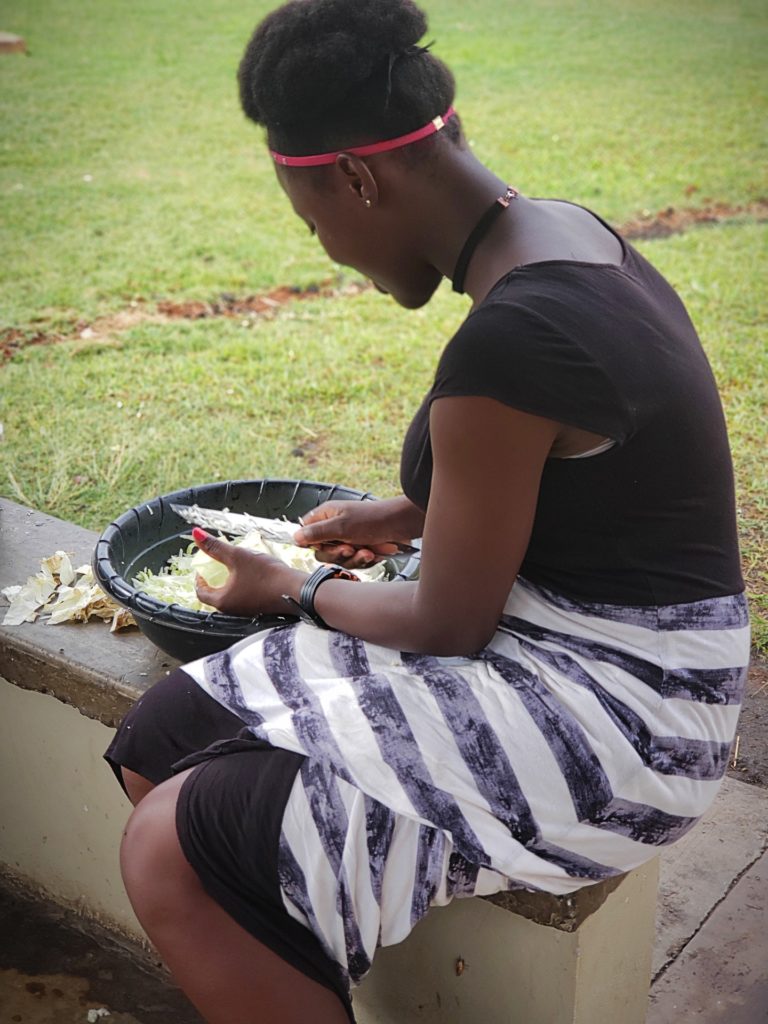
The ultimate goal was to grow a healthy, loving generation of leaders with the skills to transform their community. Because real change in Zambia can only come from its own people.
And coffee was going to help them do it. It was a powerful idea.
The Three Amigos
It was eminently clear to us that Davies was the man in charge. By Zambians, for Zambians, with American support. That seemed to track with what we were seeing on the ground.
Whenever we asked Lee or Kim a question, they would unfailingly tell us that we had to ask Davies. They referred to each other as brother, and there was much laughing, joking, and teasing among them, and the ease that comes from deep friendship.
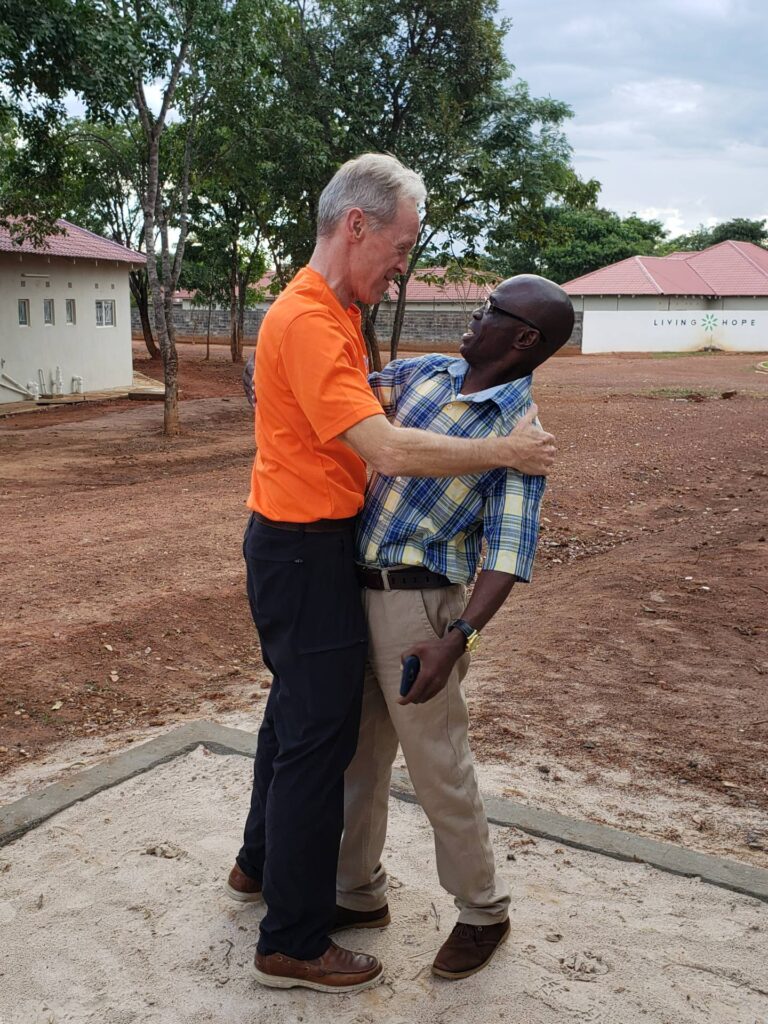
Kim and Davies clowning around at the orphanage.
And I have to tell you, Kim, Lee and Davies were really fun guys to hang around. On that trip, they all seemed deeply committed to the changes on the ground that the orphanage was making possible in the community. And they seemed equally committed to the vision, and to each other.
It was Davies, though, who had the ultimate call on how things ran, both at the orphanage, and at the coffee farm. In fact, Lee Davis told us a story of what happened that one time that they didn’t listen to him.
The orphanage needed a generator, because the electricity grid in Ndola is unreliable on a good day. Using all their American know-how and resources, they arranged to buy one that was near top of the line from Germany. Davies had suggested that maybe they should buy something more local. But the American team insisted. We know what’s best, they said.
Sure enough, shortly after it arrived, the generator stopped working. And there were no locally available parts, nor was there any technician with the training to fix it. And their very expensive piece of equipment sat idle, and they had to make a new plan.
Lee Davis told me that it had been an important object lesson in why they should always listen to Davies, because he understood the cultural and societal context in a way that they never could. Money and American know-how are fine. But if you really want to get something done, you need to work through a local.
The Zambian Way
So, you’re an American, and you want to start an orphanage in Zambia? Good luck buying land.
Before Davies was brought on as Executive Director, Lee, Trina and Kim were pretty sure that with tenacity and US dollars, they could seal a deal in no time. But every time they found a patch of suitable land for sale, they ran into a brick wall of red tape and bureaucracy that took months to peter out into a dead end.
That is because land ownership is a complicated process there. Before independence, before colonialism, the land that is now Zambia was governed by tribal chiefs representing their respective ethnic groups, going back generations. And they are still there.
How the power balance works between the democratically elected government and the royal succession of chiefs is hard to navigate or pierce as an outsider. But the royal Chiefs are the final arbiter of land ownership, and no deal goes through without their consent.
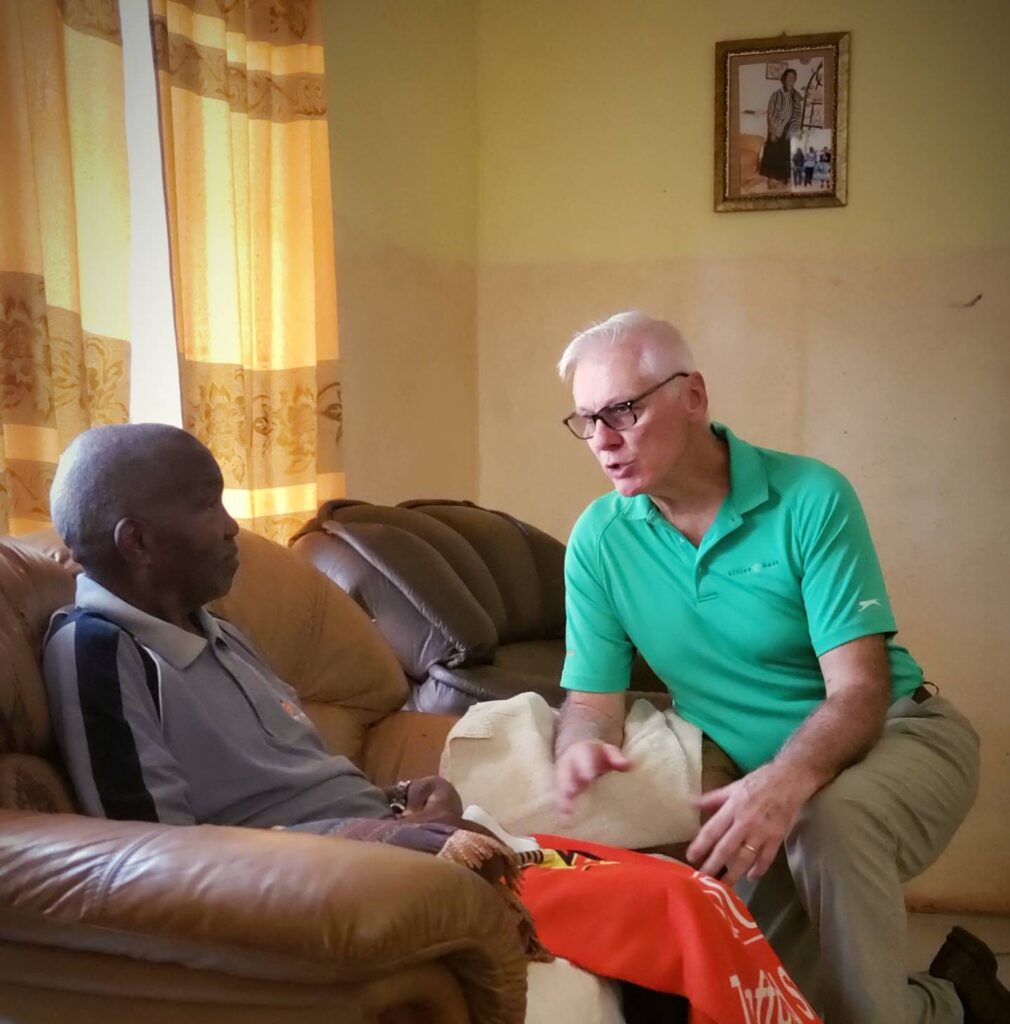
Lee Davis with Senior Chief Mushili
In Ndola, that meant that Chief Mushili, the Senior Chief of the Lamba tribe and one of the most respected Chiefs in the country, was the gateway to securing land. So, Davies went to the source.
The deal that he struck with the Chief in 2009 was remarkable. The Chief was deeply interested in only one thing: progress and improved living conditions for his people. He agreed to land acquisition by Living Hope International, but with conditions.
LHI had to promise that they would create well-paid jobs for the community, drill a bore hole that would provide potable water for the nearby villages, build a school and medical facilities that would ultimately be available to the people in the surrounding area, and house and care for the vulnerable children they would bring in.
In exchange, the Chief convinced three women, all of them widows living in desperate conditions as subsistence farmers, to donate their only valuable possession… land. In return, these women were to receive permanent employment. The Chief also granted LHI 10 hectares of the land directly in his control. That brought the total land for the orphanage and the coffee farm to 16 hectares. Not one dollar exchanged hands.
And LHI was in business.
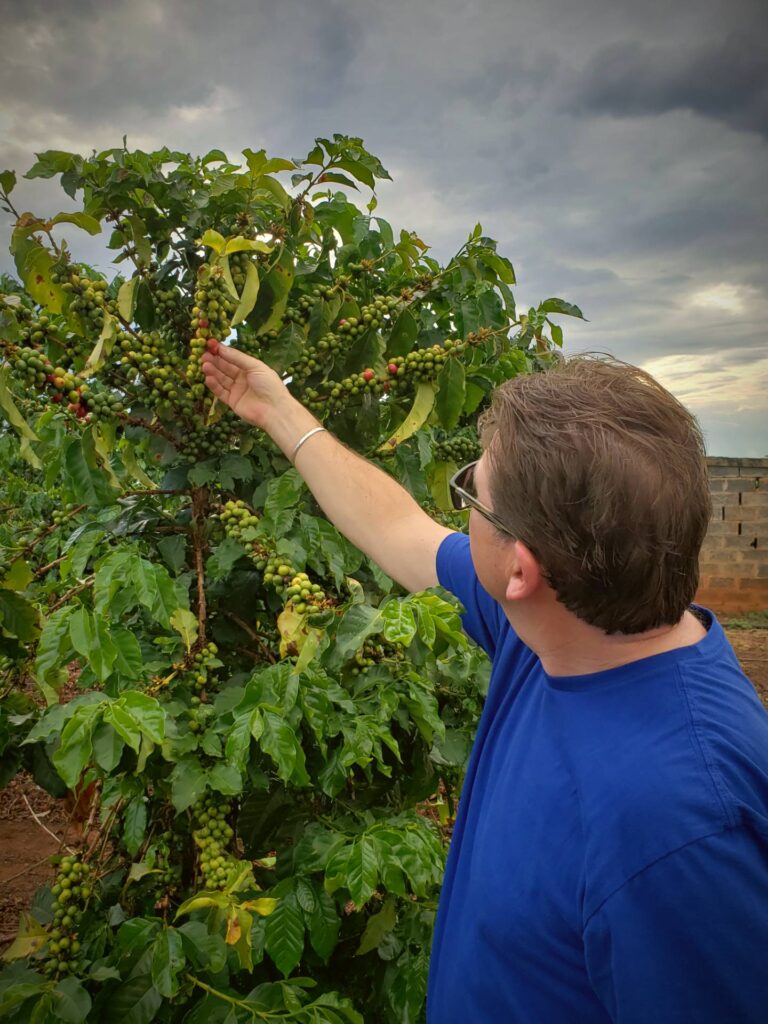
Bob checking out the coffee at Living Hope.
The Importance of Community
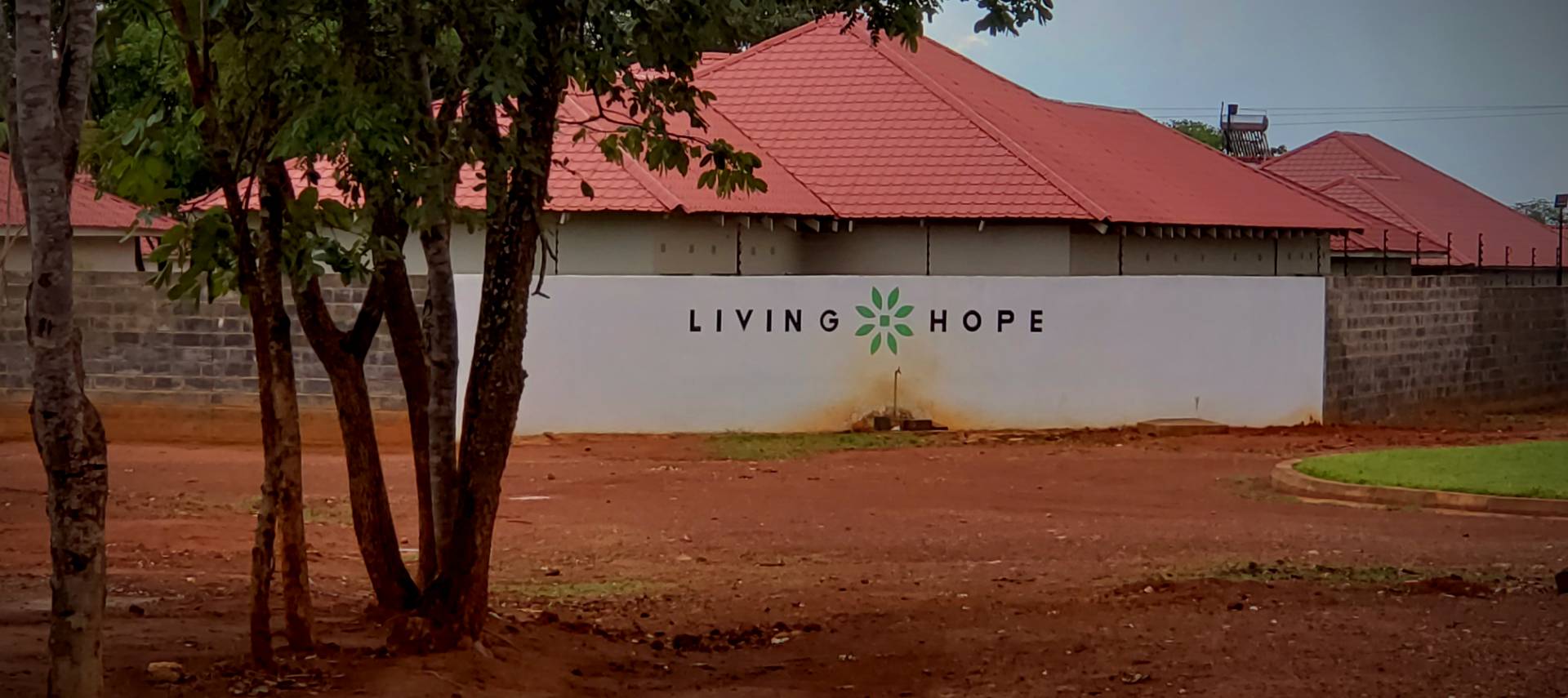
It was clear the American Team was very good at one thing: raising money to build buildings. It had taken eight years to build Living Hope into the functioning orphanage compound that we visited in 2018, and it was beautiful. There were dormitories, the insaka, a dance school, a playground, outdoor performance space, communal indoor and outdoor kitchens, the coffee farm, and more.
And they were working on plans to build a school, better coffee storage facilities, a wet mill for the coffee farm, and dormitory space to house more children. The place was thriving, and had a real feeling of community and joy.
Caring for vulnerable children was obviously at the core of the mission. But, as was made explicit in the deal they struck with Chief Mushili, it wasn’t done in a vacuum.
The Chief, Davies, and the LHI team understood that unless you supported the communities these children came from, you weren’t changing the fundamental conditions that produced a generation of vulnerable children in the first place.
The people need good jobs, access to services and potable water, information, education, and a reason to hope.
But first and foremost, jobs. From what we could see on our visit, the LHI Team was living up to their side of the arrangement.
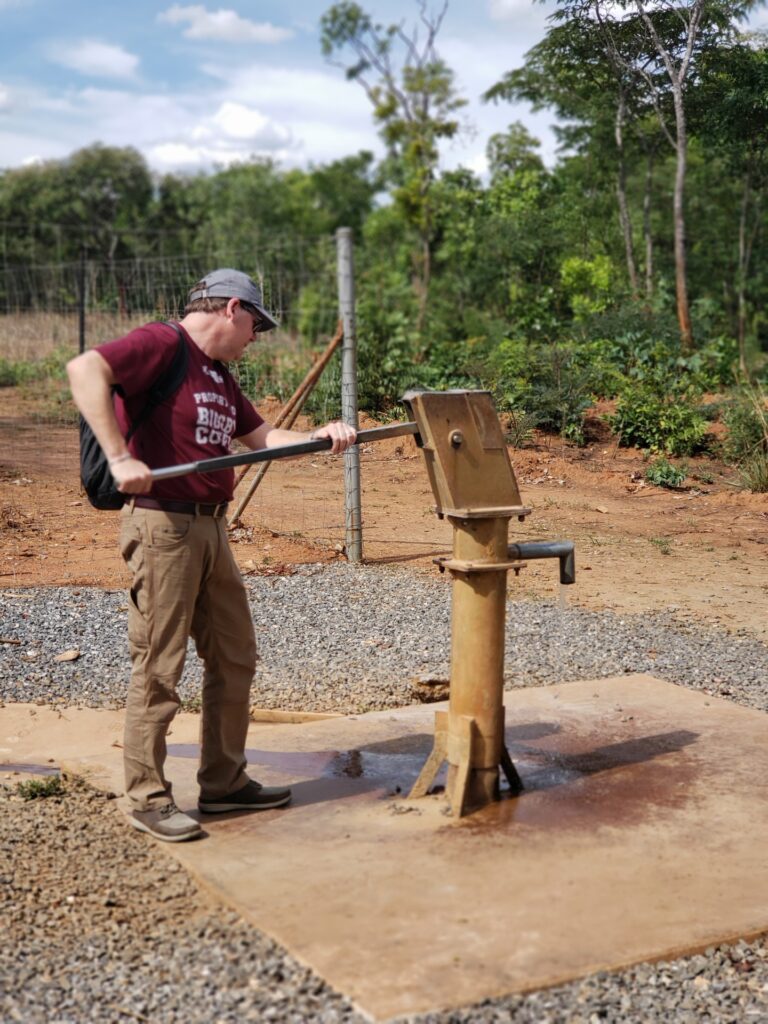
The bore hole LHI drilled for the community to use.
What They Had Built
There were jobs at the orphanage and on the coffee farm, providing meaningful, dignified work for more than 30 people in a place where those opportunities just didn’t exist. And they were proudly paying above the national minimum wage, a proscribed amount set by the government that was so low that it couldn’t reliably keep people housed and fed, let alone support a family.
And there was more. One of the first things they did was to drill a bore hole that pumped potable water from deep in the ground available, for free, to all. Before the bore hole, people walked up to two or three miles each way to carry their drinking water home from a contaminated river that often made them sick. Now, they didn’t have to.
And LHI built a soccer field that was both for the kids at the orphanage and for the people in the surrounding villages. We had a chance to watch a community match on that first visit, and it was a thrilling experience. In a place where survival is often a full-time job, the opportunity to come together to just play a game and celebrate was a revelation. Truly, it was hope in the making.
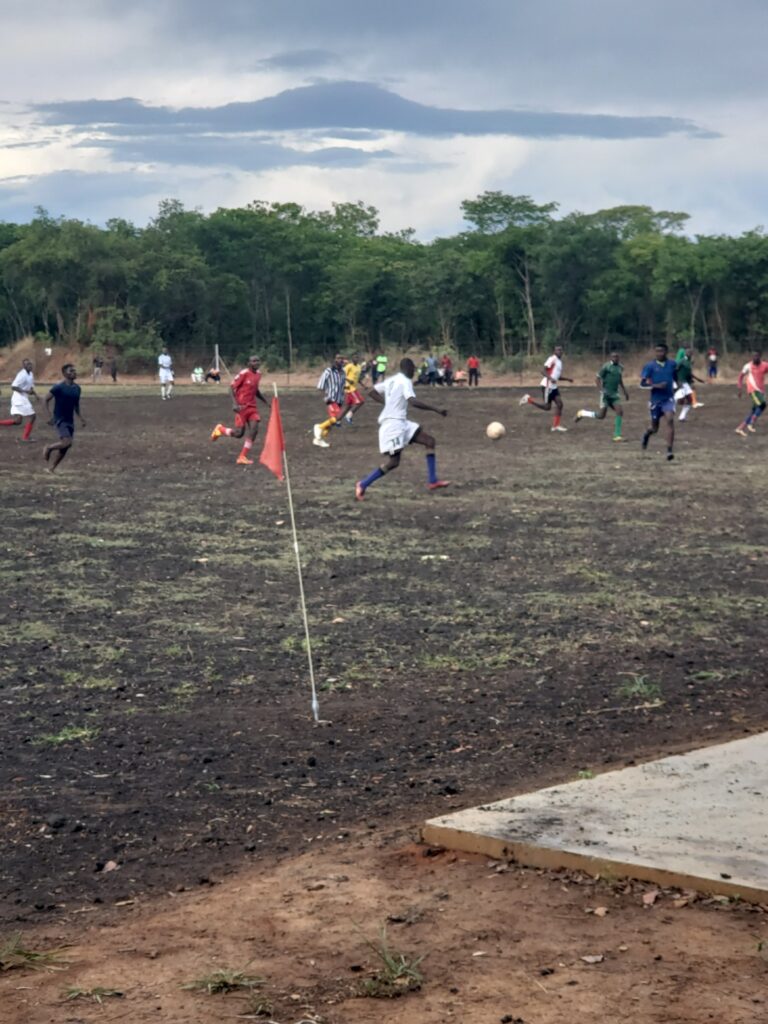
The community coming together to play soccer on our first visit.
And they were actively working on their plans to build a school that was going to open in the next couple of years. Classes would be taught in English and would offer a first-rate curriculum.
The kids at the orphanage that were already in middle and high school would finish out their educations in the Zambian school in which they were enrolled. After all, stability for these children was key to their emotional well-being.
But starting with the lower grades, they would transition those kids to the orphanage school. And open it up to the surrounding communities. As they had promised Chief Mishili it would, this school had the capacity to change futures. Not just for the kids in the orphanage itself, but for hundreds of children from the surrounding communities.
By Zambians, For Zambians
As you’ve probably already gathered, Bob and I were blown away by what we found on that first visit. Of course, we were impressed by the work they were doing at the orphanage. But more than that, it was their approach to community and sustainability that inspired us.
The idea of by Zambians, for Zambians, with American support, really resonated. As people, Bob and I are practically allergic to the myth that Americans know better, and are the only ones bestowed by their creator with the answer to the world’s problems.
Growing up, we both lived in and visited countries all over the world. And we had seen, personally, that no matter where you are, and no matter how challenging the circumstances, there are people on the ground who know what the solutions to their problems should be.
It’s not that there isn’t room for outside guidance and support as you develop solutions. But it is true that the people on the ground know best how to translate those solutions into real, lasting impact within the context of their own culture, their own experiences, and their own values. By Zambians, for Zambians, with American Support.
The orphanage, the coffee farm, Davies and Chief Mishili were living proof that the formula was a powerful one.
Sustainability
Not only that, as Lee and Trina Davis told us, Living Hope was founded, as one of its core principles, to be at least in part self-sustaining through its coffee farm.
We believe that business, done right, is the world’s biggest engine for systemic change. If you create a value chain in which everyone can thrive, then you have created something that can last, relatively speaking, forever. It is self-propelling and empowering to everyone in the chain.
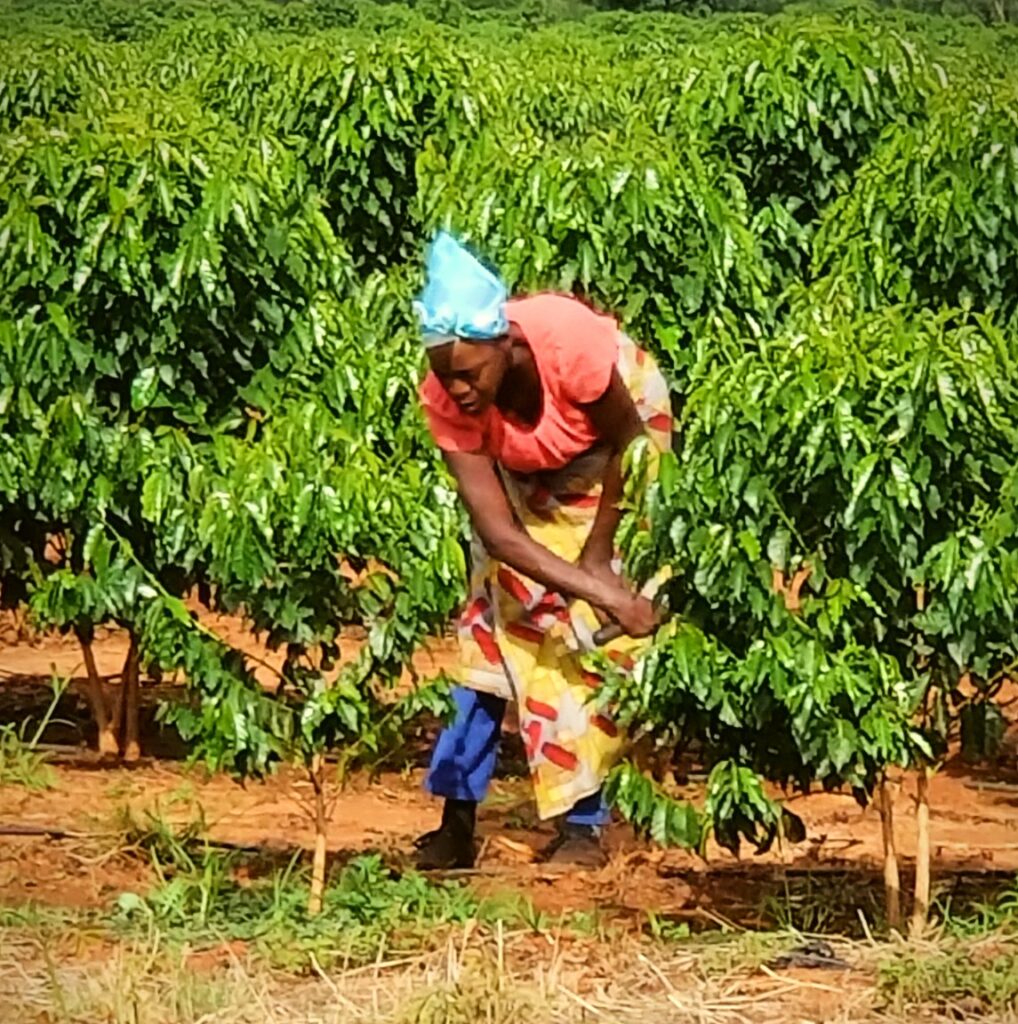
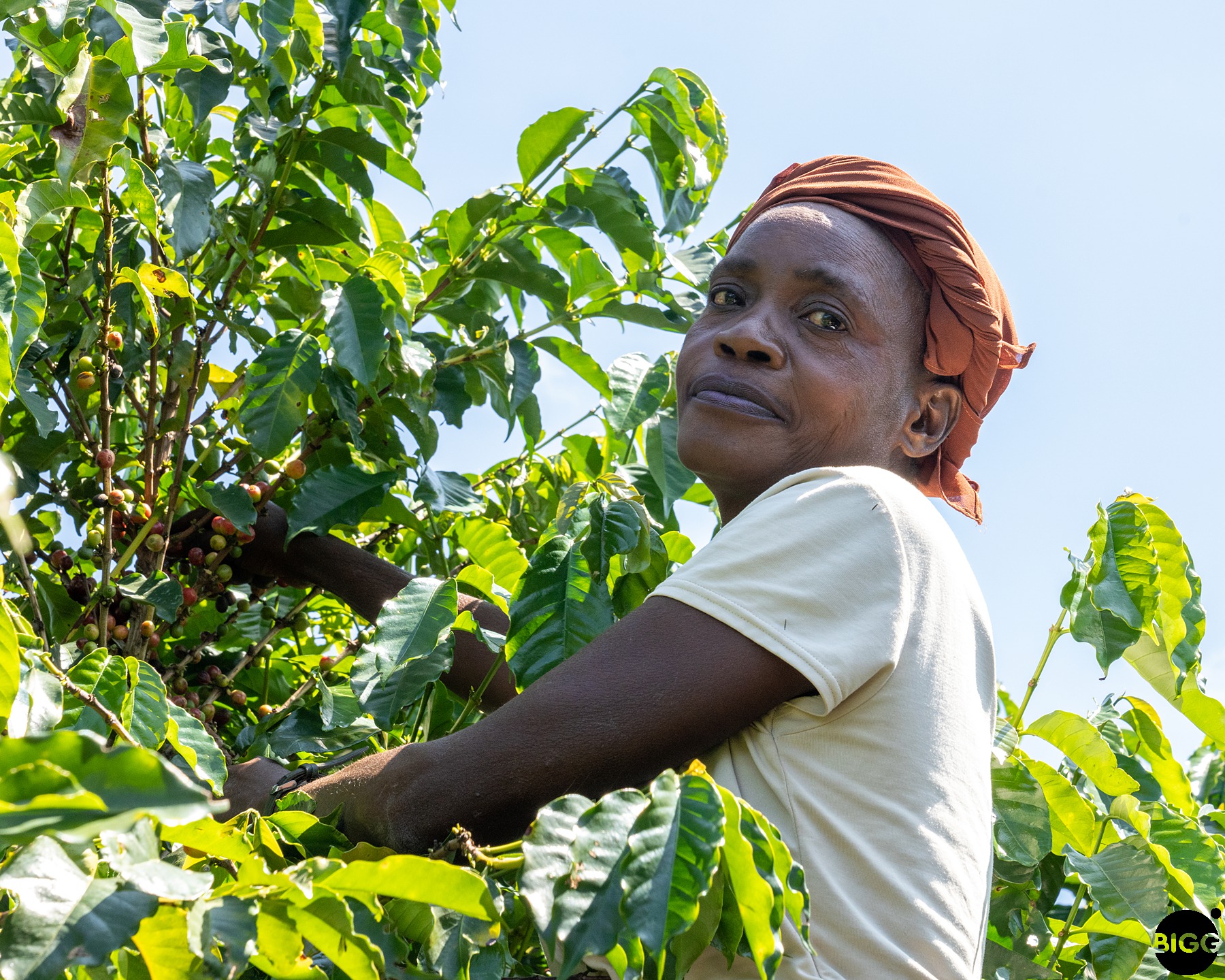
A coffee worker in the field at Living Hope.
It is also sustainable in a way that charity can never be. Relying on a donor funded model means that you are always at the mercy of your donor base. And year after year, you must sing and dance just to keep the lights on. The work you’ve done, the investments you’ve made, and the promises you’ve spoken about your steadfastness to see the project through are always beholden to your ability to put your hat in your hand and beg.
That, for us, was a huge inspiration, and a big part of the reason we were so excited to become partners.
Striking the Deal
Within a few weeks of returning home from Zambia, we had agreed to purchase all the coffee that they could not sell by the pound in churches. That came to about 20,000 lbs. And we would find a way to use it in the BIGGBY lineup.
Not only that, we began to develop our plans for Farm-Direct. After all, if we could buy 20,000 lbs of coffee that was changing lives in Africa, why couldn’t we find other producers that were using growing coffee as a vehicle to create change? If we could support them with a fair price and a guaranteed marketplace, just imagine the positive impact that we could magnify all over the world.
We were always excited to go back to Living Hope, and did so many, many times. And we brought lots of people with us. With each visit, our relationship with the people on the ground, like Davies Chipoya and his son Wana, the house mothers, the farm workers, and the children grew deeper. Thanks to the internet, that is still true today.
We bought their coffee the next year, and the year after that. Our intent was to go on buying it, forever. Things were going very, very well.
Until they weren’t.
Stay tuned for part 2.