Losing Hope, (Part 2)
By Michelle Fish
Bob and I travelled to Ndola, Zambia on our very first OBIIS trip in 2018, and we fell in love with what we found there. We’ve written a lot about that time, and you can read more here.
The short story is that Living Hope, the orphanage that started a coffee farm to make itself more sustainable, became our first Farm-Direct relationship. So much of what we do in OBIIS and how we approach a Farm-Direct prospect, we learned from Living Hope. In particular, from Living Hope’s then Executive Director, Davies Chipoya.
We started buying their coffee, about 20,000 lbs worth, in 2019. But due to COVID-19, we couldn’t return to Living Hope for four long years. And when we finally did return in 2022, we got a strong impression that cracks were starting to threaten the integrity of that foundation.
Back again
We got word in 2019 that the Flowers family from Novi, Michigan, had approached Living Hope with the request that they be allowed to come to Zambia as full-time missionaries. In September of 2019, they moved their entire family to Ndola.
And when we landed in Ndola in May of 2022, we were greeted by Jamie Flowers, his wife Kathy, and two of their children.
They took us to their beautiful house, and we sat on their porch getting to know them a bit. Jamie told his role was to provide additional pastoral guidance to the children in Living Hope’s care, and to help manage the coffee. Kathy explained that her role was to provide pastoral guidance to the House Mothers, and do additional work ministering to the children. Also, since Living Hope was in the process of building a school, her experience as a former teacher might be useful.
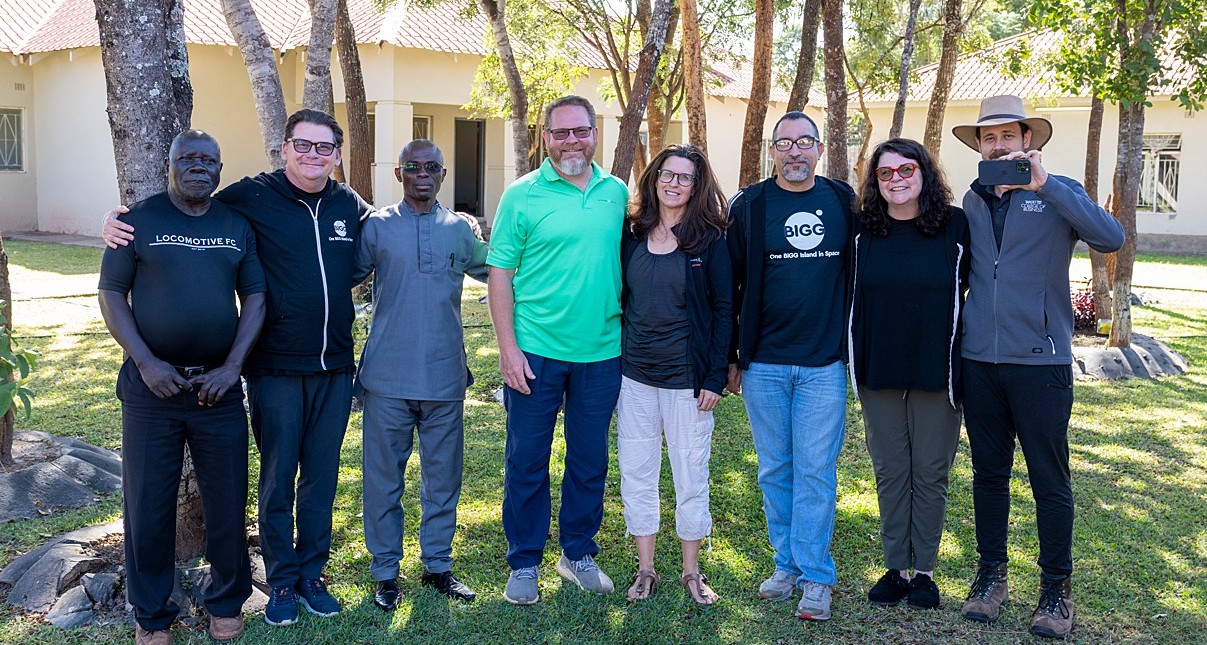
Our team, Dr. Jorge Ferrey, Bob Fish, Nathan Havey and Michelle Fish with the Flowers Family in Zambia.
After our conversation we departed for Living Hope, where we were amazed with how much the campus had changed. We greeted Davies and his son Wana, and the orphans met us once again with their amazing singing before we gratefully headed off to bed.
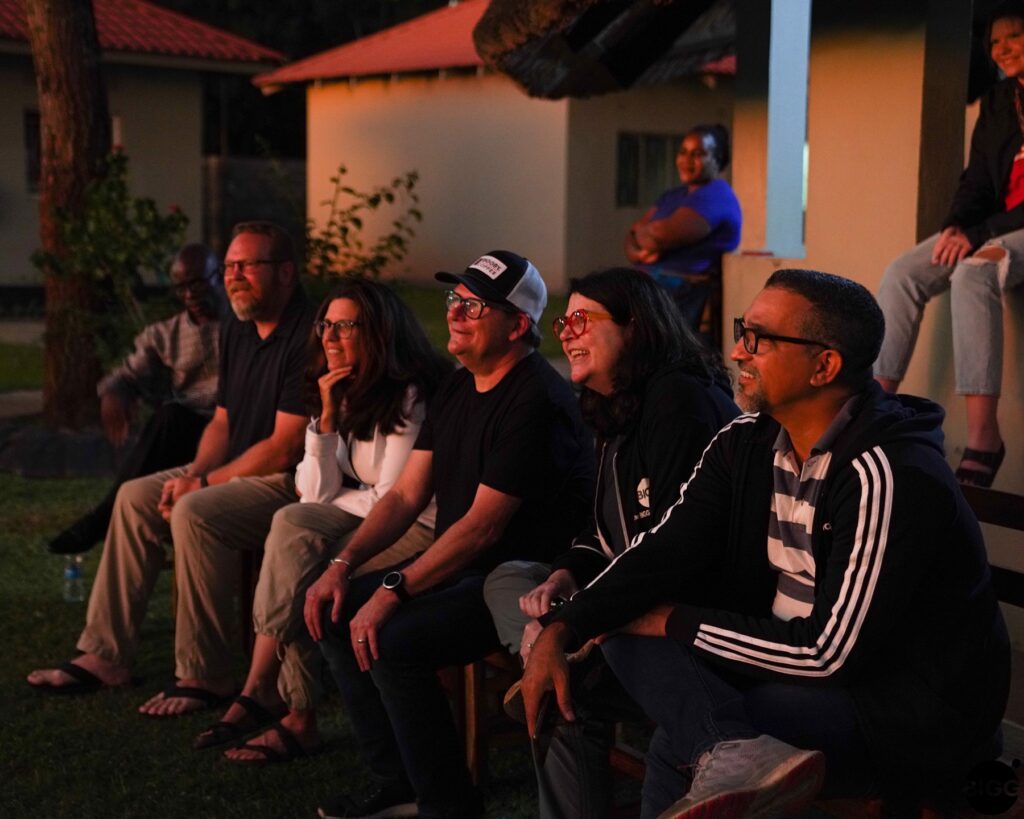
Listening to the Living Hope children sing us a song of welcome in the beautiful sunset.
The Coffee
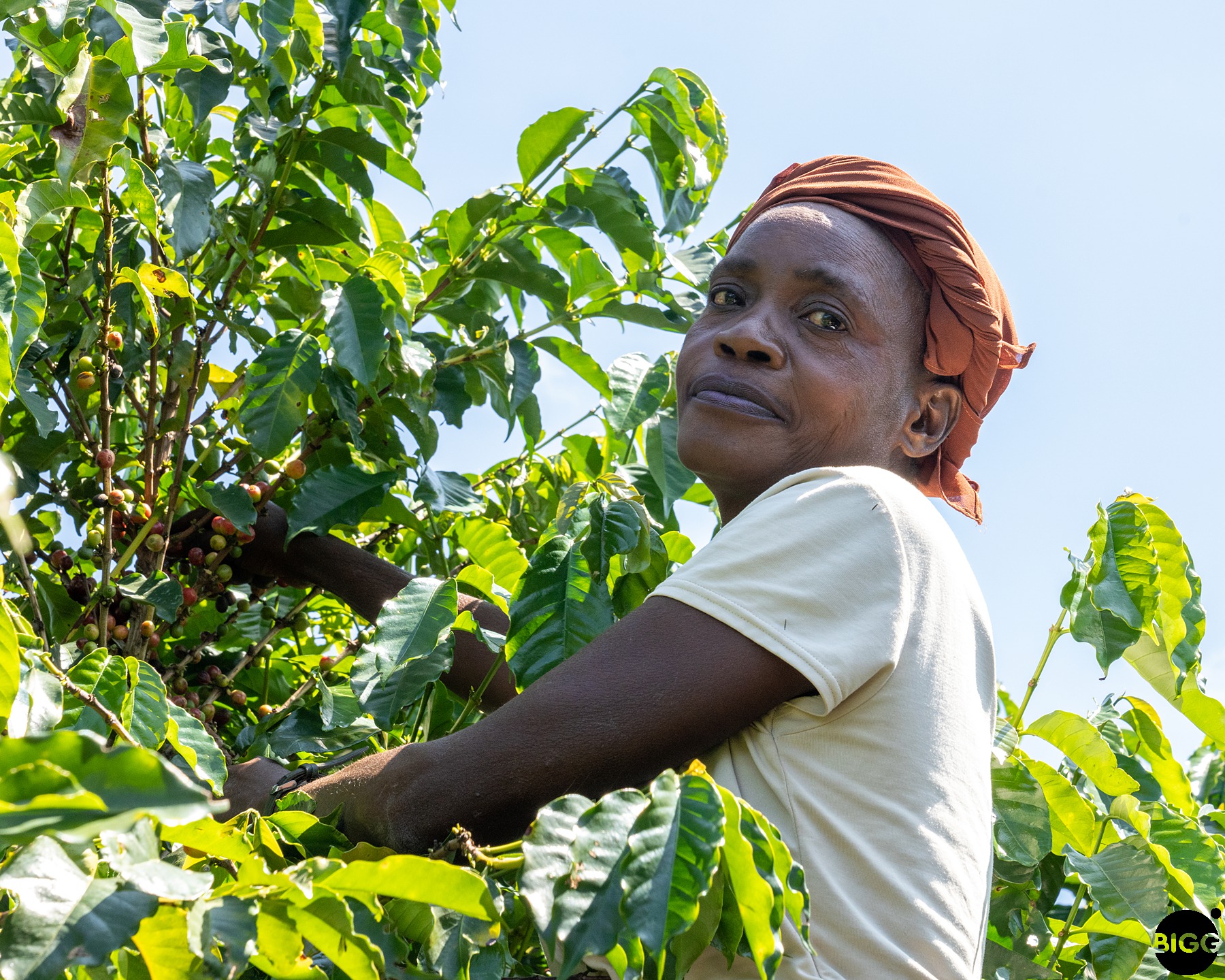
Most of the 150 or so coffee farms that Bob and I have visited since our first stop at Living Hope are planned and taken care of by actual coffee farmers, likely with generations of experience. Not so at Living Hope.
They had the idea to start a coffee farm in 2010. And they sought the guidance of a medium-sized farm nearby. But no one on either the American team or the Zambian team had any experience with coffee or coffee farming whatsoever.
As a result, they made several crucial mistakes as they laid out their farm. All of which had become quite apparent by the time we did our first visit in 2018.
They planted their seedlings too close together. This meant that as the seedlings grew, the plants grew into each other, over-competing for nutrients, reducing air flow, and creating a more favorable environment for diseases and pests.

Coffee, over-planted and under-pruned, and towering over our heads, had to be propped up to keep the branches from collapsing under their own weight.
They didn’t provide any shade for the coffee. Shade serves several purposes, including reducing the need for water, lowering the ambient temperature, and slowing the maturation of the coffee cherry, producing better coffee.
They didn’t know how or when to prune. In fact, by the time we visited, the coffee plants had grown so high that the farm workers had to stand on barrels to pick the cherries.
And while they were doing their best with fertilization and pest management, they were plagued with antestia bugs and white stem borer, and their yields (the amount of coffee they were able to harvest on an annual basis) were going down.
Wana Chipoya
They needed a full-time coffee farmer. Someone with deep knowledge of agronomy and hands-on experience, if their coffee was going to be able to thrive.
So, the American leadership team approached Davies Chipoya and told him they believed the answer was for his son, Wana, to study agronomy at the University. The intent was for him to serve as the Farm Manager at Living Hope upon graduation.
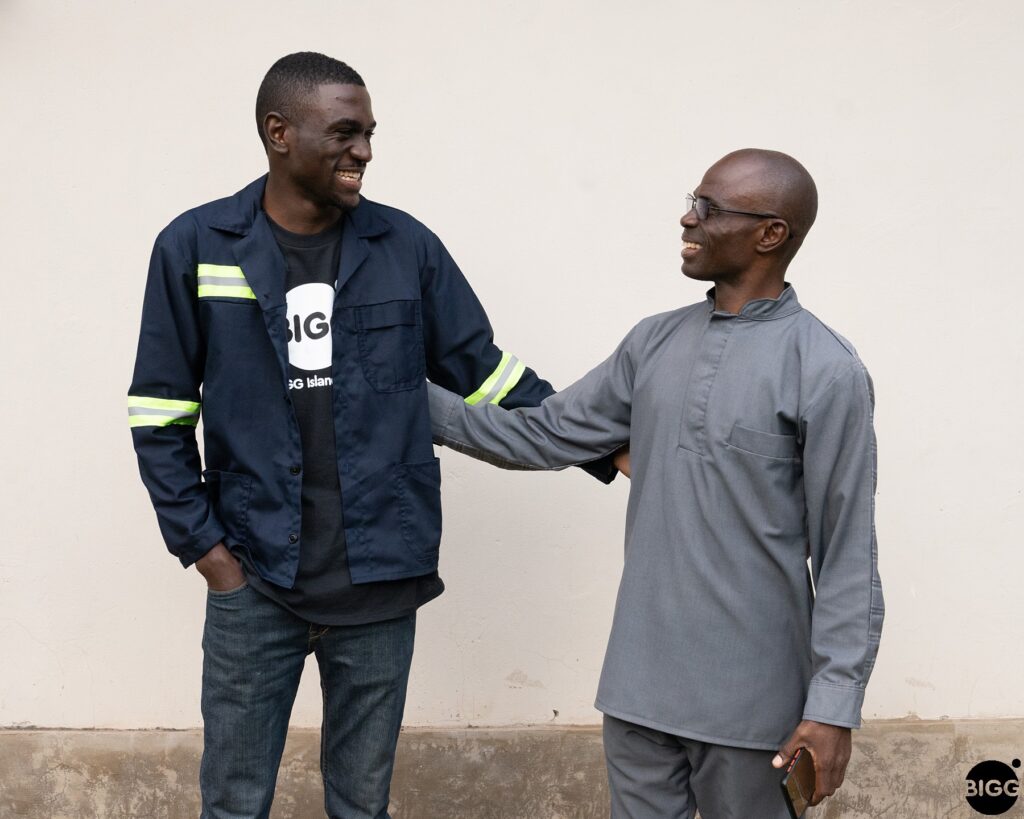
Wana and Davies Chipoya
Living Hope had previously agreed to pay for a University education for Davies’ children and Wana was just about to start his college career. His lifelong dream had been to study Civil Engineering, but Wana had spent much of his childhood living at the orphanage and was deeply committed to the mission. So, after praying on it he agreed to begin studying agronomy with a focus on coffee at Mulungushi University in Kabwe, Zambia. When he wasn’t in school, he would help on the farm.
As he took us around the farm, we were very impressed with Wana and his vision for getting coffee yields back up through proper shade, pruning, fertilization, composting and other sustainable farming best practices.
The last good day
After the tour, we were feeling good about the future of the coffee, and were excited to spend some time with the orphans as they went about their routines of school and play. The joy was palpable. Some of the girls even tried to tame my hair while telling me about their hopes and dreams for the future.
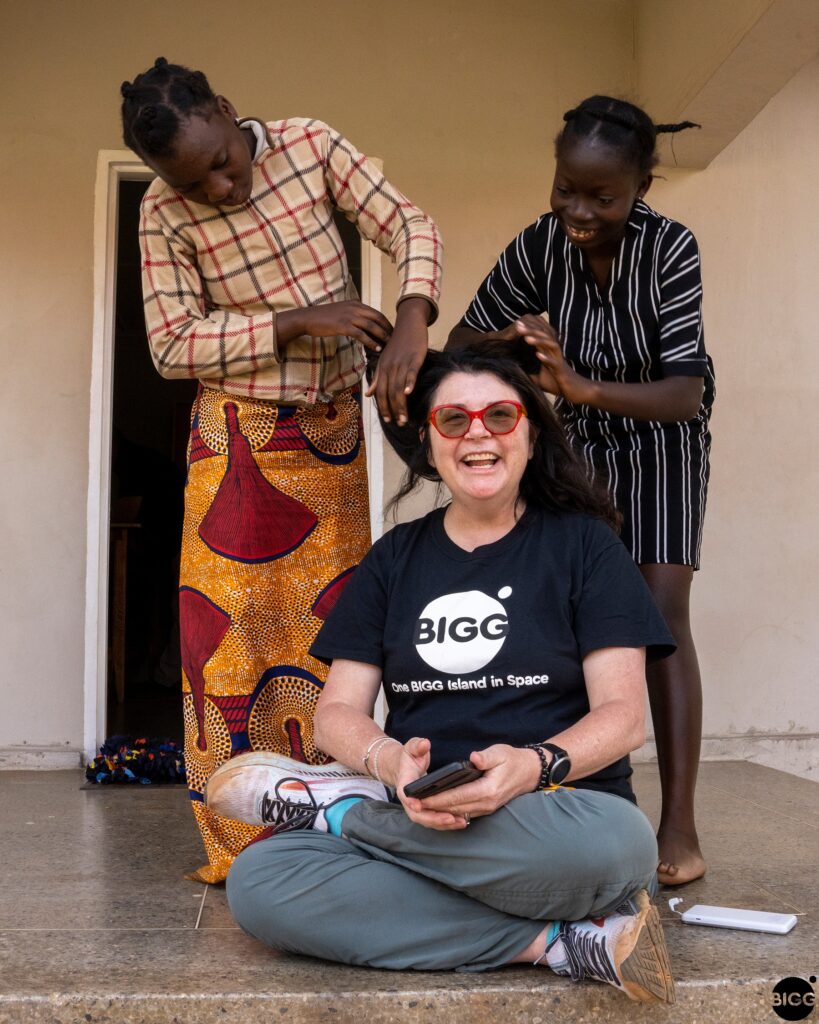
We shared dinner and enjoyed a spectacular sunset before the sound of singing in the distance lulled us to sleep. In retrospect, I’m thankful that I didn’t know during that wonderful day that a storm was brewing, and all of this was about to change.
Trouble
The next day, the Flowers family picked us up to take us around town. Their hospitality was generous, but there was something in the subtext of their comments that felt a little off.
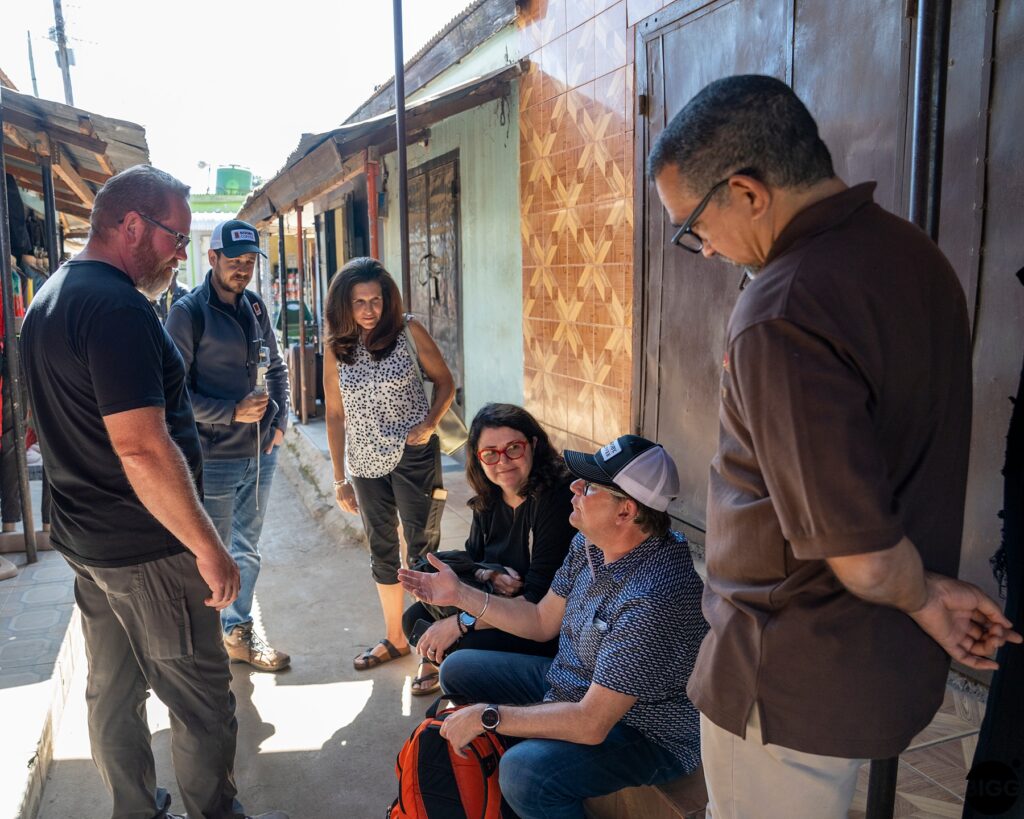
Walking through Ndola’s local market
They kept referencing something that Bob and I had not heard once on our first visit. One of the things that had drawn us to Living Hope in the first place was their operating philosophy of BY ZAMBIANS, FOR ZAMBIANS, with AMERICAN SUPPORT.
But now the Flowers referred to tension between the Zambian Way and the American Way. They were always quick to point out that they were not trying to overrule the Zambian Way, just maybe to balance it with the American Way.
But soon, those vague references opened into more direct criticism of Davies’ leadership, particularly from Kathy. Here is a story that seemed to encapsulate the tension.
One of Kathy’s daughters had outgrown a cute clothing ensemble. Kathy was quite fond of a particular child in Living Hope’s care and thought she would look great in the outfit. She was excited to give it to her and was really looking forward to seeing her wear it. But Davies wouldn’t allow it.
Davies’ insistence on the Zambian Way was based on the following idea. All the kids had been taken out of difficult, often abusive situations. They came from many different villages, and several different tribes. Living Hope was working to create a cohesive sense of family among the children, where all were equally loved and equally cared for.
In Davies’ explanation, it was counterproductive to single one child out for special attention and affection. Better that the outfit go into a closet, to be used by the next child of the appropriate size when they needed new clothes.
Kathy felt it was unjust, and that Davies didn’t have the right to make that call. In fact, she was deeply offended. In her telling, the Zambian Way could just be cover for cruelty. According to Kathy, everyone was afraid of Davies and the Zambian Way.
As the day wore on, Kathy’s accusations (and her tone) escalated to include financial impropriety, emotional abuse and even withholding nutrition. We were quite taken aback by the vehemence of her flood of complaints, and frankly, all of the tears that came with it.
We didn’t know what to say. That didn’t feel like what we had seen.
About the Coffee
Finally, Kathy suddenly blurted out that there was never supposed to be coffee at the orphanage in the first place.
That was simply not true. The founders of Living Hope, Lee and Trina Davis were, by this point good, friends of ours. And we knew from them that it was always the vision for Living Hope to be at least in part self-sustaining through agriculture. That is one of the things that had attracted us to the project in the first place.
Coffee was critical to the broader strategy of providing employment and lifting up the whole community. After all, that was how they got the land for Living Hope in the very beginning. So Kathy’s comment was bizarre.
By the end of the day, we could see that the Flowers were engaged in a power struggle for control of Living Hope and that all was not well in Ndola. We also had deep concerns about how Kathy was adjusting to her role. Bob and my alarm bells for outsiders, like the Flowers family, trying to “help” with good intentions and simplistic solutions were ringing loudly.
A note about our own experience
Whenever we visited Living Hope, including on this trip in 2022, we spent one-on-one time with the house mothers and with the children. We ask a lot of questions, and we listen to all the stories they want to tell us. We also have ongoing relationships online with many of the people in question.
Though we are not there all the time, and certainly would not claim to know everything, all I can tell you is what we have experienced.
Never, on any of our visits, or in our personal online communications, have we seen a shred of evidence to corroborate Kathy’s allegations. In fact, quite the opposite. The children in the care of Living Hope expressed what seemed to be genuine affection for Davies and his wife, Josephine. And the House Mothers clearly loved their young charges and had respect for the Chipoya family.
We witnessed hours of time spent with Davies and the children, and there was not one reason for us to believe that anything along the lines of what Kathy described was happening.
Duty to report
As we headed back to the airport, we all knew that something was off. Bob and I felt that we had to tell somebody.
Bob reached out to our friend, Kim Cooke, the Chairman of the Board at Living Hope. We told him about our visit and our misgivings. The whole idea of “By Zambians, For Zambians, with American Support” did not seem to be weathering the challenge of the Flowers’ family involvement very well.
Kim promised us that he and the board would look into it. And so, we waited for the outcome.
What happened next shocked us.
To Be Continued…