Farm-Direct Was the Better Way.
It Still Is.
And It Wasn't Enough.
By Dr. Jorge Ferrey
I want to tell you about El Recreo, and I want to tell you the truth about why this chapter is ending, because the truth is more complicated than “the partnership didn’t work.” It worked. It worked better than almost anything I’ve seen in this industry. And it’s still ending.
How it started
El Recreo is my family’s coffee estate in the mountains of Jinotega, Nicaragua, founded by my parents, Carlos and Leana Ferrey. Our farm has been producing coffee since 1972, with roots in a community it helped rebuild after Nicaragua’s civil war. By the time OBIIS and BIGGBY found us in 2018, El Recreo was a mid-sized farm of about 180 acres, employing more than 40 permanent families and roughly 200 seasonal workers, all housed, fed, and paid wages most of the specialty coffee world only talks about in mission statements. We had a school for workers’ kids. A health center. Retirement housing. A chapel.
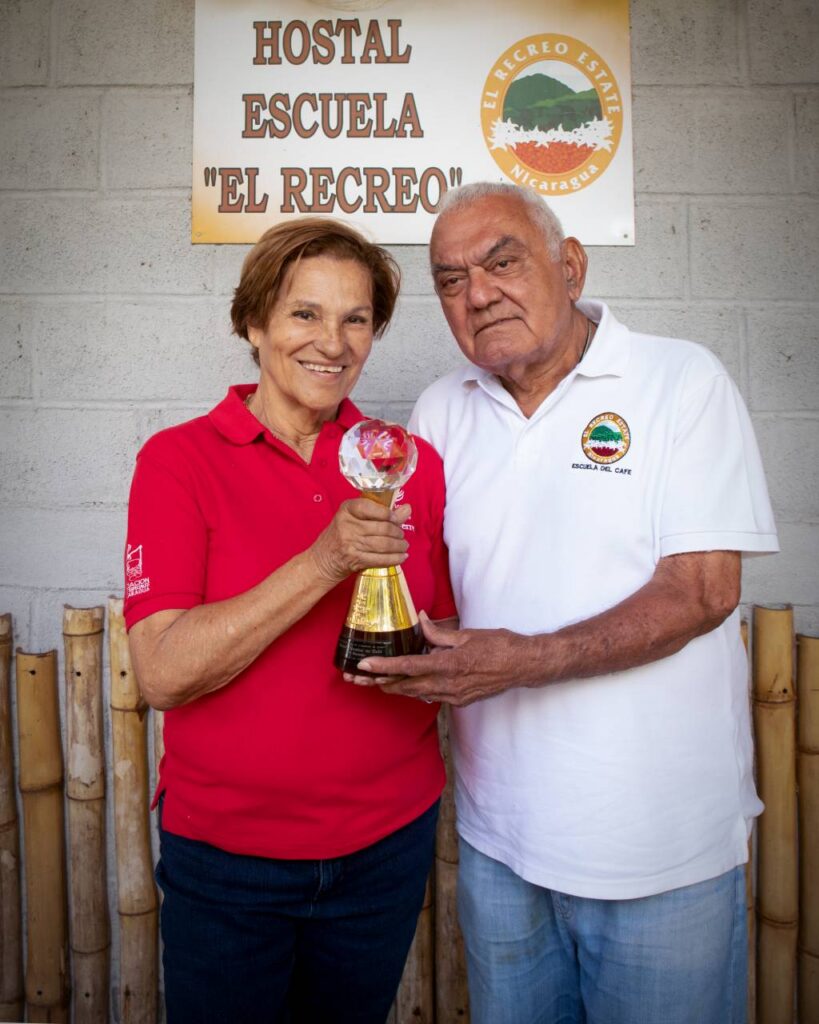
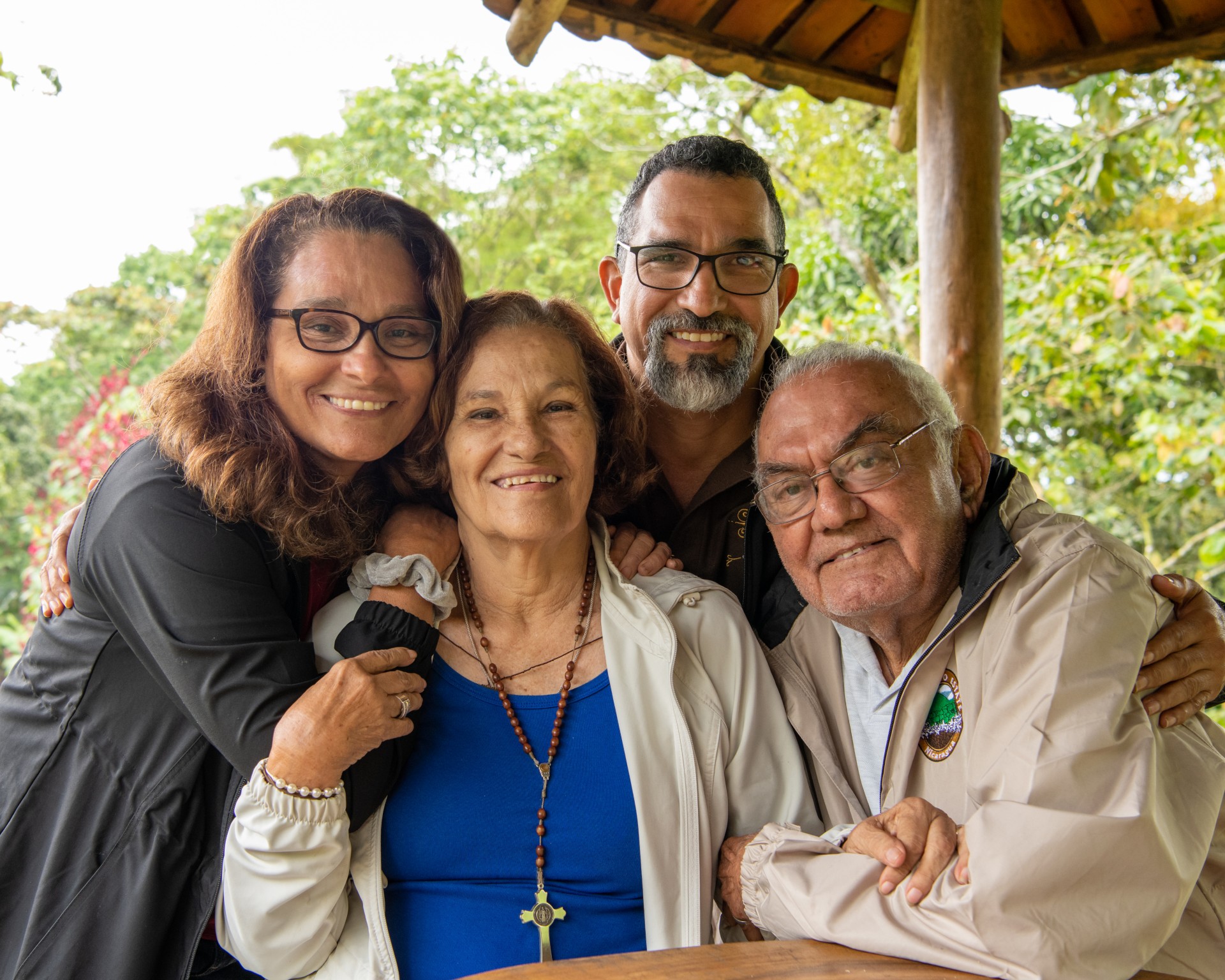
Carlos and Leana Ferrey
We were also, by our own account, close to going under. That’s the part people forget when they talk about Farm-Direct as a feel-good story. El Recreo wasn’t struggling because we were doing something wrong. We were struggling because the C-market — the commodity price that sets what a farm gets paid for green coffee — doesn’t care how well you treat your people. It doesn’t care about your school or your clinic or your fifty years of history. It just goes up and down, and a farm with this many people depending on it can’t run on “up and down.”
The Farm-Direct relationship that started in 2018, formalized as a partnership in 2019, changed that math. BIGGBY COFFEE bought directly from El Recreo at agreed prices instead of leaving us to the commodity market’s mercy. By 2023, that meant roughly 550,000 pounds of El Recreo coffee a year moving through BIGGBY COFFEE’s system, a single-origin bag with my father Carlos Ferrey’s own face on it on store shelves, and a farm that went from barely surviving to giving out worker bonuses three years running.
What made it work
The thing about El Recreo that made this partnership sing wasn’t just the coffee, though the coffee was excellent. It was the people. I’m a physician, a coffee producer, and a finance graduate — all at once — and I became something like the proof of concept for the entire Farm-Direct model. I could tell other prospective farms, honestly, that the model was real, because I’d lived it. My sister Miriam Morales and her husband Hector ran the farm day to day, splitting time between Nicaragua and their own café in Boston. This was never an extraction relationship. It was family-run, family-visited, family-known.
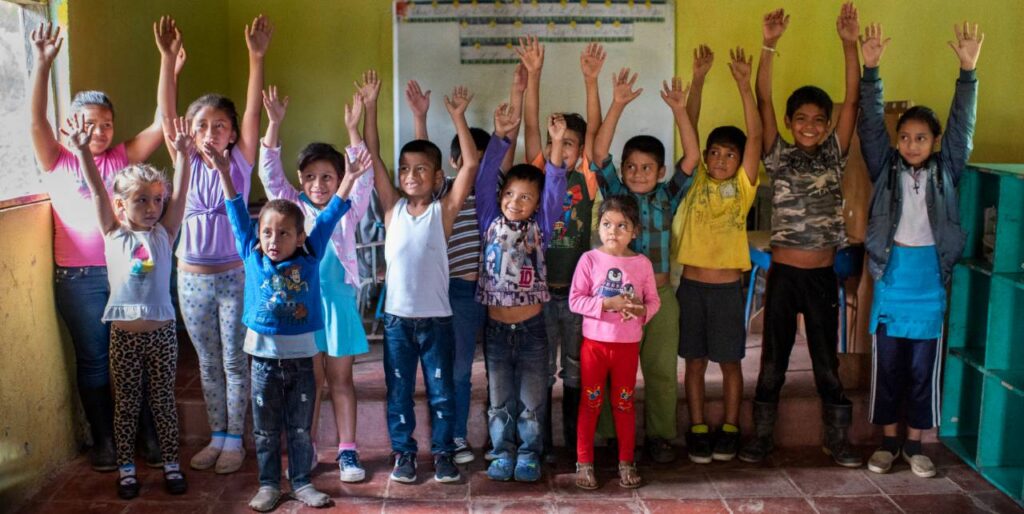
Kids in El Recreo’s school
That’s the part of Farm-Direct that’s almost impossible to put a number on. People at BIGGBY COFFEE didn’t just know El Recreo’s beans. They knew Carlos. They knew Leana. They knew what the workers’ kids’ school looked like. When farm visitors finally got to walk the fields with the people who picked the cherries, something shifted — coffee stopped being a commodity and started being a relationship with consequences on both ends.
For eight years, mostly, that relationship held. Through price spikes, through the ordinary brutal unpredictability of farming, El Recreo and BIGGBY COFFEE built something that looked like what direct trade is supposed to look like when it actually works.
What it couldn’t survive
Here’s the part that doesn’t fit neatly into a marketing story.
This isn’t even the first time my family has had to flee. My parents, Carlos and Leana, lived through Nicaragua’s 1979 revolution and the civil war that followed, and in 1982 they were forced out themselves, eventually finding asylum in Costa Rica. They didn’t know if they’d ever see the farm again. They got it back in ‘90s, only to find the buildings gone and the coffee trees torn out for cornfields, and they rebuilt it anyway, from nothing, a second time.
This decade, history repeated itself. After 2018, Nicaragua’s political situation deteriorated sharply under the Ortega government, and it became personal for my family again. My wife Anely, who is also a doctor, spoke out against the regime’s human rights abuses, and the consequences were severe. She was imprisoned and later our entire family was forced into exile, suddenly and without warning, losing nearly everything we owned in the process except for a backpack of clothes and a desire to raise our kids with better opportunities.
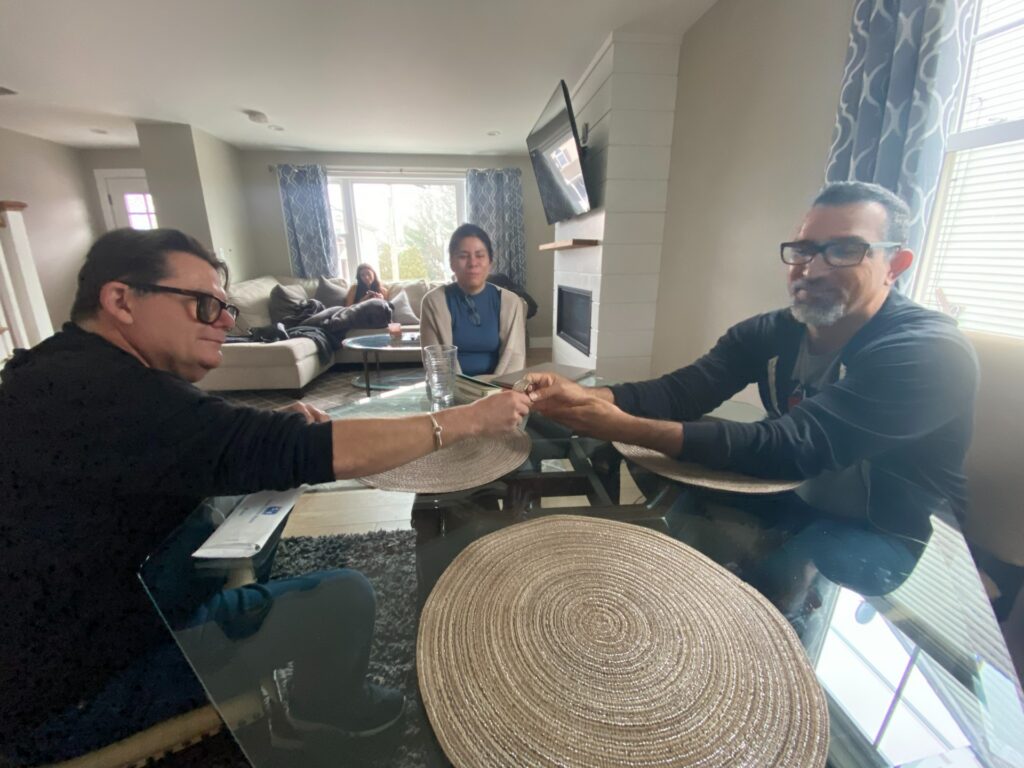
Safe in Boston, days after our forced exile.
My parents weren’t spared either, and the way it happened says everything about how this regime operates. In 2023, they left Nicaragua for a routine medical checkup, the kind of trip they’d made many times before. When they tried to come home, the government denied them reentry. Not because of anything they themselves had done or said, but simply because of who they were related to — my parents, and the in-laws of my wife, Anely. That’s the logic of this kind of repression: it doesn’t stop at the person who spoke out. It reaches backward into a family and closes the door behind everyone connected to them. My parents, who had already rebuilt this farm once from nothing after their first exile in the 1980s, found themselves locked out of their own country a second time, for no reason that was ever theirs. Today, no member of my family remains in the country we had farmed since 1972.
For a while, I kept managing the farm’s production remotely with my sister Miriam, by video call, while other family members stepped up oversight from a distance and a capable on-the-ground team kept things running. It’s a credit to everyone involved that it worked as long as it did. But a coffee farm isn’t a business you can run from another country indefinitely, not when you’re also dealing with:
- A C-market that kept spiking, squeezing margins even with a Farm-Direct floor underneath them
- Rising input costs — fertilizer, fuel, everything — that don’t pause for political crises
- A shrinking pool of manual labor willing or able to work the harvest
- Increased government scrutiny on a farm whose owners the regime had already exiled — our farm
Any one of those is hard. All four at once, managed from thousands of miles away, by a family that had already lost their home once — that’s not a business problem anymore. That’s just not survivable as a remote operation, no matter how good your team on the ground is without change, no matter how much you love the place.
Why this doesn’t disprove the model
I think it would be easy to read this and conclude that Farm-Direct failed El Recreo. I don’t believe that, and I don’t think it’s true.
Farm-Direct didn’t cause any of this. A repressive government forcing a family into exile isn’t a flaw in a sourcing model — it’s a reminder that even the best business relationship in the world operates inside a world that doesn’t always let good things keep happening. What Farm-Direct did do was keep El Recreo alive years longer than the commodity market would have allowed, and it gave a family that lost everything else a partner that didn’t disappear when things got hard.
If anything, the years between 2018 and 2026 are the best argument for this model that I know of. A farm that was nearly going under became a farm that gave out bonuses three years straight, built out worker housing and education, and put a name and a face on every bag. That happened because someone paid a fair price and showed up, year after year, in person, instead of treating a farm like a line item.
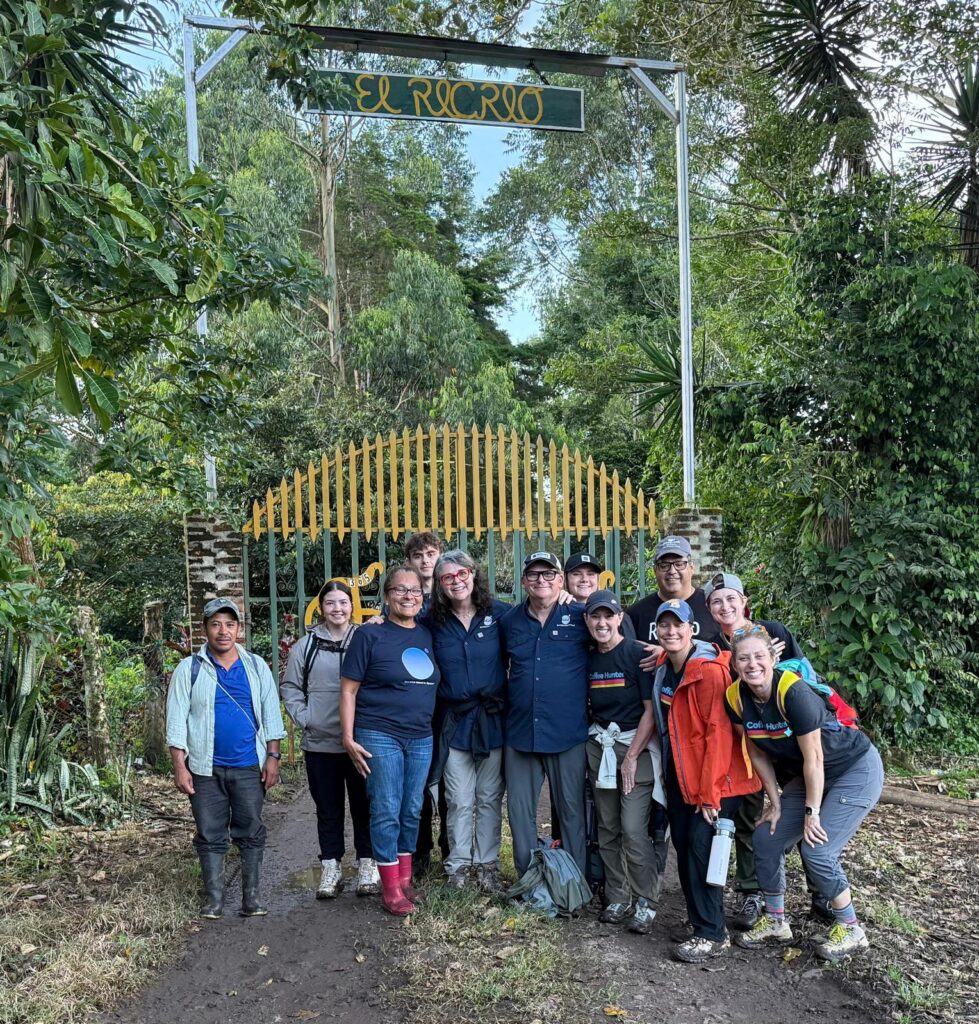
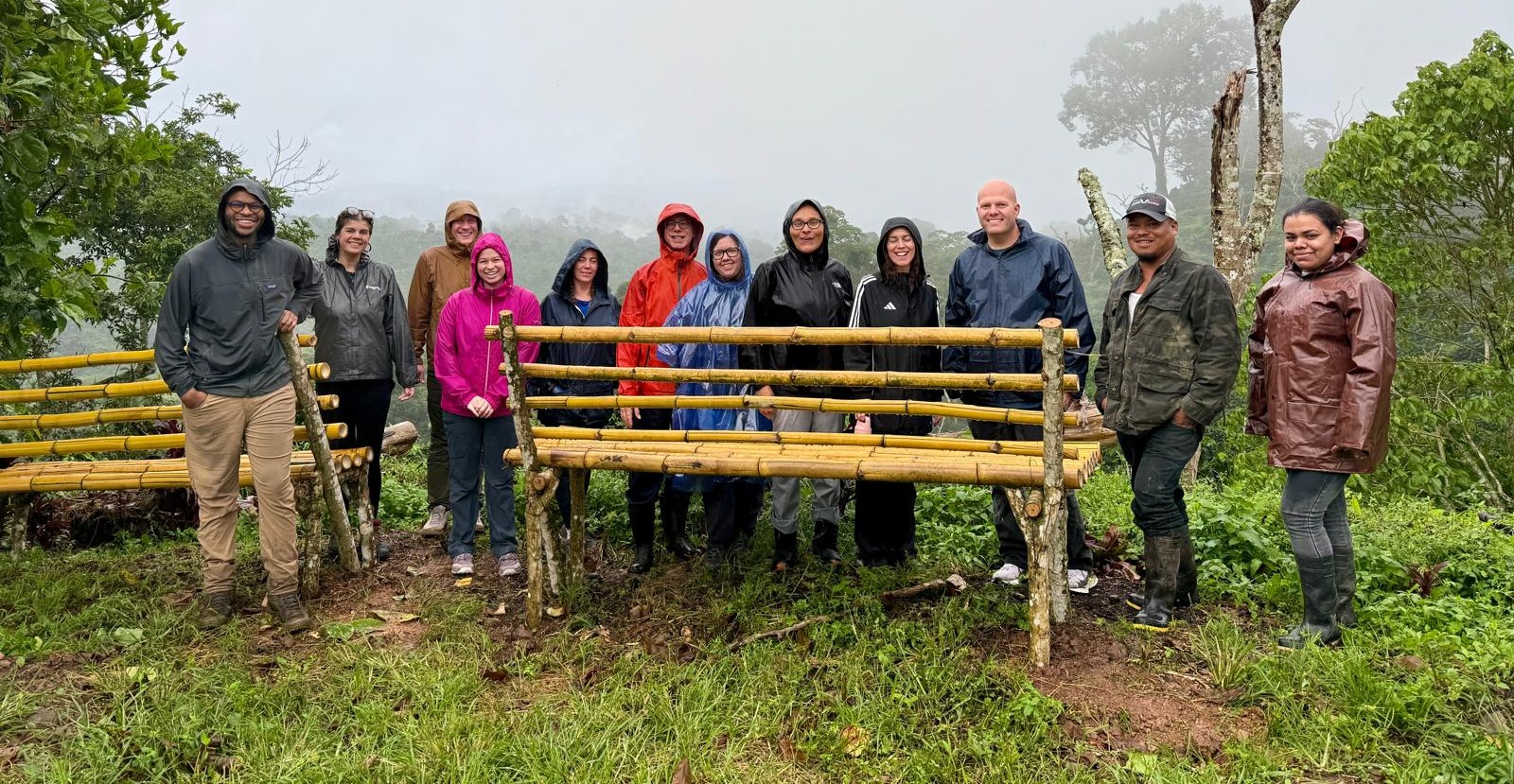
A BIGGBY NATION trip to El Recreo in October of 2025.
The lesson isn’t “Farm-Direct doesn’t work.” The lesson is that Farm-Direct is necessary but it isn’t a force field. It can’t fix a coup. It can’t keep a family safe from a government that’s decided they’re enemies. It can’t substitute for the people who have to be physically present to run a farm. What it can do — what it did do, for eight mostly good years — is make sure that for as long as the people are there, the partnership is fair, transparent, and real.
What I hope people take from this
El Recreo’s story with BIGGBY COFFEE and OBIIS isn’t ending because the model failed. It’s ending because the world made it impossible for one family to keep doing what they’d done for fifty years, and no amount of fair pricing changes that.
I’d rather tell you that honestly than pretend this is a clean, uncomplicated success story with a tidy ending. It isn’t. It’s a story about what’s possible when buyers and farmers actually partner with each other — and about the limits of what any partnership can fix when the politics of a place turn against the people trying to do good work in it.
Farm-Direct is still the better way. El Recreo proved that, for eight years, about as well as it can be proven. I just wish proving it had been enough.