Saying Goodbye to El Recreo
By Michelle Fish
Bob and I first met Miriam and Hector Morales at a Specialty Coffee Association Trade Show in Boston in 2019.
We were in our second year of OBIIS, searching for coffee producers that were doing right by their people, the planet, and their communities. They were in their fourth year of running their Café and Roastery in West Roxbury, Massachusetts, roasting and selling the coffee grown on Miriam’s family farm, El Recreo, in Nicaragua.
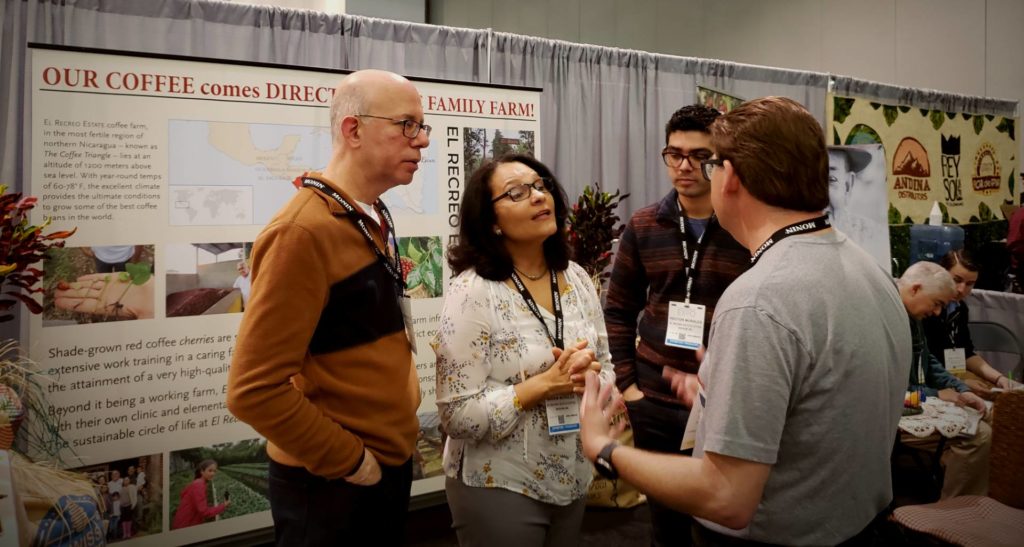
Meeting Hector, Miriam, and their son Hector in 2019.
Miriam was full of excitement and pride describing the farm to us. She talked at length about her parents’ commitment to education for all their workers and their workers’ children, and the multi-generational impact that education was having in Jinotega. She told us about the housing they had built for workers’ families. And the school they had started on the farm to train small producers in better agronomy, and understanding and managing their cost of production.
She talked about her parents’ dedication to being good stewards of their land, taking a holistic approach to farming that included avoiding harmful chemicals, protecting their native forest, and maintaining the health of their soil through organic methods.
The First of Many Visits
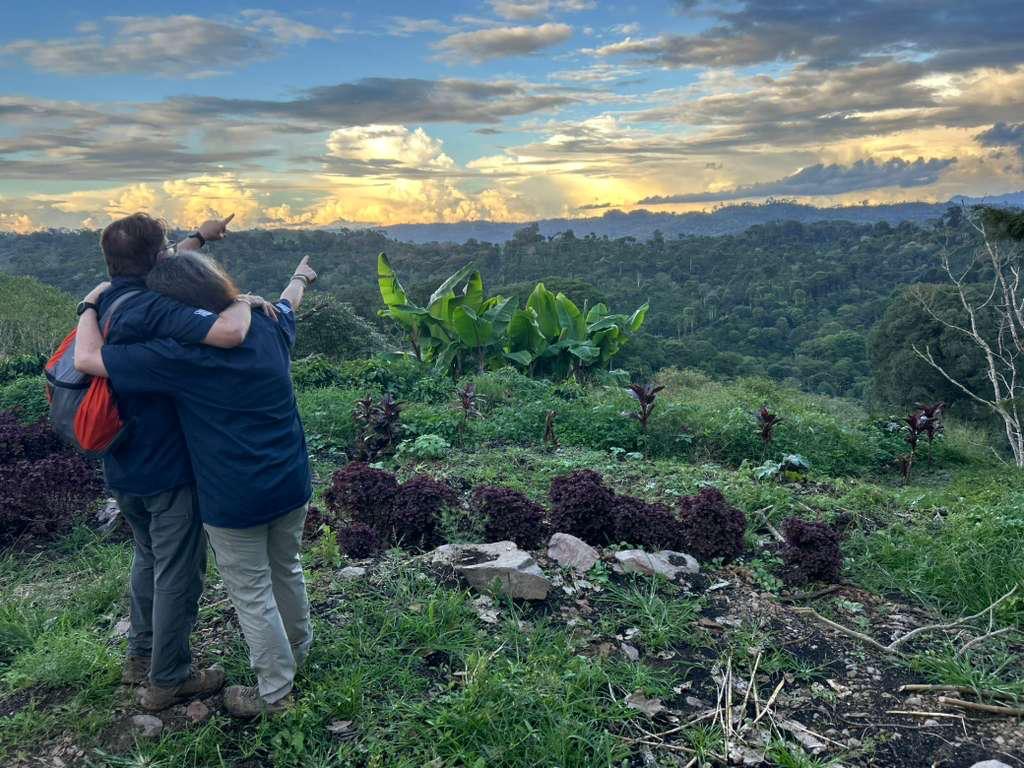
We knew we had to go see what was happening on the farm for ourselves. So, in July of 2019, we headed to Jinotega, Nicaragua to check out what the family was up to. That’s where we first met Miriam’s parents, Carlos and Leana Ferrey, as well as her brother, Jorge. We fell in love with what we found there.
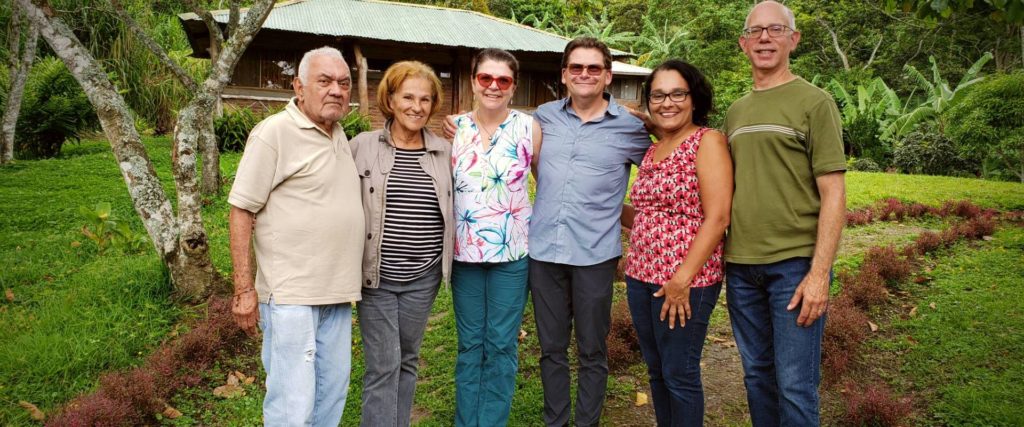
On our first visit to El Recreo in July, 2019.
It took us about six months to work out all the logistics. But in January, 2020, El Recreo officially became our second Farm-Direct partner. None of us had any idea what the future had in store for us, or how important our partnership would be, both for the Ferrey family, and for One BIGG Island in Space.
The Partnership
Since then, OBIIS has facilitated the purchase of more than three million pounds of coffee from El Recreo for BIGGBY COFFEE. We have paid them a fair price, based on the economics of their farm rather than the vagaries of the international market. And that fair price has enabled them to lessen the debt on the farm, support an array of social programs to benefit their workers and their community, and to farm in a way that has protected their soil and their natural habitat.
We have also led many trips to the farm, bringing people from BIGGBY NATION to meet the family behind the coffee and learn first-hand about the incredible work being done for people, planet, and community.
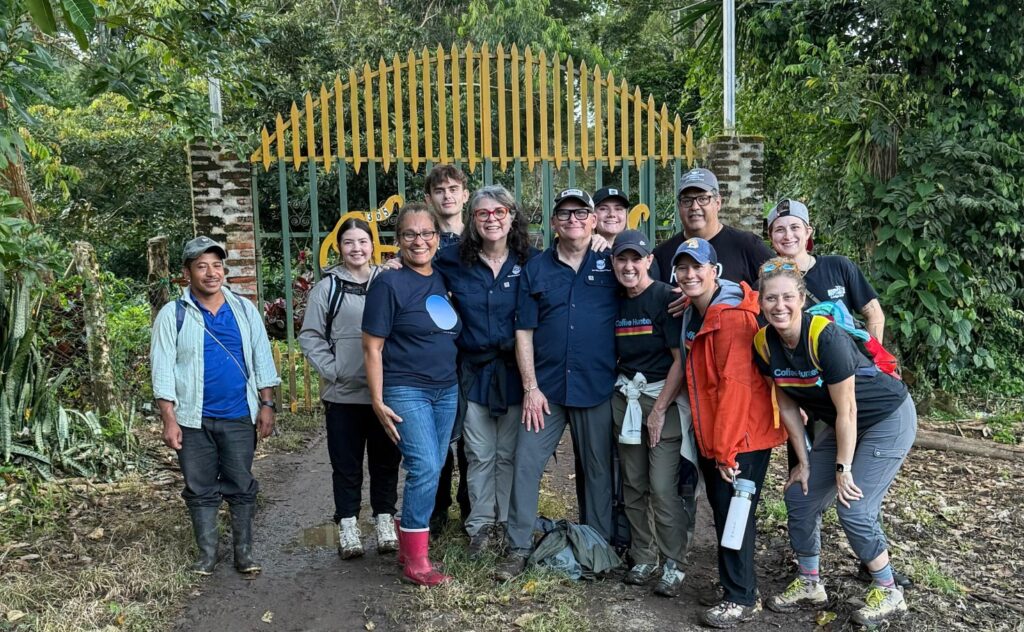
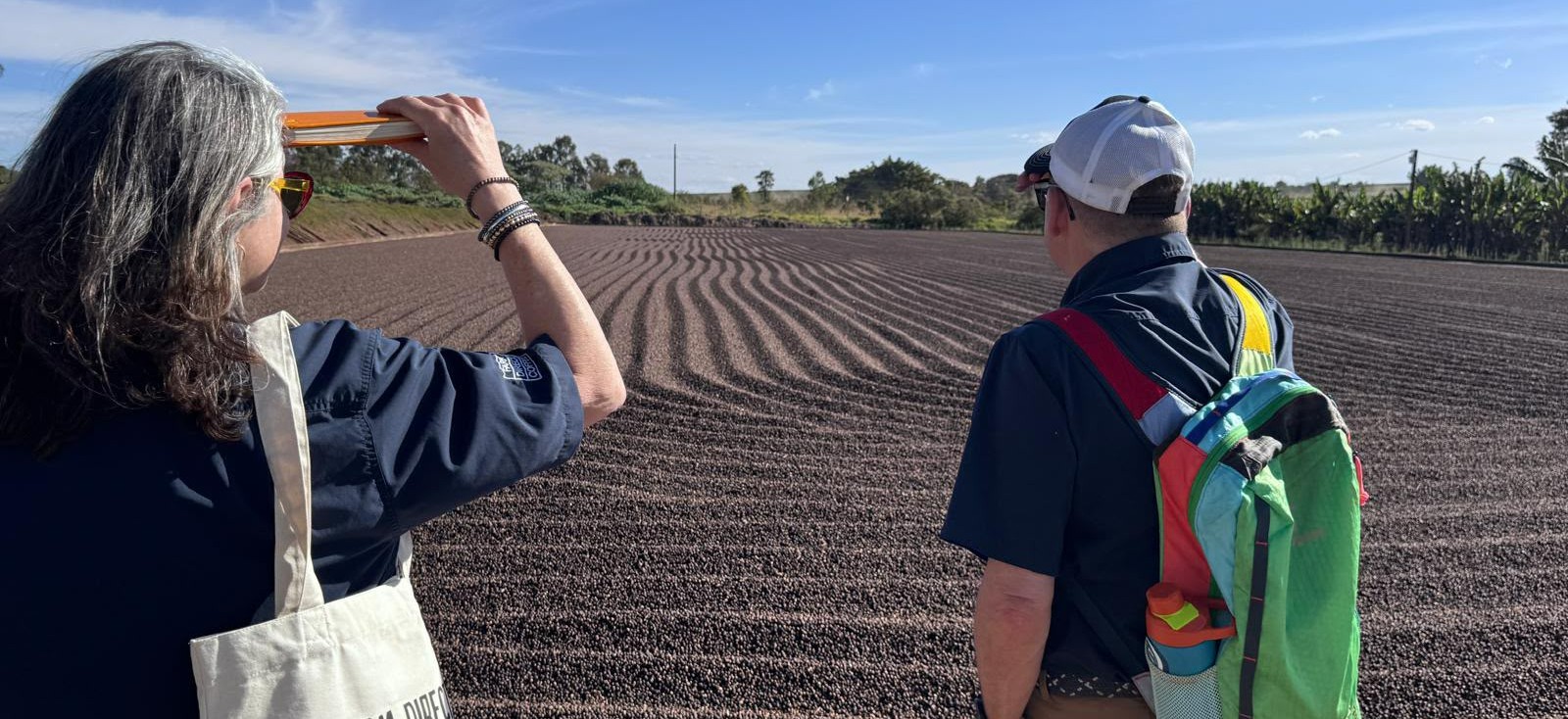
One of our many, many BIGGBY NATION trips to El Recreo in October, 2025.
And we have developed a deep, personal relationship with the Ferrey family that extends beyond the purchase of coffee and its transactional nature. They are like family, both to OBIIS, and to the larger BIGGBY COFFEE community.
It’s a partnership that we thought would go on forever. In a perfect world, it might have. But we don’t live in a perfect world.
What You Can’t Control
Coffee farming is hard. It doesn’t matter what country you do it in. It requires 365 days a year of effort to tend to a plant that gives you one crop a year. In 99.9% of the cases, the farmer doesn’t set the price. The market does. So, as a coffee farmer, you don’t even know what that hard work is going to make for you in any given year. Most years, you don’t break even.
There are many things within your control. Like what varieties you plant, how you do your agronomy, and how you take care of your people.
But there are many, many more things that are not. Like the international market price for coffee. And the weather. And politics.
The Backdrop of Politics, Chapter One
It’s no secret that the political landscape in Nicaragua is challenging. Carlos and Leana bought the farm in 1972. Civil war was already simmering in the background, as rebel forces fought to unseat the Government. The violence worsened in the remote, mountainous areas around their farm in Jinotega, and the Ferrey family was forced to confront the deteriorating security situation.
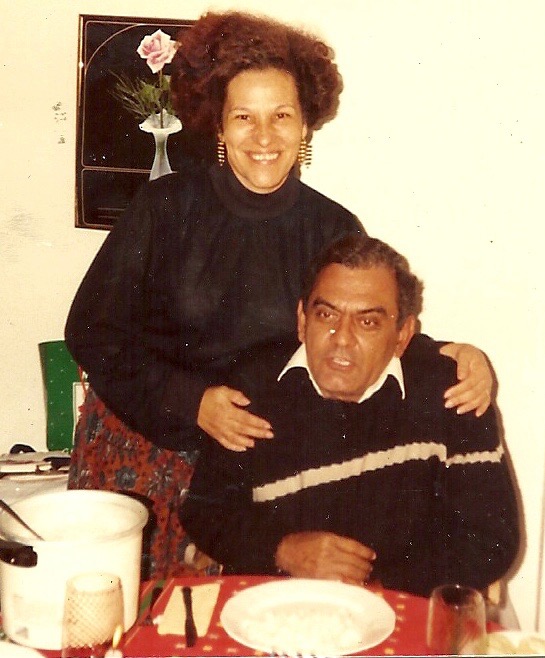
Leana and Carlos “back in the day.”
First, Carlos and Leana sent their four children to live with relatives in the United States, to protect them from being killed or conscripted by guerillas fighting in the war. They stayed behind to guard the farm. But it wasn’t enough.
The Somoza dictatorship finally fell in 1979. But the fall of the government didn’t bring peace. In the early 80s, Carlos and Leana were arrested by the Government for political reasons and put in prison for years. They were only released after Leana had a stroke. And they fled with just the clothes on their backs to Costa Rica, not knowing if they would ever be able to return to Nicaragua.
Getting it Back
By 1987, the civil war was largely over and they were, at long last, able to return home. But there was massive uncertainty about what they were returning to.
The farm was in ruins. All the equipment was gone. Most of the buildings were torn down. Much of the coffee had been ripped out to make room for other food crops. And there were people living there who claimed the land as their own and refused to budge.
After many months of research, Carlos and Leana determined that they were still the legal owners of the land. It took a lot of time and a lot of courage, but finally they were able to negotiate the peaceful return of the land from the families that were living there. And they began the daunting task of rebuilding from scratch, with zero resources.
By the time we first visited the farm in 2019, their 30 years of work and the rejuvenation of the farm as a community hub was a wild success. El Recreo was thriving, with a school for farm workers children, a clinic, a chapel, housing for workers and their families, recreational facilities, the school for small producers, and so much more.
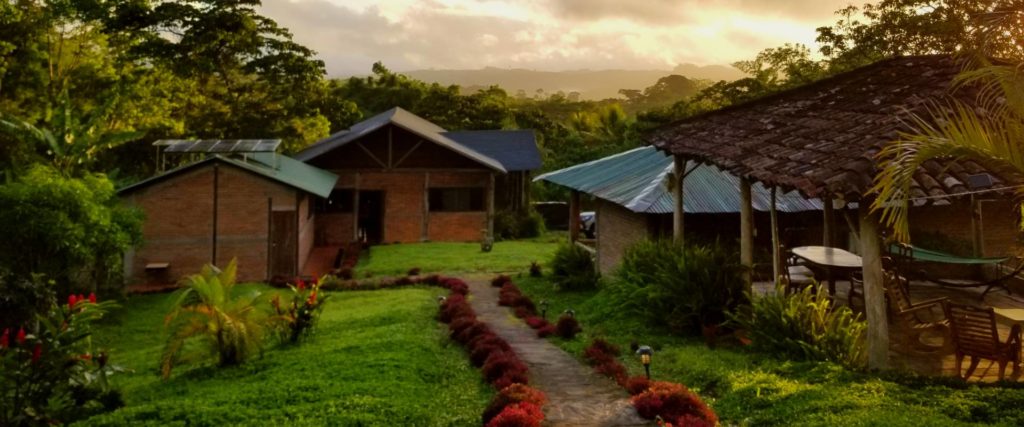
The family’s living space at El Recreo in 2019.
The Backdrop of Politics, Chapter Two
While Carlos and Leana were rebuilding El Recreo, Nicaragua was trying to reconstitute itself as a nation after decades of fighting, and the lingering effects of a massive earthquake in the early 70s.
Over the last 50 years, Nicaragua’s political climate has shifted from a dynastic dictatorship pre-1979, to a revolutionary socialist government, followed by a fragile democracy, and ultimately, a return to authoritarianism under its current President, Daniel Ortega, who was reelected in 2007.
If you’ve been following the news out of Central America over the last five years, or so, then you will likely have heard stories about political repression in Nicaragua. This has played out on a global stage, as the Government has systematically been dismantling democratic institutions. This has included steps like banning assembly, outlawing political opposition, jailing opponents, and arresting members of the clergy, especially Catholic bishops, who advocate for the rights of the people. Thousands have been forcibly exiled from Nicaragua and had all of their assets seized. And many thousands more have been imprisoned.
The effects have been felt at El Recreo, as well. The Government forced the Ferrey family to shut down the school for the small producers. And to also shut down the school on the farm for workers’ children. They have instituted draconian laws that restrict what El Recreo is able to provide its workers in terms of benefits and pay.
Once, the Ferreys had a dream of building housing for their retired workers. But it’s been several years since they’ve been able to build anything new. And most of the ones they had built stand empty. Slowly, but surely, the Government has eroded all of Leana’s much beloved social programs to the point that they no longer exist at all.
Worse, there is a climate of fear at the farm and in the surrounding communities. People dare not speak out about anything that could be interpreted as criticism of the Government. The consequences can be dire.
The Backdrop of Politics, Chapter Three
When we first met the Ferrey family in 2019, Carlos and Leana’s son, Jorge, was working at the Farm with his father. He was a practicing Physician and had a very successful career as an Interventional Radiologist. But he believed strongly in his parents’ social mission at the Farm and had made the decision to pick up the baton of coffee farming and continue their legacy.
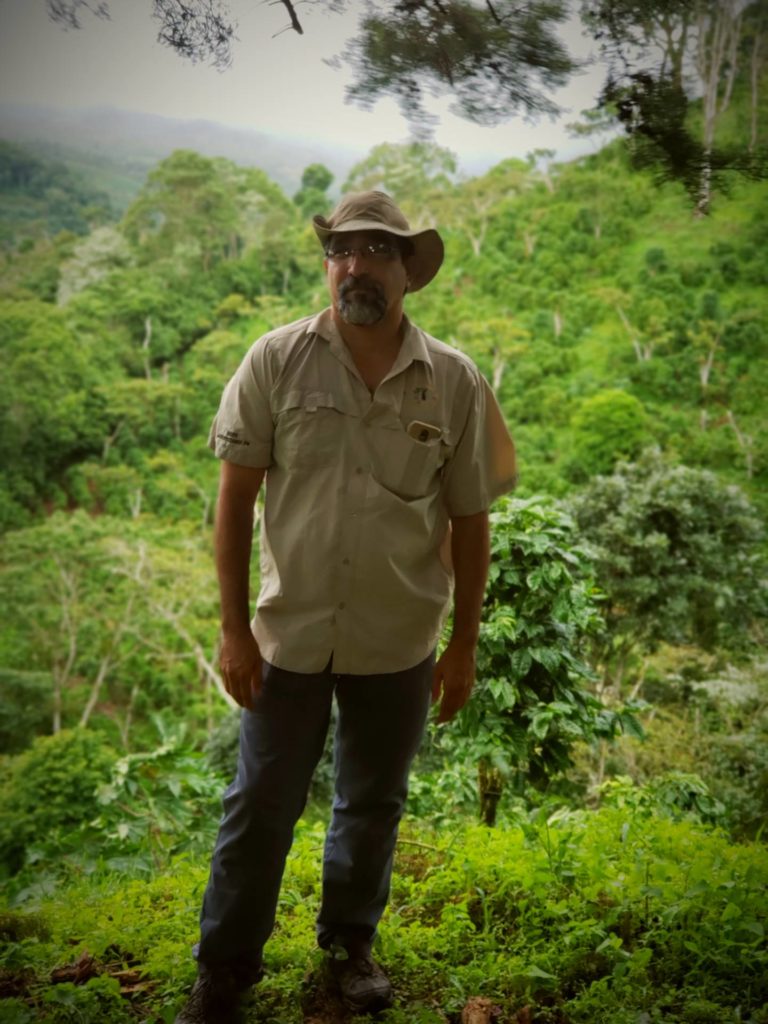
Dr. Jorge Ferrey at the farm in 2019.
In the early days of OBIIS and our partnership with El Recreo, we often brought Dr. Jorge along with us on our travels to help us evaluate farms all over the world. In addition to the benefits of having a very knowledge, science-brained coffee farmer with us, it was pretty great to travel with your own personal Doctor. He once saved me from heat-stroke in Africa. And he literally saved the life of a young woman with a severe infection from mastitis in Sierra Leone.
In 2023, he was with us in Honduras when he got a panicked phone call from his two children, back home in Managua. Heavily armed police had come to the house to arrest his wife, Dr. Anely Molina.
She had, on a couple of occasions, made public statements about health-related issues. Once, when the Government had used lived ammunition on protesters in 2018, she issued a statement that she, and other Doctors she knew, would provide free treatment to anyone wounded in the protest, soldier or protester.
And during COVID-19, while the Government was denying that there was a pandemic, she made public statements about how people could best protect themselves, including wearing masks, avoiding large gatherings, and washing their hands frequently.
For this, they took away her passport. And now, in 2023, they took her to jail.
What Happened Next
We were in Honduras. Jorge needed to get home to his children as fast as possible. It was a terrifying moment. But we were able to secure him a ride to the border, where he would be met by a driver on the other side to take him home.
Before he left us, he gave Bob his watch for safekeeping. It had been a wedding present. And he was afraid that he might be arrested, too. Turns out, he was right.
Within 24 hours of getting home to his children and beginning the search for his wife through Nicaragua’s infamous prison system, he was also arrested.
He was given a choice. He, Anely, and their children could accept permanent exile and the forfeiture of all their assets, right down to their wedding rings and their photograph albums, or he and Anely could rot in jail for the rest of their lives. It’s not really a choice. We were still in Honduras when I got a call from Jorge. They had been put on a plane to Miami at gun point. They were on their way.
2023 to Today
They landed in Miami with nothing but the clothes on their backs, as so many people facing political persecution have landed on US shores. In some ways, they were luckier than most. Jorge has two siblings living in the US, including his sister, Miriam, in Boston. And they had us. So, they weren’t facing this alone.
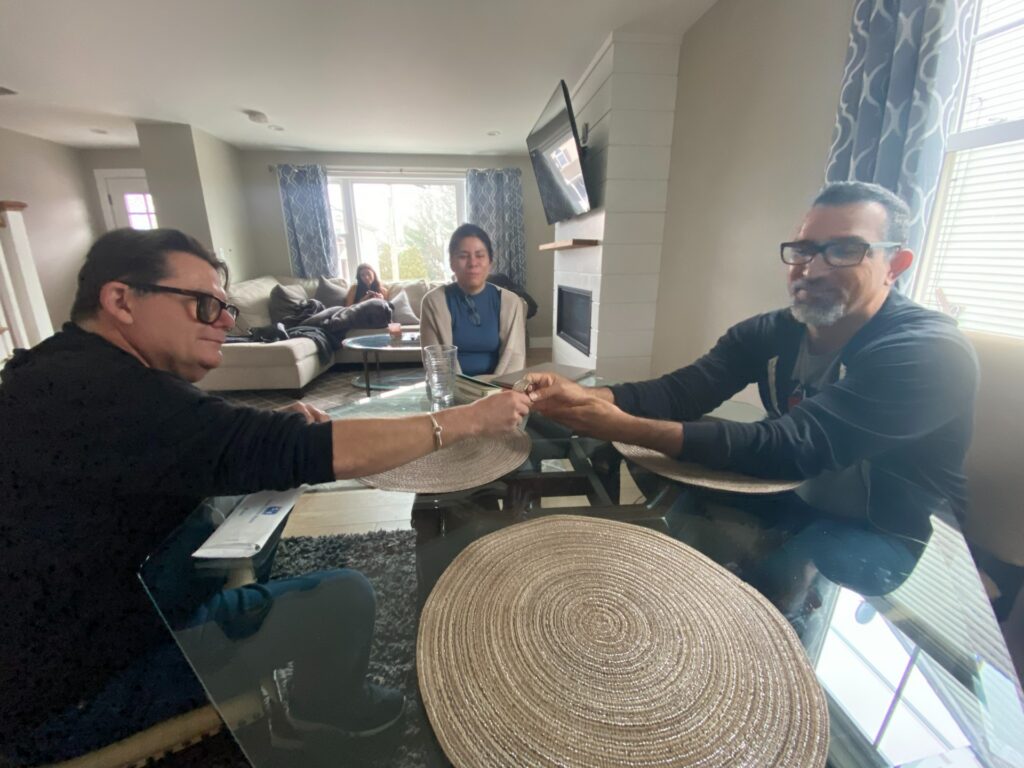
Bob returning Jorge’s watch to him, after their arrival in Boston.
But, even at that, it has been a long, hard road for their family in the years since as they have navigated the legal system and rebuilt their lives in the US.
Today, Jorge works for BIGGBY COFFEE as the Director of Sustainable Agriculture and Quality Assurance. Anely, once a renowned Doctor of Dermatology in Nicaragua, has an Aesthetician practice working with a local Doctor. And their kids are both thriving in school.
Jorge’s intention had been to provide space for his now aging parents to retire. But with his forced exile, Carlos and Leana returned to the farm full time. Although both Carlos and Leana have serious health challenges, they seemed to really relish being back at the farm. And everything seemed like it was going to work out. At least, for a while.
The Backdrop of Politics, Chapter Four
One of Carlos and Leana’s sons, Carlos Jr., lives in Costa Rica with his family. In 2024, Carlos and Leana made the drive from El Recreo to San Jose, Costa Rica to celebrate one of their grandchildren’s milestone birthdays. By all accounts, it was a very fun and very happy celebration. And then it was time to go home.
Except they couldn’t.
When they got to the border, the Nicaraguan border patrol refused to let them enter the country. Sure that there must have been some kind of mistake, they went back to Carlos Jr’s house and began contacting everyone they could think of in Nicaragua to help them get it sorted out.
To date, they have not been able to.
No one in the family knows the reason why Carlos and Leana have been banished. There are theories. But no official explanation.
It is not an exaggeration to say that the thing they want most of all is to go home. They are both well into their 80s now, and very much want to spend the last years of their life in the country of their birth. But even if they were able to somehow smuggle themselves in, they might face imprisonment or worse. And they would likely never be able to leave.
So, they are stuck in limbo in Costa Rica, again.
Back at the Farm
Which means that there is no Ferrey at the farm. In the two years since Carlos and Leana were banished, Miriam, Jorge, and their brother Carlos, Jr., have been doing their very best to run the farm from afar.
You can ask any coffee farmer. In fact, you can ask any owner of just about any business, anywhere. They will tell you that it’s hard to run a successful enterprise, even when you are present all the time. But it’s nearly impossible to do it from a different country via zoom. Particularly when the family, and the nation, is under so much duress.
For a while, the loyal team of workers that had been with the family for years rose to the challenge. But over time, without regular and sustained leadership on the ground, the day-to-day operations of the farm have devolved. There have been numerous challenges including theft. They have gone through a succession of people that were hired to run the farm. None have stayed longer than a few months. Even the old guard employees that had been with the family for years, like Marvin and Lenin, have left.
On our last BIGGBY NATION visit to the farm in October of 2025, we could feel it. By then, the social programs that we had fallen in love with back in 2018 existed in name, only. The harvest had been declining because the agronomy was no longer consistent.
Miriam introduced us to her newest management team, two very enthusiastic young women who had big plans for change. Within about a month of our visit, they, too, were gone.
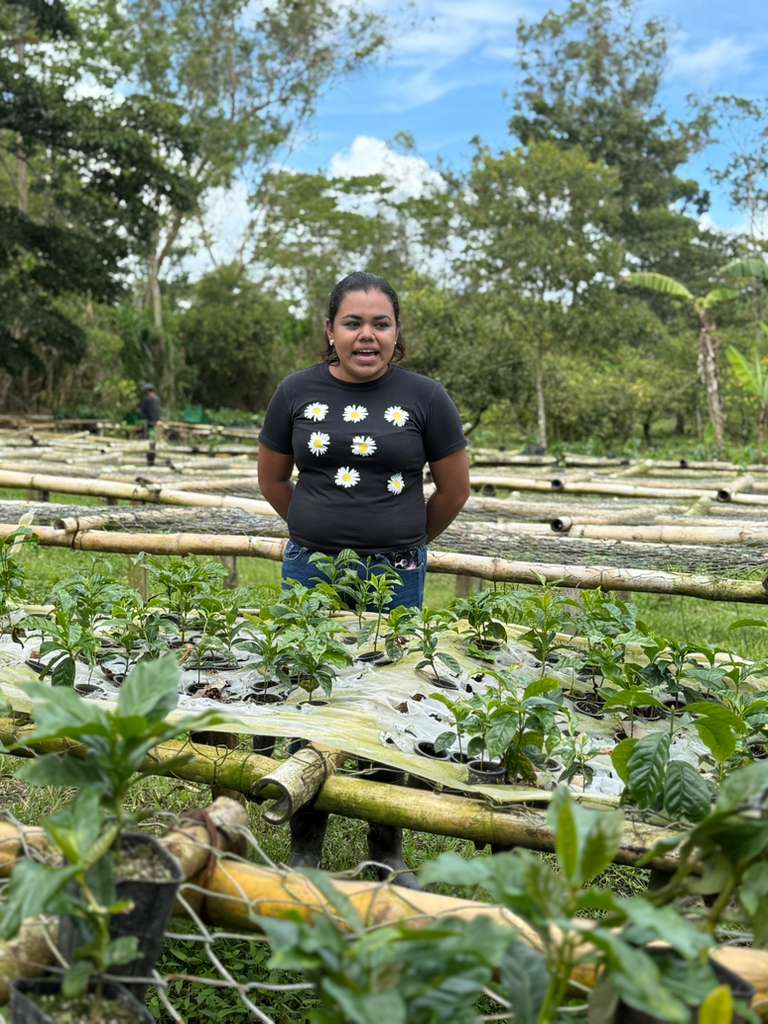
Juanita Gutierrez, briefly hired to be the new farm manager.
The truth is, if that October 2025 trip had been our first visit to El Recreo, the farm would not have qualified to become a partner. There was no vision left. There was no Ferrey left. The heartbeat of El Recreo was gone… it lives in Costa Rica now.
The Backdrop of Politics, Part Five
Meanwhile, the world kept turning. In January of 2026, the US launched an operation to take out the President of Venezuela, Nicolas Maduro. You might ask what that has to do with Nicaragua. The answer is two-fold.
First, for an avowed socialist authoritarian government like Ortega’s, with close links to other socialist governments in the region like Cuba and Venezuala, seeing one of your number fall to the US military is not likely to lessen your paranoia about hanging on to power.
We have heard from numerous sources that the capital, Managua, became significantly more militarized in the days after Maduro’s fall. And paranoia about Americans coming into the country became more pronounced.
Second, Nicaragua is dependent on Venezuelan oil for their energy, and that source dried up overnight. The economy in Nicaragua has shrunk significantly over the last several years, and there is real fear of economic collapse.
It was all finally too much for the Ferrey family.
The Call
In March of 2026, we got word from Miriam that the family has decided to sell the farm. And just like that, the Ferrey family’s long love affair with El Recreo and all the people of Pueblo Neuvo and Jinotega is coming to an end.
Further, Miriam informed us that the security situation in the country is such that neither she, nor most especially her husband Hector, feel that they could guarantee the safety of any future BIGGBY NATION trips. And so, we cancelled the remaining trips we had scheduled for 2026.
Without the ability to continue to go to the farm and verify conditions, we cannot continue a partnership. And, frankly, based on our last visit, we already had significant concerns about the operation of the farm.
By informing of us of the intention to sell, and by cancelling our trips, Hector and Miriam concluded the terms of our partnership.
We had hoped that with time, and a more regular on-site presence at the farm by Miriam and by Carlos Jr., perhaps the ship could be righted, even within the tenuous political framework of the country. But that isn’t possible.
BIGGBY COFFEE, through OBIIS, has purchased all the 2025/26 harvest, and will have coffee through the end of 2026. But it will be our last year of partnership.
What We Have Learned
El Recreo was our second Farm-Direct partnership. We will forever be grateful to Carlos, Leana, and the entire Ferrey family for the journey that we have been on together over these last seven years. They have had such an impact on OBIIS, and how we operate.
Personally, Leana taught me something that has been profound in my life. The world can be full of challenges, and it’s easy to get overwhelmed. But I learned from Leana that you can move mountains if you just focus on doing the next, right thing.
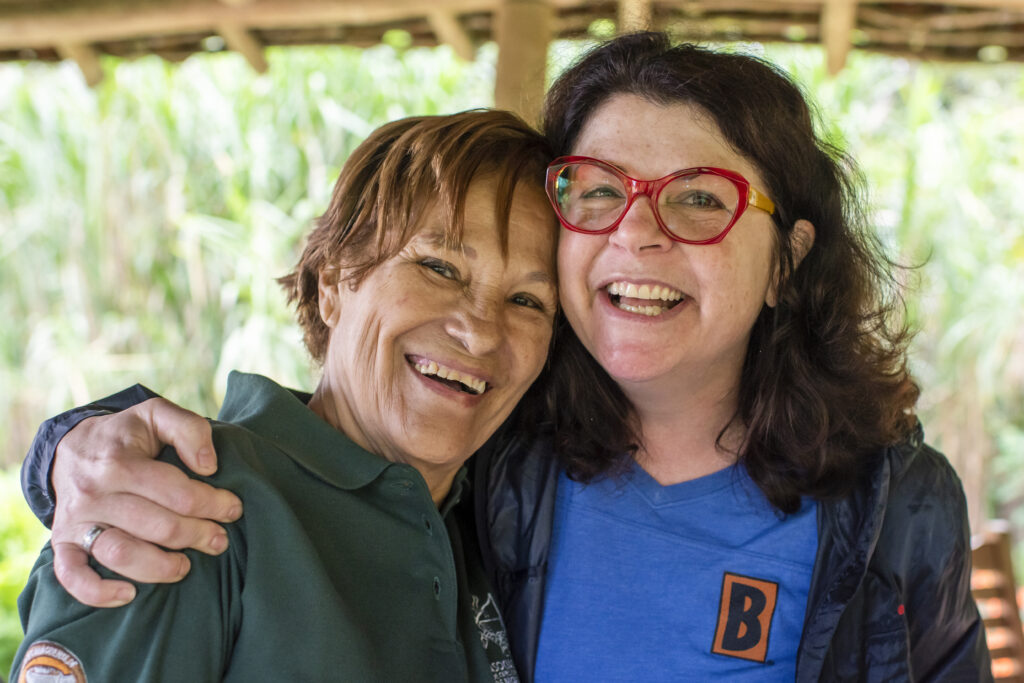
Even without the farm in the family, their legacy continues on. Thanks to their work, hundreds of children were able to get an education.
Marvin, their former Farm Supervisor, is a great example. He was born at the farm to illiterate coffee pickers. Leana made sure that both he, and his parents, learned to read. He was able to get a university education, thanks to the Ferreys. And now, his children are also in university. That is generational change. And it’s just one story of hundreds.
And it’s also worth mentioning that every time we attend a coffee tradeshow in Central America, we meet coffee farmers that are graduates of the school for producers that they operated at El Recreo. Every single one tells us about the impact that opportunity for coffee education has had on their lives and their farms.
The world keeps turning. We are hopeful that one day, there will be a peaceful resolution to all of the challenges that face the nation of Nicaragua. But one thing we know for sure is that the Ferrey family will continue to be beacons of light and love in whatever community they find themselves in.
And we are grateful.