Trusting the Coffee Experts
By Brie Roper
If you live in the United States and you drink coffee, this post is for you.
But before I get to coffee, I’m going to start off with a story about how I think through choosing a mechanic for my car. Go with me.
I don’t tell my mechanic how to fix my car. I’m NOT a mechanic. I also don’t blindly trust any old mechanic that I meet. I look for signs I can trust them: someone who treats me kindly and never talks down to me, someone confident and competent who can explain things in a way I understand. Someone who isn’t trying to squeeze every nickel out of me, because that tells me they value a long-term relationship over a quick sale. I look for someone who seems to enjoy their work and take pride in it, whether that shows up in a clean, welcoming space, transparent communication, or just the way they carry themselves. And if any of that feels off, I’ll take myself — and my car — elsewhere for a second opinion.

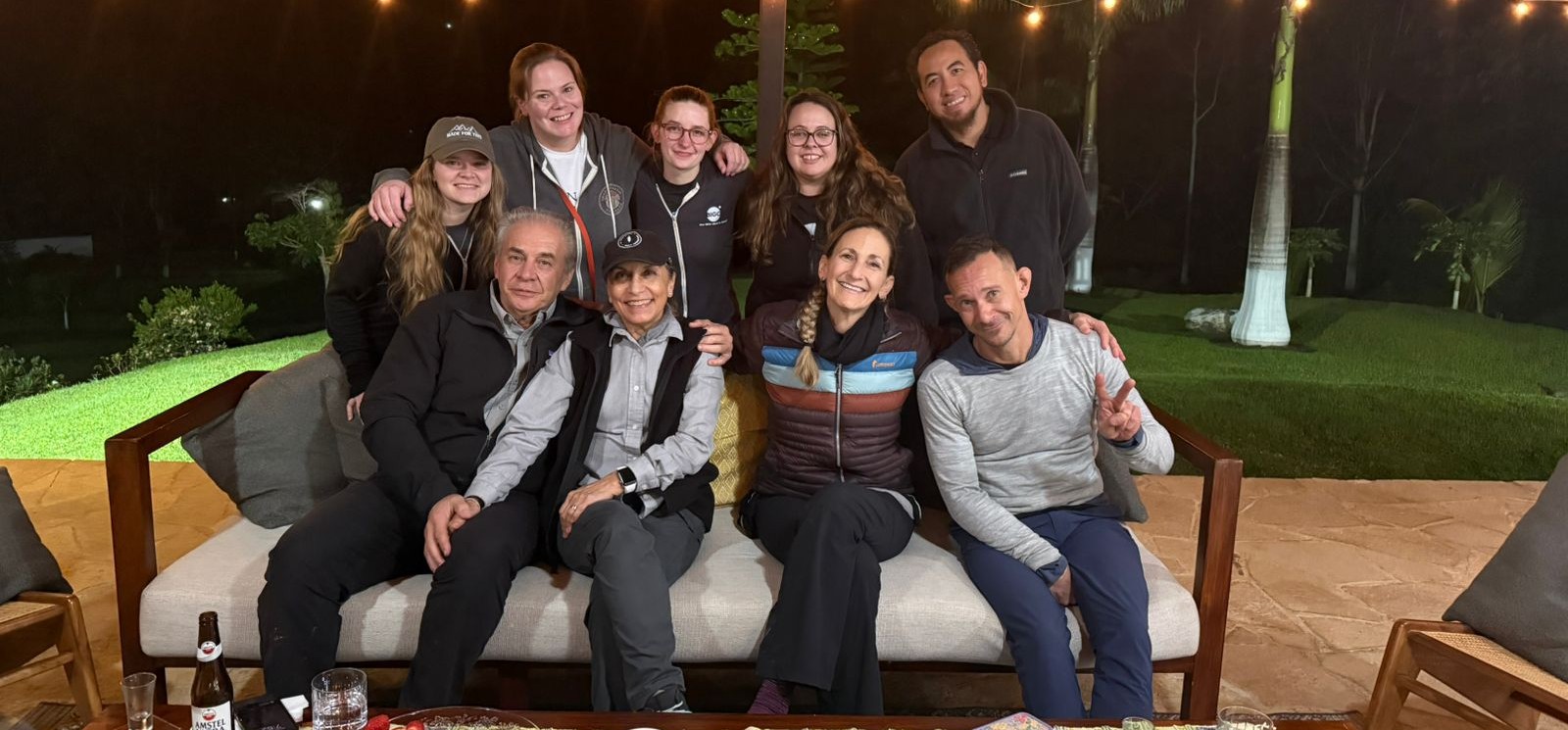
Brie, center, with (l-r) Rod Carpenter, Rich Schaafsma and Ward Yondo from Paramount Coffee Roasters on their way to Finca la Fortaleza in Chiapas, Mexico.
Always Learning
Now, what does “Brie’s Guide to Choosing a Mechanic” have to do with coffee and my most recent visit to Chiapas Mexico? Well, even though I’ve been drinking coffee nearly every day for the better part of 30 years and working in the coffee business for the last 18 years, I’m still nowhere near being a coffee expert. This last trip was only my third visit to origin. I’m still a very new learner when it comes to places where coffee is grown.
On this visit, I found myself wanting to help coffee drinkers, specifically in the United Sates, better understand what goes into their morning cup, that latte that gets them through the afternoon, or the pot they brew before after dinner conversation starts. What do I want people here to do so they understand the value of their coffee? I want U.S. consumers to trust the coffee experts.
The Producers
There are several experts that help coffee get from the tree to our cup, but in this case, I mean the producers. These are people who have built their lives around coffee for generations upon generations. They know the land, the climate, their community. Coffee is their history and their culture. It is in their bones. Of course, they also carry a long and often complicated history with people like us, the ones seeking the precious resource they grow and guard.
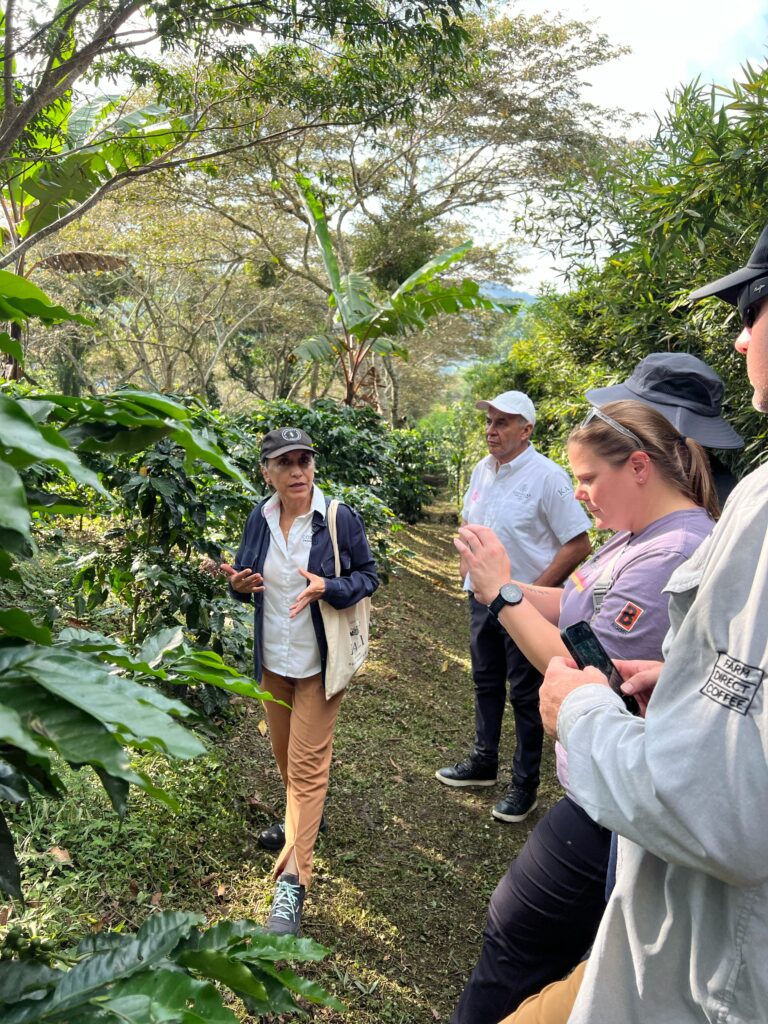
With Maria Esther Saut and Pascual Castillo, the proprietors of Finca La Fortaleza and Cofincaf, in their fields.
When I say they build their lives out of coffee, here is what I mean. Small producers and their communities work incredibly long hours, doing intensely hard physical labor, climbing mountainsides with heavy bags full of coffee cherries. And they do this work to sustain their lives. It is often not about growth or future prosperity; it is only about survival. They plant seedlings hoping that years later they’ll bear fruit. They pick cherries without knowing the price they’ll fetch. They process and dry their coffee beans without any guarantee they’ll sell at all.
OBIIS and Farm-Direct
What One BIGG Island in Space (OBIIS) and the Farm-Direct model make possible is a true relationship. One where a U.S. coffee consumer like me can meet an expert coffee producer and start to build long-term trust and support. A back-and-forth relationship. Just like walking into a mechanic’s shop with limited knowledge, I can visit a small producer knowing I’m the novice, looking for signs that I can trust the expert.
And in many ways, I look for the same things. I look for a producer that is proud of his land, his community and his family, someone eager to show us around and share his plans and his experience. I look for signs he’s caring for the earth: low-growing greenery, diverse plants, shade trees, insects and birds. And I look for the humility and patience that comes from expertise. Someone who knows that he’s the coffee expert, and that I’m the one learning.

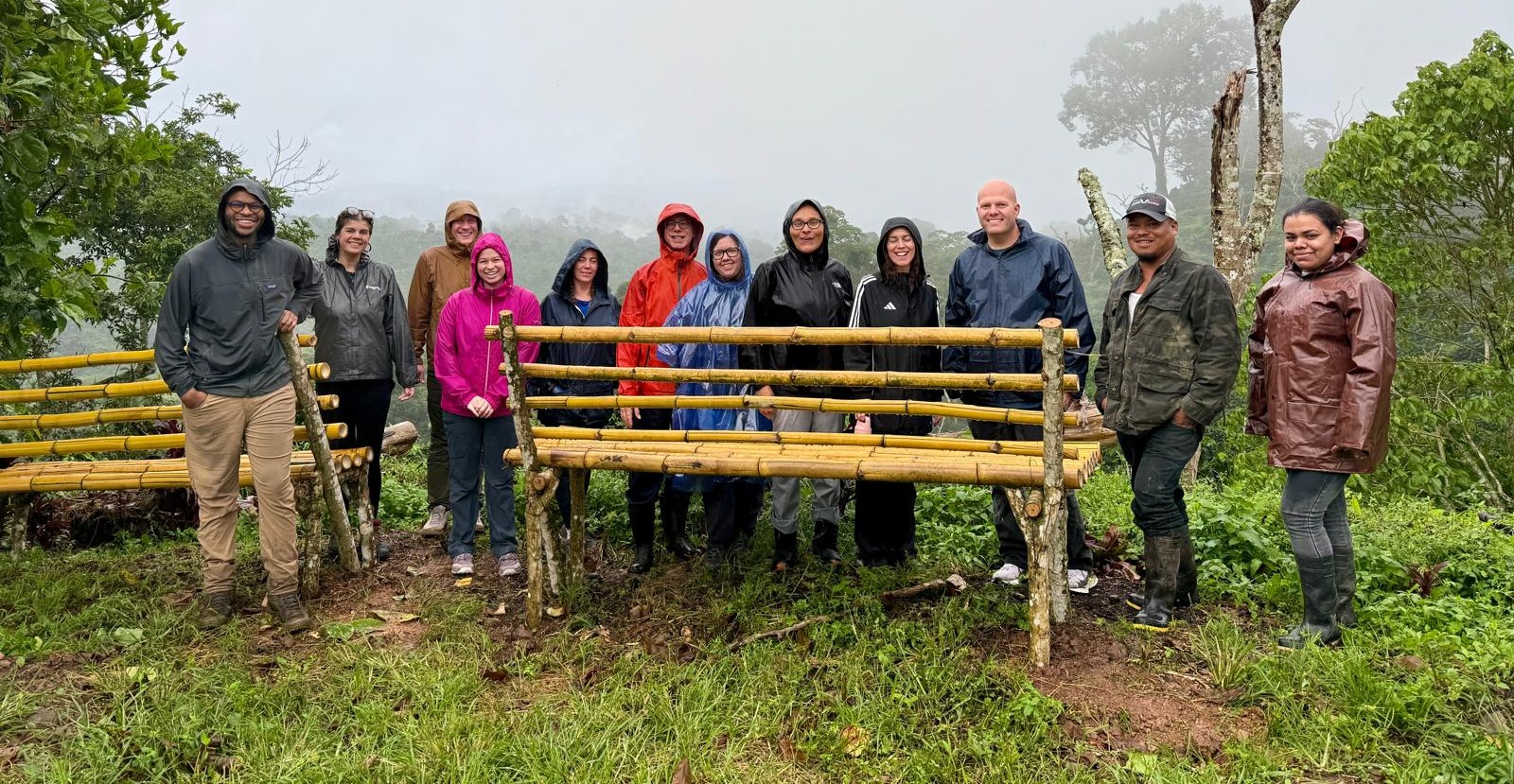
Pedro’s community of small producers in Chiapas, Mexico.
Meeting Pedro
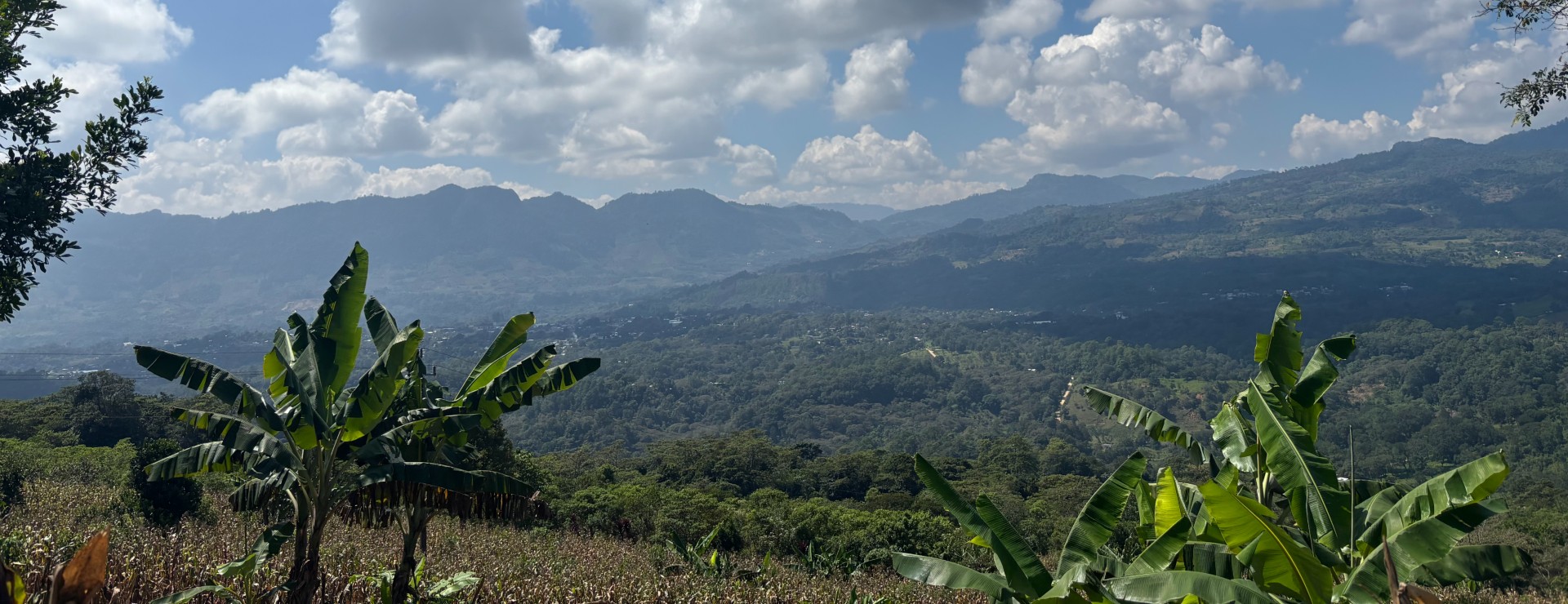
We visited the farm of a man named Pedro. In addition to his work as a coffee producer, he is a pastor at a nearby church and a well-respected leader in his community. To get to his land we hiked a long way up a very steep path and then back down the other side of the mountain where we walked directly into beautiful green coffee plants growing out of soft and rich soil. Standing on the slopes of Pedro’s coffee farm we listened to him talk about his history with the land, his family, and his community. He told us how the climate has changed over the years that he has been growing coffee. The rain used to come in shorter bursts and more frequently. Now it often seems to come all at once. He told us that the people who harvest the coffee will make 3 or 4 trips each day up and down the mountain, sometimes carrying up to 100 pounds of coffee on their backs. He was proud of his land and happy to show it to us. He patiently answered all of our questions.
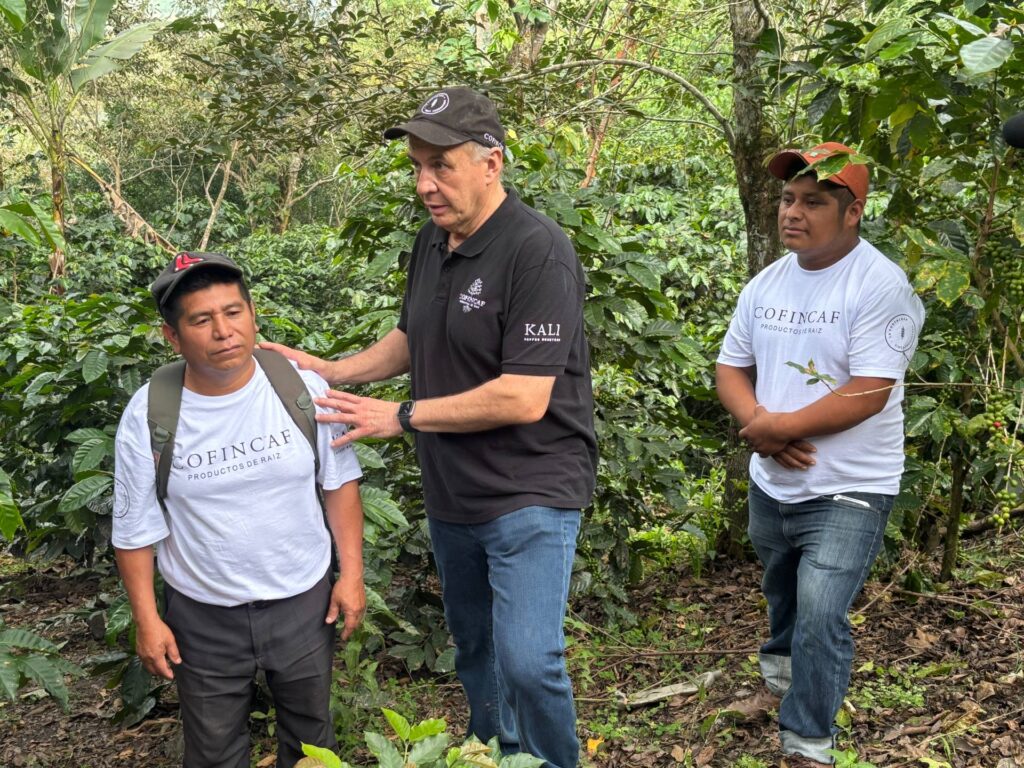
Pedro, left, with Pascual Castillo and Pedro’s son, Juan.
The plants were covered with green coffee cherries that would, within a few short weeks, turn red and be harvested. Those same cherries will be processed and will eventually find their way into bags of BIGGBY COFFEE here in the US. Pedro is the newest producer in Chiapas to become part of the OBIIS partnership.
And I trust him completely. Just as I trust OBIIS to connect us (US coffee consumers) to small producers that we can trust. And I trust those producers and their lifelong… no… GENERATIONS-long experience in coffee production. I trust him.
The Bottom-Line
So here’s what I need from you, fellow US based coffee drinker: Trust me. I’ve visited these small producers three times so far, and I will keep visiting for as long as I can. When your coffee is Farm Direct through OBIIS, you can trust that it is of the highest quality, and it is grown by expert producers who are treating people and the planet right. You may spend more money on this coffee but that is because you are paying (as directly as a US based coffee consumer can) the coffee producer a nearly fair price. When you pay a bit more, you can trust that they will use the resources to grow their farms the right way for the planet and reinvest in their communities.
We love coffee here in the United States, and from what I can tell, the producers I have visited in Chiapas love coffee, too. If we work on trusting each other in this coffee business, we are working to protect people and the planet.