Boots on the Ground: Diary of a trip
Ethiopia & Kenya, February 2026
By Nathan Havey & Janeé Hartman
African Fine Coffee Conference- Addis Ababa, Ethiopia
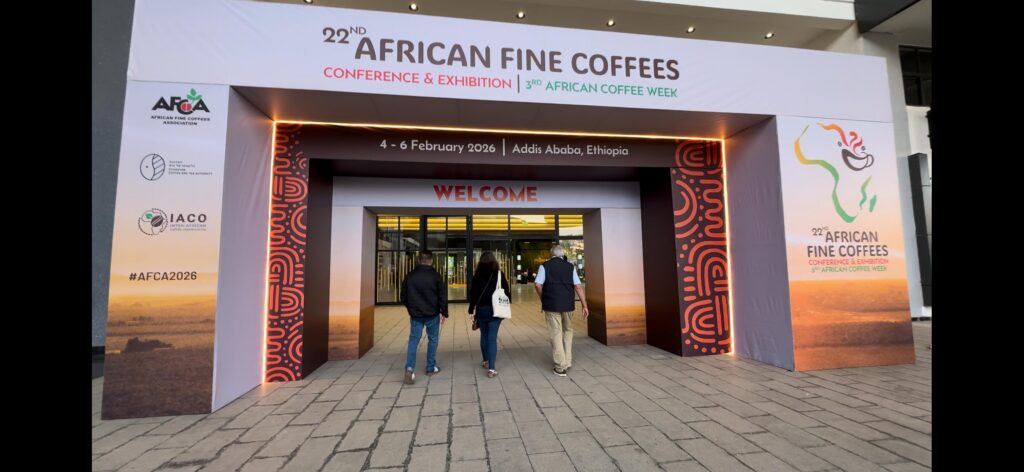
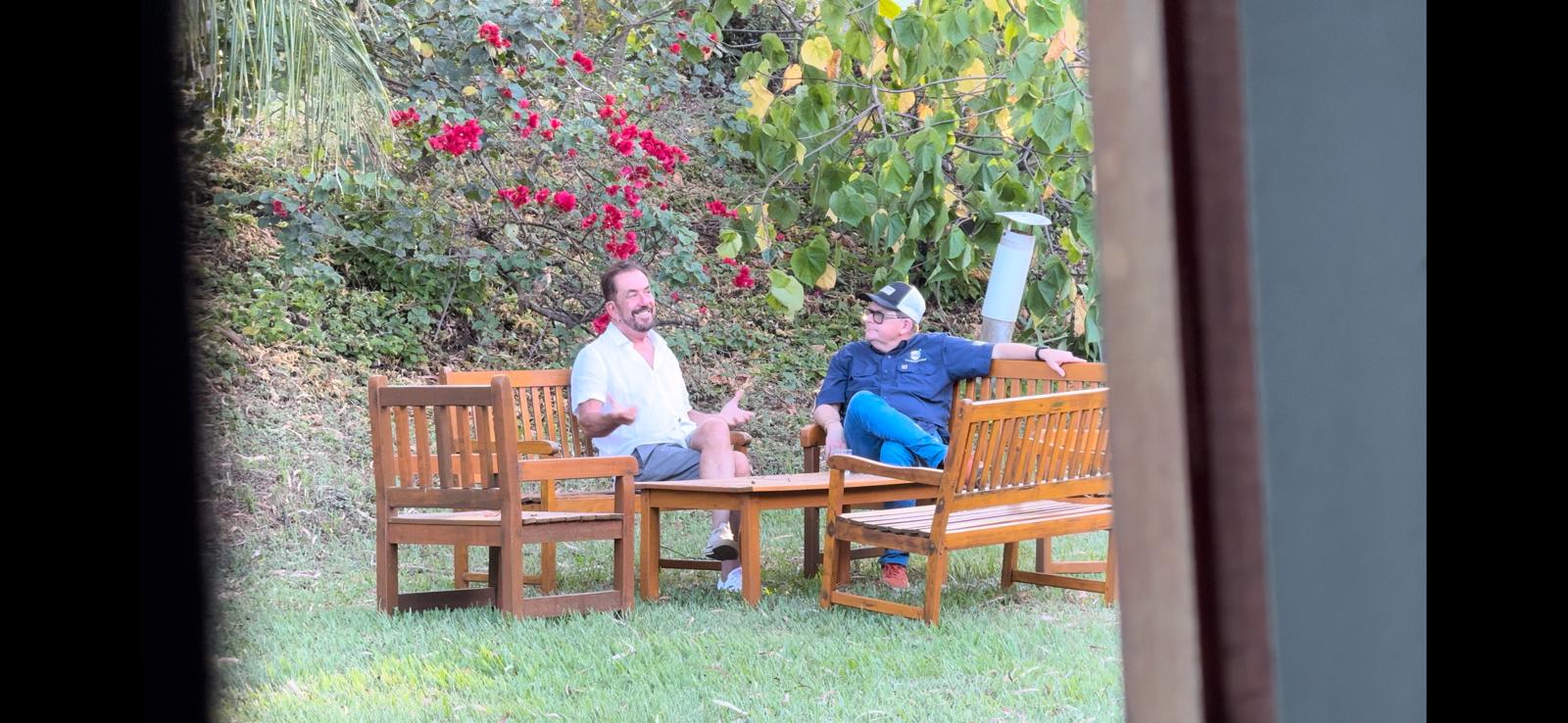
Bob, Michelle, and Gary Dodd from Gorongosa are arriving at the African Fine Coffee’s conference in Addis Ababa, Ethiopia.
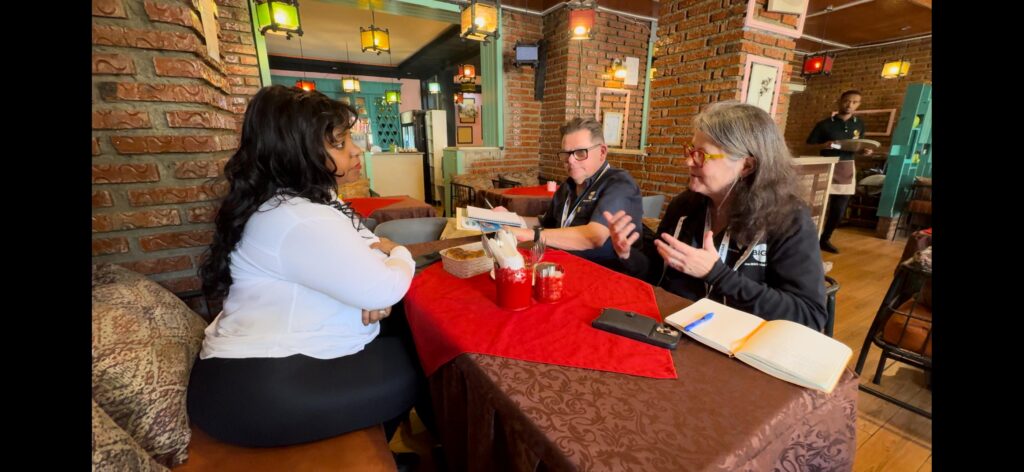
Bob and Michelle have lined up a lot of meetings with producers and exporters. Frehiwot Kassa took them to lunch and told them she started an exporting company to help some of her family sell their coffee.
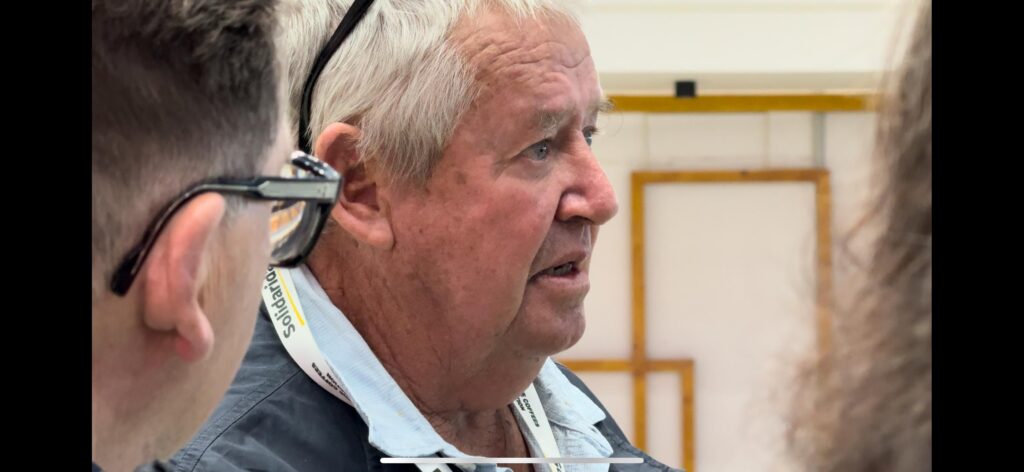
Gary Dodd (Gorongosa) talks with some exhibitors at the African Fine Coffees conference.
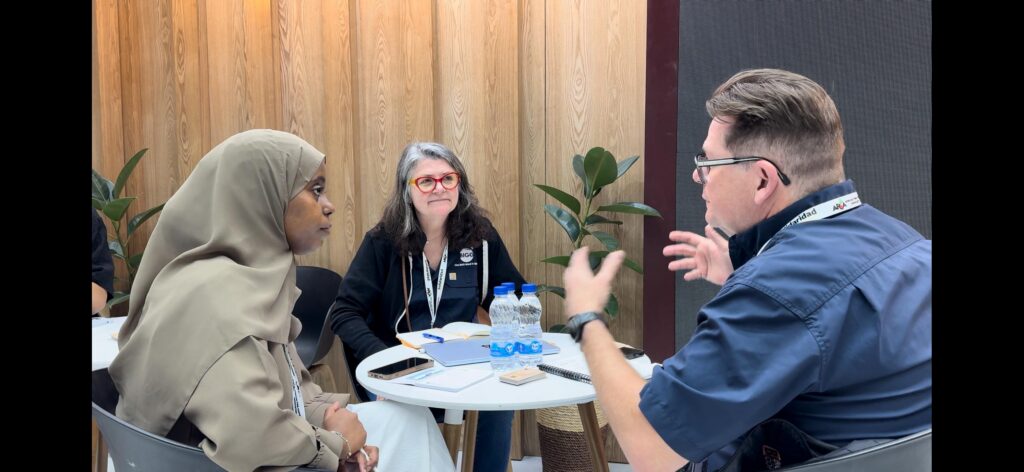
Bob and Michelle had a long talk with Fahem Coffee’s export manager, Rihana Mohammed. Rihana Mohammed shares many values with the OBIIS team. Her family has been in coffee for three generations, and her company is committed to the health of the communities they work with.
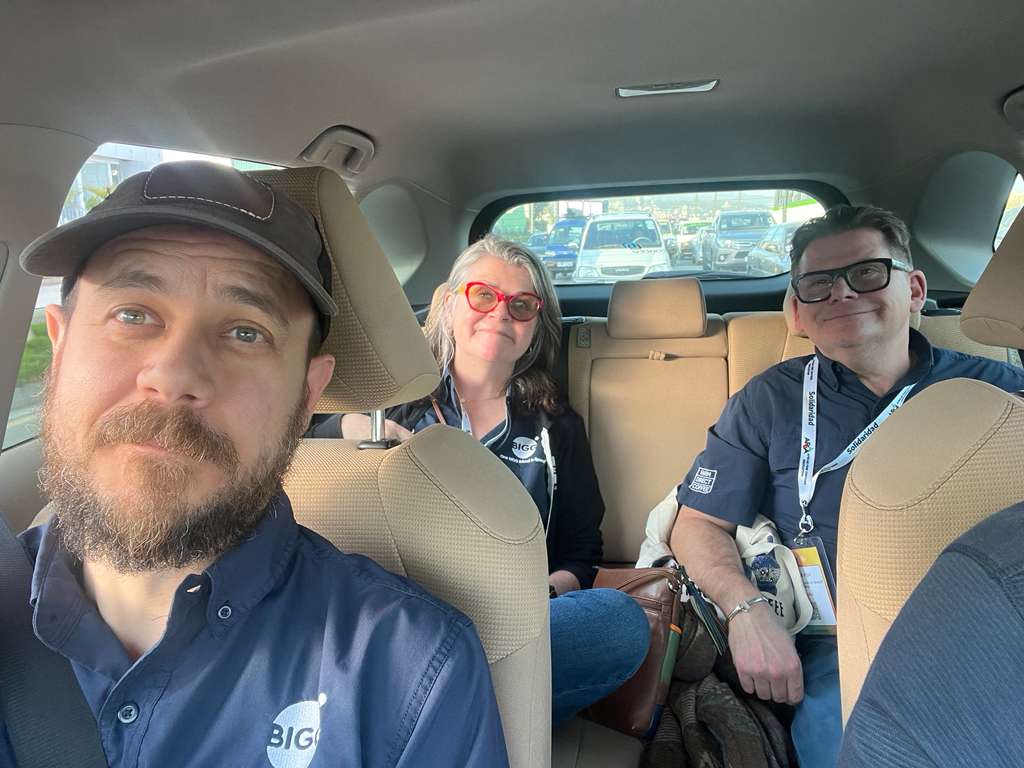
The OBIIS team is jet-lagged. But day 1 was good, with at least one prospect for a new Farm Direct relationship.

Addis Ababa is the capital of Ethiopia. It’s a big cosmopolitan city with a coffee scene that has grown tremendously in the last few years.
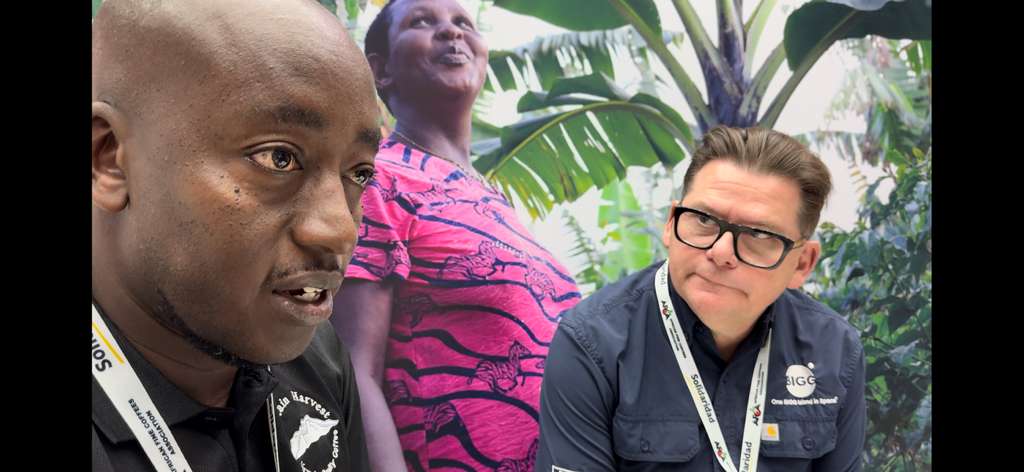
Kenneth Mugabo Barigye is the managing director of Mountain Harvest Coffee in Uganda. Listening to Kenneth was like meeting a kindred spirit. What he and his team are up to in Uganda is very aligned with what OBIIS is up to.
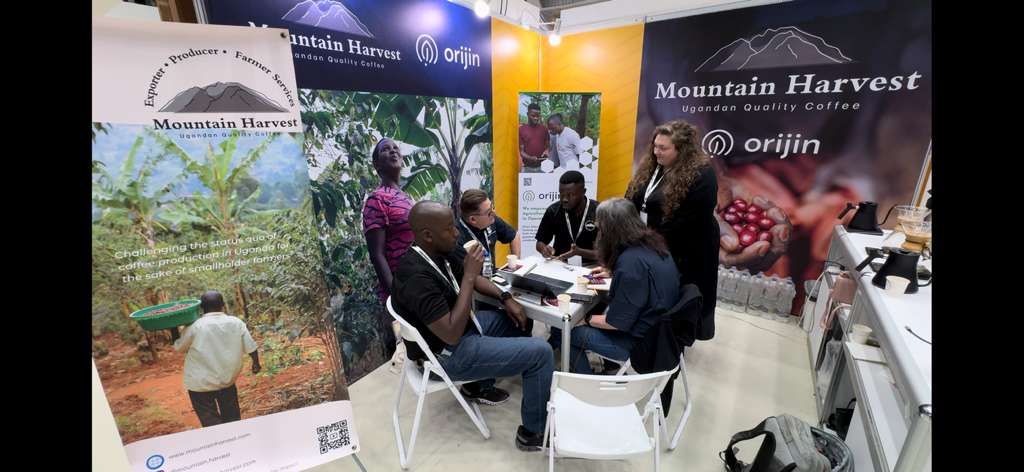
Mountain Harvest Coffee focuses on ensuring that farmers are able to earn a profit and has created an impressive system in Uganda to make that happen. We’re excited to deepen this relationship.
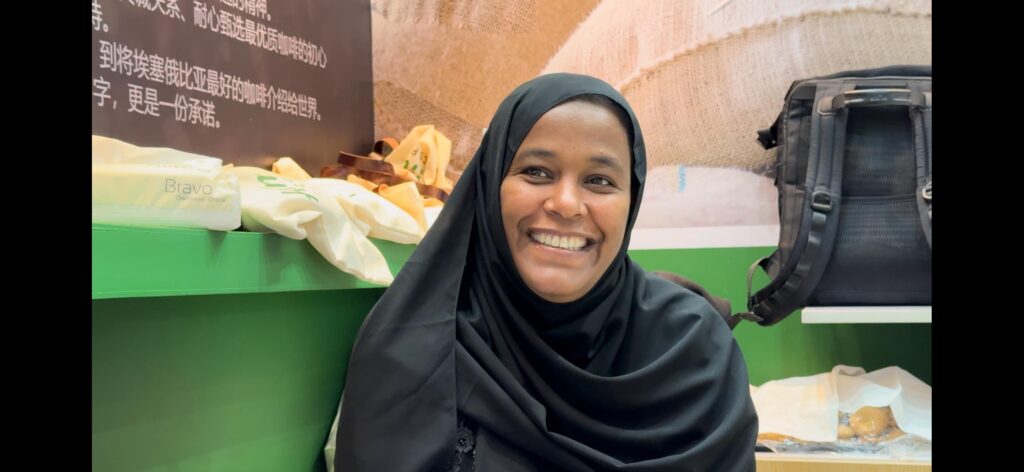
Mehbuba Seid and her husband run Himma, an Ethiopian coffee supplier. Bob and Michelle had a good meeting and some fantastic dates.
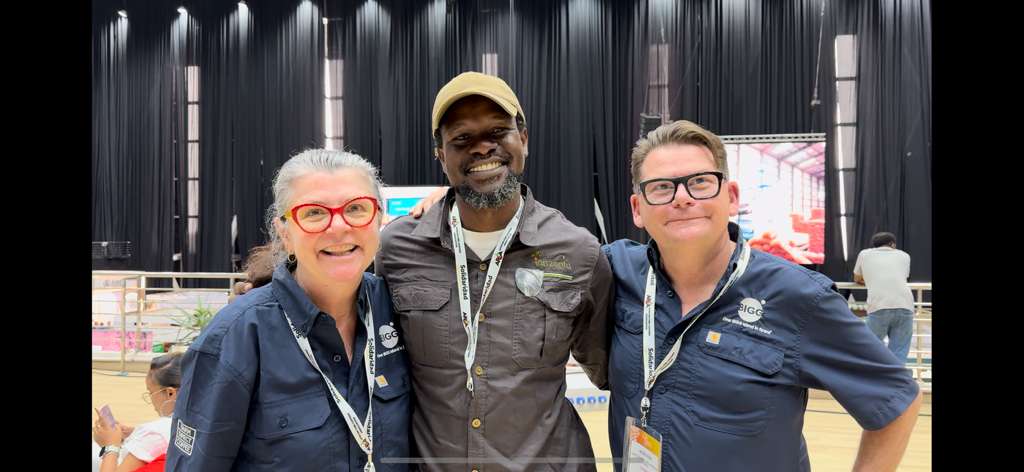
Bob and Michelle met with Keremba from Shamba Coffee. There was a real spark of connection here, and it feels very well aligned. Now we just have to figure out when we can get to Tanzania!
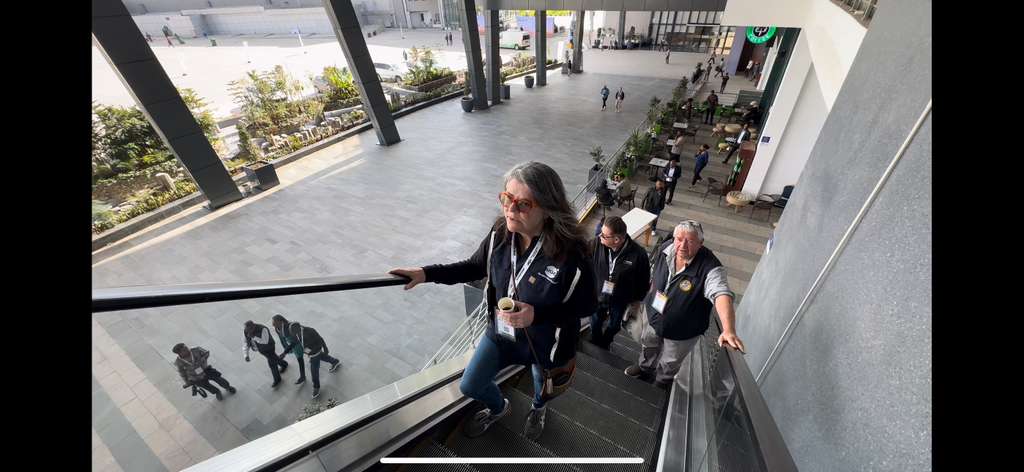
In the swirl of scheduled and unscheduled meetings at the Africa Fine Coffees conference. Some conversations were promising; others were stark reminders of how disconnected the coffee industry is from the impact. It is having on people on the planet.
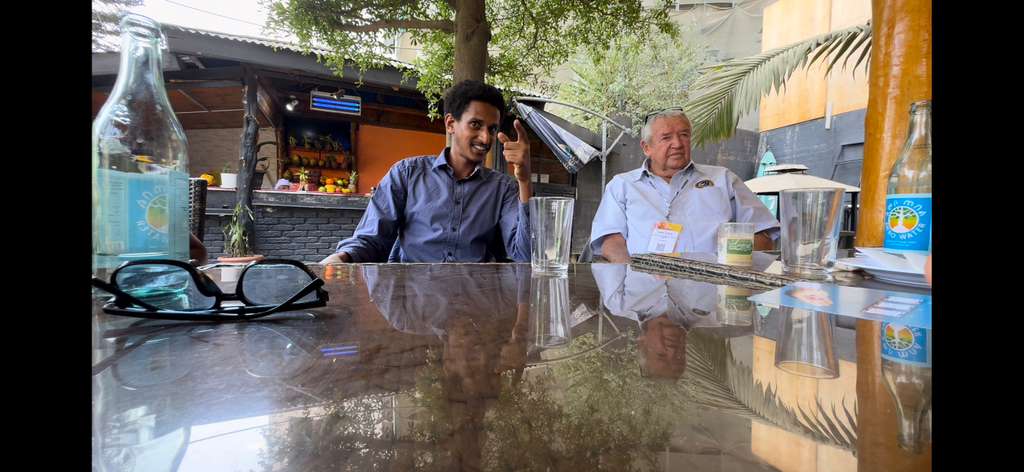
On Friday, we had a great lunch with a family that runs a coffee farm in Ethiopia. We really connected, and we hope to see more of them and learn more about what they’re doing.
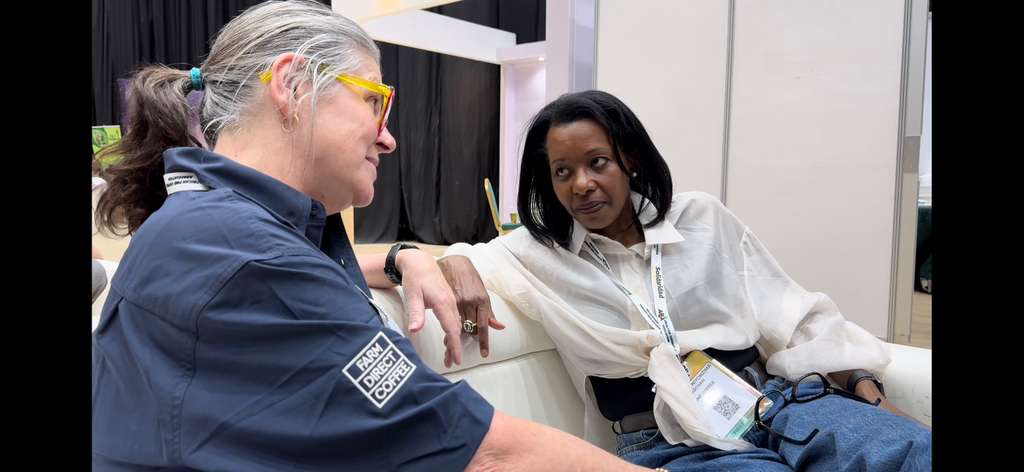
We also ran into some old friends at the conference. This is Janine from JNP Coffee. She’s doing some excellent work in Burundi. The other team went to visit her several years ago, and it was great to reconnect.
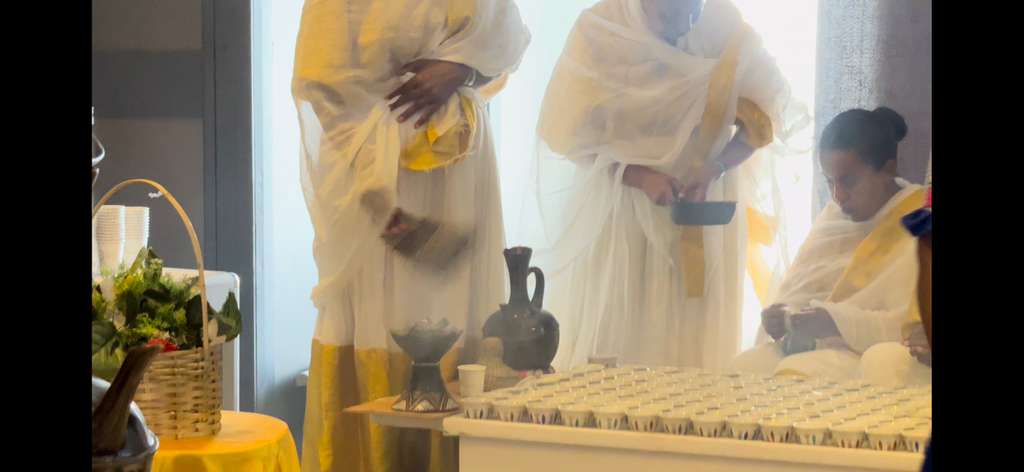
A traditional Ethiopian coffee service is a very special experience. It includes a lot of smoky incense, smoky roasting of coffee beans in a pan over an open fire, and eventually some very strong coffee.
Boots in the Air
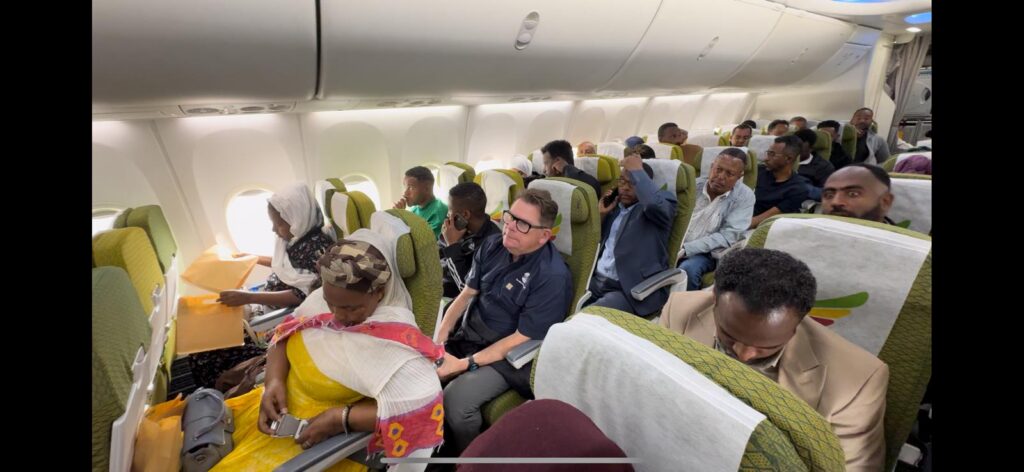
On Saturday, the OBIIS team flew to Jimma, one of Ethiopia’s most productive coffee regions.


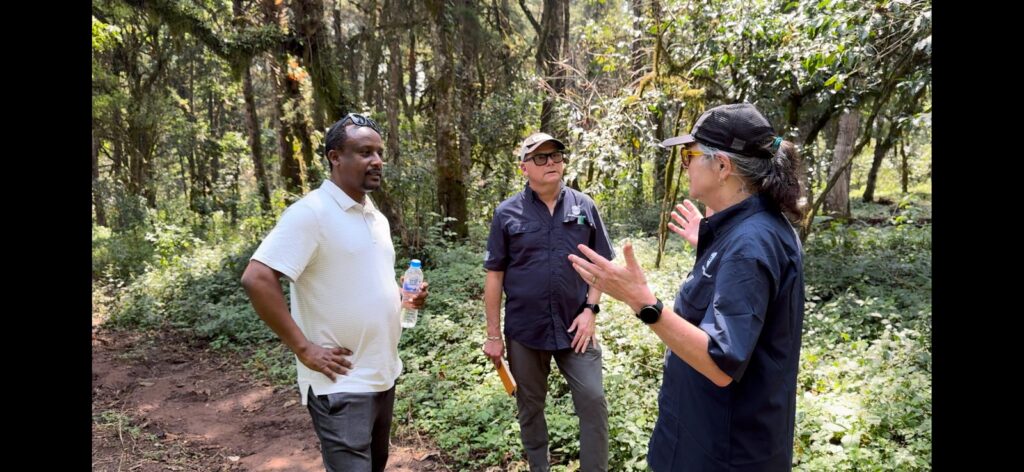
We are here with Getu. He introduced us to the idea of making sure coffee producers get a high percentage of a metric called FOB, which is the price that is paid for coffee as it leaves the country of origin. Getu tries to make sure that the producers he works with get 90% of FOB. That’s incredible because what usually happens might be more like 20% or even less.
Gizachew Teshome
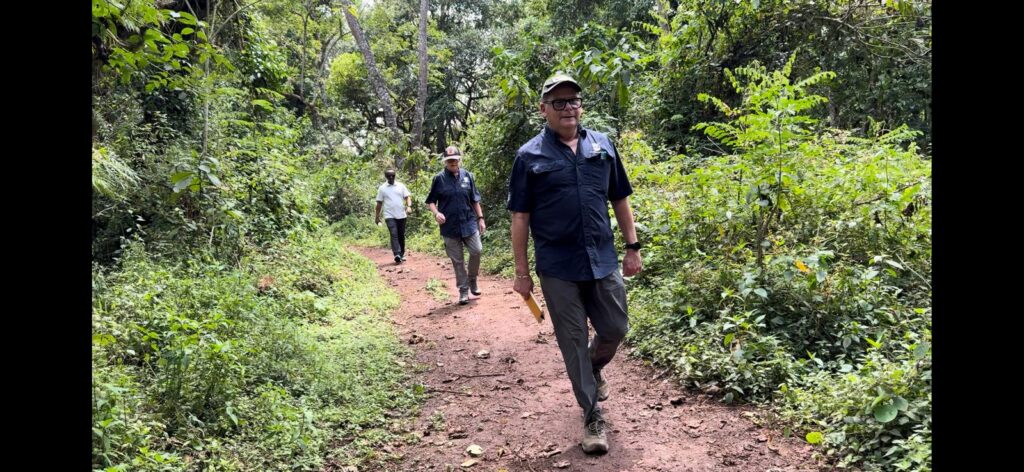
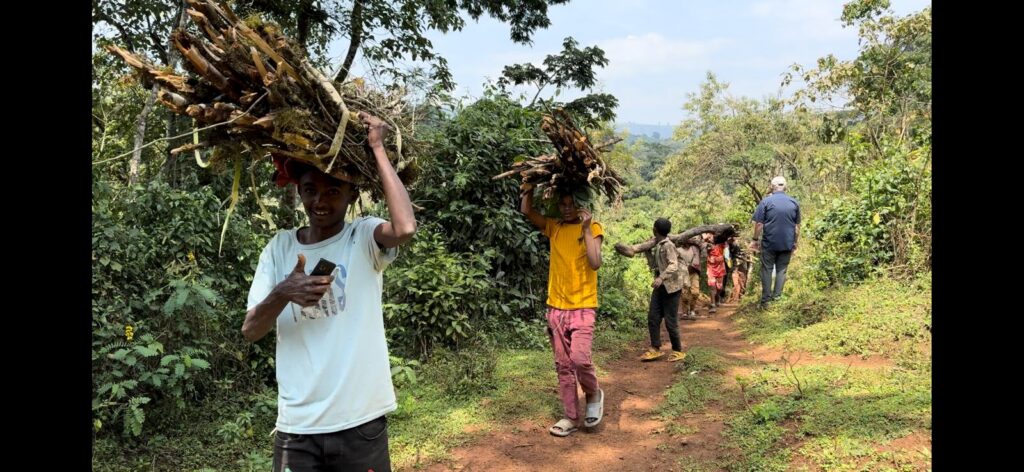
Getu took us up in the hills about an hour and a half outside Jimma. He took us on a hike through an area where coffee grows under a gigantic old-growth forest. As we hiked, we passed a lot of people who had gathered firewood. Getu remarked that life here is not easy.
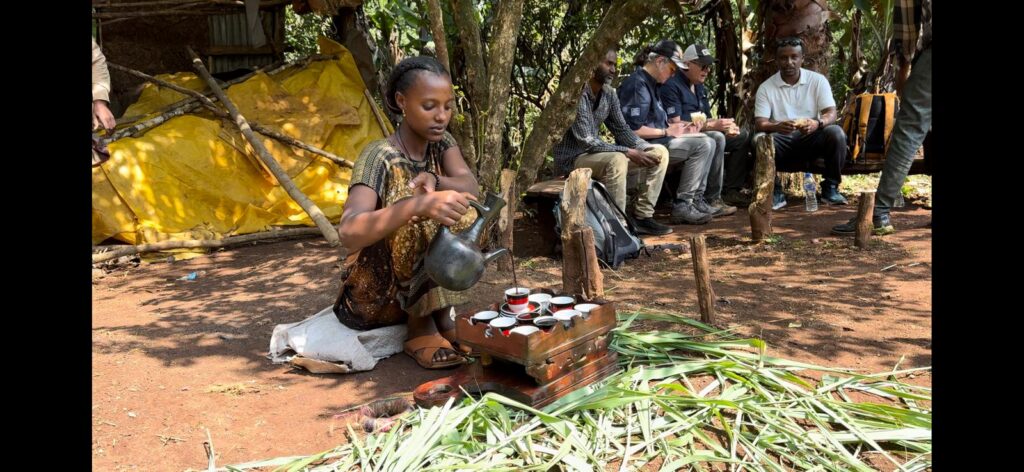
An hour into the trail, we arrived at the farm of Gizachew Teshome. We were treated to a wonderful coffee ceremony, and we settled in for some conversation. As often happens in coffee country, the initial awkwardness of a meeting like this passes in a few minutes.
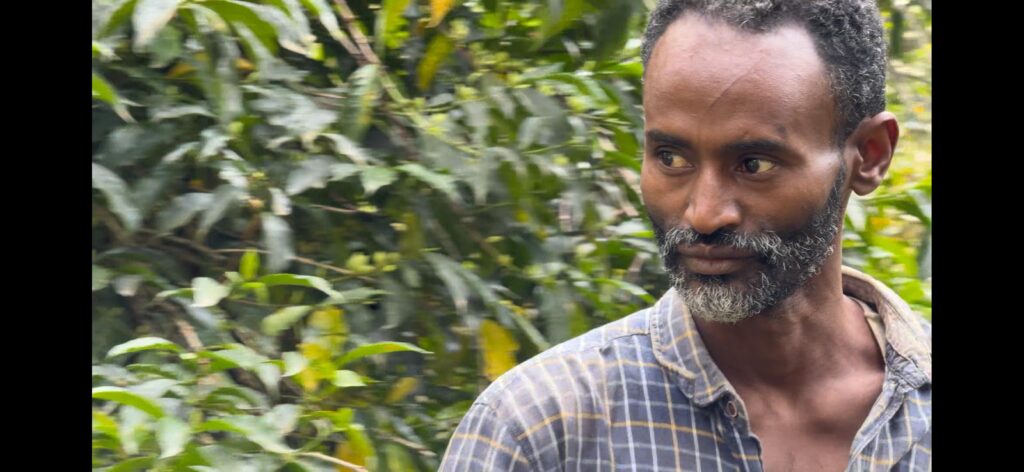
Gizachew Teshome
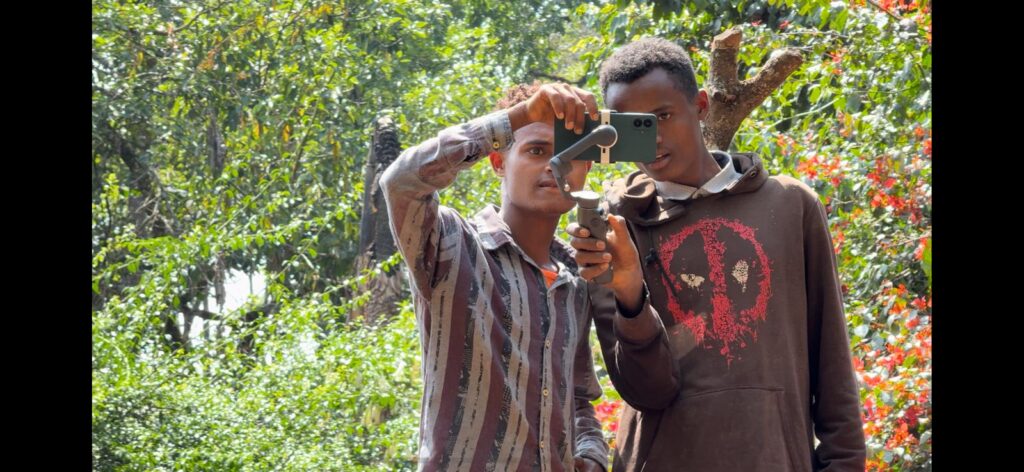
Nathan gave a couple of the young men his phone stabilizer to play with. And they began documenting what was happening too.
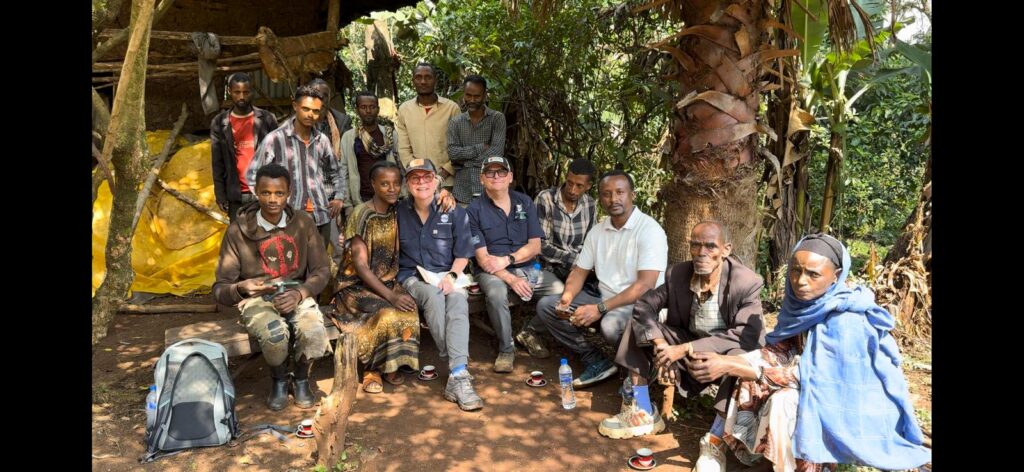
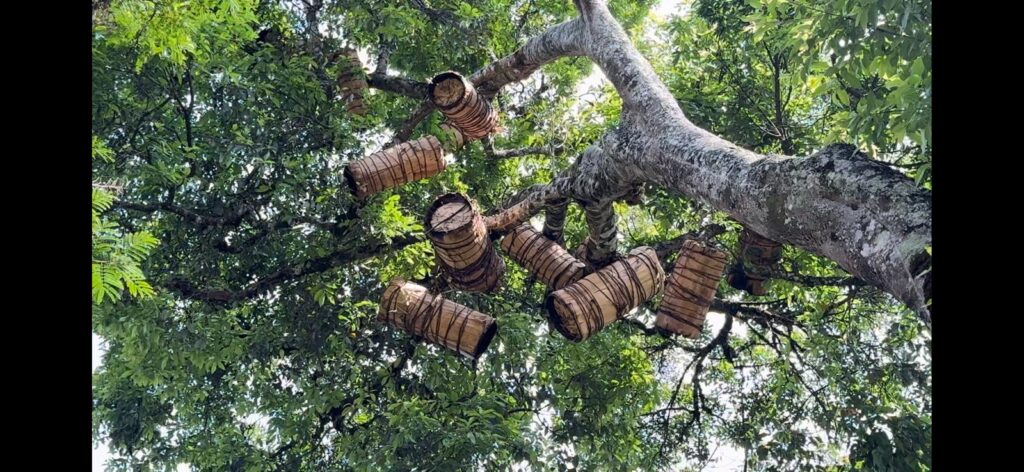
Next, it was out to see the coffee, which is perfectly adapted to this ecosystem. After all, this is where coffee is from! They also keep bees here, but they keep the hives in barrels that they hoist high into the trees. They lower them with ropes when it’s time to harvest the honey.
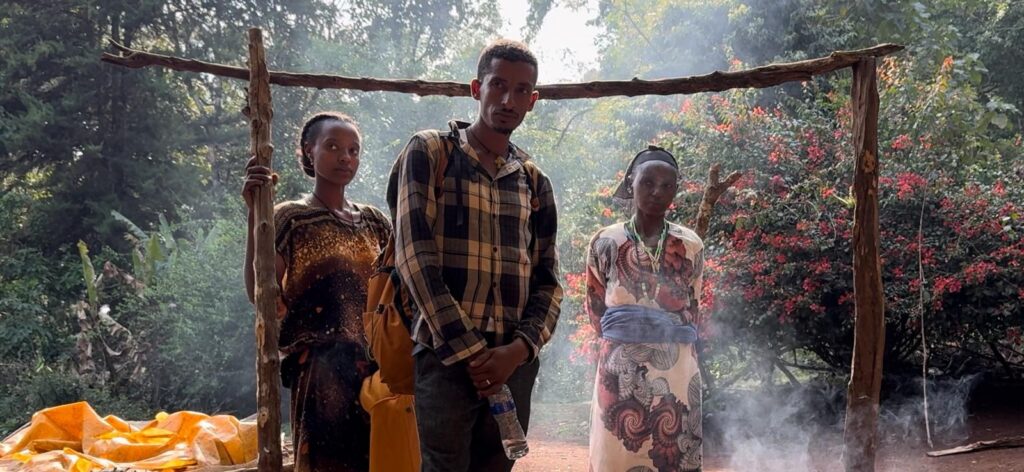
When we came back from the fields. The conversation continued. Bob and Michelle asked Gizachew about his vision for the area and what he thought the right price would be for his coffee.
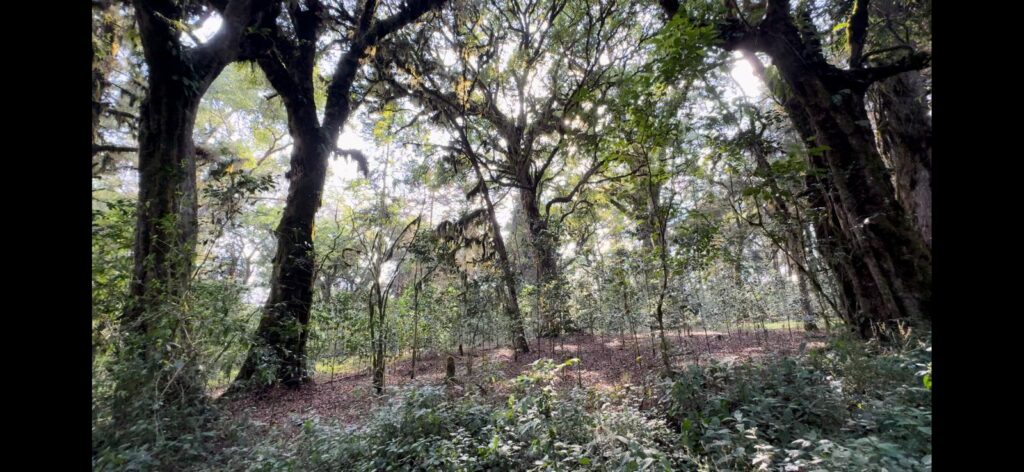
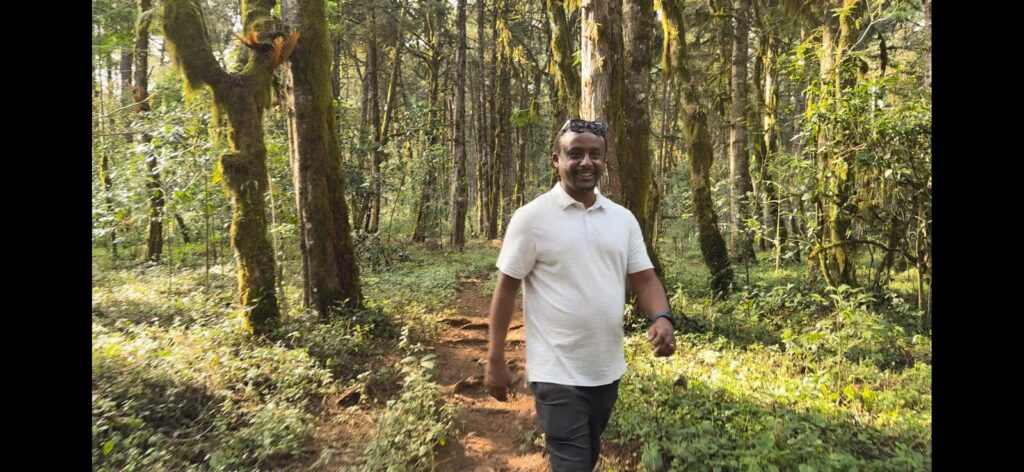
The hike down the mountain was simply spectacular in the late afternoon light. Getu has been walking these trails for years. It is kind of his happy place. The OBIIS team was pretty happy, too.
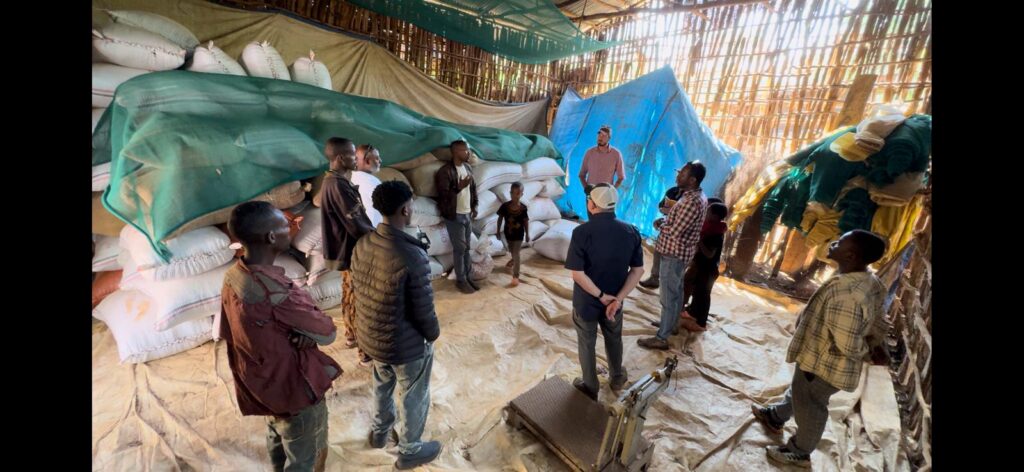
When we made it back to the road, Getu took us to a washing station where coffee from this area is processed, and then to a storehouse that was full of coffee.
Historically, high prices gave farmers a lot of confidence last year, but as the price is falling, they are holding onto their coffee with the hope that it will rebound soon. As the sun sank low, we headed back to Jimma. There is a lot to love about what the OBIIS team saw today. It’s too soon to know if this will be the right fit for a new partnership.
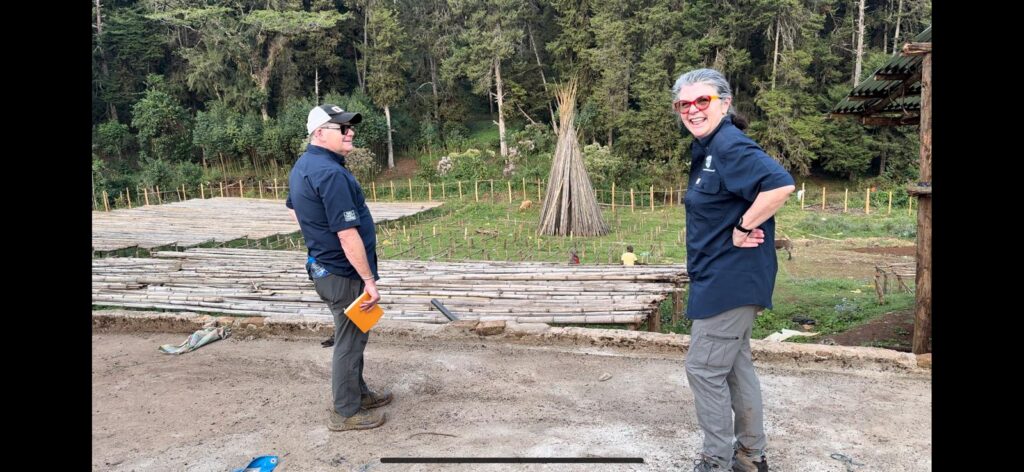
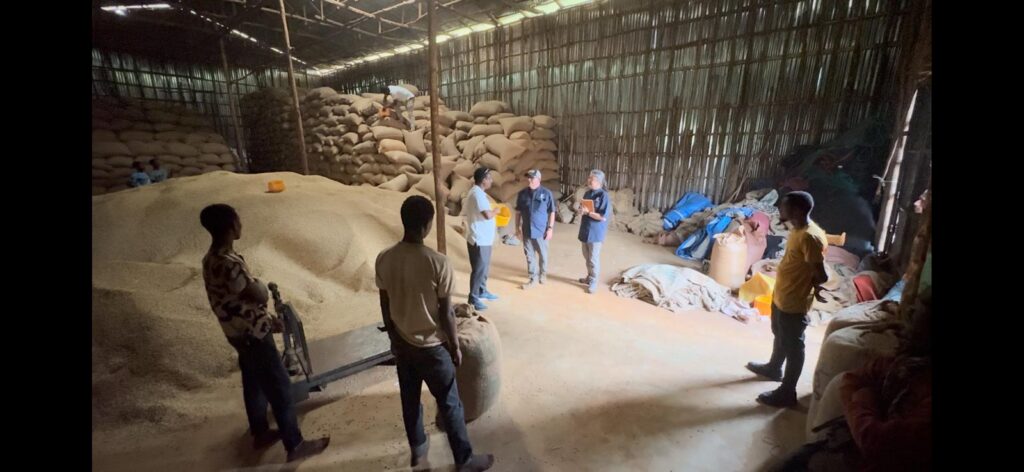
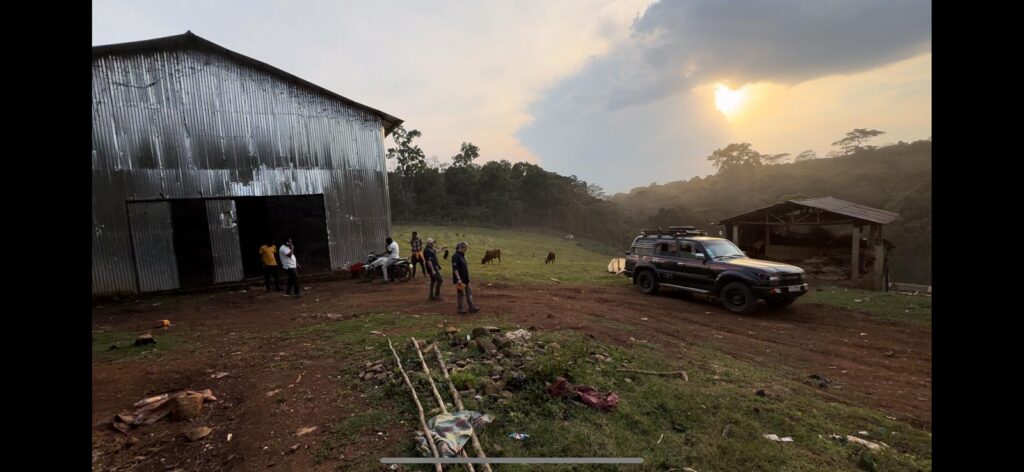
As the sun sank low, we headed back to Jimma. There is a lot to love about what the OBIIS team saw today. It’s too soon to know if this will be the right fit for a new partnership.
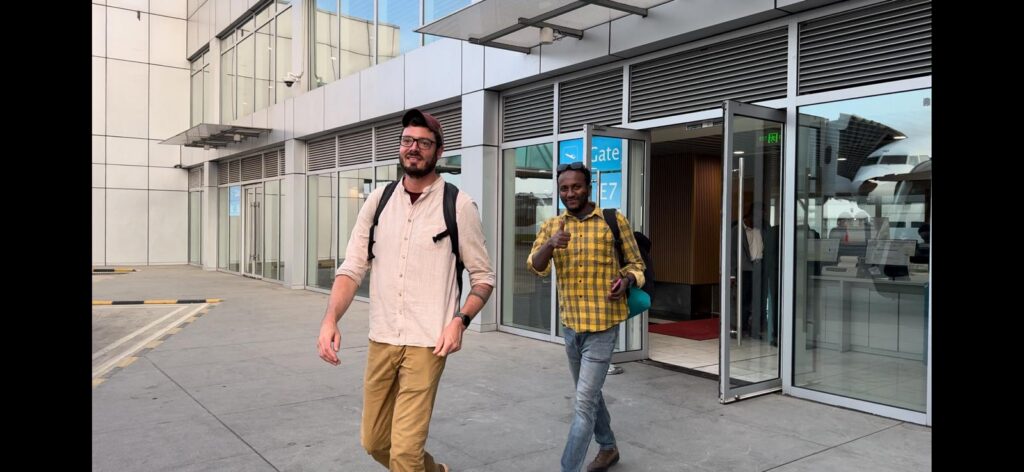
On Monday, we met up with Matthew Thornton and Lemi Tagesu to take a short flight to Hawassa and then a longer drive to Dilla and Yerga Chefe, another famous coffee origin in Ethiopia.
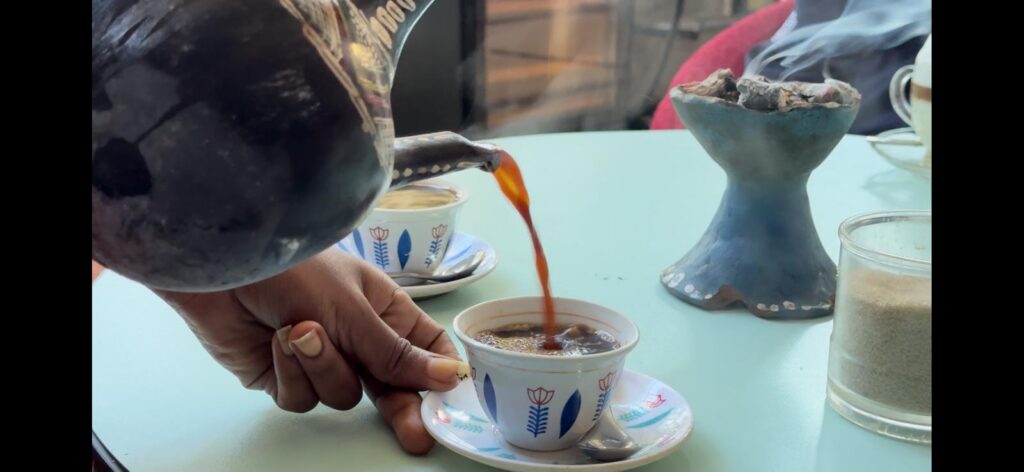
Dila is a small but bustling city, and we stopped for coffee before heading out to the fields.
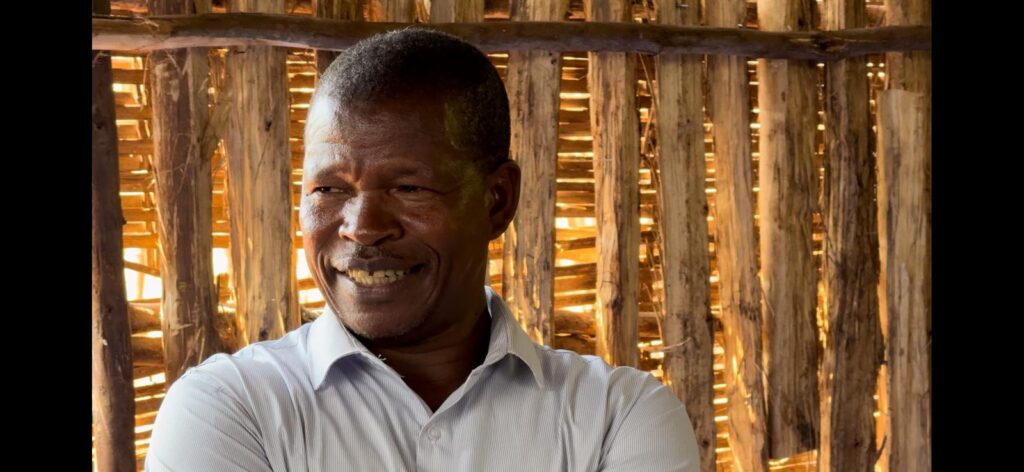
Worku Werera
We pulled over in a small village and navigated a maze of trails that ran along property lines to find Worku Werera, who met us with a big smile and a lot of enthusiasm. He showed us his farm and, as a special treat, much of his coffee was in bloom. Worka’s son, Abenezer, paid close attention as we got to know each other and talked about their hopes and dreams.
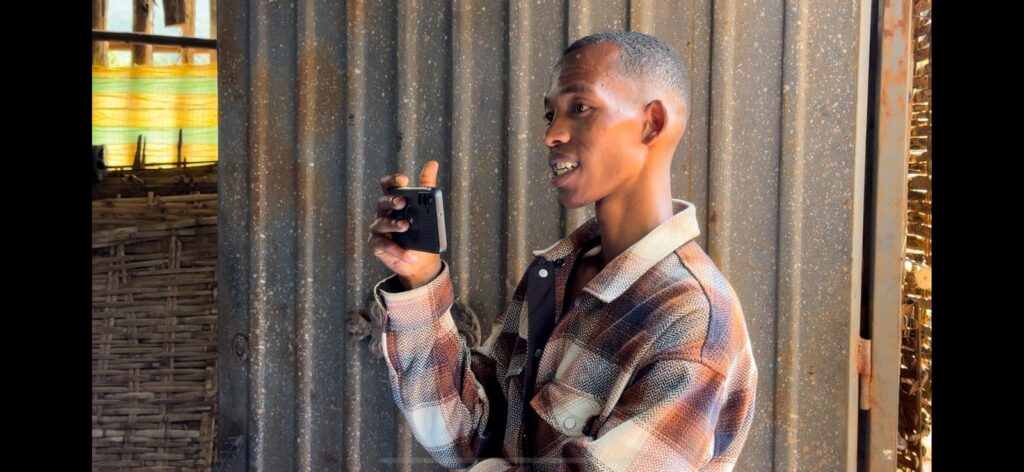
Abenezer Werera
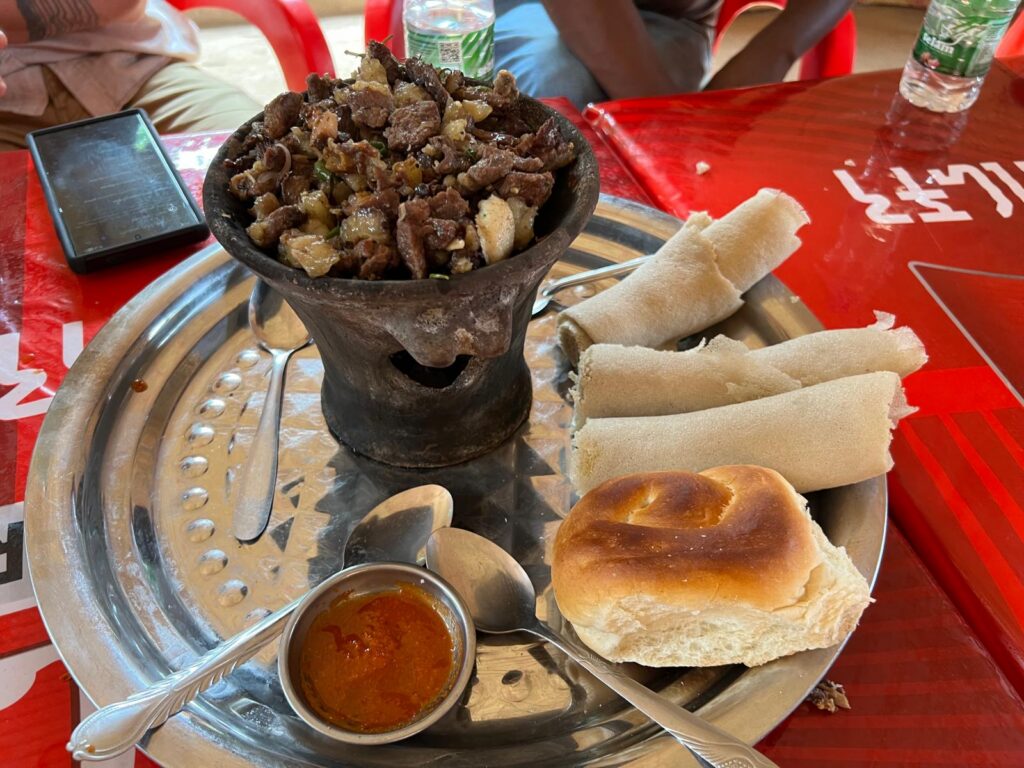
Then it was time for a much-needed lunch. A popular local dish is called “tibs”, a grilled steak with onions and hot peppers served, as Ethiopian food tends to be, with injera, the crepe-like bread.
Abebe Oliye
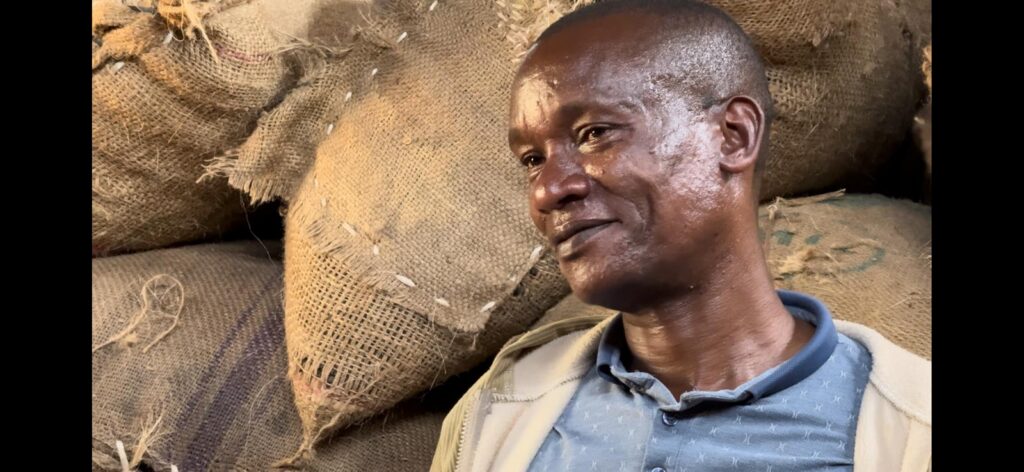
We then drove up into a different community that was just off the main road to meet Abebe Oliye. When we pulled up, a gaggle of kids ran up to see what was going on. A couple of them got through the gate before it was closed behind us, and we settled in for a conversation in the storage shed where Abebe keeps his precious coffee.
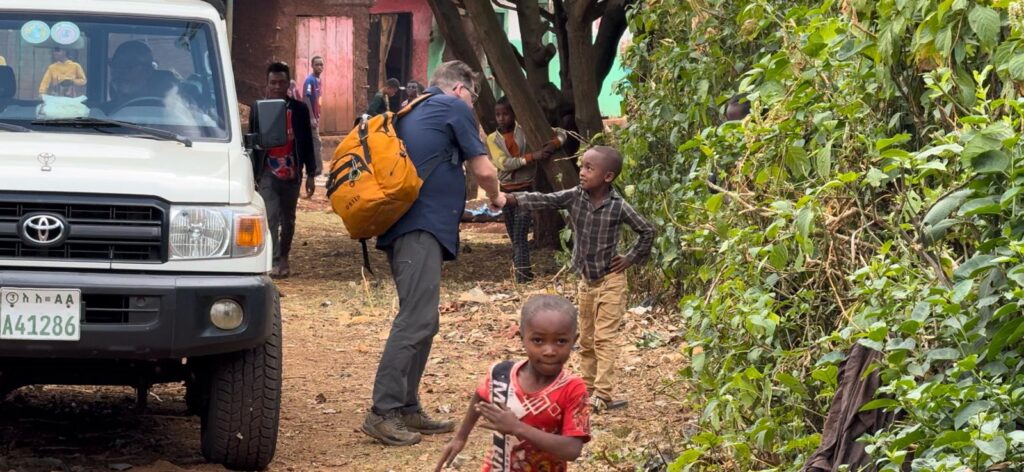
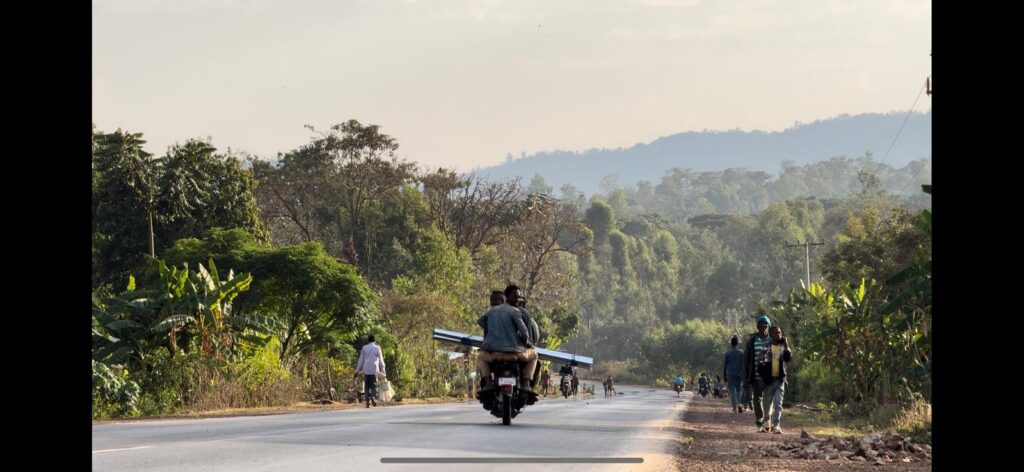
Abebe wanted to show us his farm, so we crossed the highway, dodging motorcycles laden with more people than seemed possible, and heavy trucks carrying a whole lot of everything, and walked down a short path and into his coffee. Many of the kids and neighbors followed us to see what was going on.
Yerga Chefe
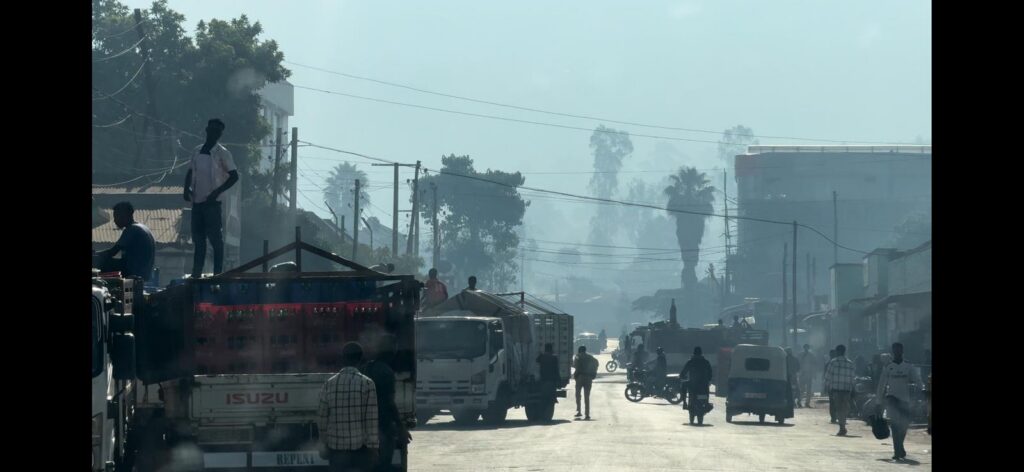
The next morning, we set out for Yerga Chefe. We observed this almost everywhere we go in coffee country, but the air pollution from cars, trucks, and motorcycles, as well as from cooking fires and burning trash, is a backdrop to much of what is happening in cities on these trips.
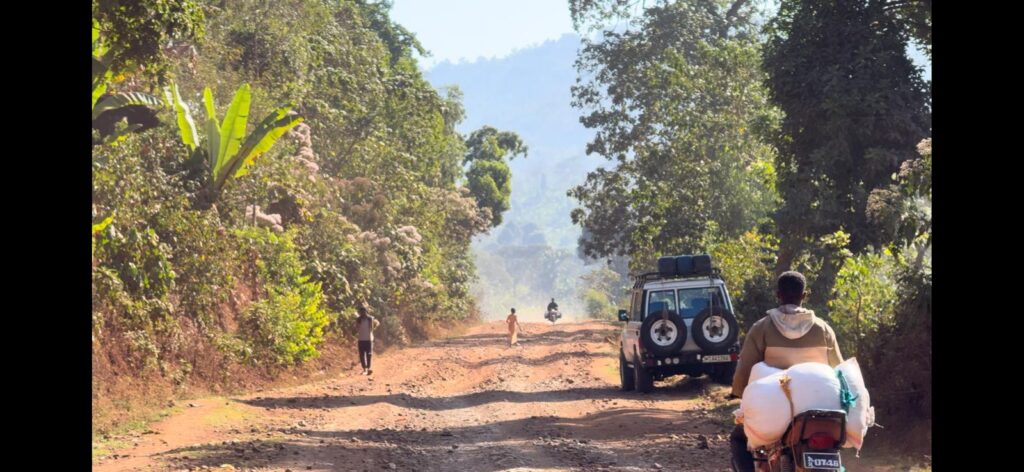
That is one of the reasons it is so nice to drive up and out into the coffee areas. We left the pavement and pulled over in a seemingly random stretch of road.
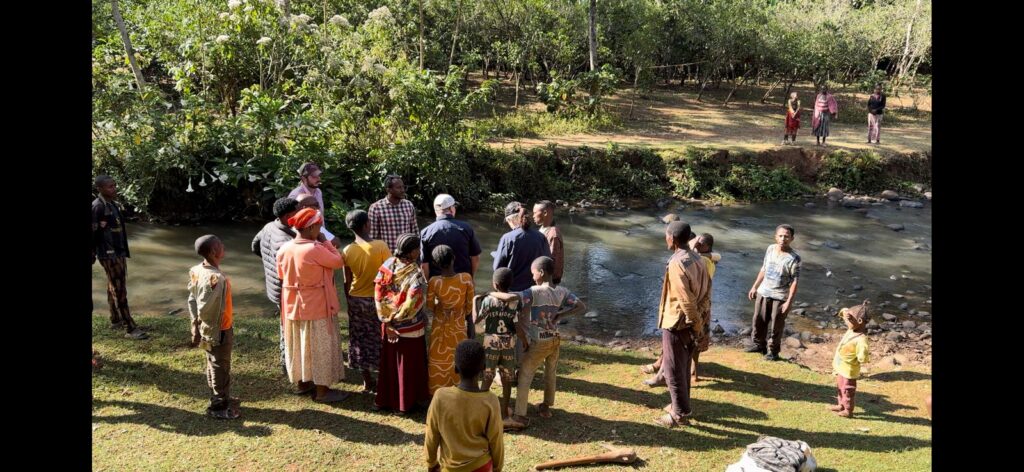
We were greeted by Tamiru Shonto, who eagerly let us down through his coffee to the bank of a small river. As usual, many of the neighbors and their children gathered around to be part of the moment.
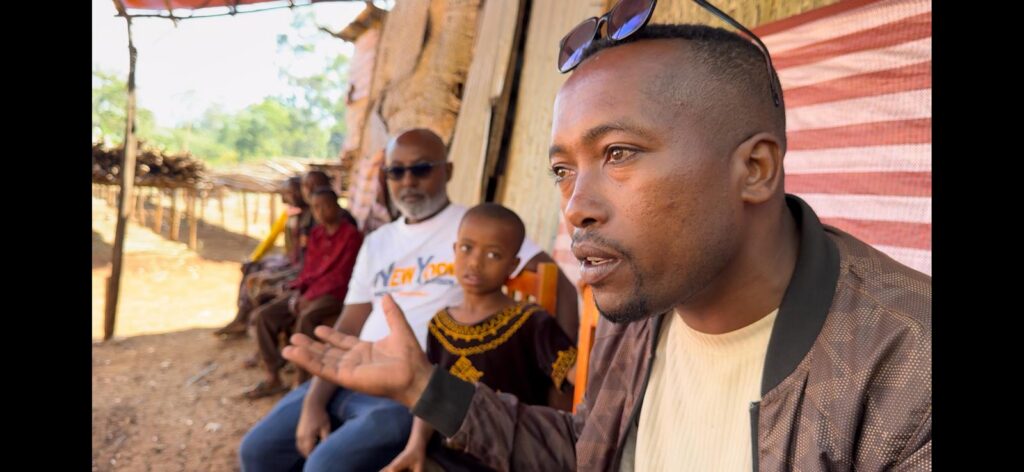
Tamiru Shonto
As the conversation unfolded, Tamiru lamented how, in the Ethiopian system, it is very difficult for a farmer to distinguish their coffee. He told us how much he has liked working with Matt and Lemi. Matt has created an app that helps to connect small roasters with small producers like Tamiru. For the past couple of years, the app, along with historically high coffee prices, has helped Tamiru to really prosper.
Tamiru is rightly proud of his coffee. A quick look at a sample revealed that he really knows what he’s doing, and he takes great care to deliver top-quality.
But more than that, he’s also committed to his neighbors and his broader community to make sure that they can also benefit from their work, just as he has.
It was time for our group to move on, but Tamiru stayed with us as we moved onto the next farm.
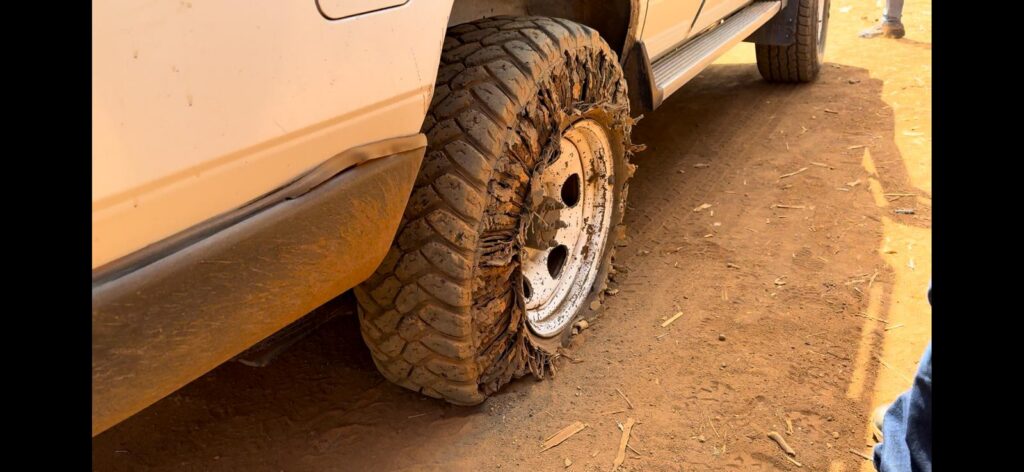
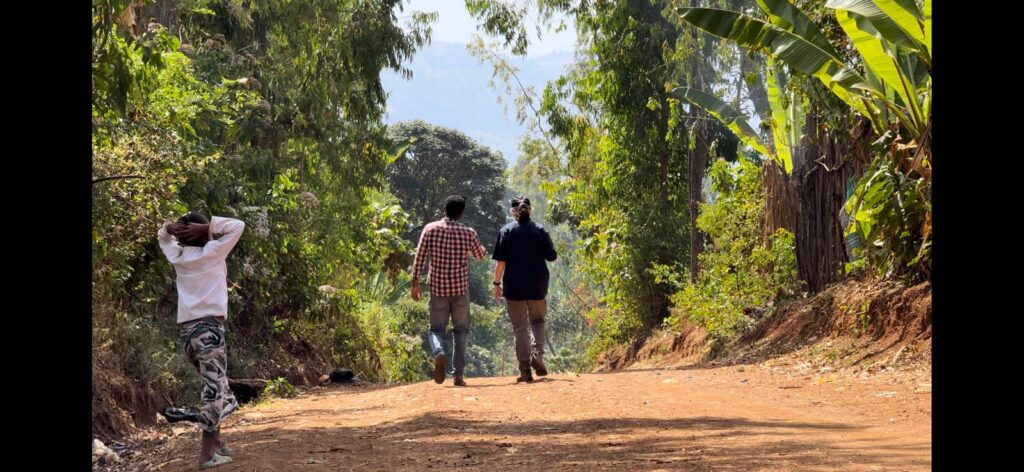
As we were driving to the next producer, the vehicle Michele, Lemi, and Nathan had been riding in got quite a flat tire. So they set off to walk the rest of the way.
Fortunately, help arrived, and Michelle and Nathan got to load onto the back of a motorcycle (the same one) and ride the rest of the way to the farm.
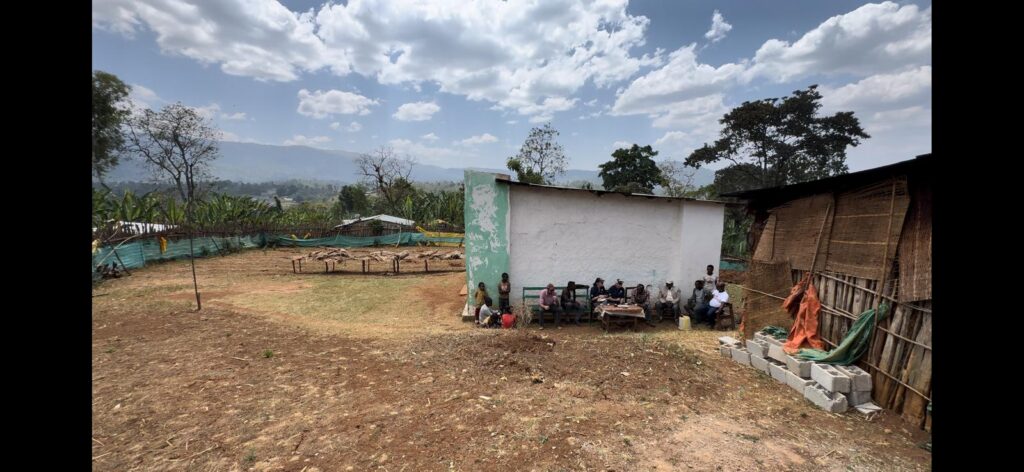
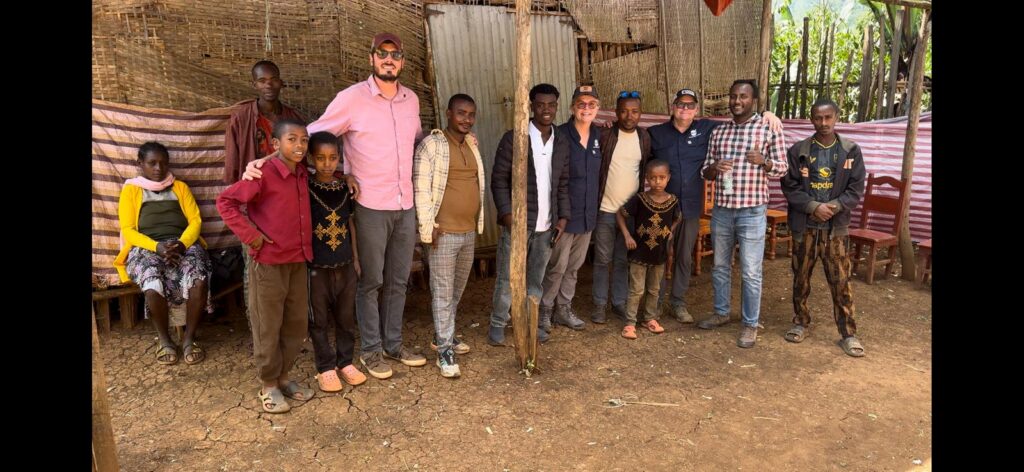
Soon, we were at the farm of Gutu Bire and his son, Senbete. Sitting in the narrow shade of a building, we were treated to coffee and toasted barley and peanuts as we discussed the coffee system in Ethiopia.
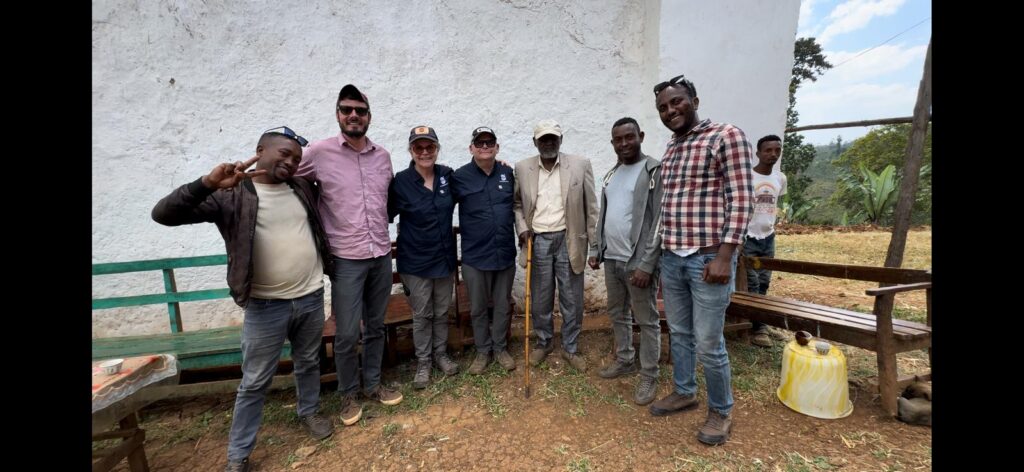
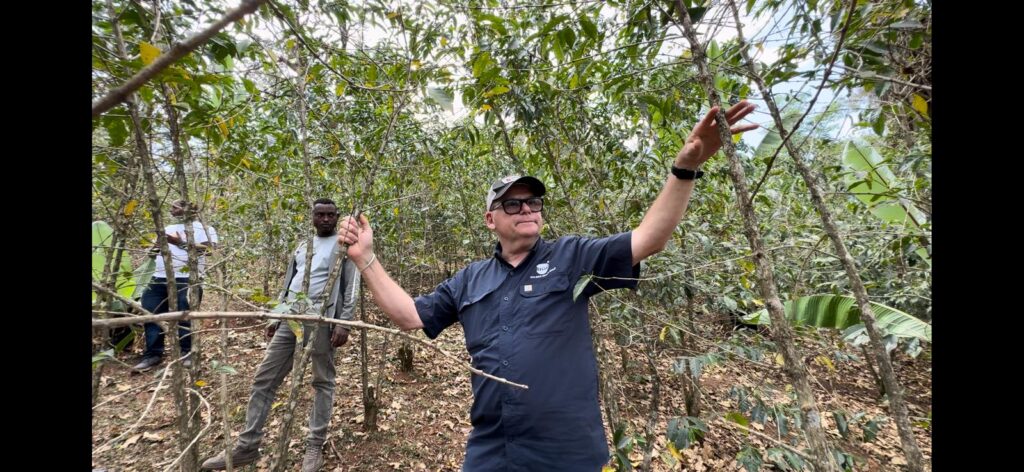
We posed for photos and followed Senbete into his fields. His coffee was healthy, but because it was planted close together, it chased the sunlight and grew really tall, making it much more difficult to harvest the coffee. Bob asked if they knew about a technique that is common in Central America called “topping,” but learned that it is not a common practice in the region.
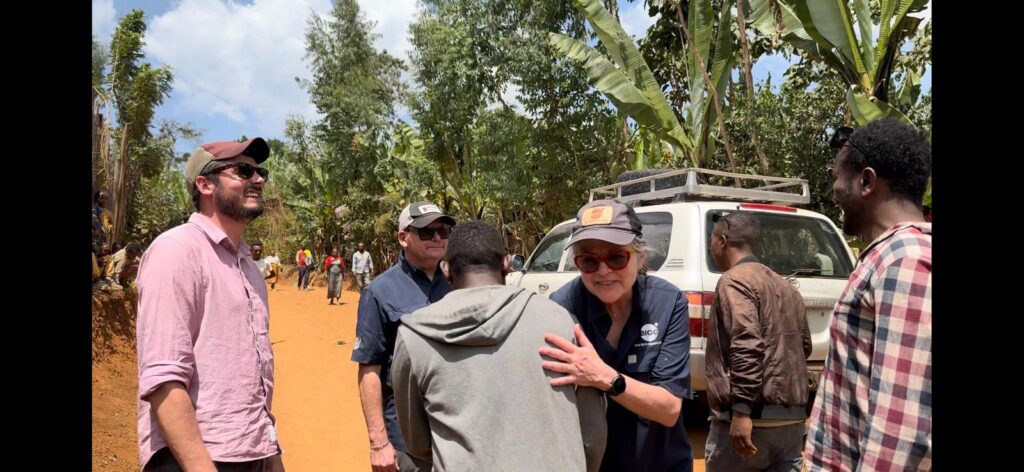
We hiked back out to the road, and it was time to head back to the airport. Over our time here, we’ve gotten good at the Ethiopian handshake, which includes shaking hands and then bumping shoulders. It’s our last day here, and we finally know how to do it – sort of.

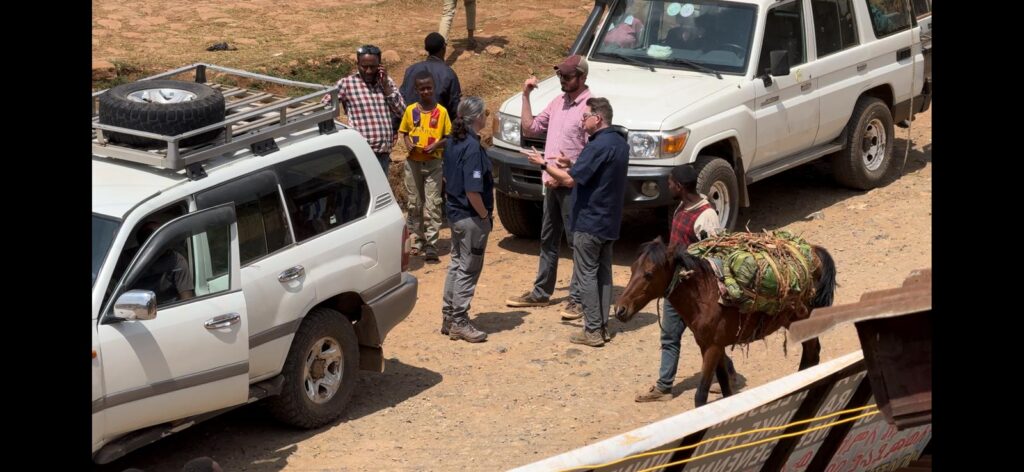
On the way back, Tamiru rode with us and surprised us with a quick stop at a business center he is building in town. His niece was there, and she introduced us to his beautiful new daughter. Time was running short, so we couldn’t stay long, and we piled back into the vehicles for the 3-ish hour drive back to Hawassa.
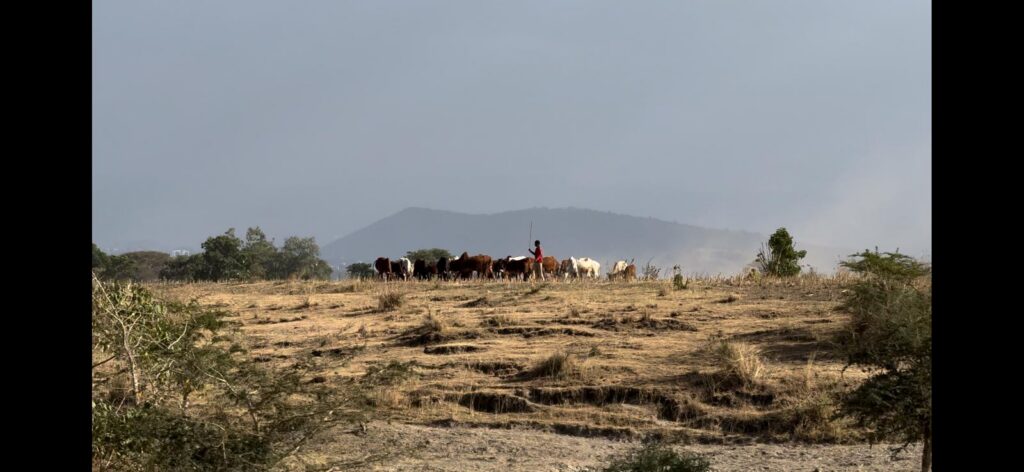
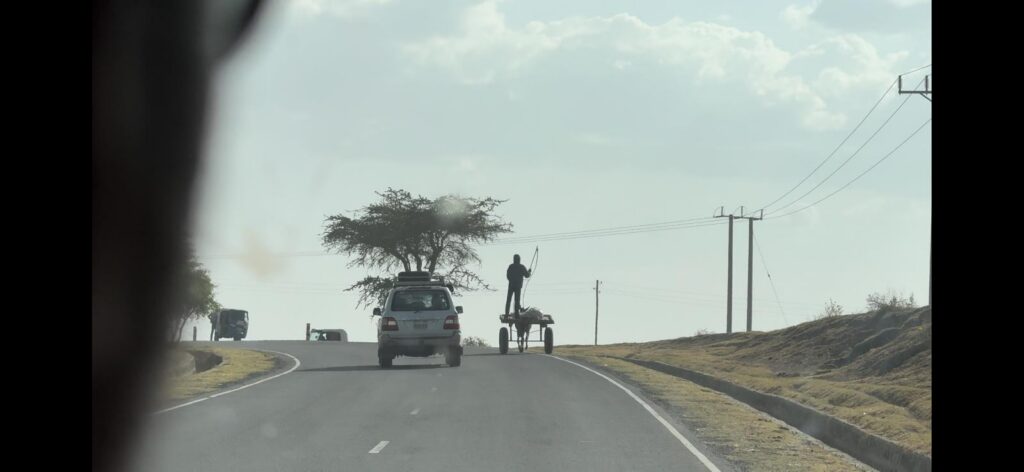
There is a kind of sadness as you leave coffee country. There’s a lot of time to think as you see all the lives that flash past the windows on a drive.
You get the feeling that despite the differences in language, culture, and access to resources, we are all pretty much the same.
We are all working for food, shelter, and clothing, safety, security, and health, and something better for the next generation.
We really are all on one big island in space.
Bidii Coffee Estate
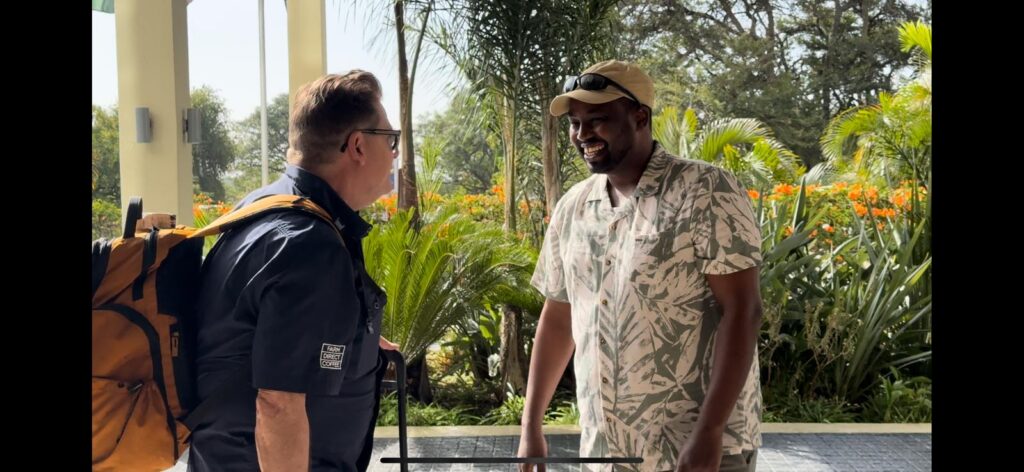
Sharmaake Sabrie, the Founder of Ubuntu Brews, met the OBIIS team at an airport hotel in Nairobi, Kenya. Shar is originally from Somalia, but spent his childhood in Michigan. The OBIIS team will spend the next two days with the Ubuntu crew looking for new coffee partners in Kenya.
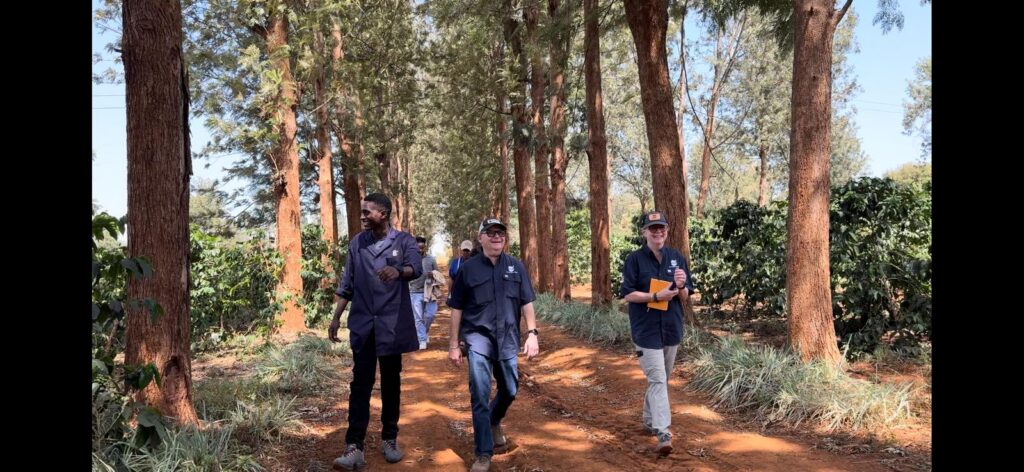
We drove about an hour out of the Capitol to get to the Bidii Coffee Estate. We have to admit, we have been to other “coffee estates” in Kenya, and they have not made a good impression. So as we began to walk the fields, we tried to keep an open mind, but we were on the lookout for the telltale signs of trouble.
But the coffee looked… healthy. So did the soil. We saw butterflies and other insects flitting about. And there was even some shade! That is a first for us in Kenya!
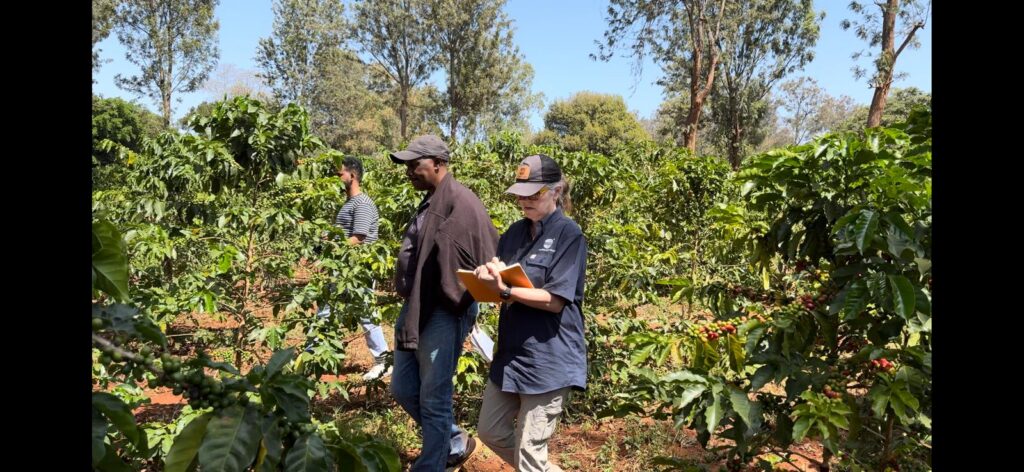
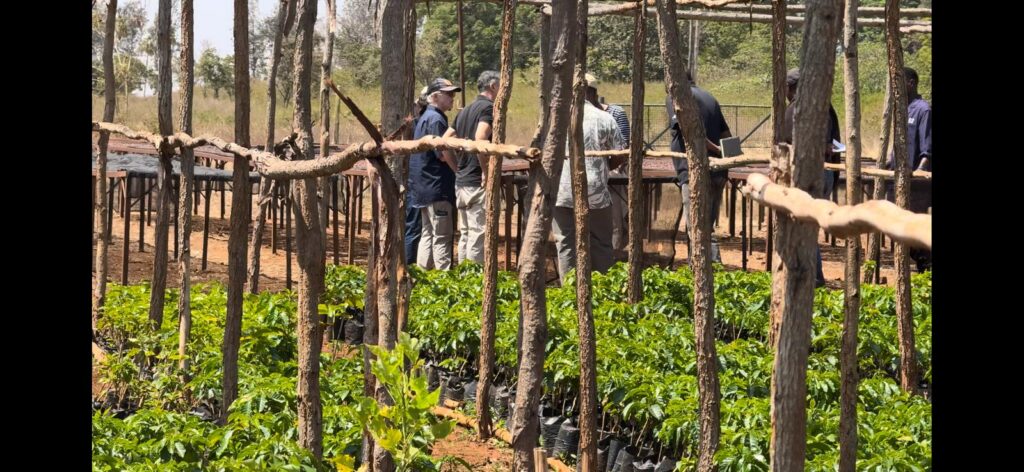
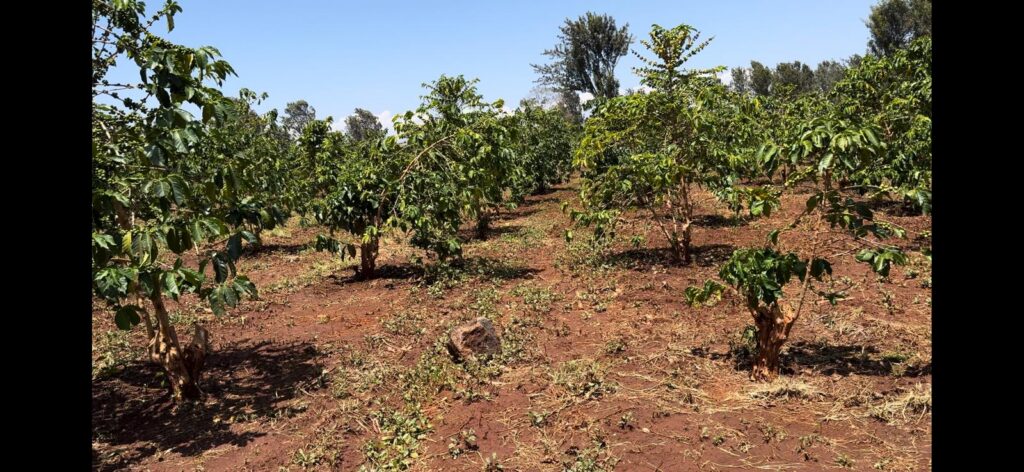
As the tour continued, there was more good news to share. They were “stumping” the coffee, essentially cutting it about 12cm from the ground to give the plant a sort of second life, and usually increasing production. But not only that, but they also had an impressive nursery where they were growing new coffee plants to allow them to regenerate the farm, and they had a bursary for trees native to the area to provide shade for the coffee and to support the local ecosystem.
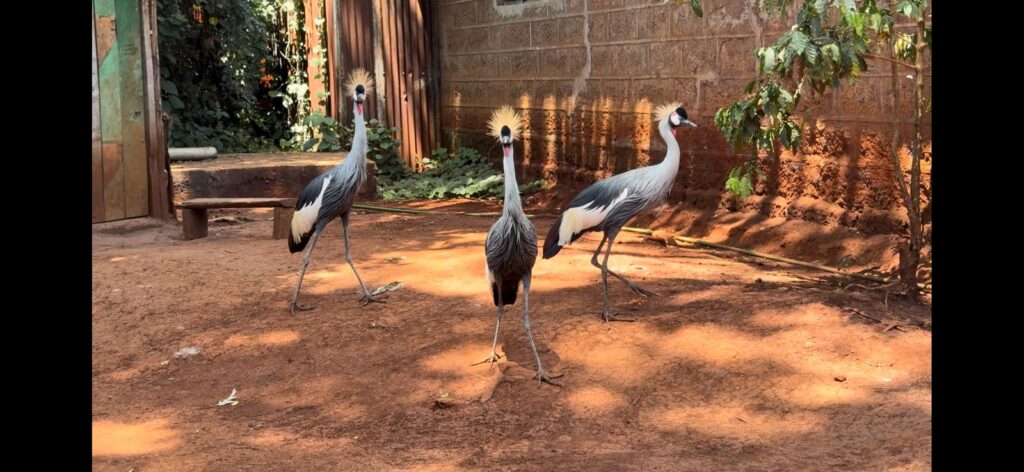
The Bidii Coffee Estate keeps a variety of birds and other animals, both to add their manure to compost and to collect and sell their eggs and milk (cows), to add to their revenues.
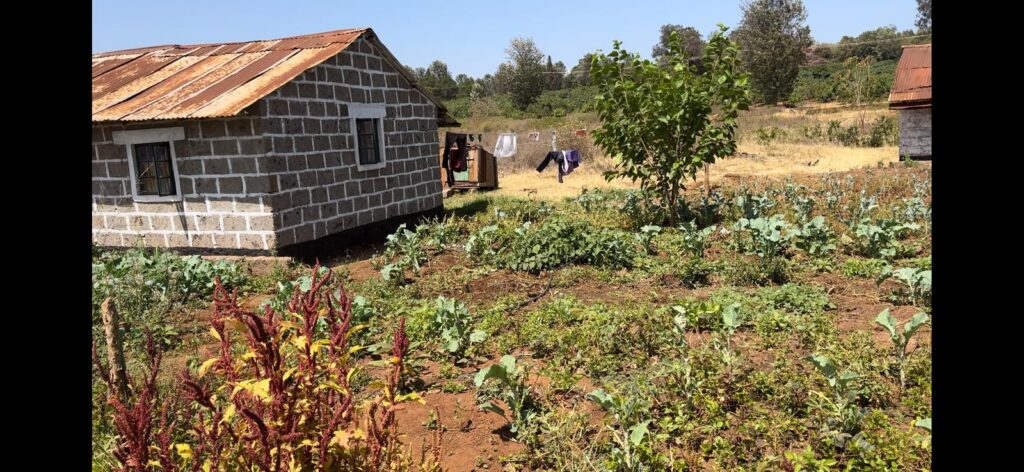
We also learned that Bidii has housing with running water and electricity for about 50 employees and their families. They focus on hiring widows. The houses also include garden plots where residents can grow their own food.
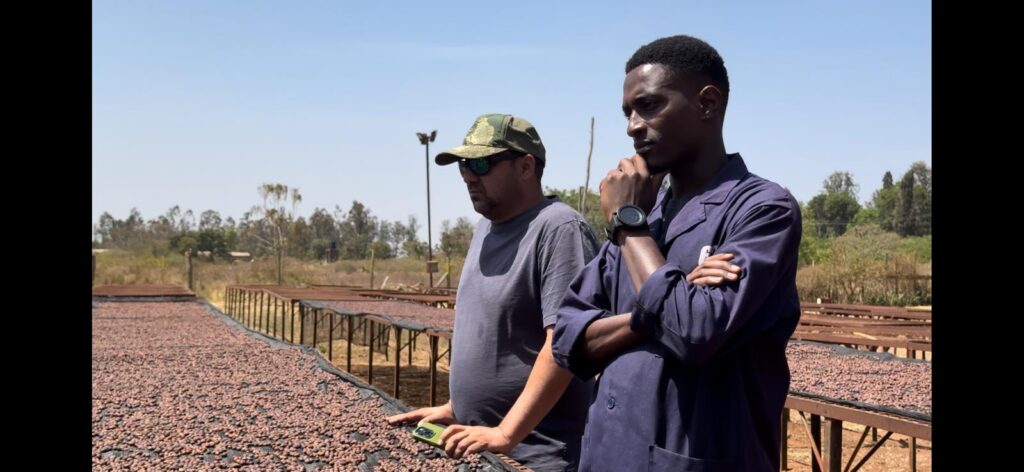
As we stood with Raul, Sami, Earnest, and other farm leaders, over their drying coffee, we got the sense this might be something quite special. But they weren’t done yet…
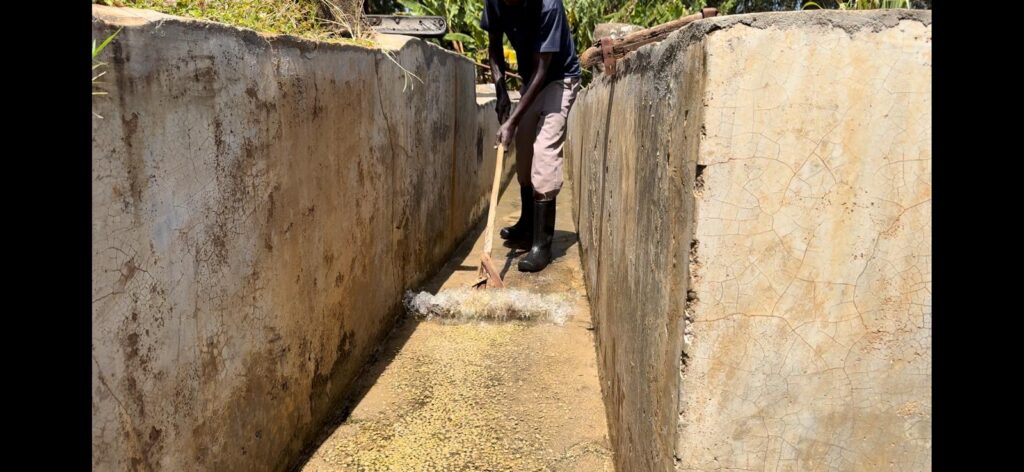
They took us to their wet mill, where a few employees were just finishing washing some coffee. Wet milling demands a lot of water, and what happens with that water can have some negative environmental consequences.
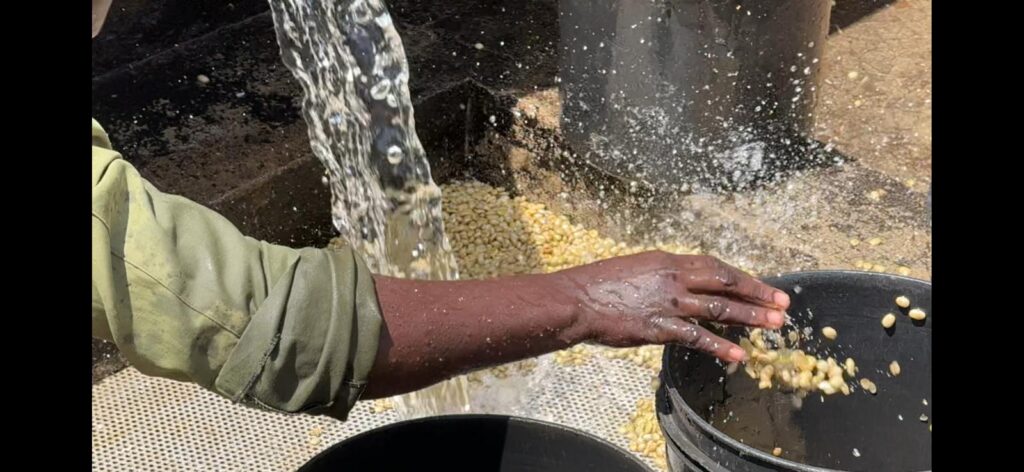
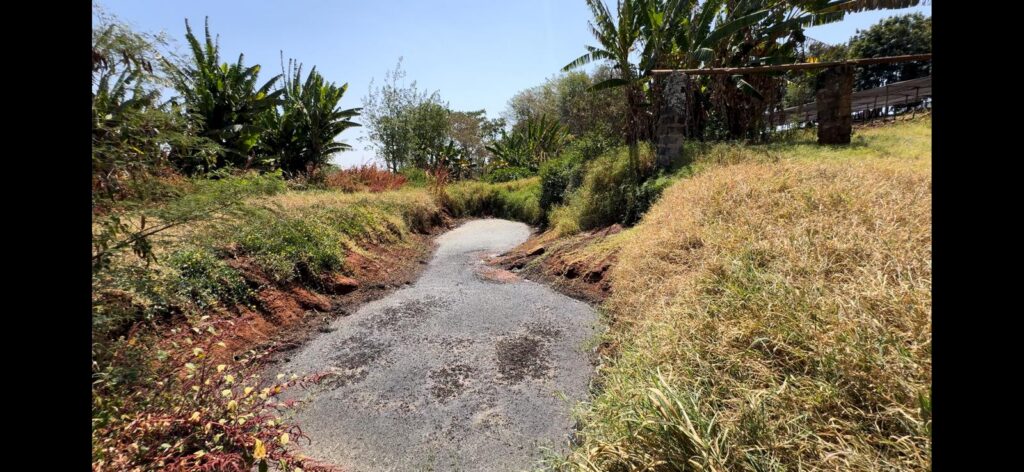
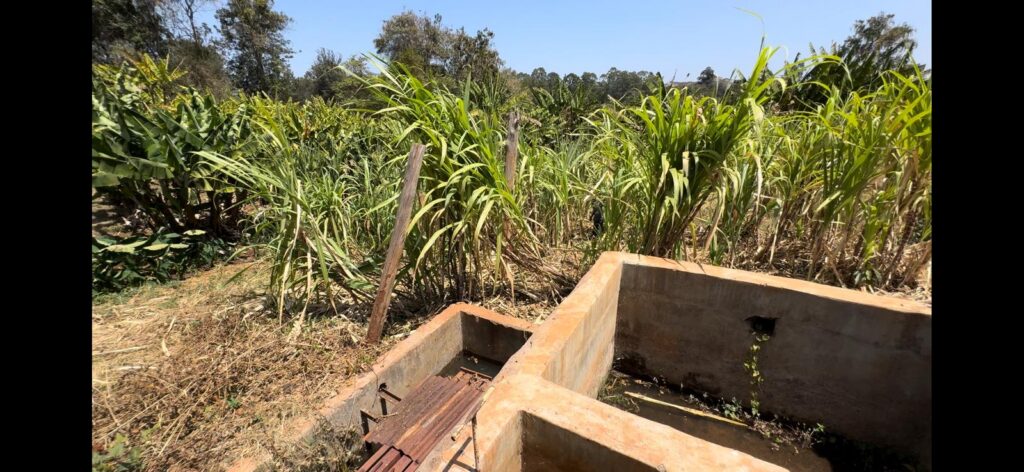
The Bidii coffee estate is doing what you do to care for the environment around a wet mill. They have created a big retaining pond for the pulp that comes off the coffee beans during the process. And they have created a natural filter where plants helped to purify the “honey water” that comes out of the wet mill.
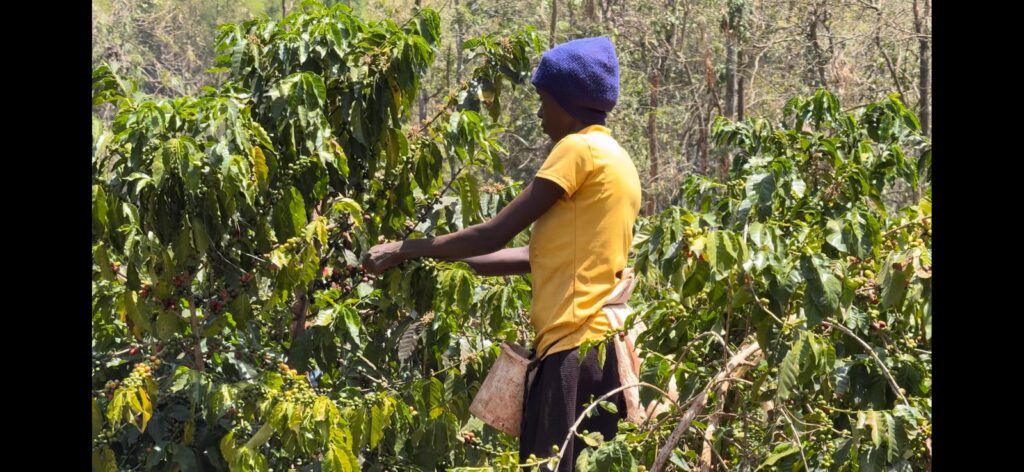
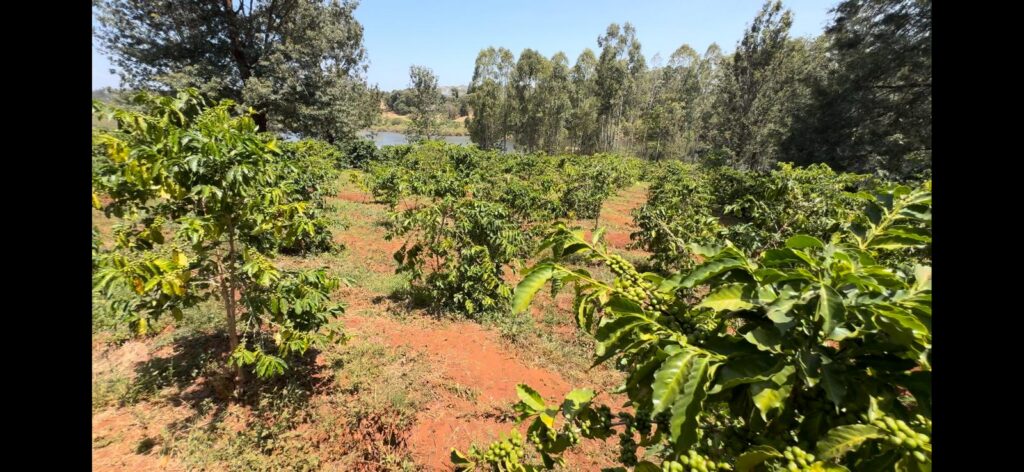
We continued the tour and saw the beautiful lake that is at the bottom of the coffee fields. We walked past a number of women who were harvesting the coffee.
Despite our skepticism, this place has really wowed us.

Our visit to Bidii Coffee Estate was only a first visit. This is also the first time we’ve been to Origin with the Ubuntu team. It’s too early to say whether this will be an OBIIS partner. But as we drove back into Nairobi, we were all pretty excited to see such good things happening in Kenya.
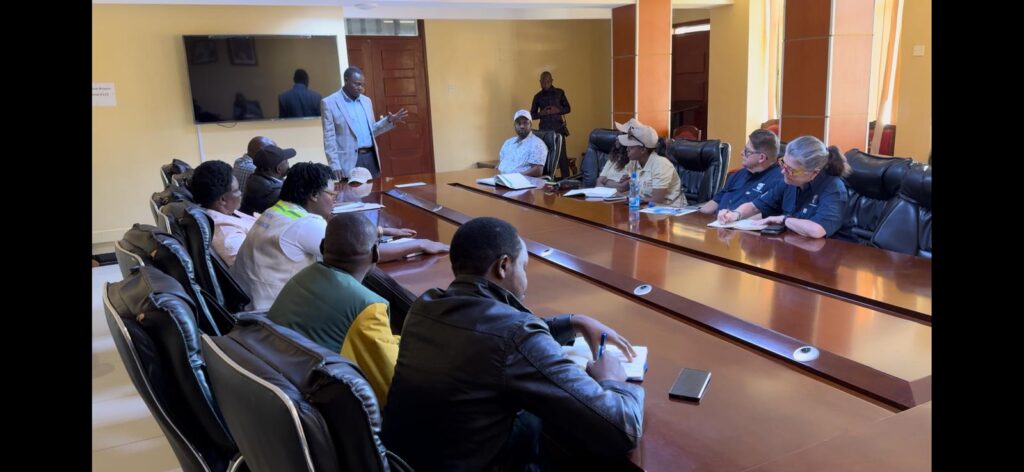
For day 2 with the Ubuntu team, we traveled into the Rift Valley to Baringo County. The day started with a meeting in the office of the County Governor. Then we toured a school for autistic children, the local health clinic, and a freshwater spring that provides water for the town.
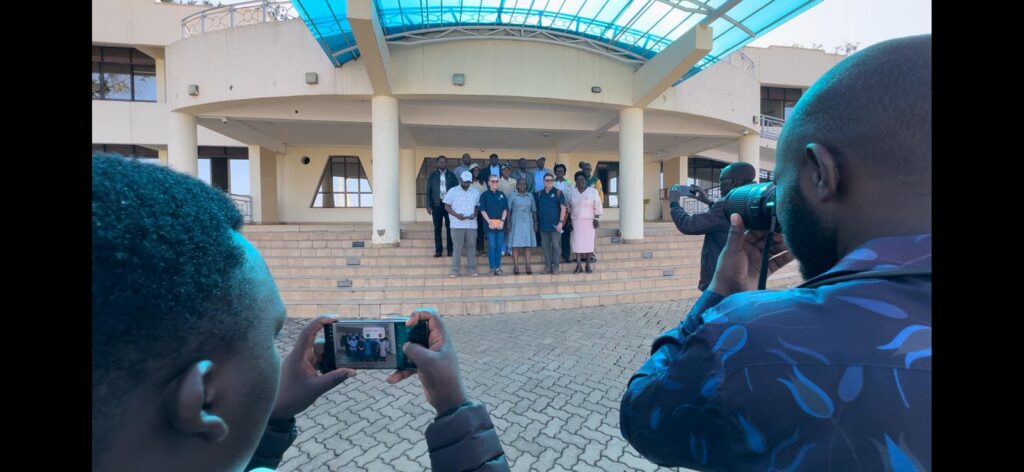
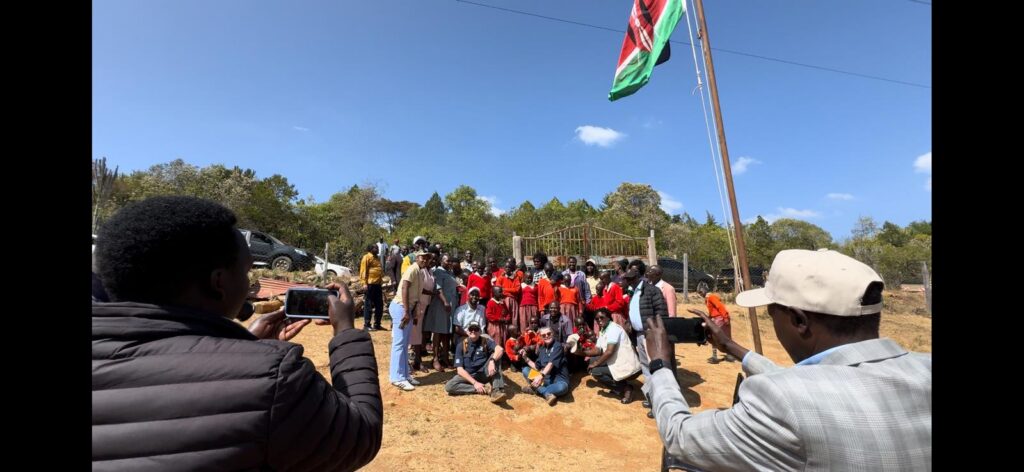
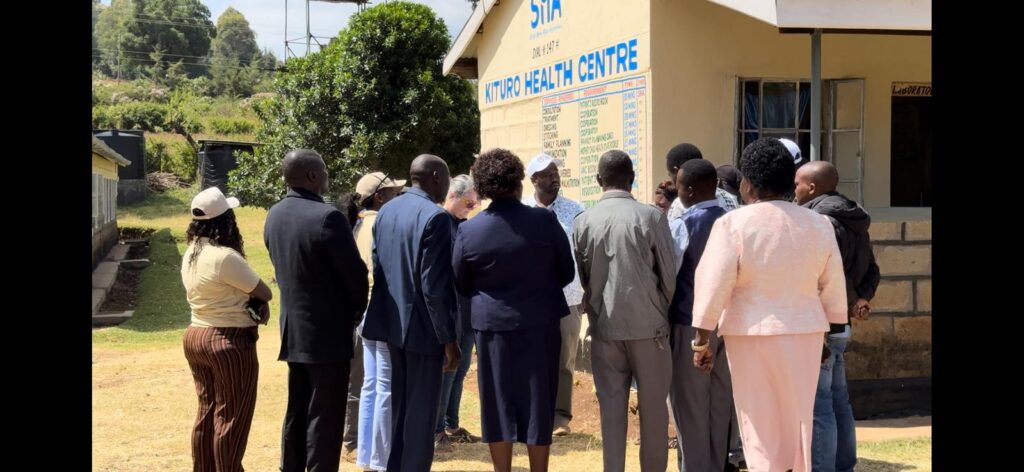
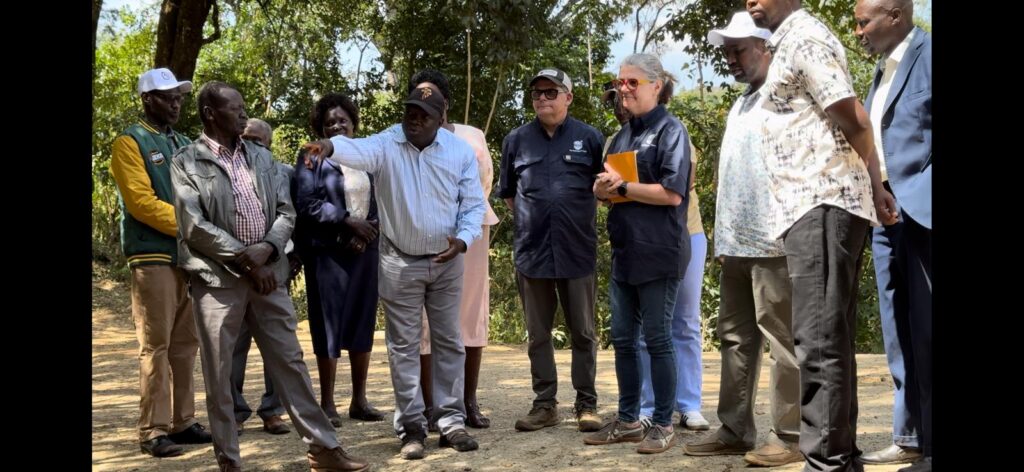
Then we visited four small farmers in the area, including the family of the man who had planted the first coffee farm in the area. His wife and son told us the story, and we discussed what had changed over the years. They told us that the biggest challenge today is the market price of coffee.
The Kituro Cooperative

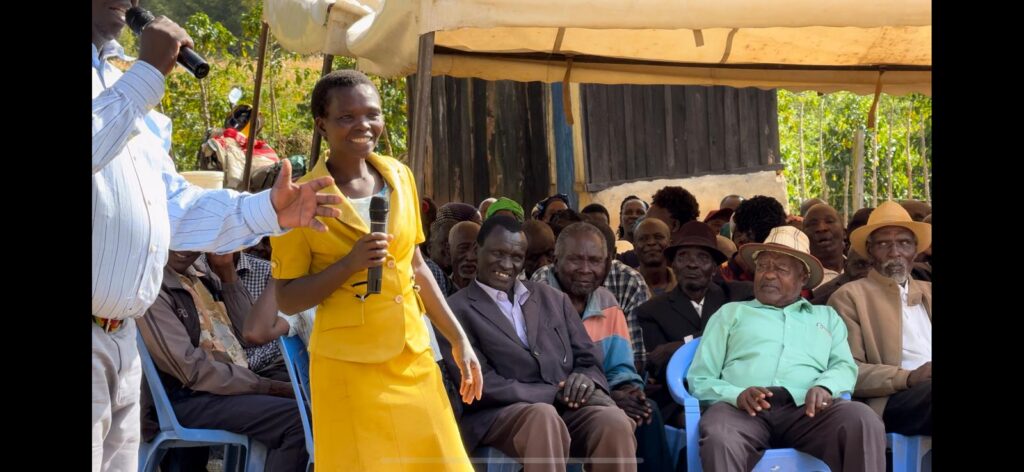
The day had been building up to a big picnic lunch with the Kituro cooperative. The OBIIS team didn’t know what to expect, but when we arrived, we saw about 20 co-op members in traditional dress, dancing and singing a traditional welcome. Beyond them, there were three big event tents packed with 300 or 400 people, all of whom had been waiting for our arrival. The dancers gave Michelle a neat beaded headdress, and Bob and Nathan got colorful bracelets. As the team walked down the road from the gate to the event, the dancing and singing followed them even while they stopped to look at the nursery briefly. The group stayed and sang until they entered the event.
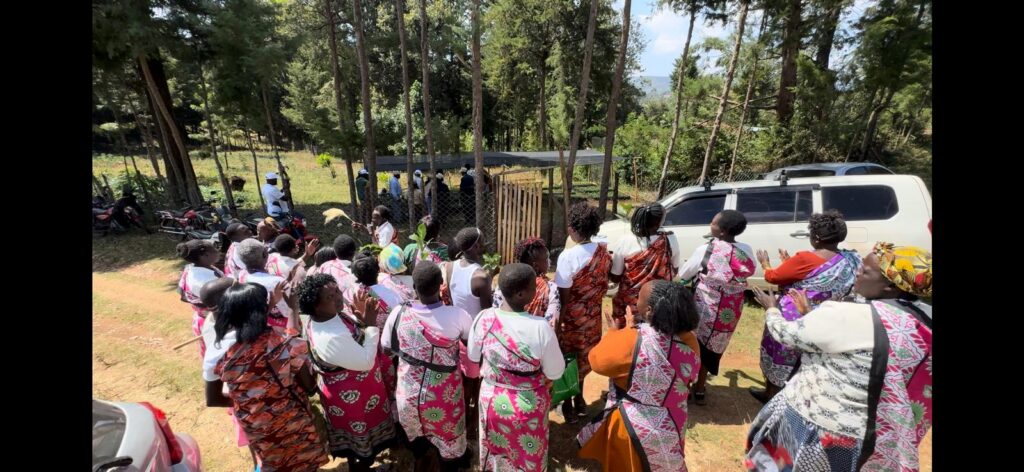
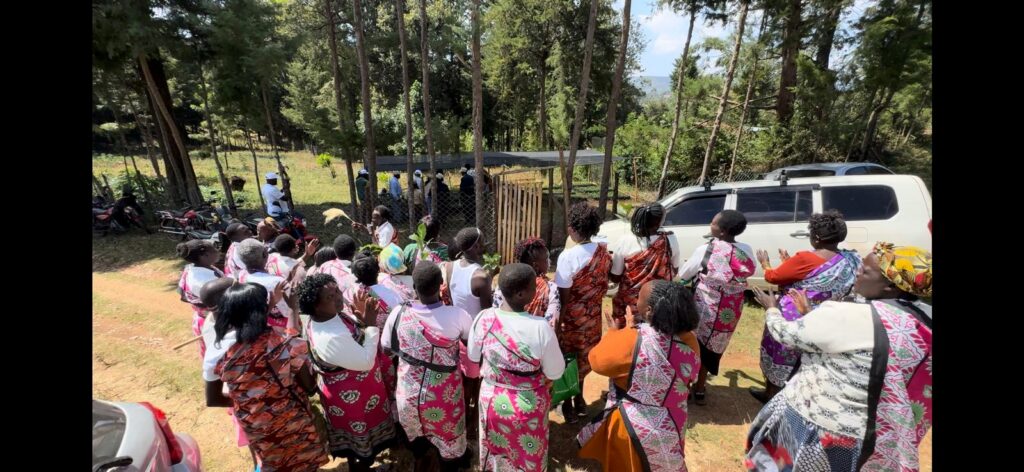
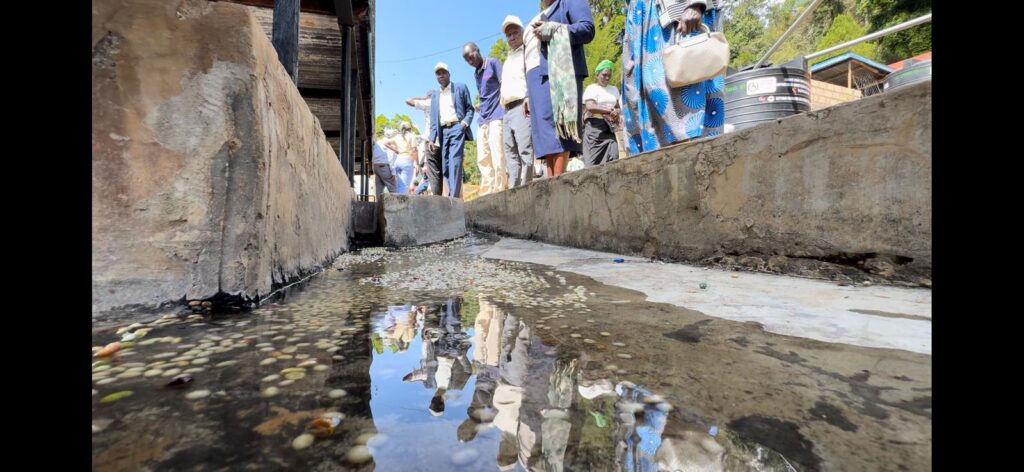
As is customary, Bob and Michelle were treated to a full tour of the wet mill and storage facilities before being guided up to the VIP tent to enjoy lunch.
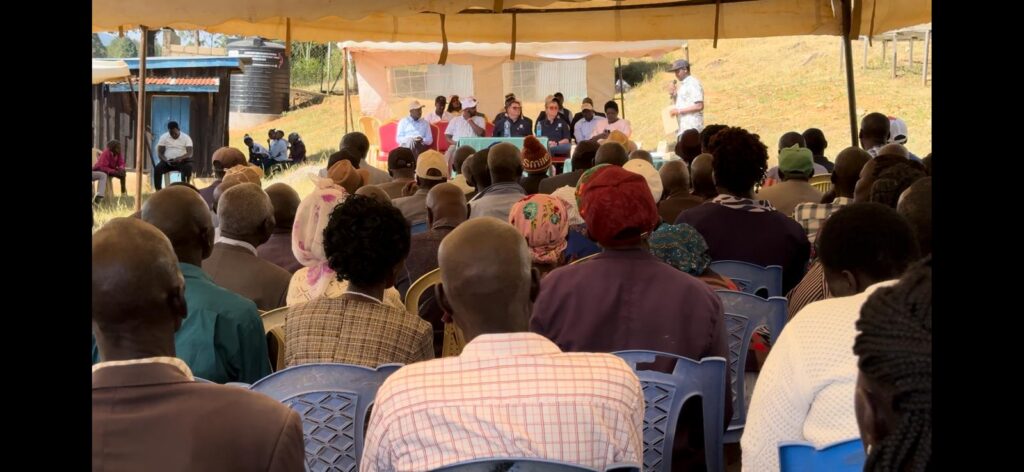
Then, it was time for speeches. And there were a lot of speeches. We heard from local government officials, we heard from cooperative officials, we heard from tribal officials, and finally, we heard from a couple of small producers. They were very enthusiastic, and the hope that they felt at having OBIIS come to visit their co-op was palpable. Then, Bob and Michelle each took a turn on the microphone and received a lot of applause as they talked about the OBIIS commitment to pay fair prices.
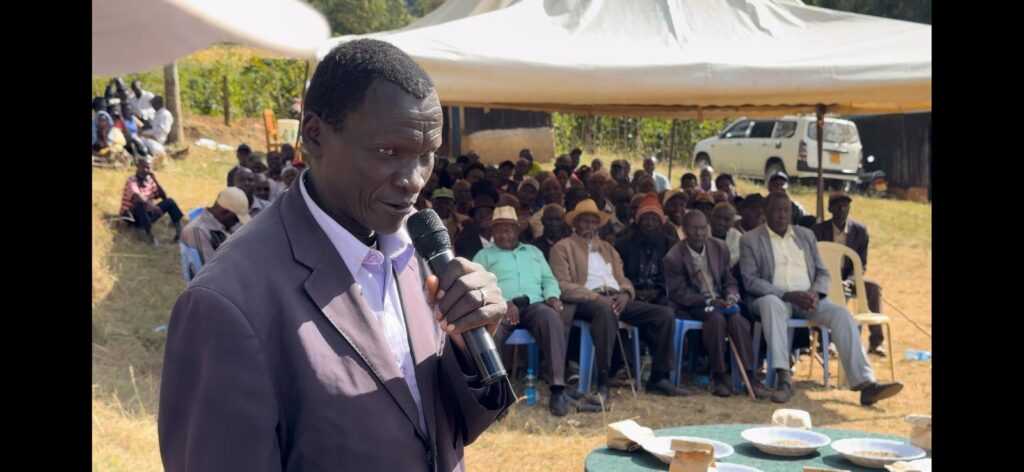
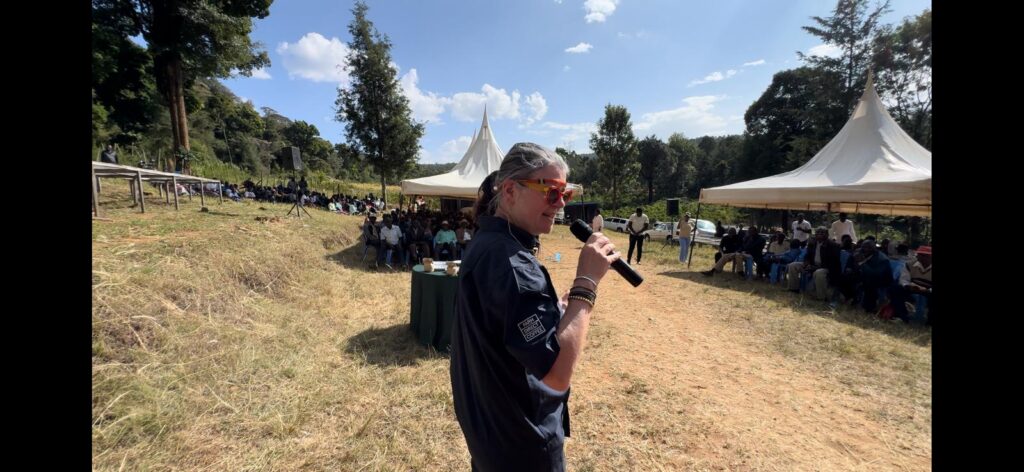
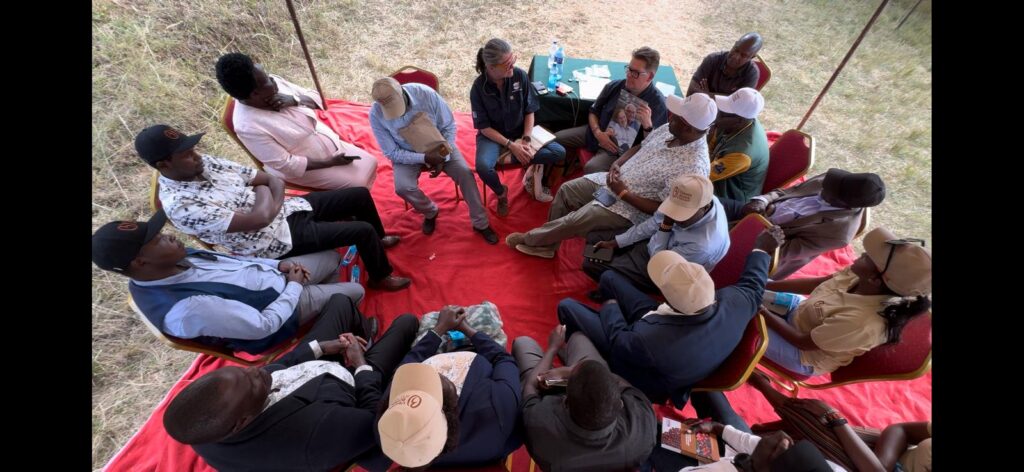
When all of the pageantry had ended, Bob and Michelle had a few minutes to sit down with the cooperative leadership to go much deeper on what OBIIS is looking for and how a partnership might come to be.
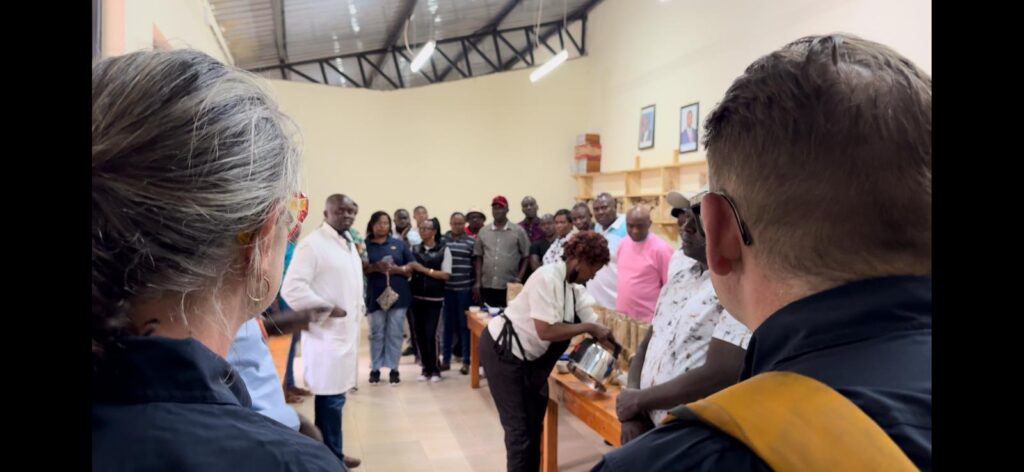
But the day was not over yet. As the sun was starting to get low, we made the drive to the dry mill, had a quick tour, visited a large group that was doing cupping, and sat down to talk to the drywall owner for a few minutes.
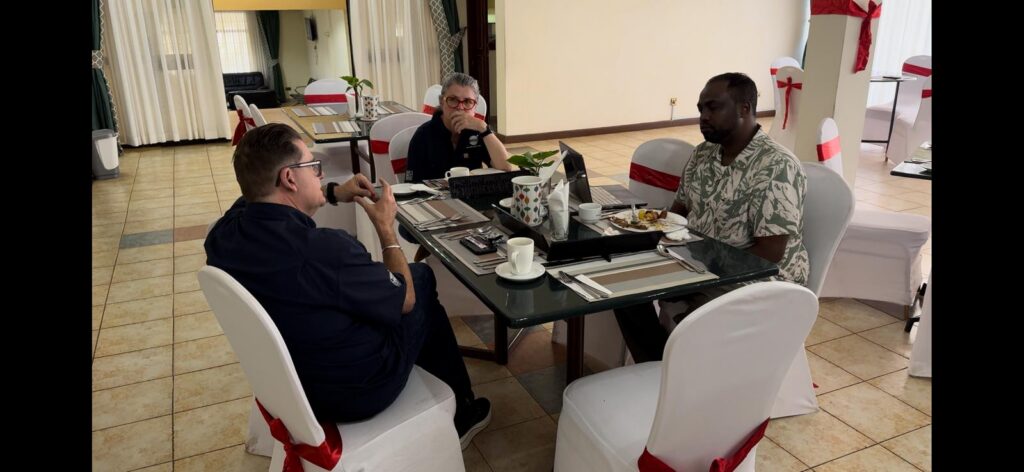
The next morning, we met up with Shar to debrief our visit. Ubuntu is still very young, and the way that they do things is not a fit for OBIIS, at least not yet. We had a very productive conversation and agreed to keep the conversation open.
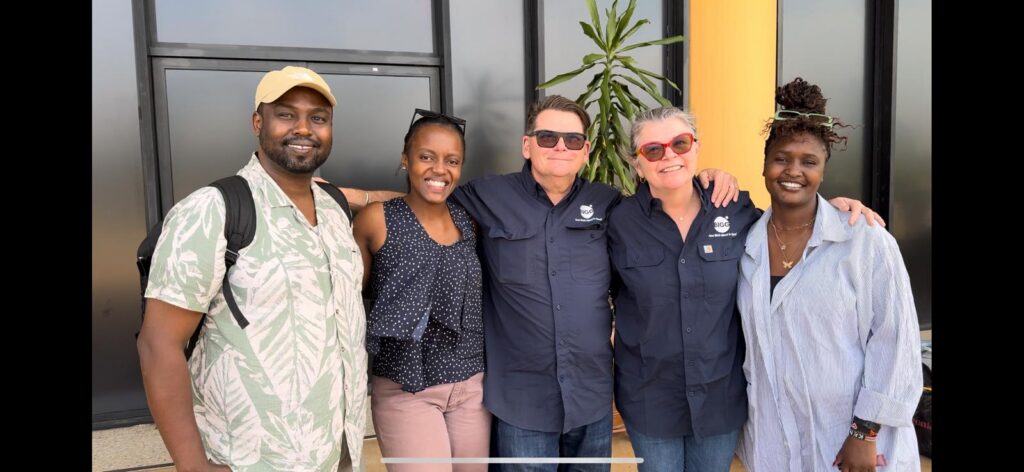
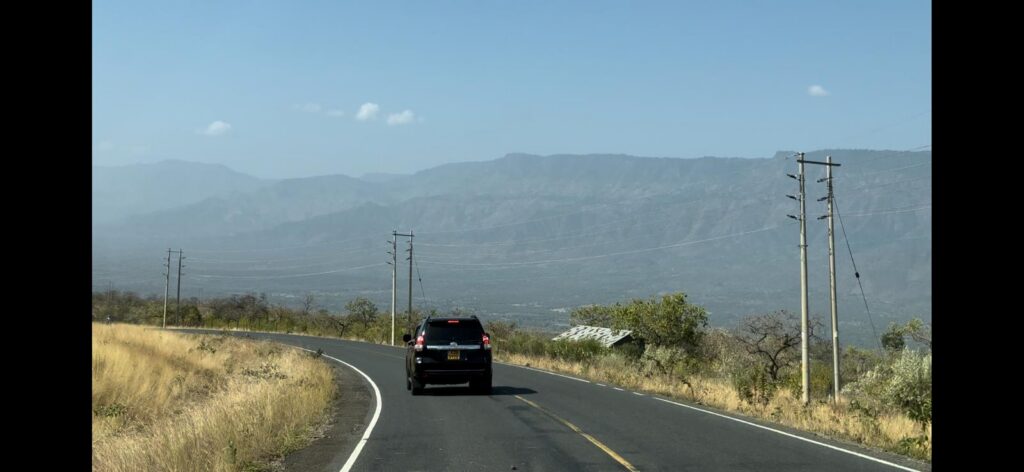
Then we loaded into the cars and made the 2-hour drive back to El Doret. We said goodbye to the Ubuntu team as they headed to the airport, and we waited outside for our next farm visit to arrive.
Though this one is not a fit for now, our time with Ubuntu was further proof that there are a lot of really smart, caring people who see coffee as an opportunity to make an impact in the world. We look forward to following their journey.
Lion Hills

On Saturday, we met the Lion Hills team at the airport in El Doret, Kenya.

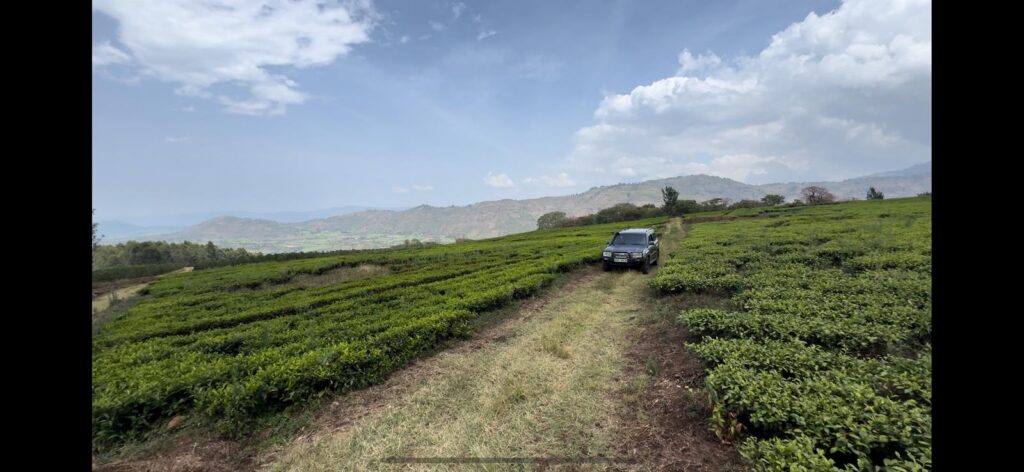
Edward Barngetuny is the third-generation leader of Lion Hills Farm. His grandfather founded the 1,000+ acre farm mostly to grow tea, but over the years, they added sugar cane, sheep and cattle, dairy cows, and, more recently, coffee. Edward is now focused on converting his tea fields to coffee.
The OBIIS team quickly heard a lot to love in Edward’s story, including a focus on expanding prosperity for everyone in his community.
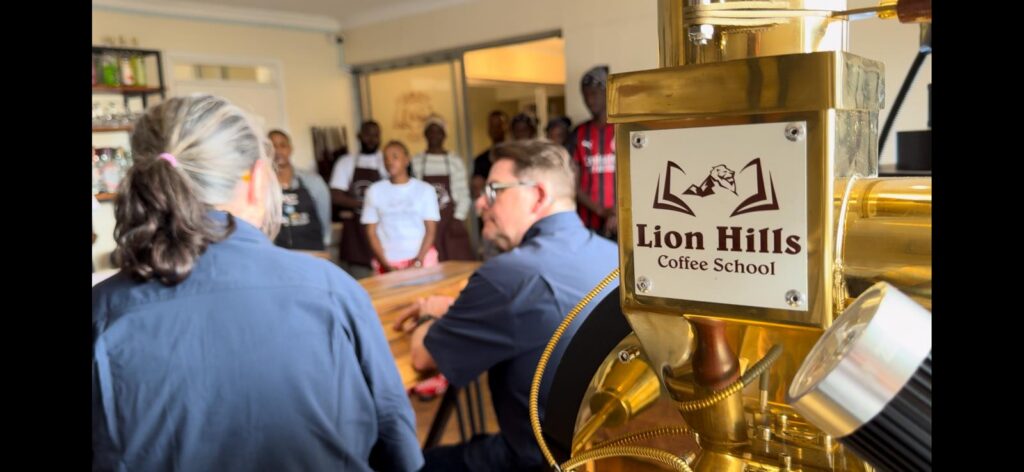
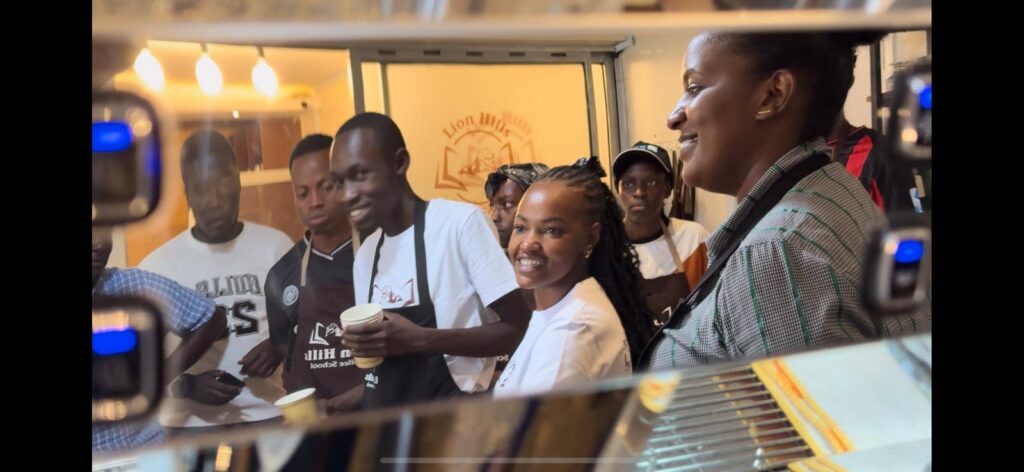
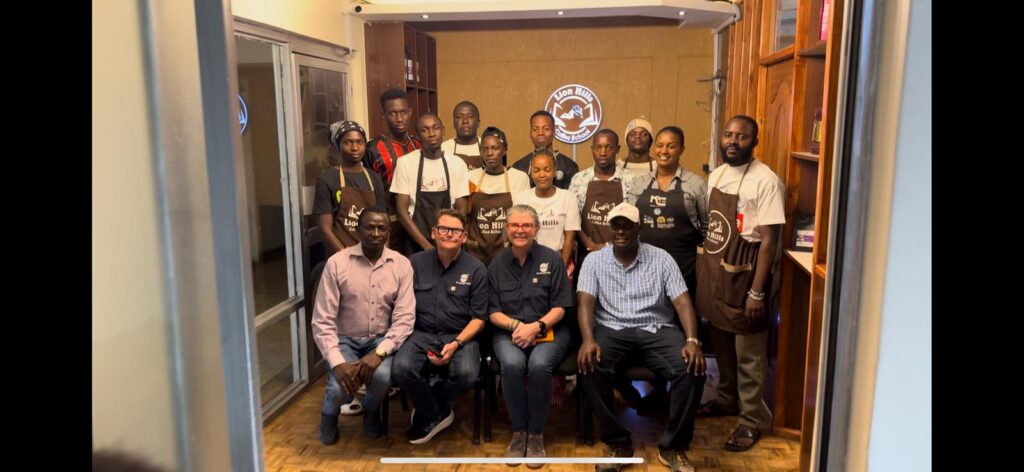
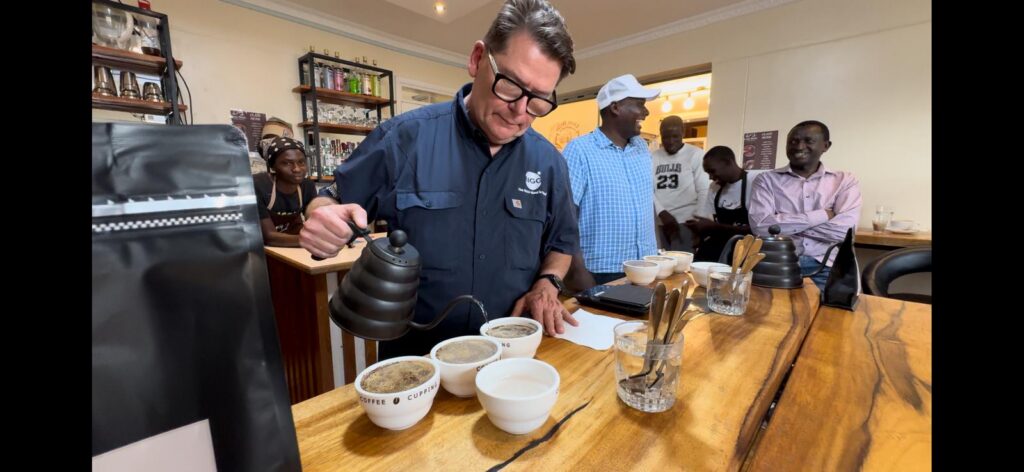
The first stop was at a school for baristas that Edward opened a few years ago. Even though it was a Saturday and Valentine’s Day, many of the students showed up to practice their skills for the OBIIS team. They put Bob through his paces, too.
From there, we made the drive to Tinderet, in the state of Nandi, home of many a Kenyan running champion. As we drove, night fell and so did a heavy rain, which made for an … exciting … ride.
We reached our home for the night, a German mission with several guest houses. We found our way around in the dark and tucked in for the night.
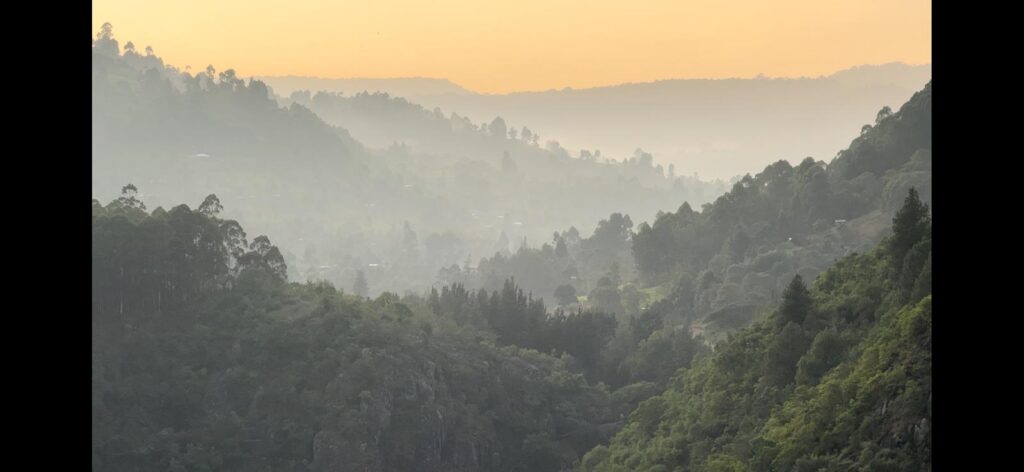
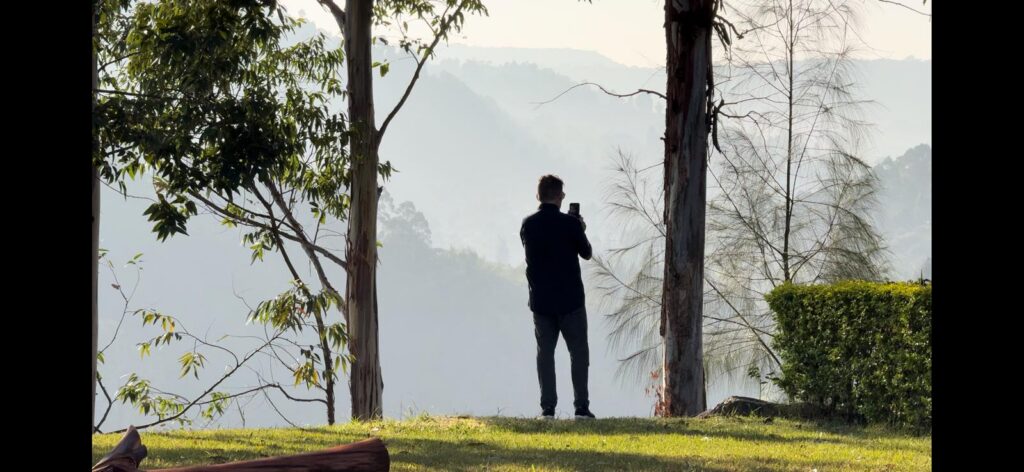
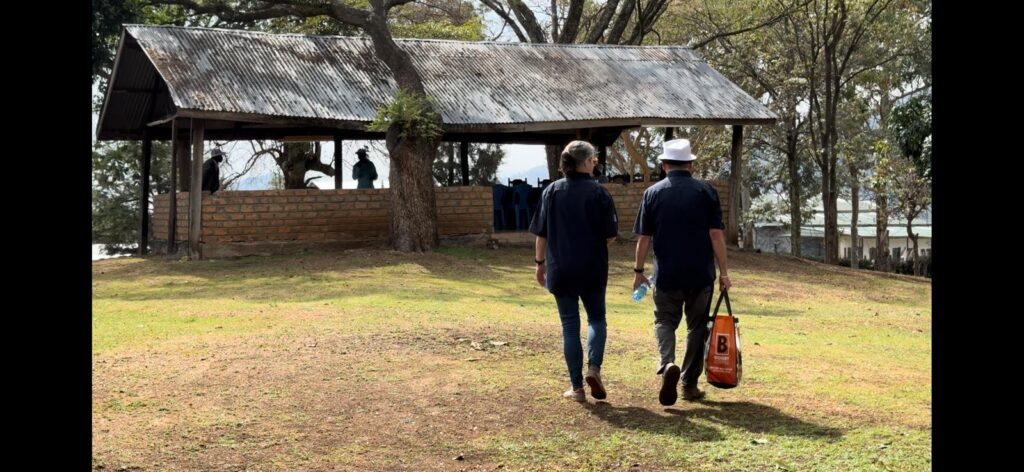
In the morning, we awoke to some stunning scenery. Years ago, a man named Chris was a part of this mission and took a bag of coffee home to Germany to see if he could find a market for it. He branded it as Lion Hills coffee, roasted and sold it in several countries. Edward liked the brand, so he decided to use it for his whole farm. Chris has continued buying Lion Hills coffee and providing it to a number of small roasters in Europe.
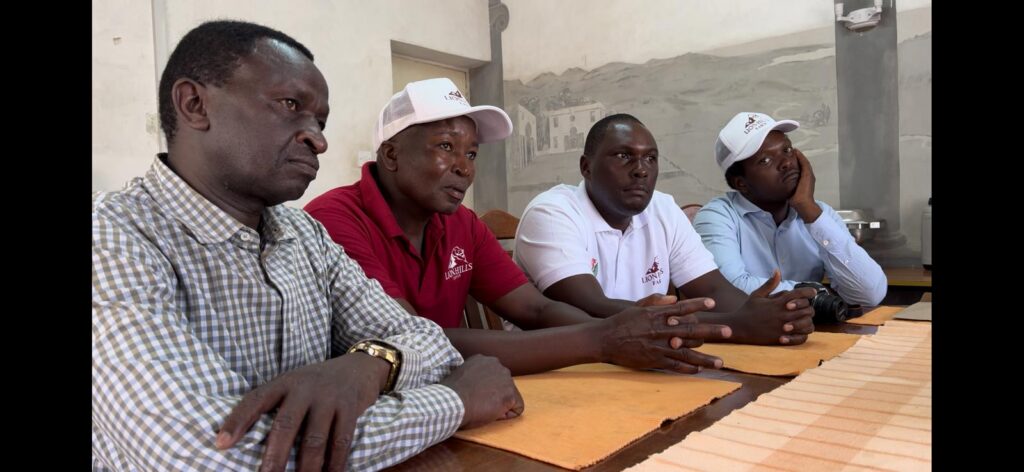
Over breakfast, we met Edward’s coffee manager, Kenneth (second from the left). He was impressed by the OBIIS model.
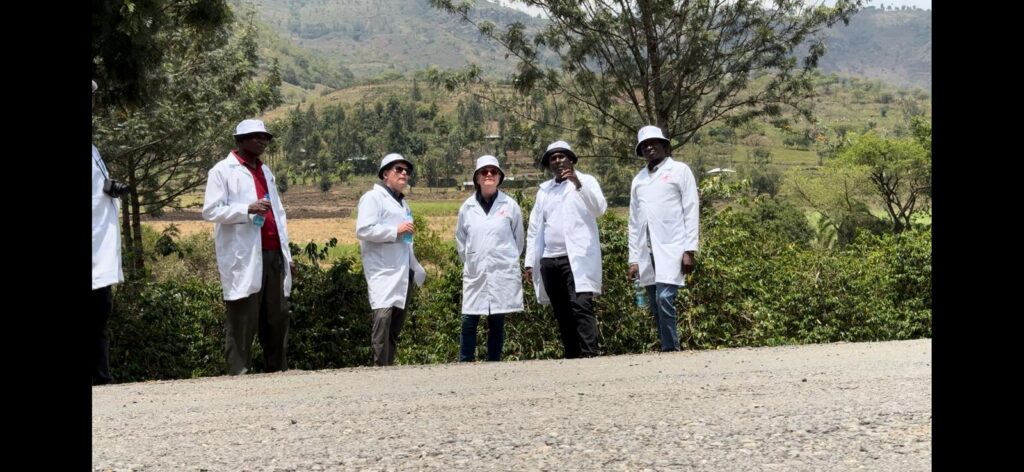
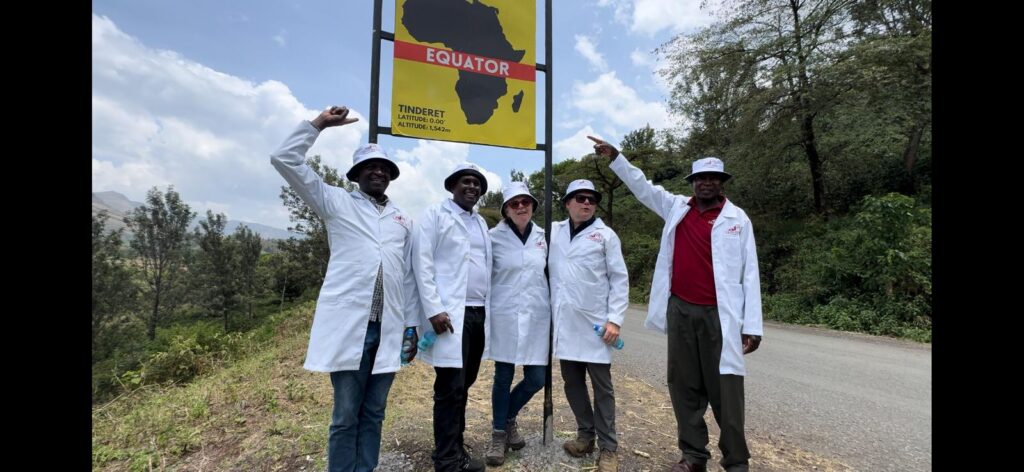
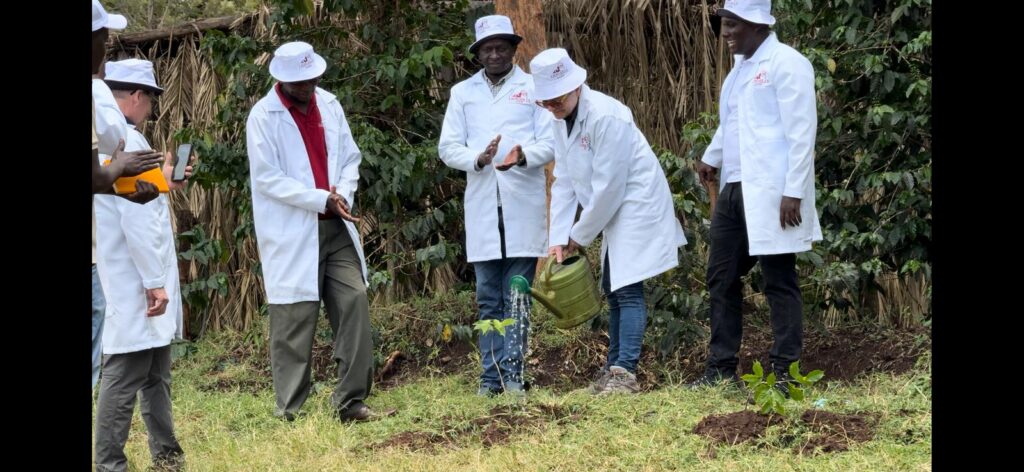
We were given farm lab coats and hats for the tour.
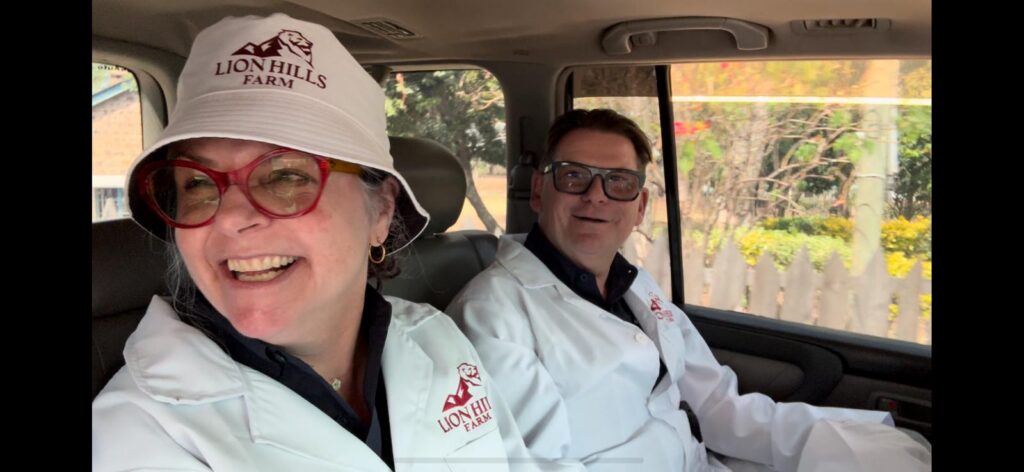
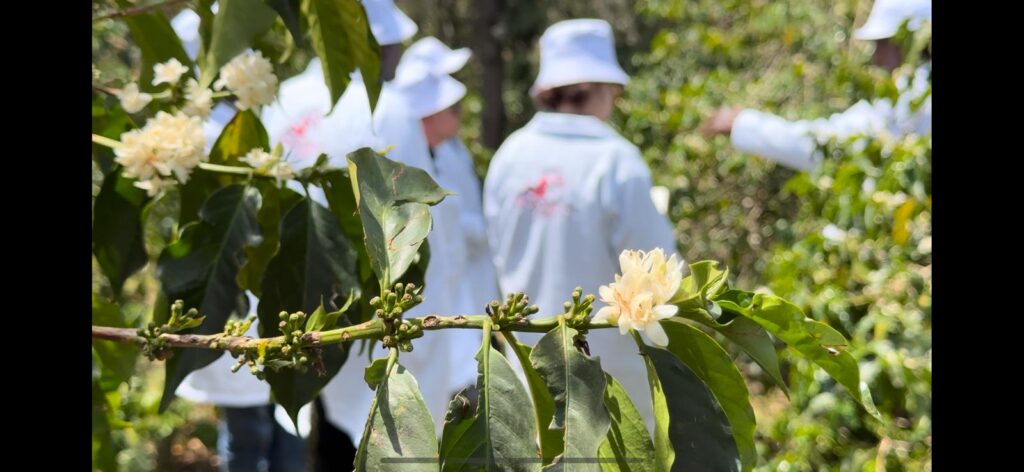
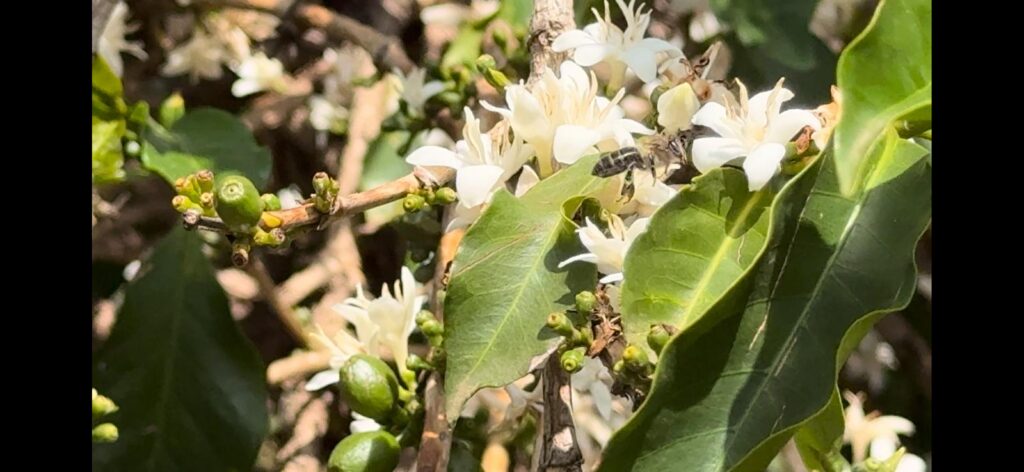
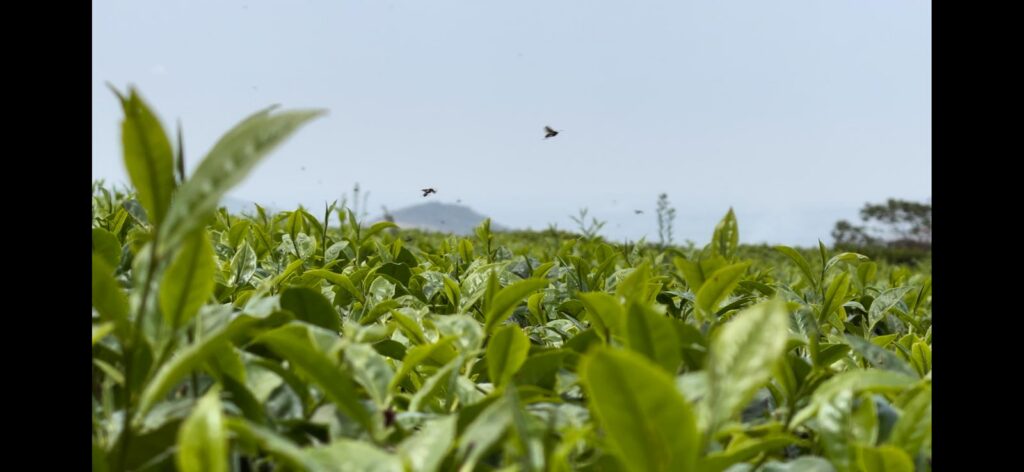
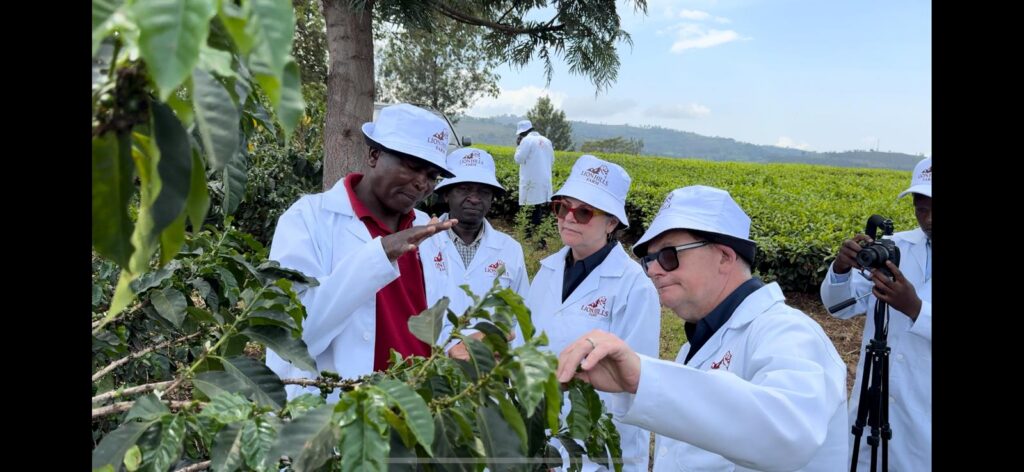
The coffee was flowering, and we were very impressed with the farm. Kenneth is doing an incredible job. The coffee is thriving, and the soil is healthy. There were bees everywhere, pollinating the coffee. And as a bonus, the setting was stunning.
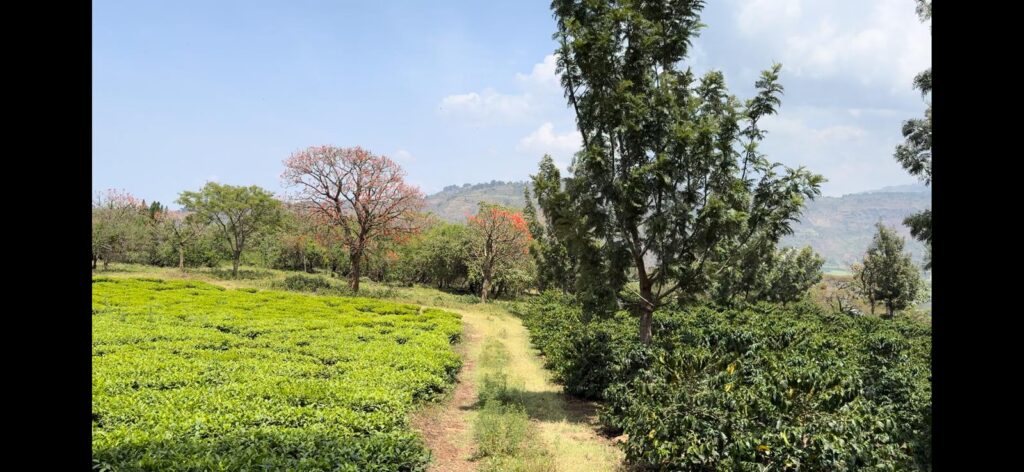
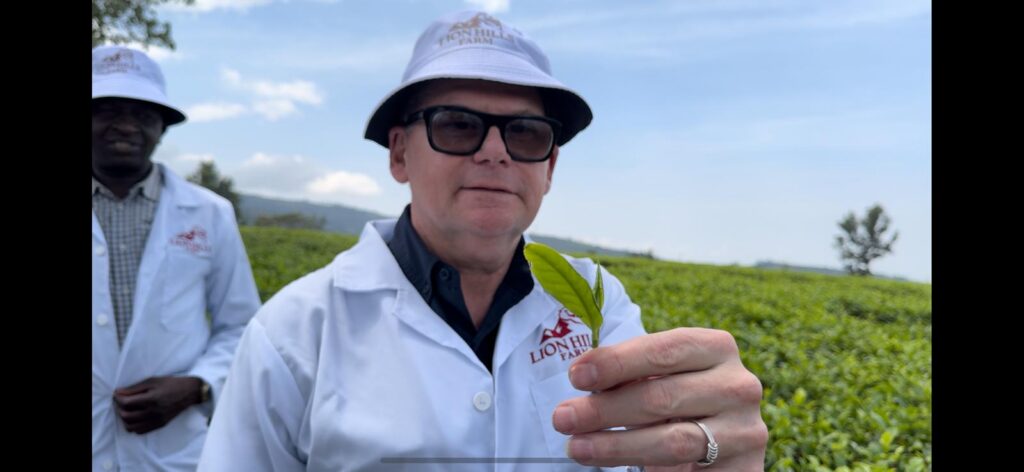
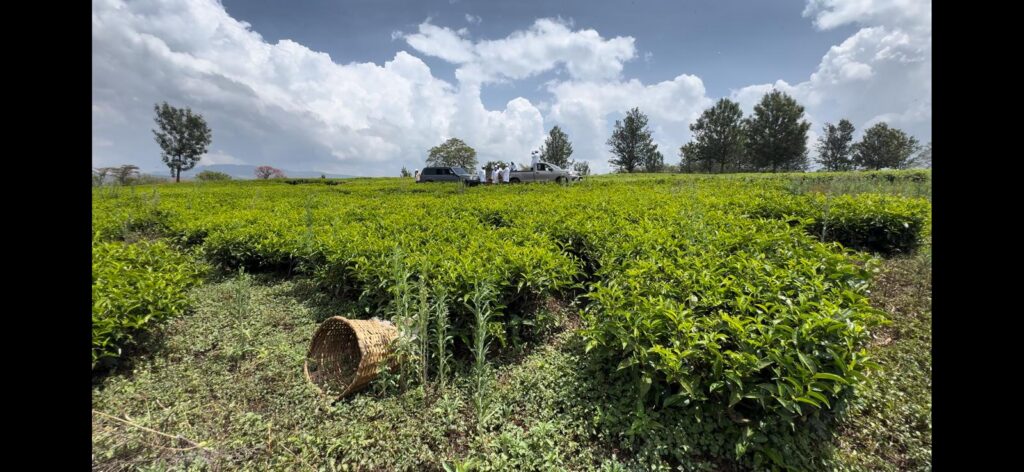
Edward told us that he believes coffee is the future for Lion Hills Farm and the surrounding communities. He believes coffee will do better than tea on his farm, and he thinks that coffee will provide better money for him and the surrounding communities, especially if he can find a relationship buyer like OBIIS.
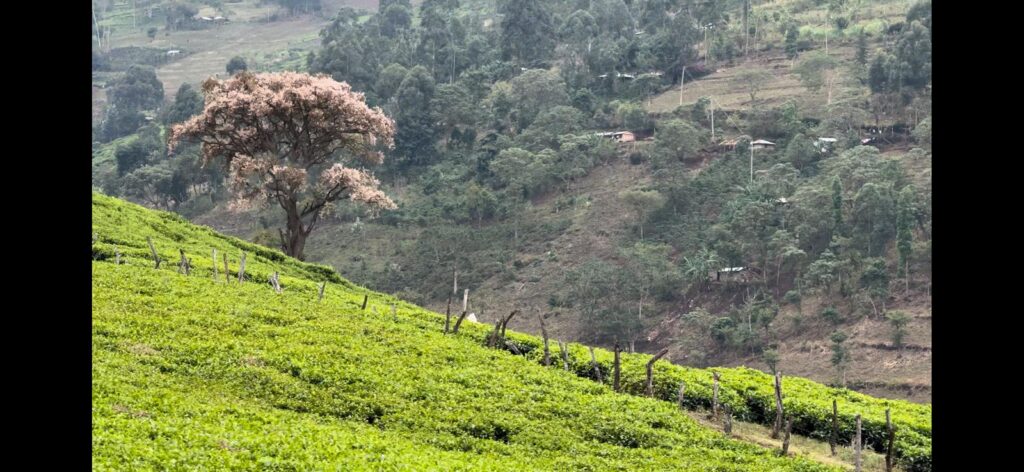
On parts of the farm, there’s a big field of coffee on one side of the road and a big field of tea on the other. But in a few years, it may all be coffee.
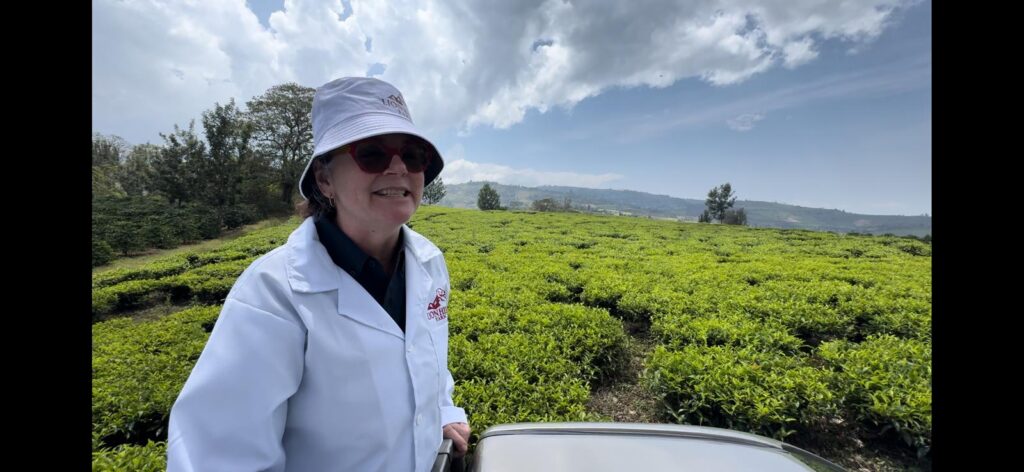
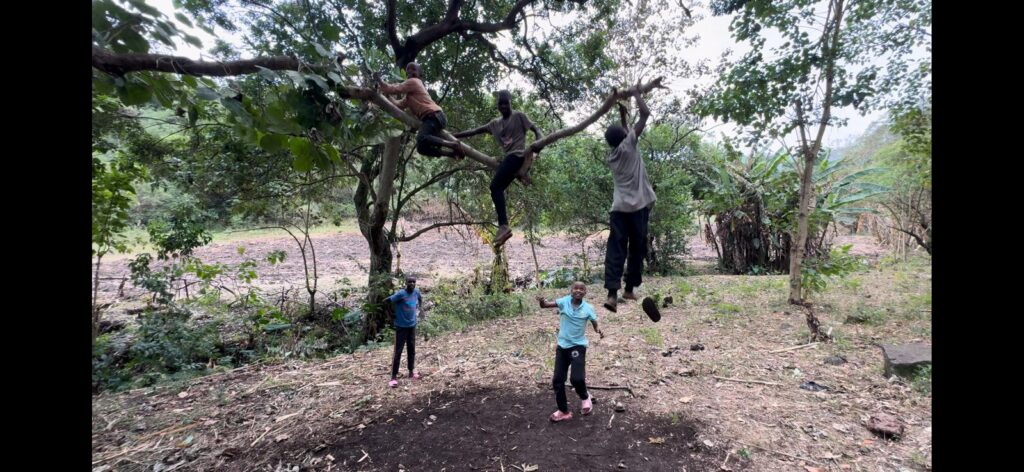
We continued on, but Michelle got jealous of Nathan riding in the back of the pickup, so she joined in the fun.
Lion Hills Farm has some breathtaking views. And we came across many workers and neighbors who, like everyone we’ve met in Kenya, were friendly and oh so welcoming.
Edward took us to see the first hillside of coffee that had been planted when he convinced his grandfather to give it a try.
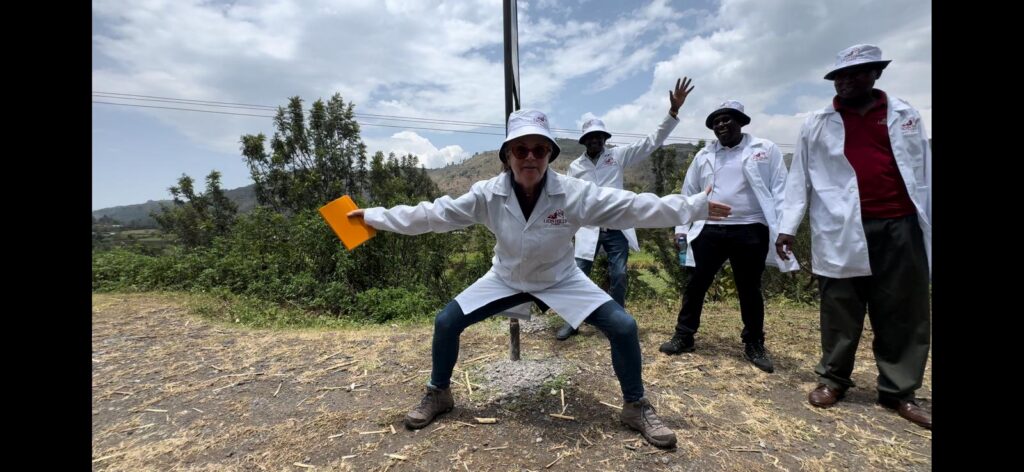
As a special treat, the equator passes nearby, and we took a moment to stop and mark the occasion of crossing it.
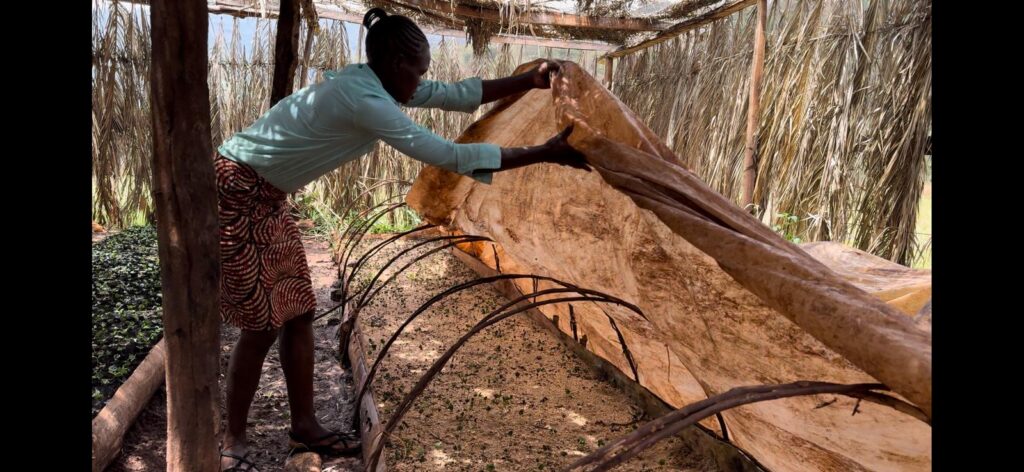
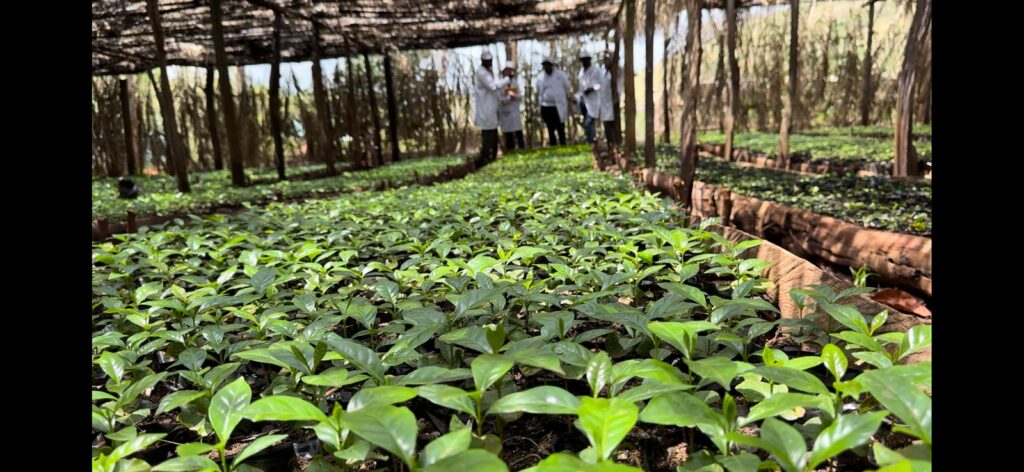
Next, it was to the nursery, where Kenneth and his team are growing thousands of seedlings to prepare for the farm’s continued expansion into coffee.
Lion Hills Farm has a tradition of planting a new coffee seedling in honor of visitors who come to see what they’re up to. So there are now three new coffee trees planted there by the OBIIS team.
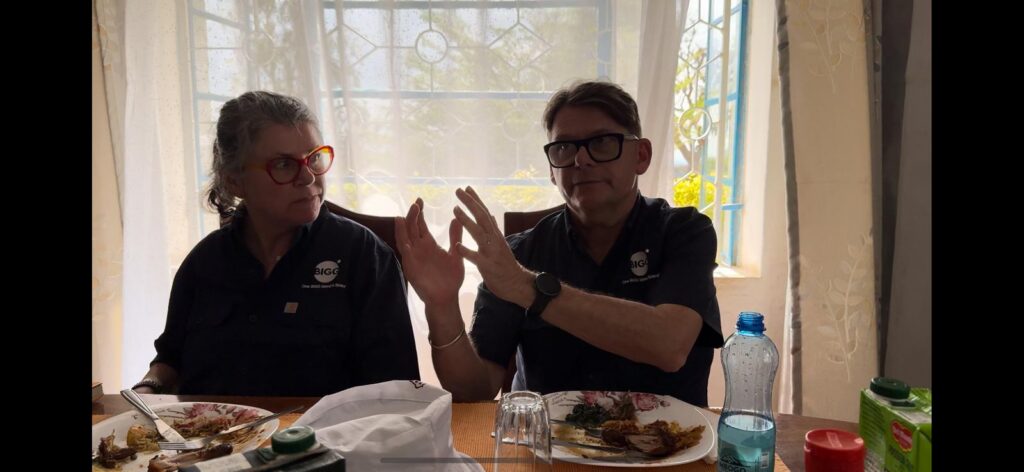
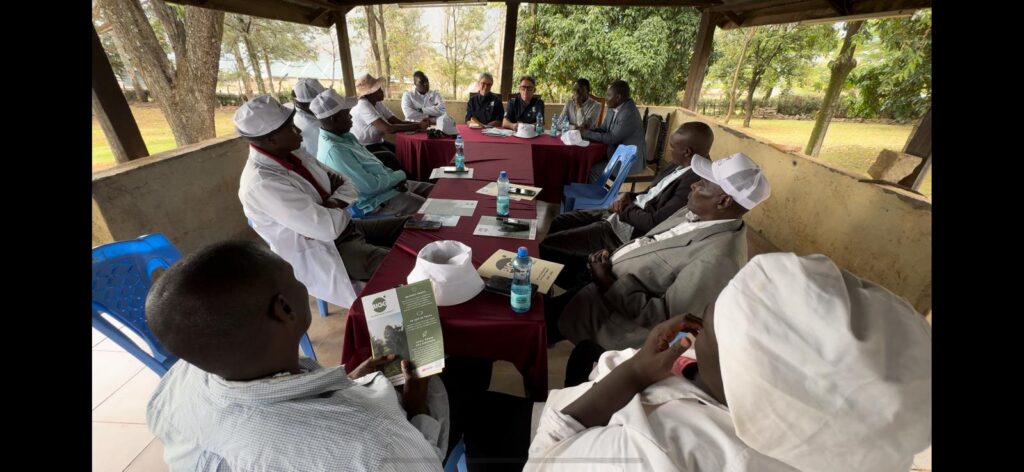
At lunch, we were joined by several of Edward’s stakeholders, including the leaders of some local cooperatives he supports with seedlings and pulping machines. To make a possible partnership work in the OBIIS model, several of the groups would likely need to collaborate with Lion Hills Farm to send enough coffee.
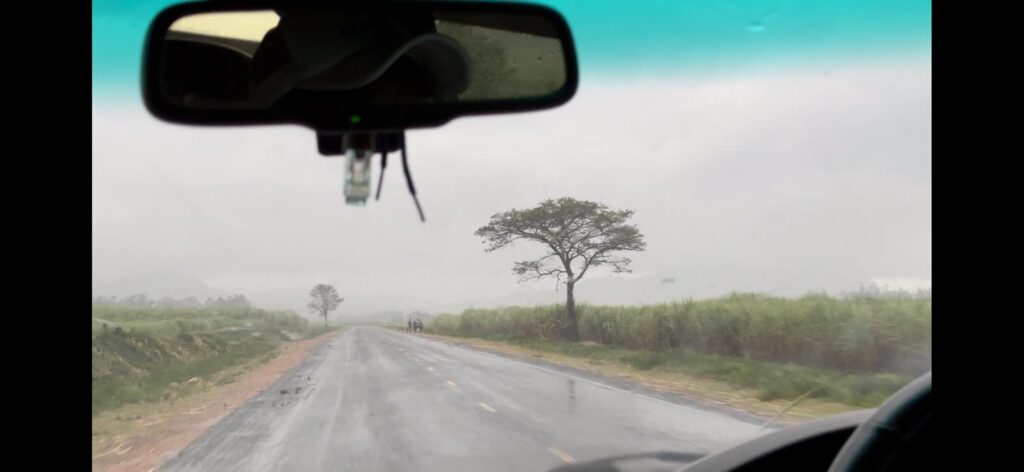
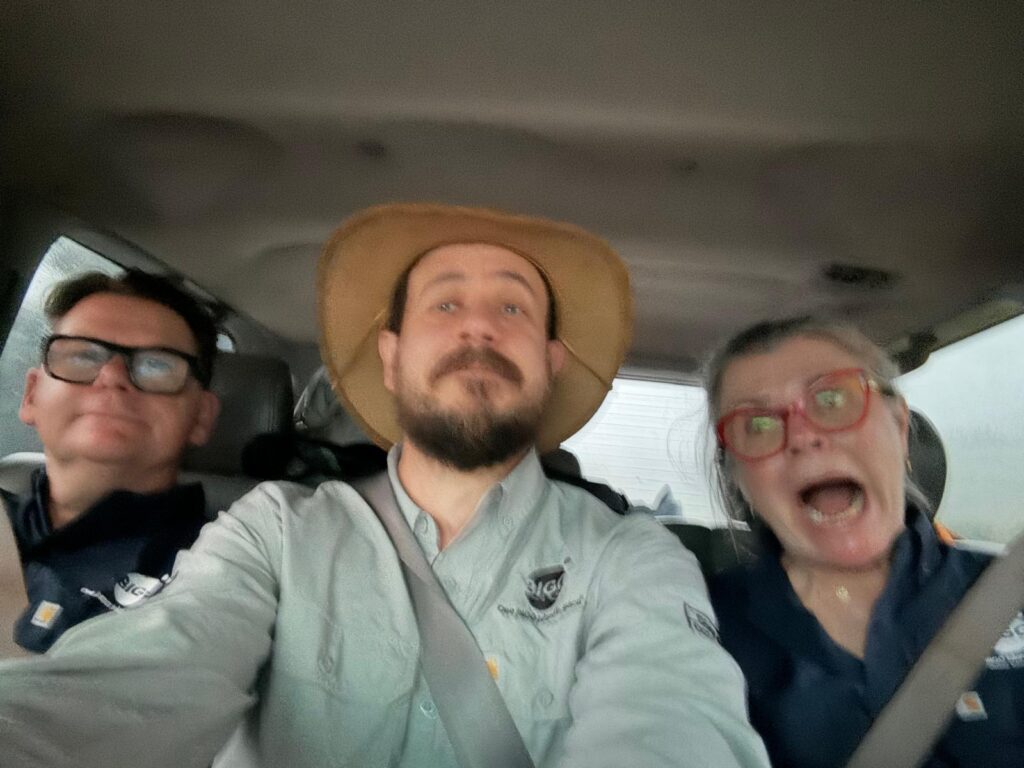
The meeting ended, and it began to rain again. We said goodbye and started our drive away. To us, it seemed kind of fast for the conditions, but we always trust our hosts.
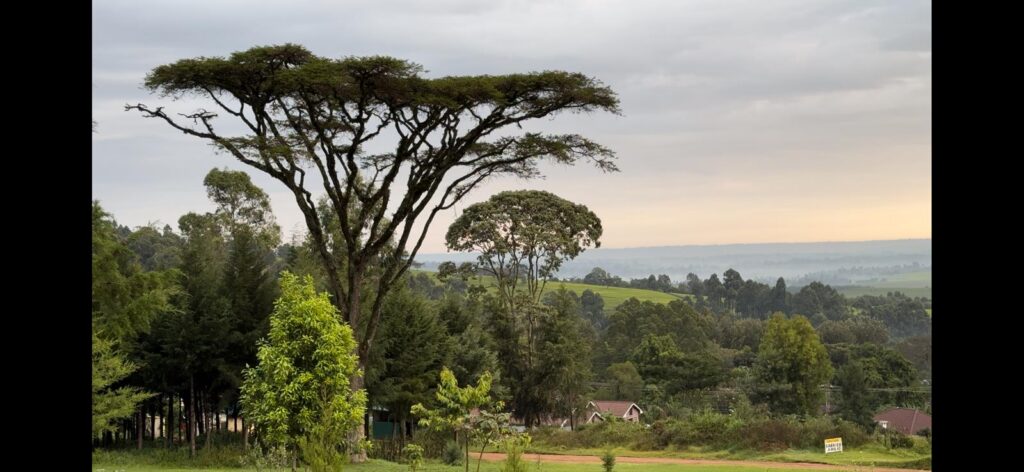
That’s a wrap for a three-week OBIIS trip to find new Farm-Direct partners in Africa.
We met some incredible people, saw some amazing places, and learned a lot about what coffee producers are facing in this part of the world.
The OBIIS team will debrief and see if any of these possibilities warrant a second visit when we come back to East Africa in November/December.
But for now, we are excited to fly home and hopefully get some rest for a few days before the OBIIS team sets out to visit an exciting coffee and agroforestry project we’ve heard is happening in Brazil…