Boots on the Ground: Diary of a trip
Brazil, April 2026
By Janee Hartman and Nathan Havey
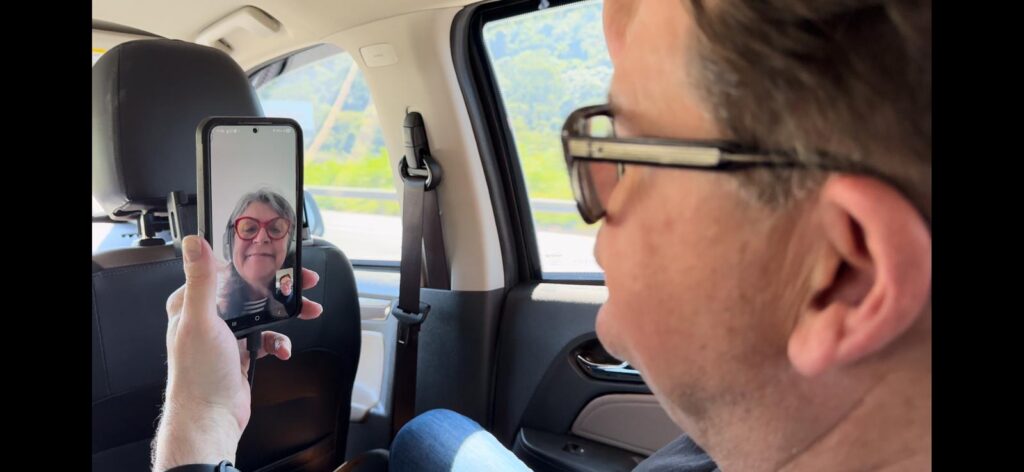
In the quest to find coffee that is good for people, planet, and community, a pared-down OBIIS team landed in São Paulo, Brazil. Michelle stayed behind this time to catch up on some writing, including blogs that will become episodes of Field Notes Season Three!
Bob and Nathan were scooped up at the airport and drove two hours to another airport with a call to check in with Michelle along the way.
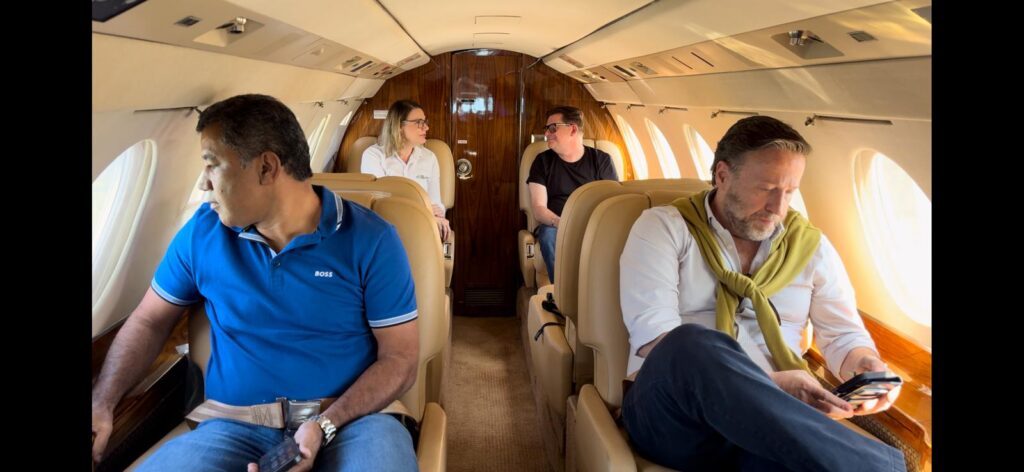
To our surprise, we were ushered onto a private jet that would take us to a town called Patrocinio, not far from our first farm visit for the trip. The plane belongs to Jair in the blue shirt. He is part of the coffee business in Brazil and clearly does pretty well.
Next to him is Danny from Cape Horn Coffee. Danny Neves is our host for the first couple of days of this trip.
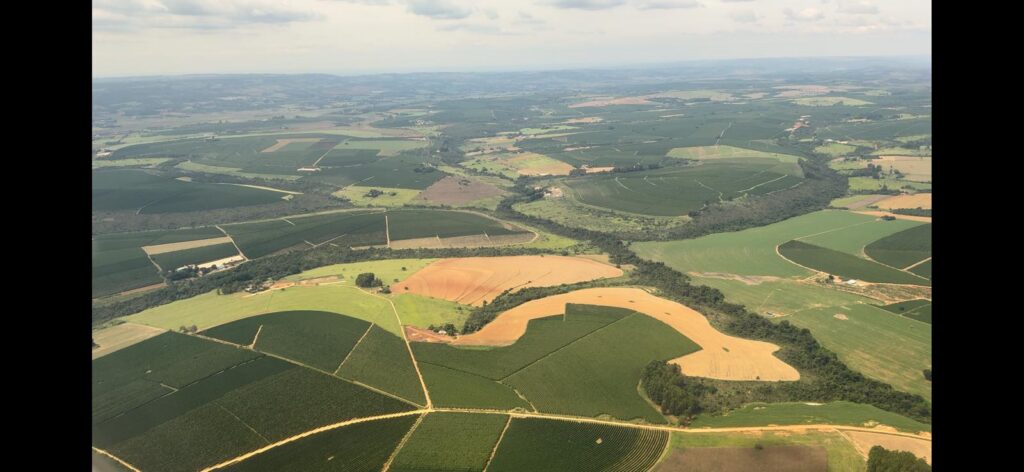
From the air. We are reminded of the sheer scale of coffee in Brazil. All of the dark green in the image is coffee, growing without shade, as far as the eye can see. 40% of the world’s coffee comes from Brazil. And when you see it up close, you understand why.
Rio Briliante
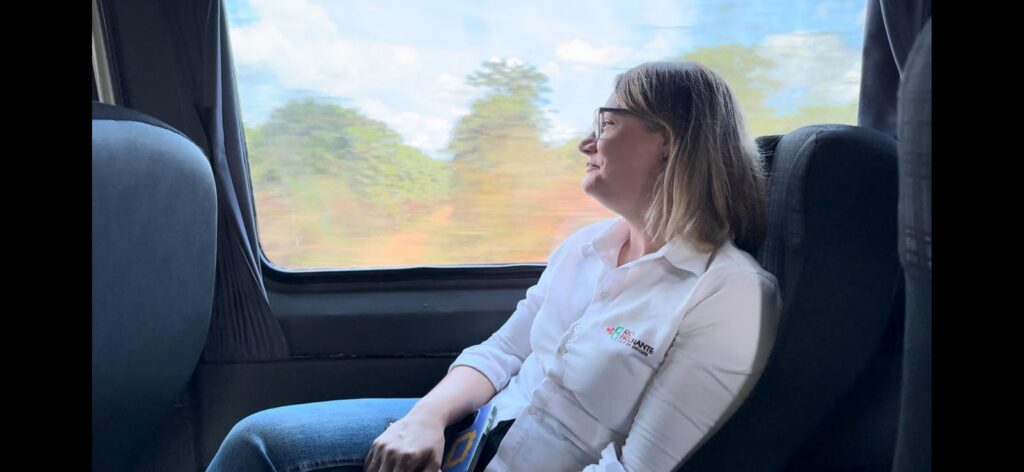
The first stop is a large coffee farm called Rio Briliante, and Andreza Mazarao, the farm’s coffee trader, is to be our guide.
After landing, we all load into a van and drive into the countryside.
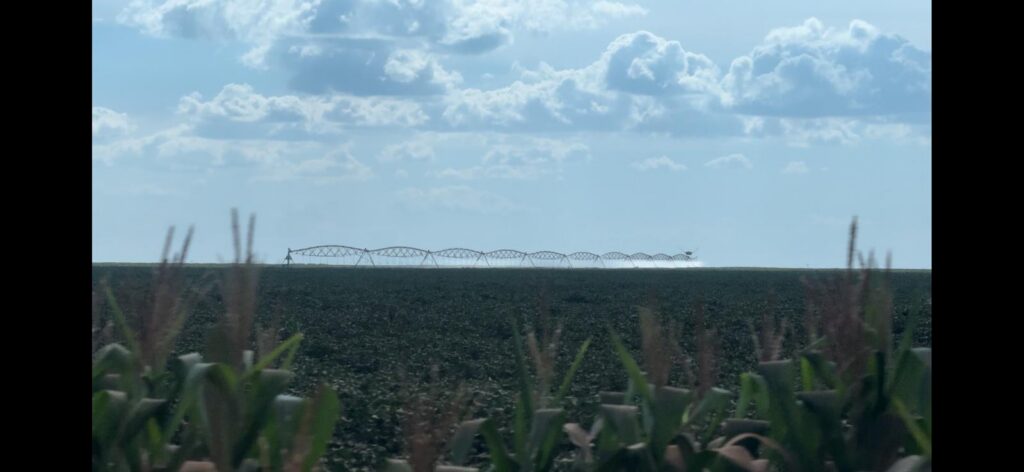
It’s not just coffee. The interior of Brazil is an agricultural Mecca that rivals the Midwest of the United States. Even for people used to driving through the cornfields of Iowa, the scale of agricultural production here is jaw-dropping.
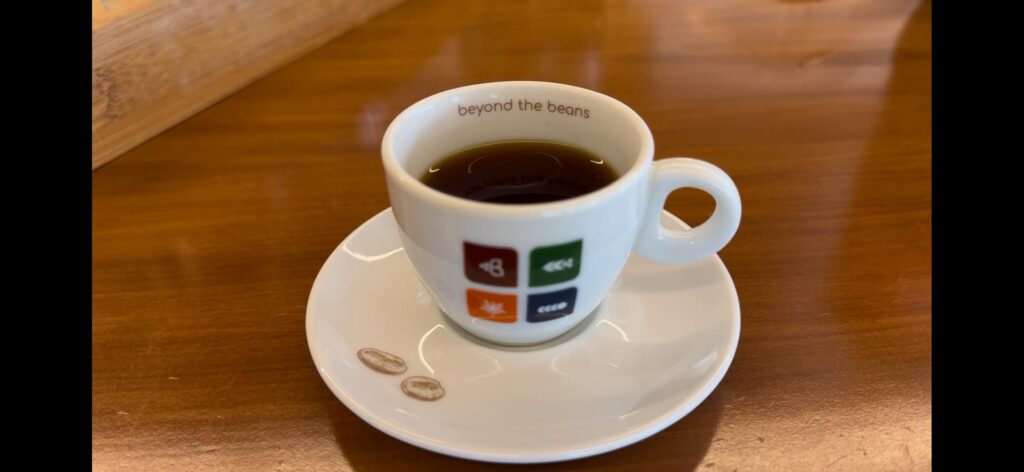
After about an hour and a half, we arrive at the farm. We are ushered up to a tasting room with fresh-baked cheese, bread, cornbread, cakes, and some other snacks… and of course, coffee. We haven’t had lunch yet, and we’re grateful for the sustenance.
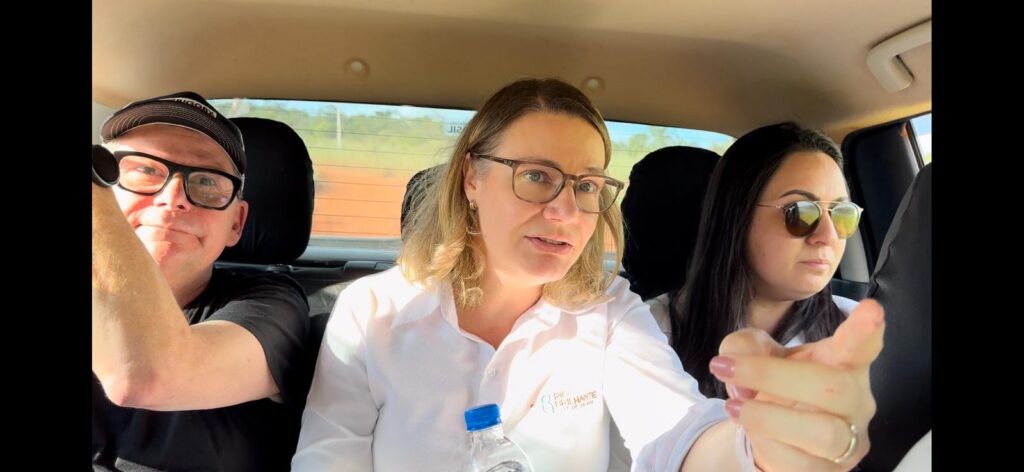
Next, it is time to go see the farm. In Central America, this would usually mean lacing up our boots and heading out on foot, but in Brazil, it means loading into a pickup truck and driving sometimes 15 or 20 minutes from one plot to the next. Andreza shows us some of the things they think are important, and as she does, some initial skepticism begins to melt away.
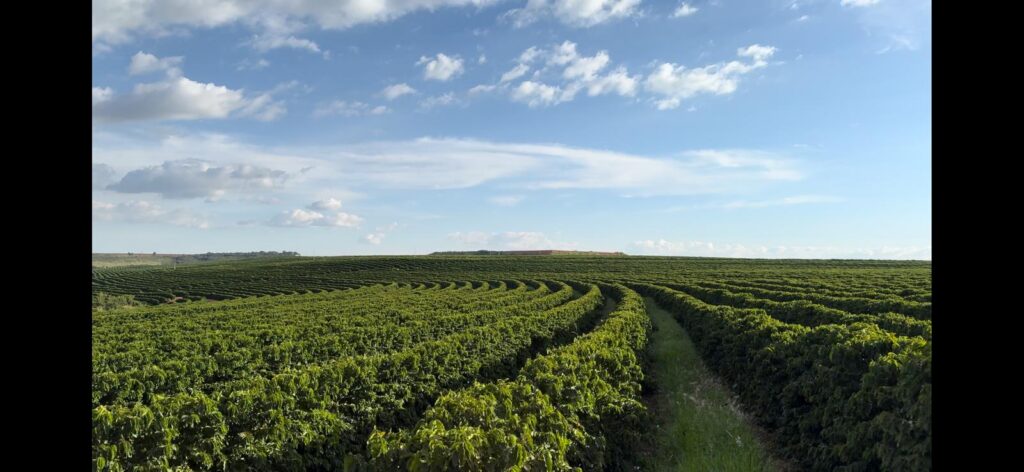
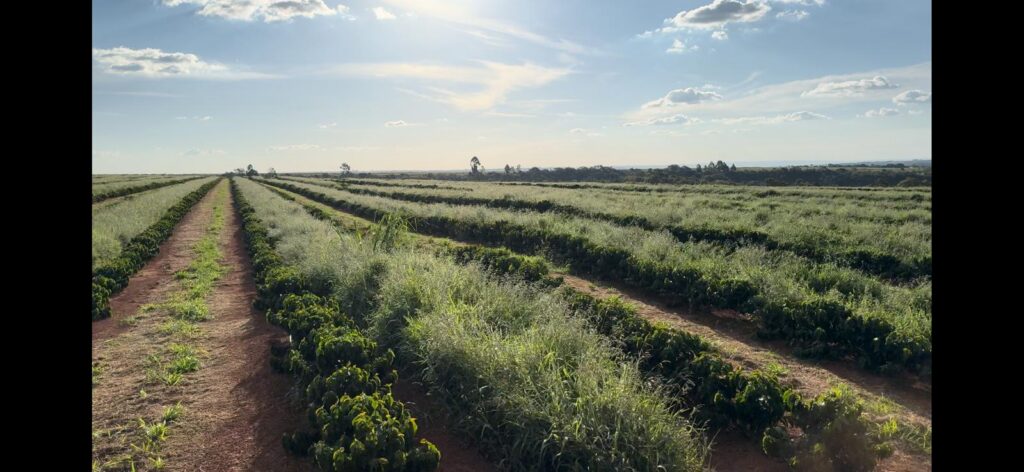
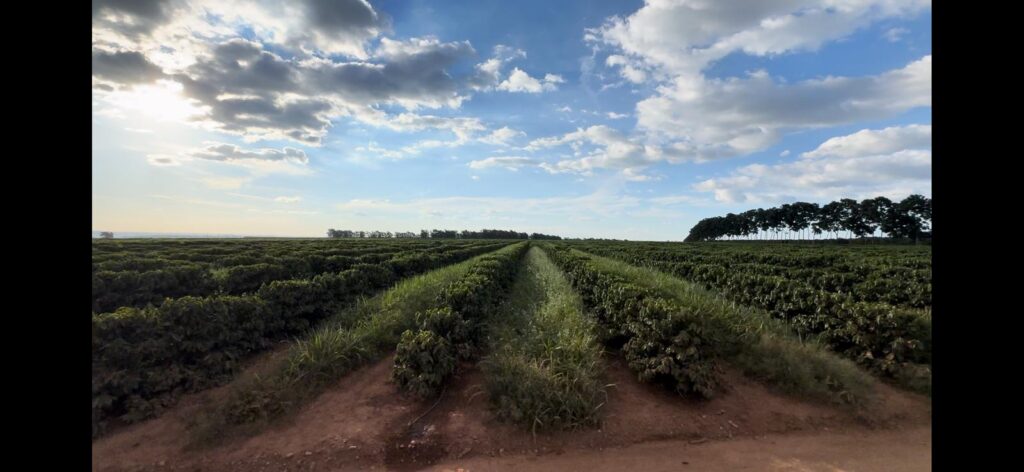
The family that owns this farm is very proud of their region of Brazil. We are told that they strive to be an environmental leader, cutting down on dangerous chemicals and investing in creating really healthy soil.
One of the most important ways they do that is by planting cover crops in between the rows of coffee. In Brazil, this idea is heretical. But on this farm, it is a source of tremendous pride, and everywhere we go, we see the practice flourishing.
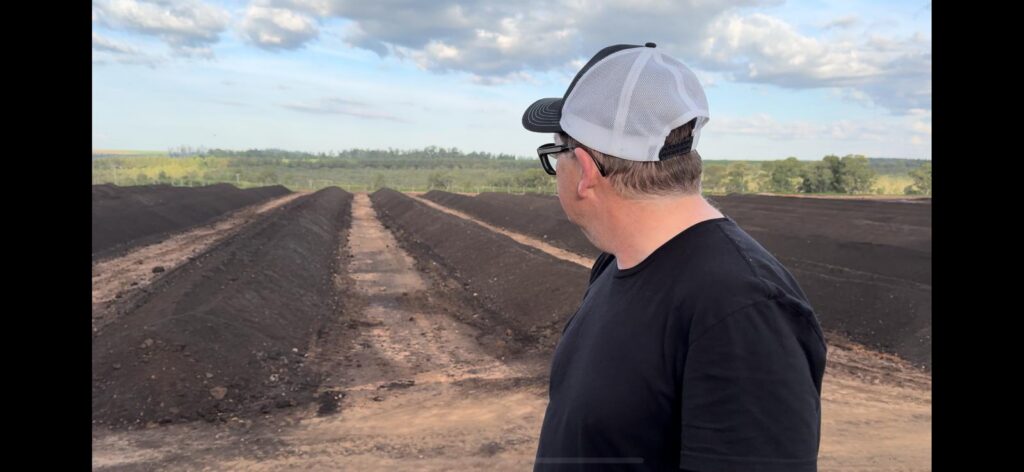
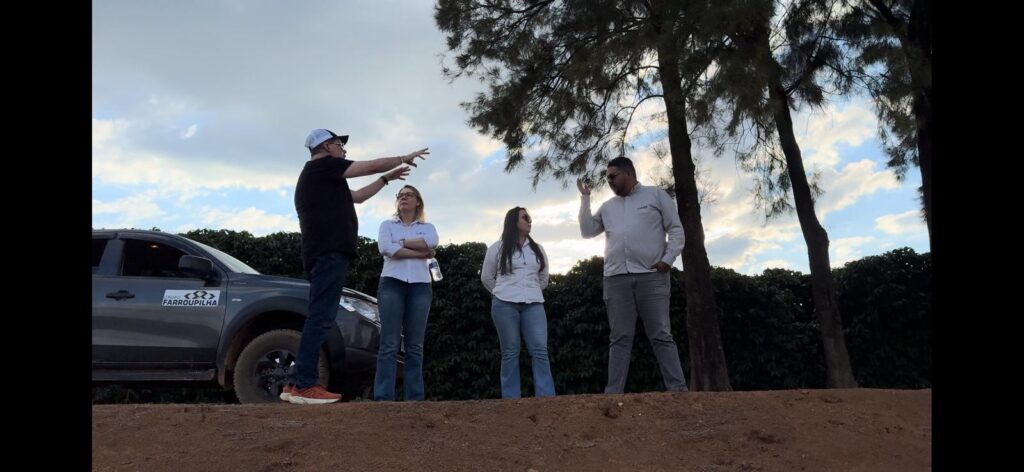
Next, we were taken to their compost area and Bob remarked that it’s the neatest, best managed compost operation he has ever seen.
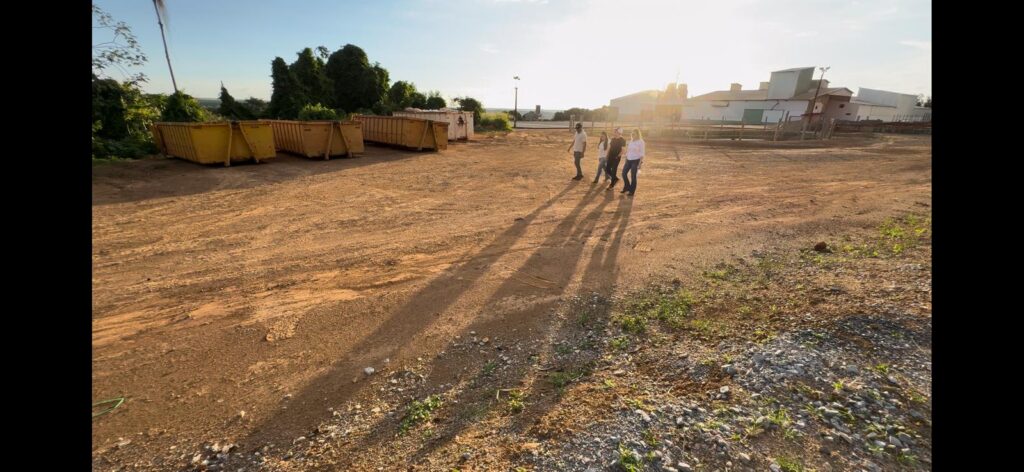
As the sun began to sink, we returned to the center of the farm and walked to a set of drying patios, more massive than anything we had ever seen. They say that everything is bigger in Texas, but maybe they haven’t been to Brazil.
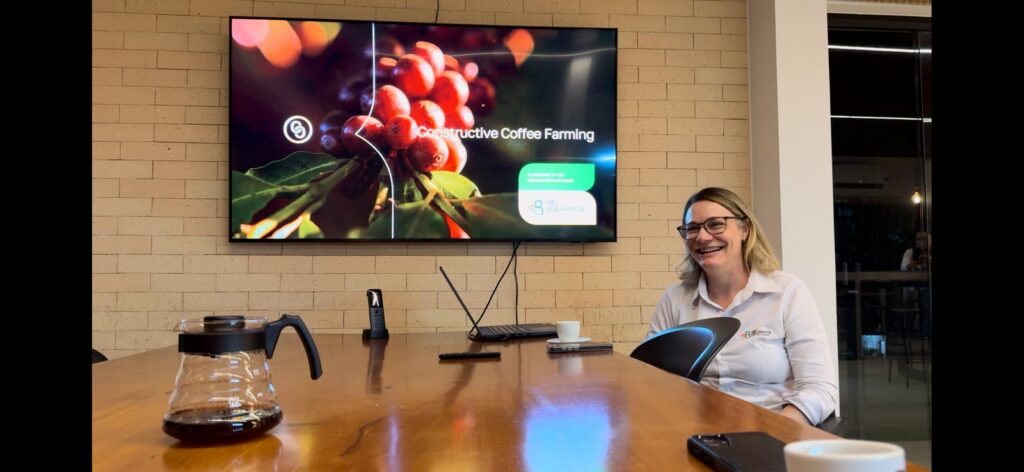
Back in the office, Andreza gives us a presentation describing the environmental priorities of the farm. Here, they call what they are doing constructive farming. In some ways, this is beyond sustainable or regenerative. They have data that shows that the impact they are having on the land here is even better from a carbon sequestration perspective than what the native land was like before anybody touched it.
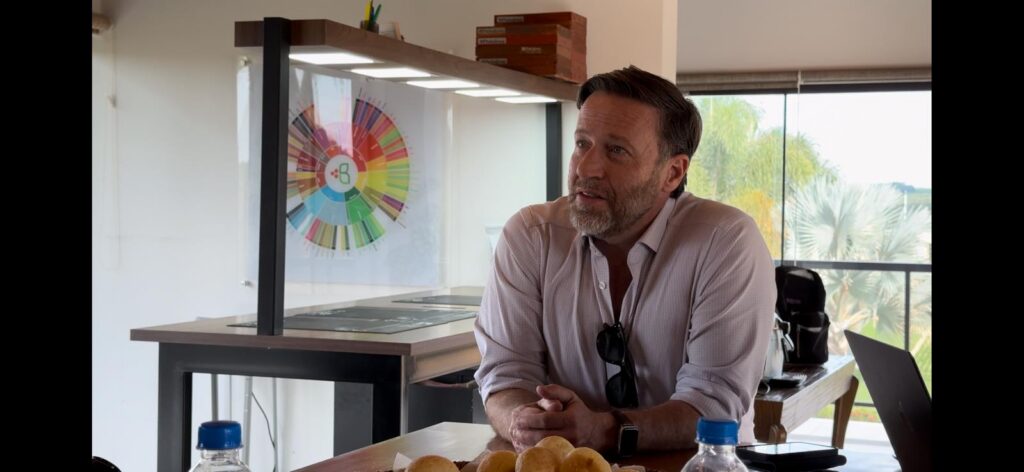
This was only the first farm of three that Danny is planning to show us. As we went to bed that night, we were excited to sit off with him again in the morning.
We thanked Danny and Fernando for a wonderful day and said good night. It’s too soon to know if there are any next steps here. Tomorrow we transition to another host and visit another farm, continuing the search for a needle in the haystack here in the biggest coffee country in the world.
Fazenda Guanabara
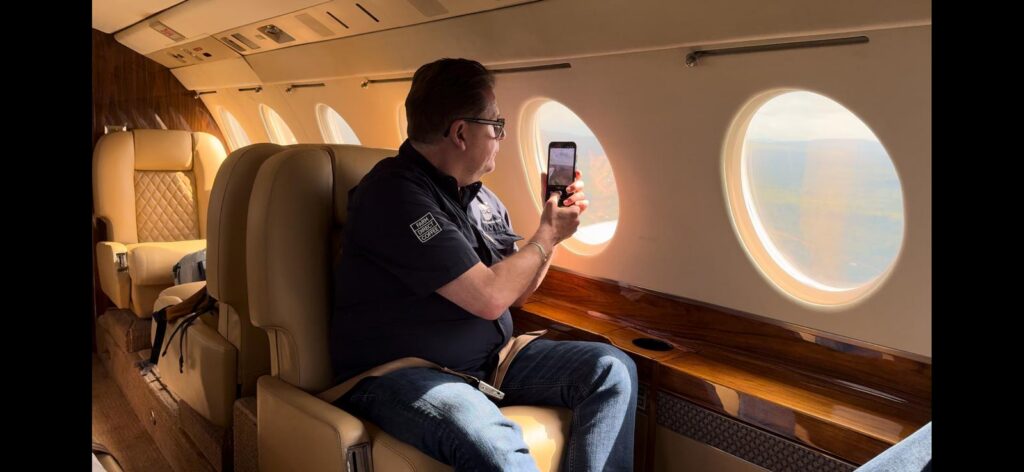
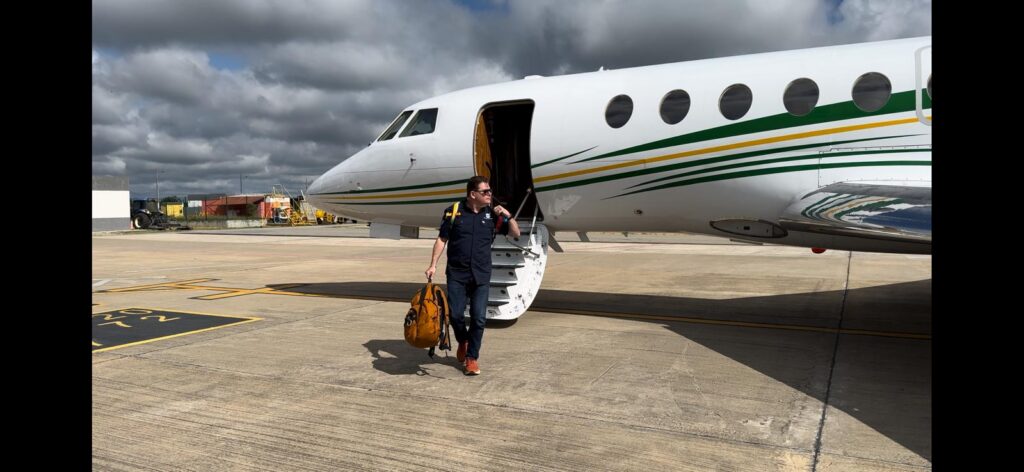
The next morning, we were up early to fly further north to the state of Bahia. Bob remarked that we have to be careful not to get used to traveling like this.
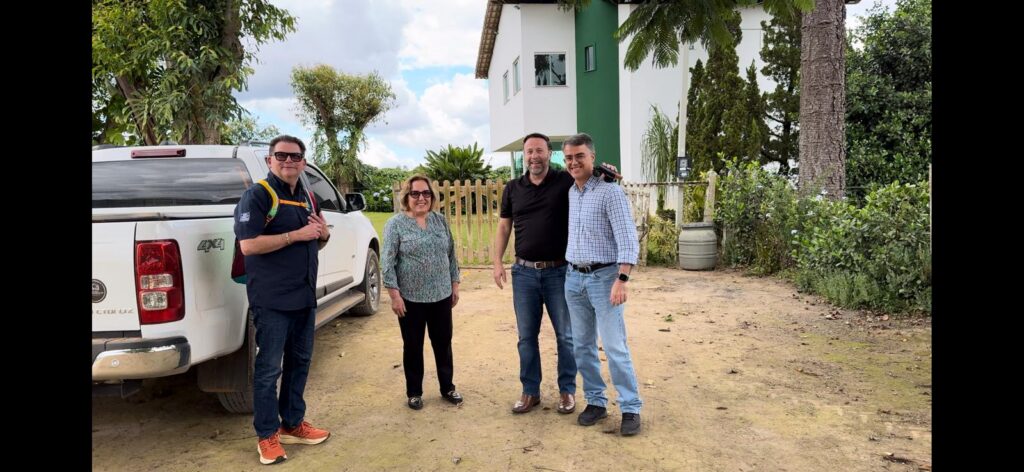
Danny’s cousin Fernando Neves met us at the airport, and we loaded into trucks to make the two hour drive to Fazenda Guanabara. When we arrived, Fernando introduced us to his mother, Arly.
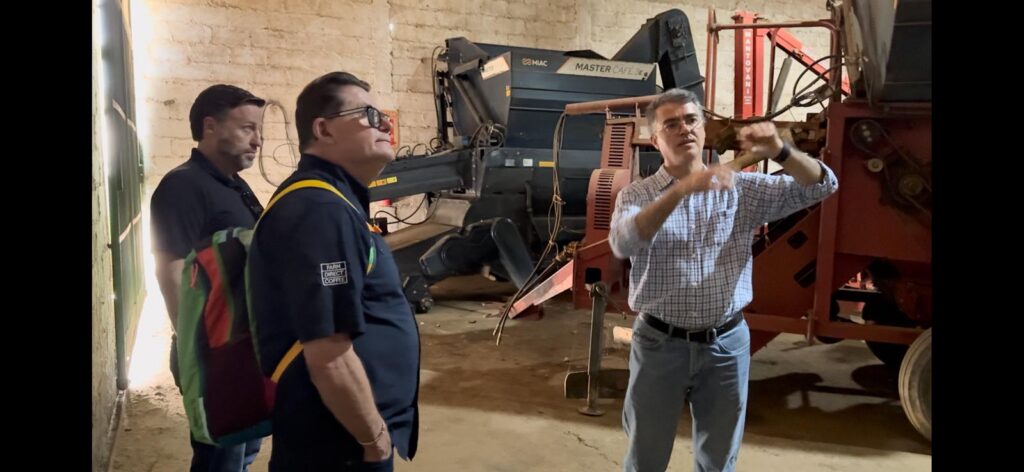
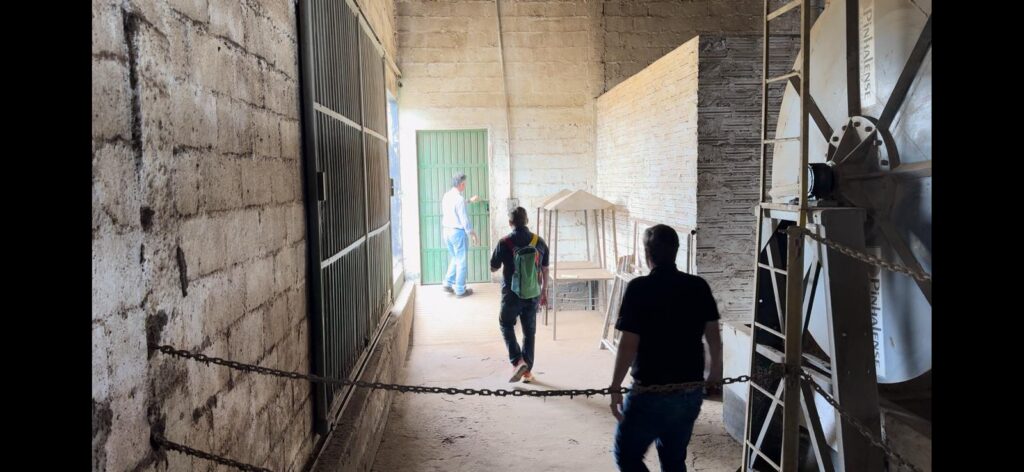
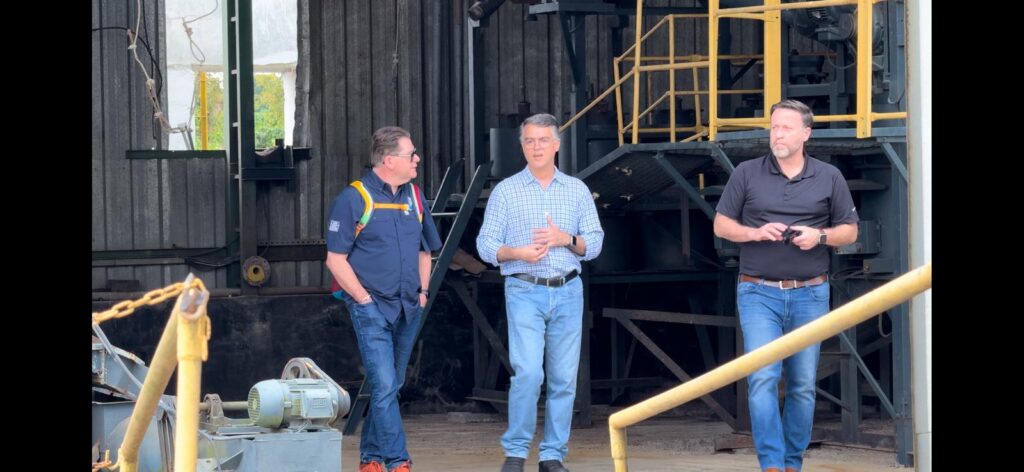
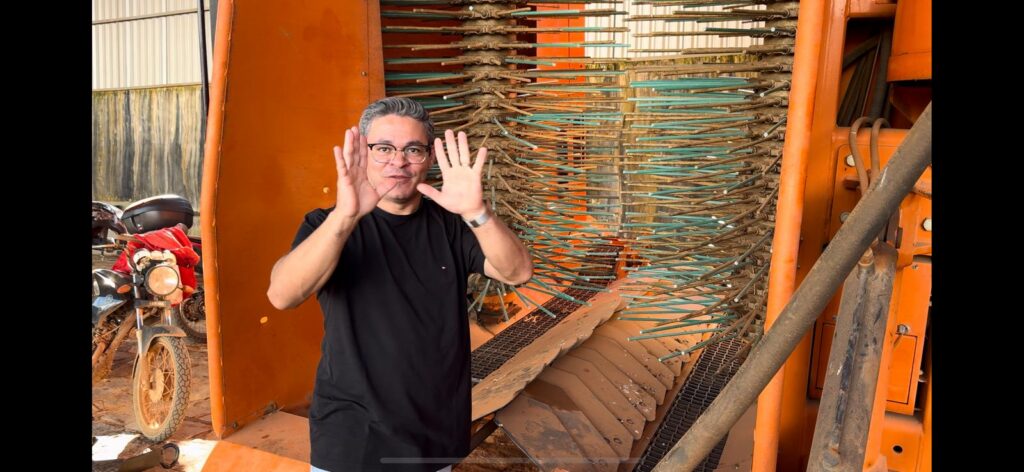
Fernando took us to see the machinery he uses to process his coffee. Because of the wet climate here, Fernando’s process is known as semi-washed coffee, and he uses a sorting machine that Bob had never seen before.
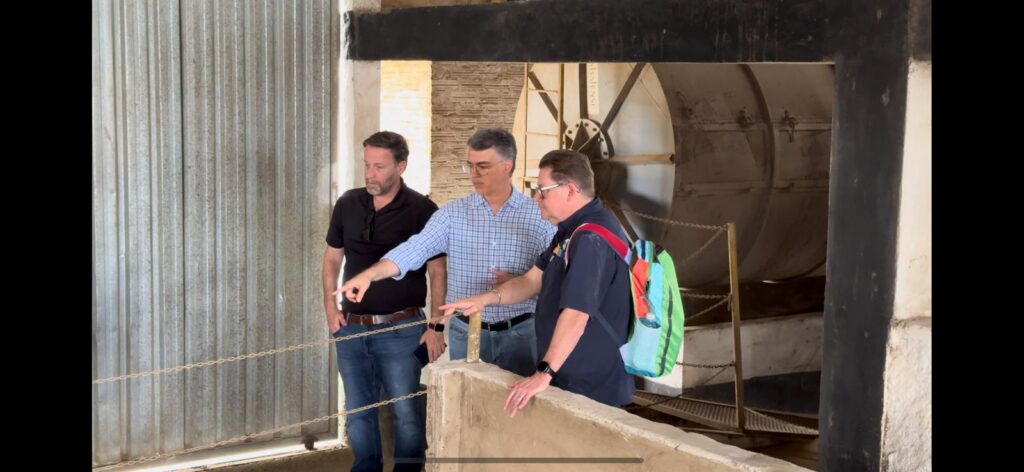
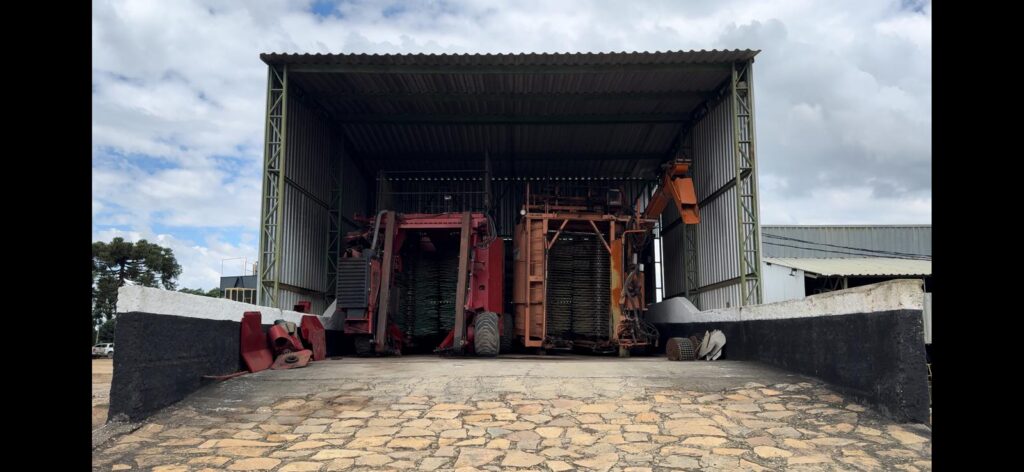
Soon, the topic of glyphosate came up, and Fernando explained his challenge.
The huge harvesters that he uses drop roughly 10% of the cherries on the ground as they move through the rows. If those cherries are not picked up, they can rot and bring broca, a pest that bores into the coffee cherry, into the fields. That’s not good! Neither is losing 10% of your yield to inefficient harvesting.
So what big farms like his do is send a second pair of machines through the fields at the end of the harvest. The first one sweeps and blows all of the fallen cherries into a neat row, and the second scoops them up and brings them in for sorting and processing. But these machines only work if the ground between the rows is bare dirt. Hence the need for a powerful herbicide like glyphosate.
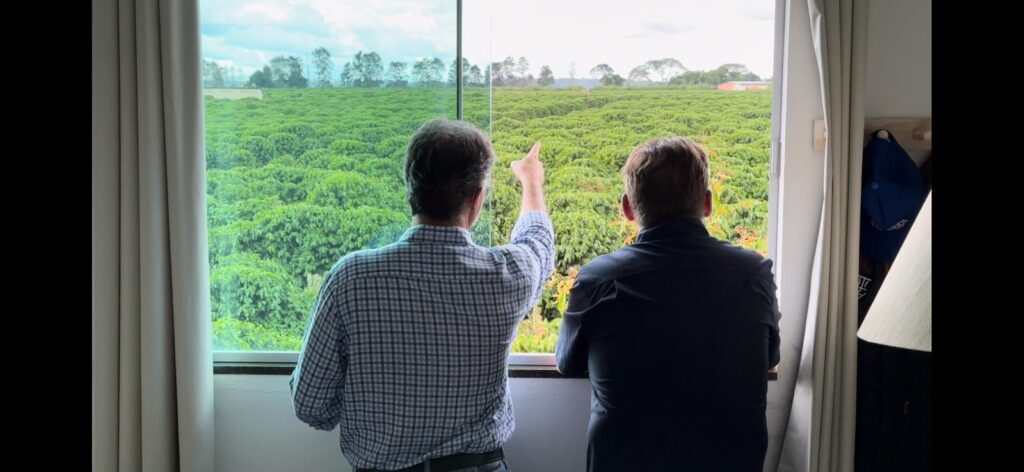
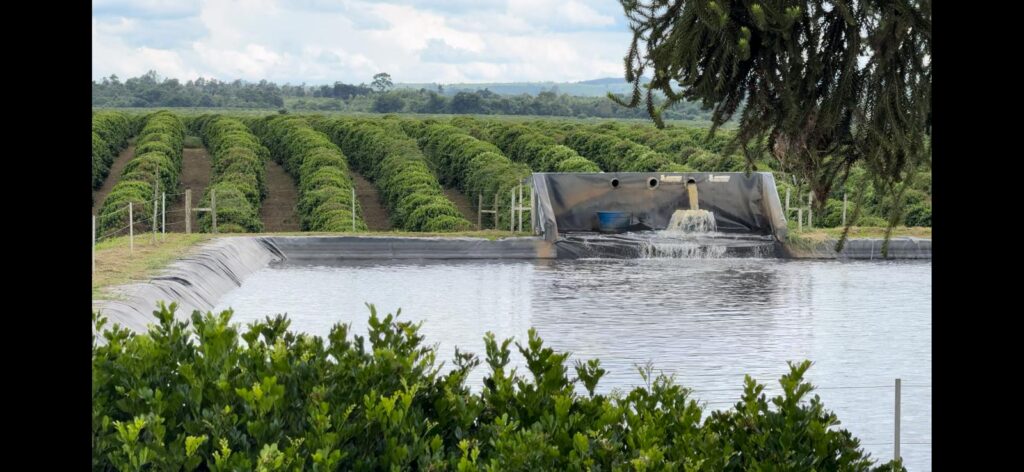
As lunch was being prepared, Fernando took us to the beautiful house that he had built on the farm. He showed Bob a field of coffee just outside the window, and he pointed out the reservoir that provides irrigation for the coffee. He told us it is fed both from the nearby river and from a well. Fernando mixes the water to balance the minerals and alkaline before feeding it out to the coffee.
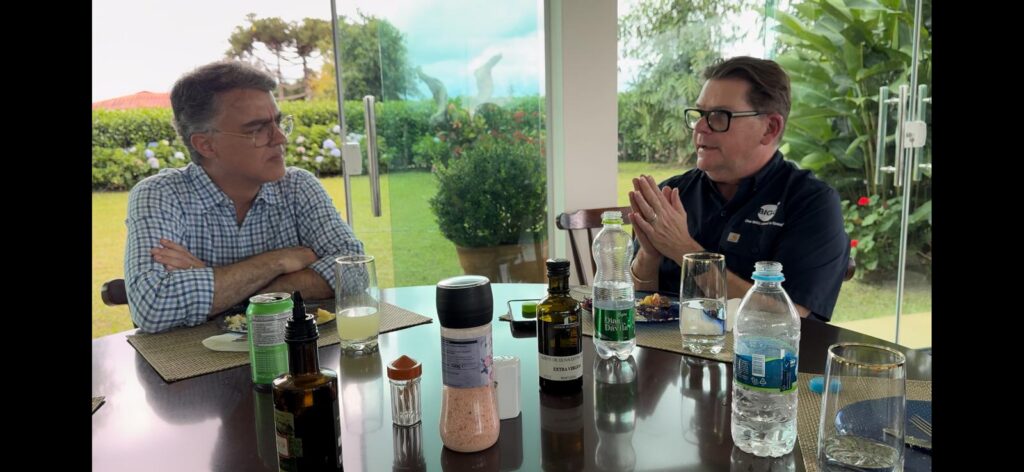
Over a delicious lunch, Fernando told us the story of taking over the family farm from an uncle who wanted to retire, and of his more than two decades of mastering agronomy here.
Bob shared what OBIIS is up to, including our goal to be glyphosate-free.
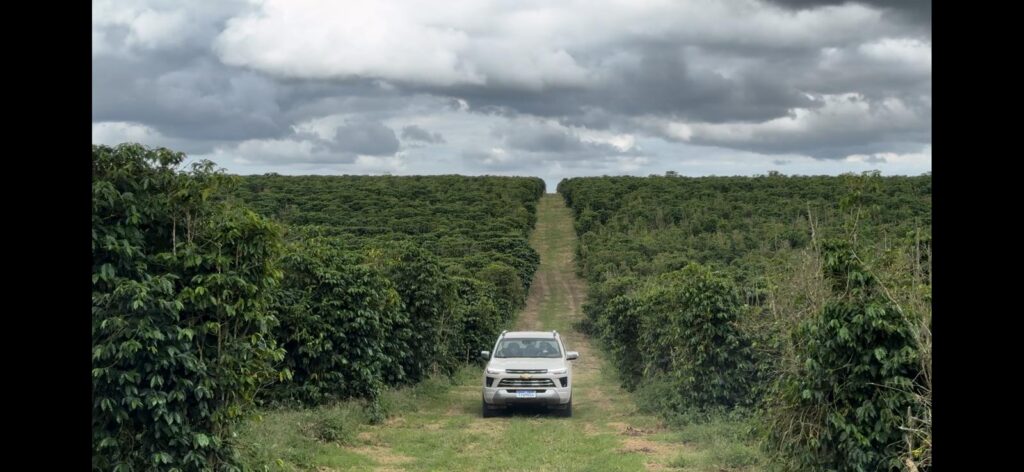
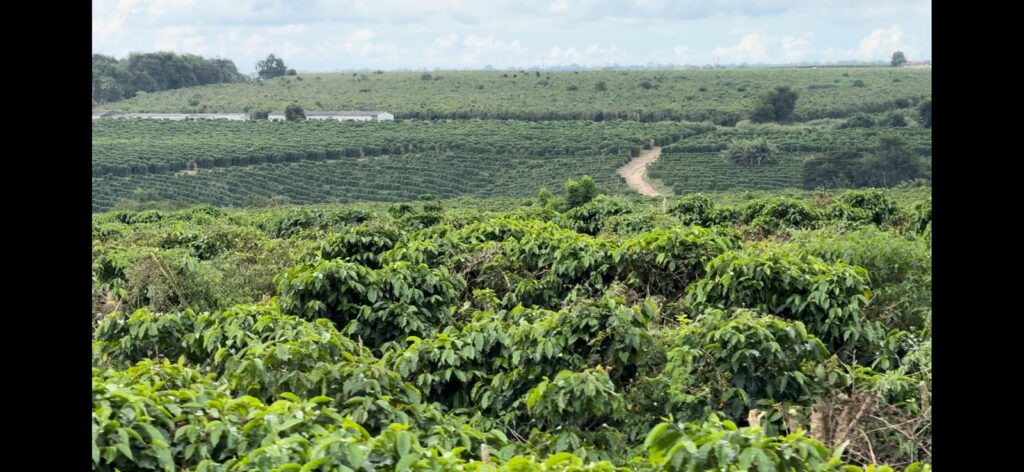
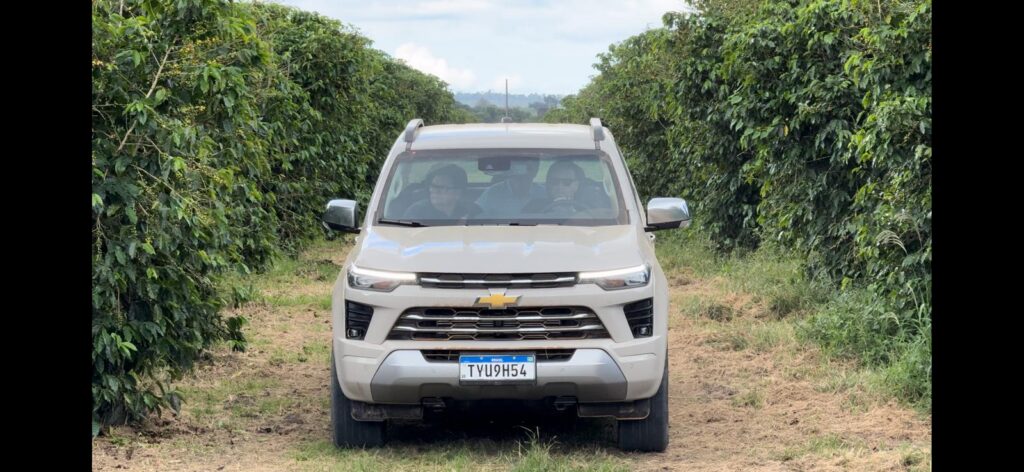
Next, it was time for a tour of the farm, so we got back into the trucks and drove for miles exploring all of the different areas of the massive, or by Brazilian standards, large-ish farm.
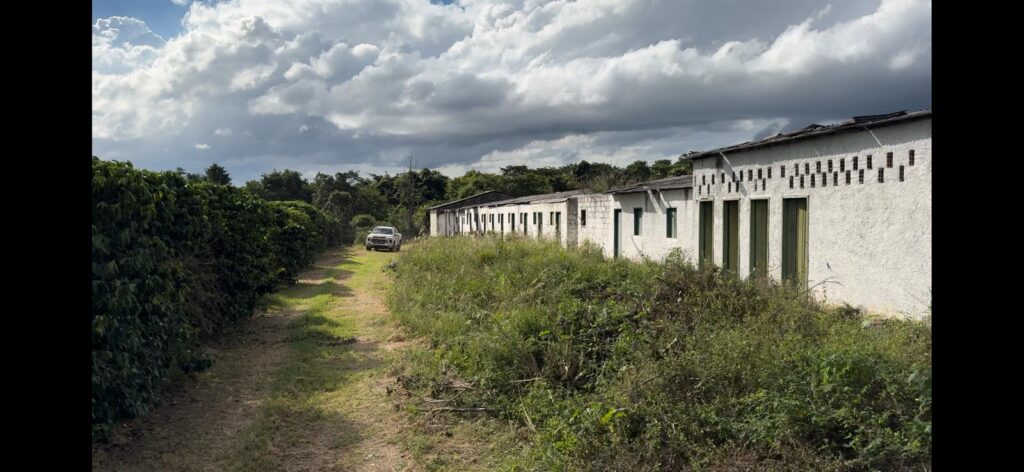
As we drove, we saw remnants of the Brazilian coffee’s recent past. Huge housing complexes stand vacant, ghost towns created by the advent of mechanized farming, and the cost savings it affords.
A generation ago, these houses would have been abuzz with many hundreds of workers and their families, doing the tough job of harvesting coffee by hand, likely with little need for chemical poisons like glyphosate.
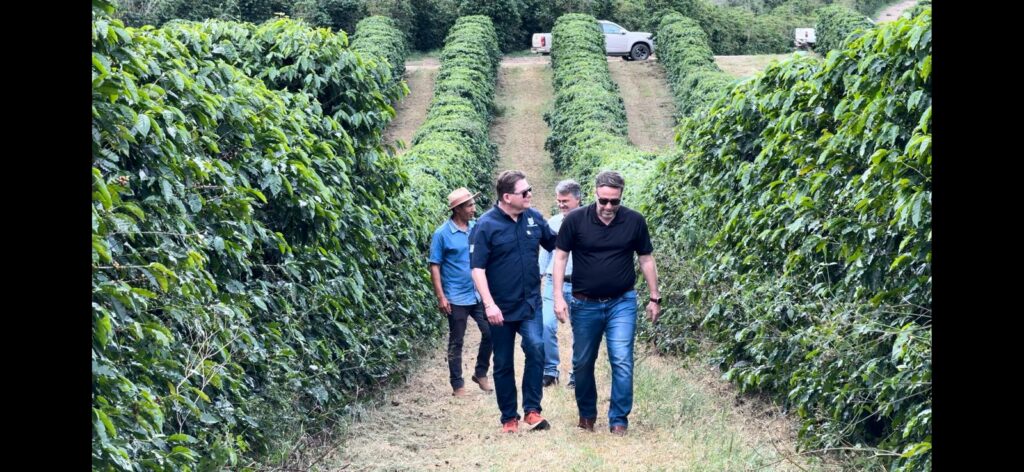
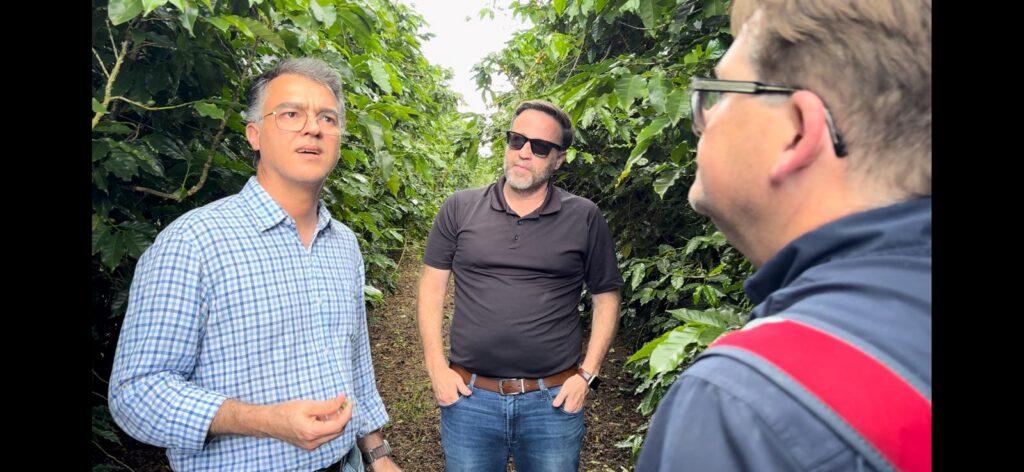
Occasionally, the trucks would stop, and we’d walk into the coffee, deep in conversation with plenty of laughs.
Fernando is doing some great work, including ubiquitous cover crops that he says are essential to keep the soil and coffee healthy.
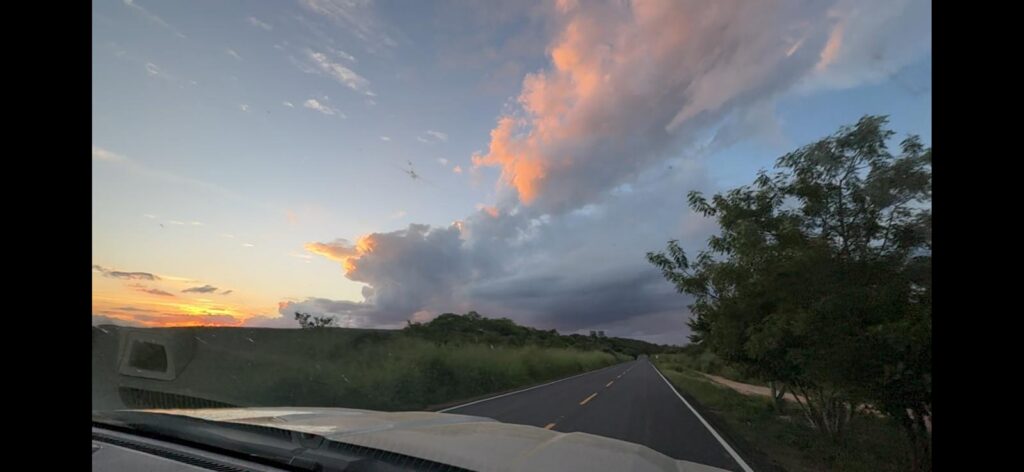
Soon, it was time to go, and we made the two hour drive back to town.
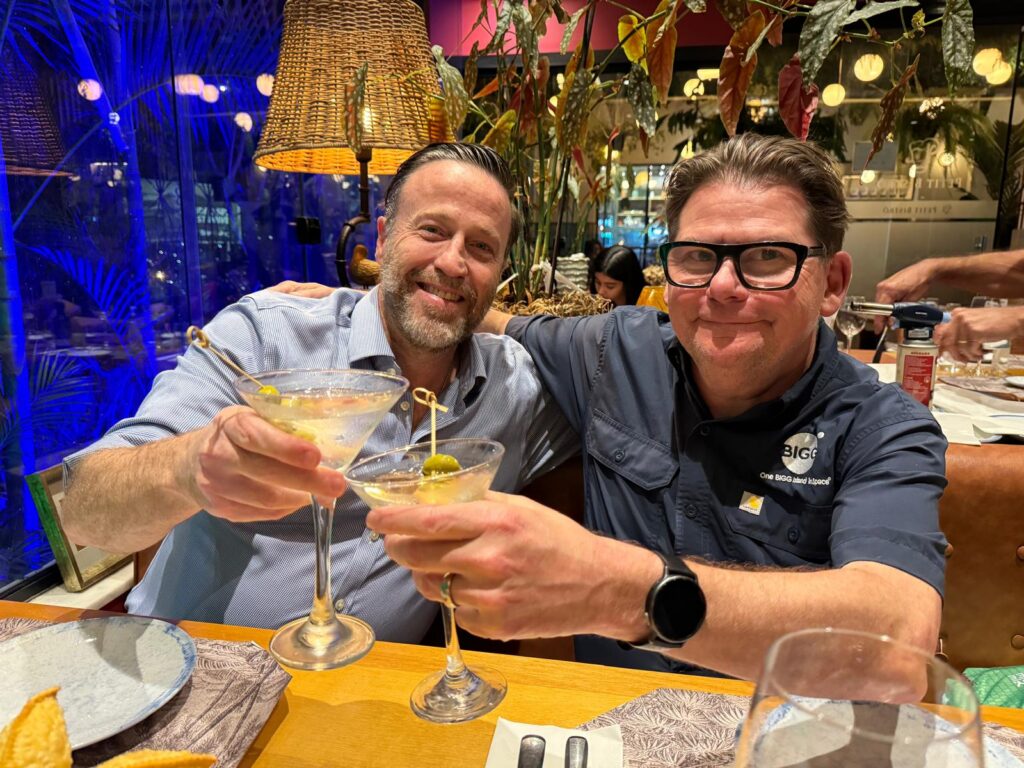
Dinner that night was at a wonderful French restaurant. At one point, the conversation came back to glyphosate. Nathan asked Fernando if he saw a way to avoid using it altogether. Fernando didn’t miss a beat, saying that he knew of safer alternatives that would work, but that they would require more applications to be effective. He did the math of what it would cost to do that, and given the size of his farm, it was not very much.
Mió
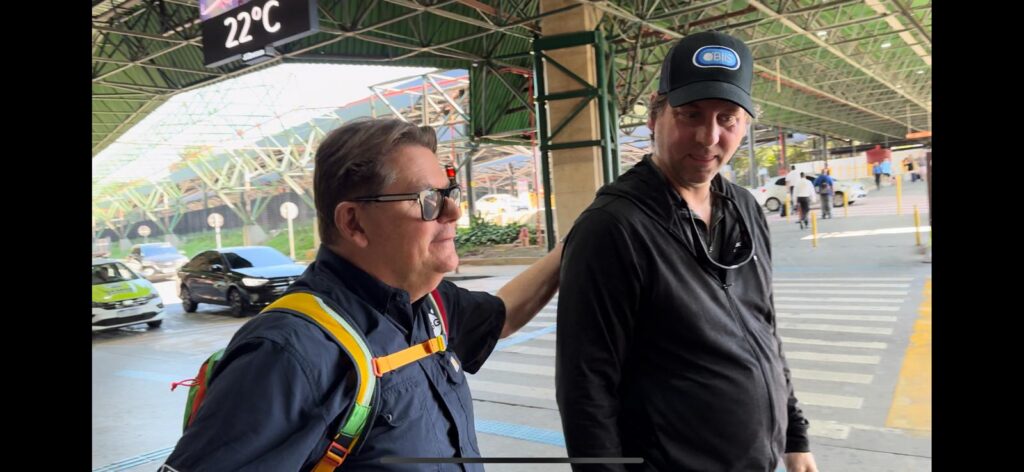
On Sunday, Bob and Nathan flew back to São Paulo, where Rich Schaafsma of Paramount Coffee and Chad Trewick, of BIGGBY COFFEE were waiting. We all loaded into a car and drove four hours north to a farm called Mio.
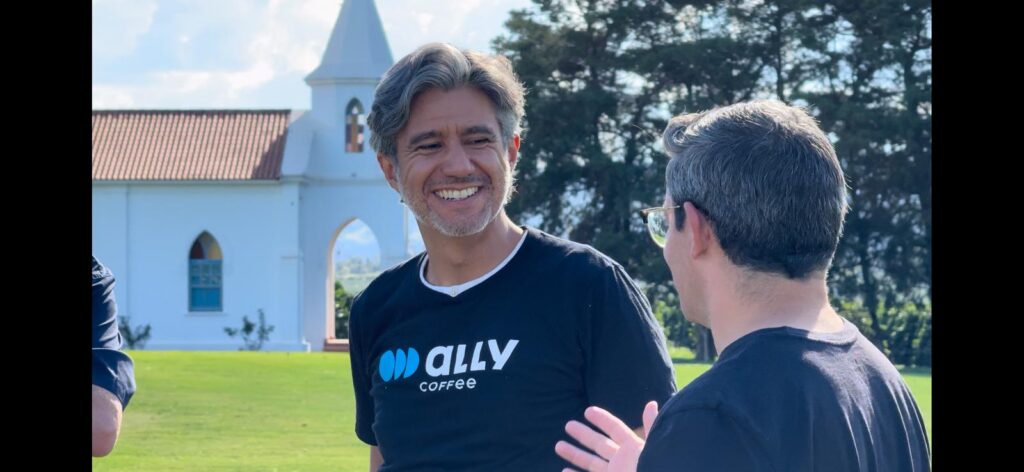
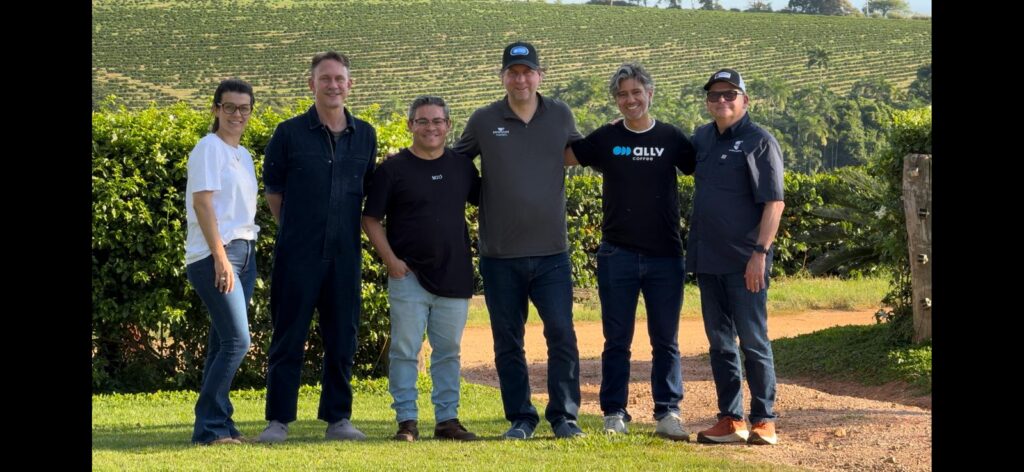
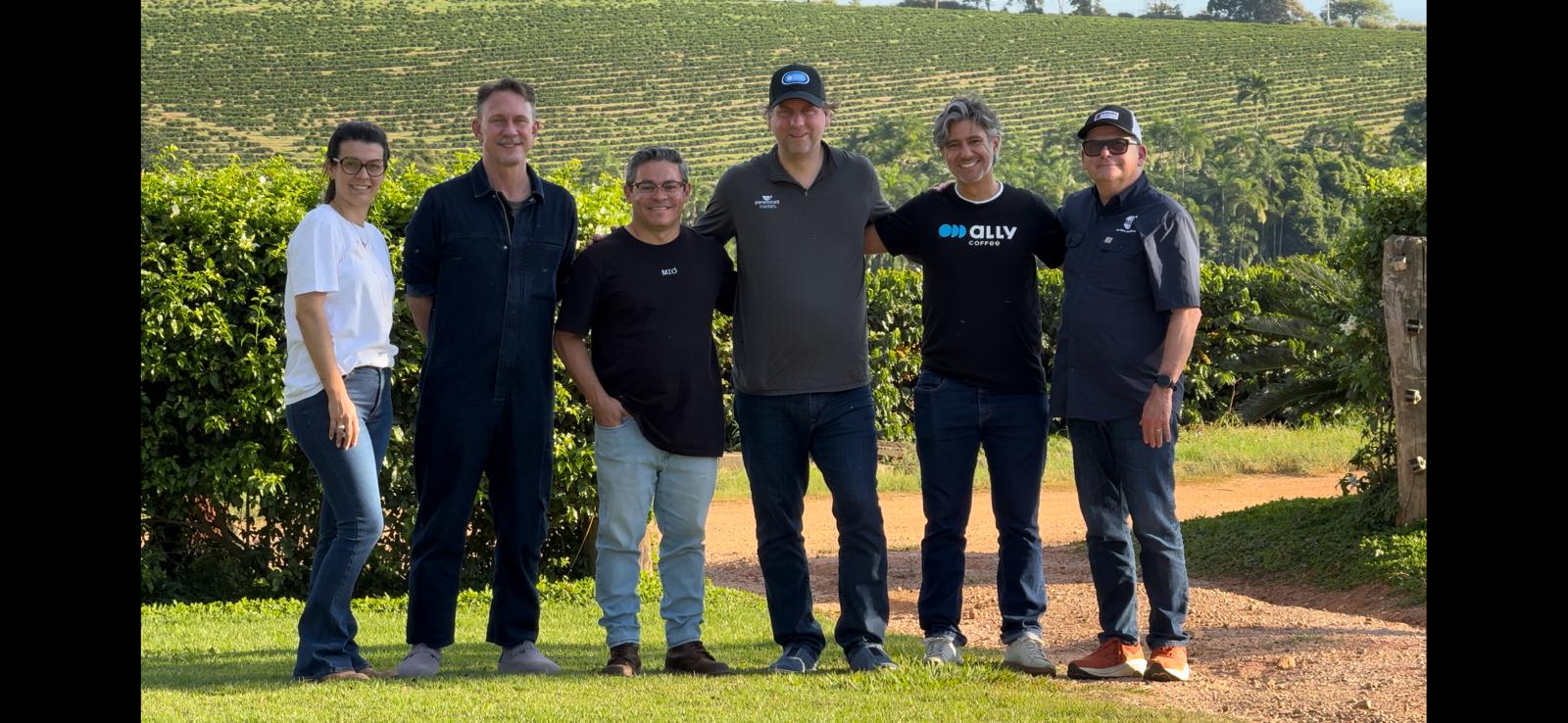
Our host for this leg of the trip is Luiz Fernando Tinoco from Ally Coffee. He introduced us to Lucas Louzada and Maísa Mancini. We all posed for a picture before Luiz had to depart for a family matter.
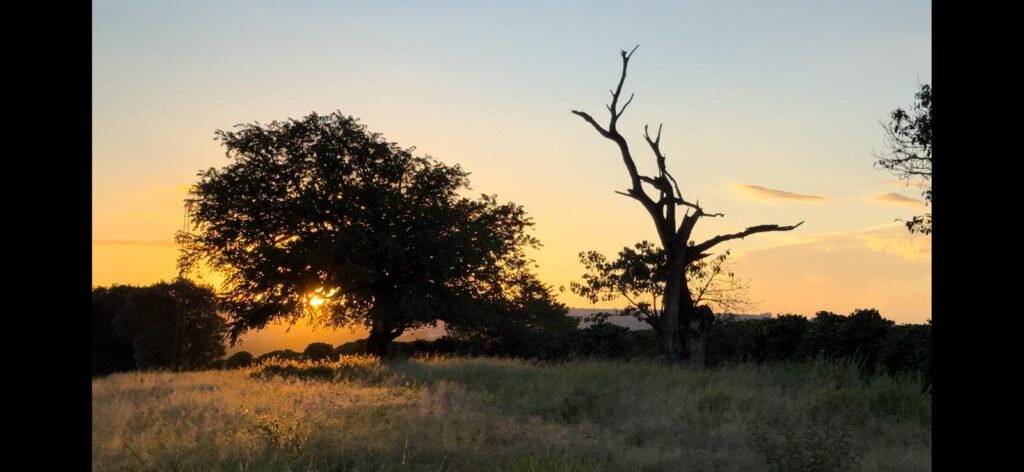
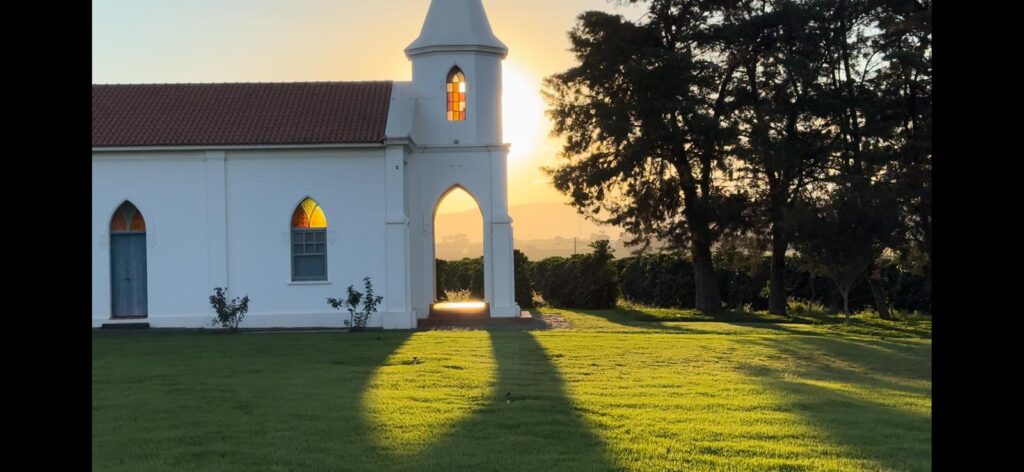
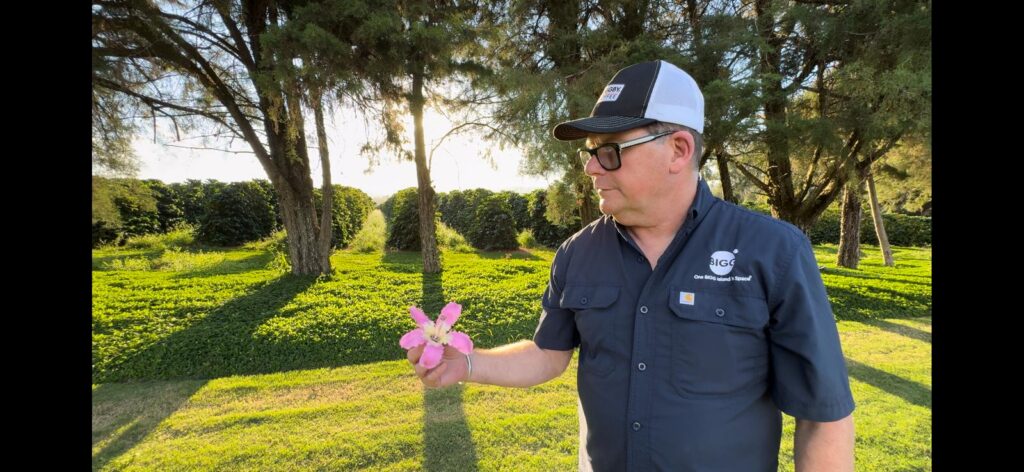
We were all exhausted from traveling and were relieved when we were given an evening off.
We explored the grounds in the late afternoon light, had some pizza, and went to bed early.
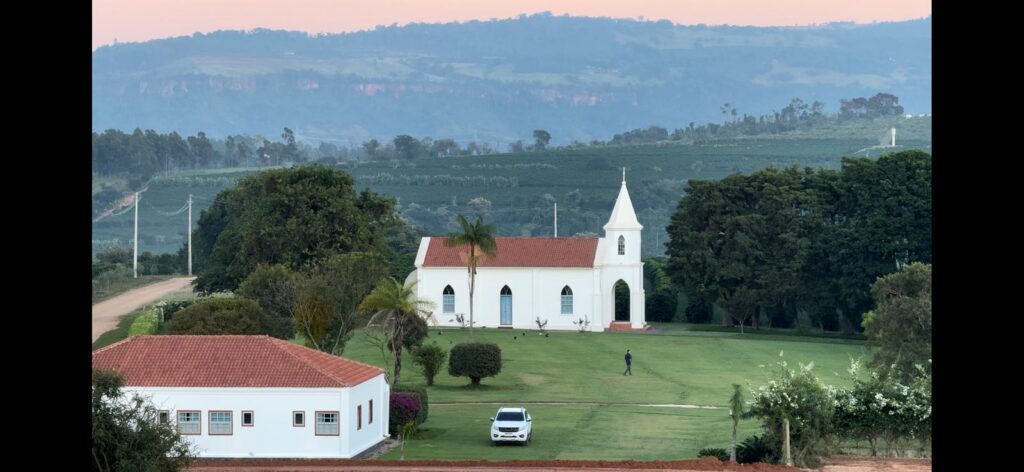
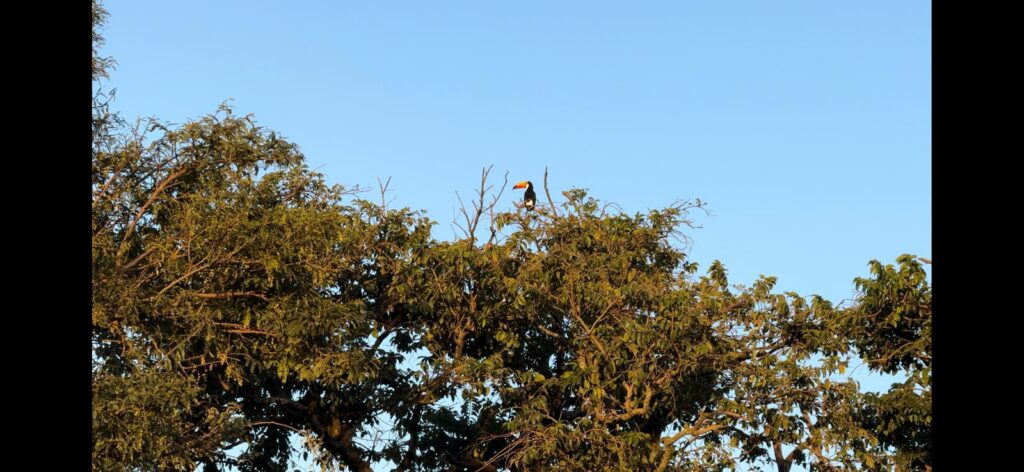
The next morning, we awoke refreshed and eager to see what Mio is all about. The fact that there were toucans around was a good sign environmentally.
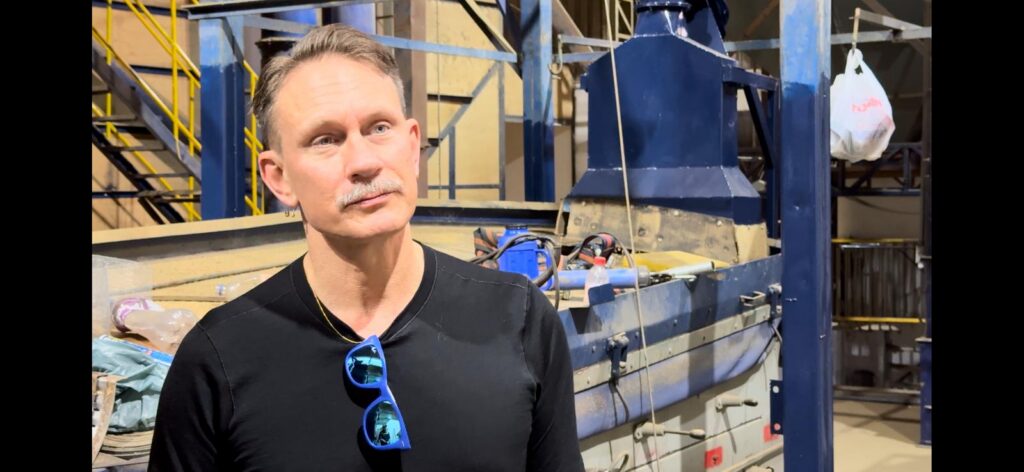
Chad Trewick
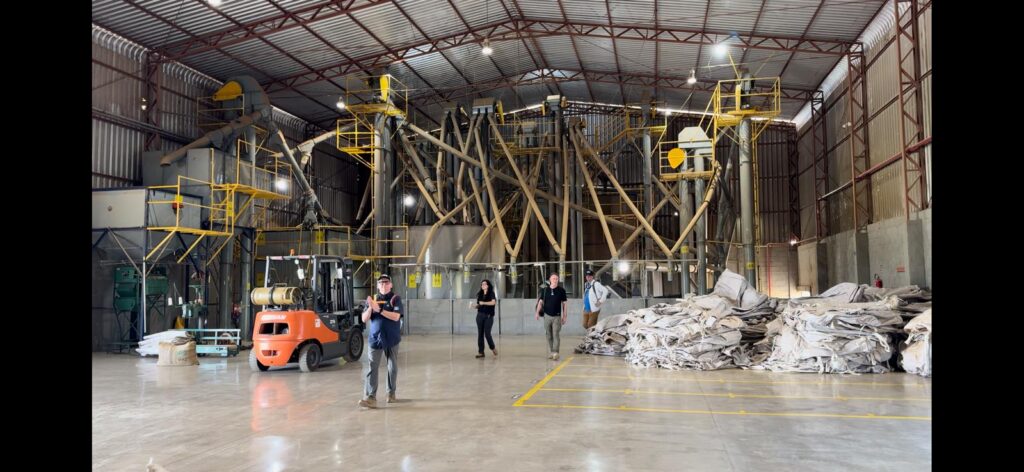
We began by touring the wet and dry mills where the Brazilian scale of coffee was on full display. Rows of dryers, a massive drying patio, and industrial-scale processes, dialed in with a level of sophistication that is hard for the rest of the coffee world to achieve. Chad has been to Brazilian farms like this many times before and suggested to us that we need to add some Brazilian coffee to the OBIIS portfolio.
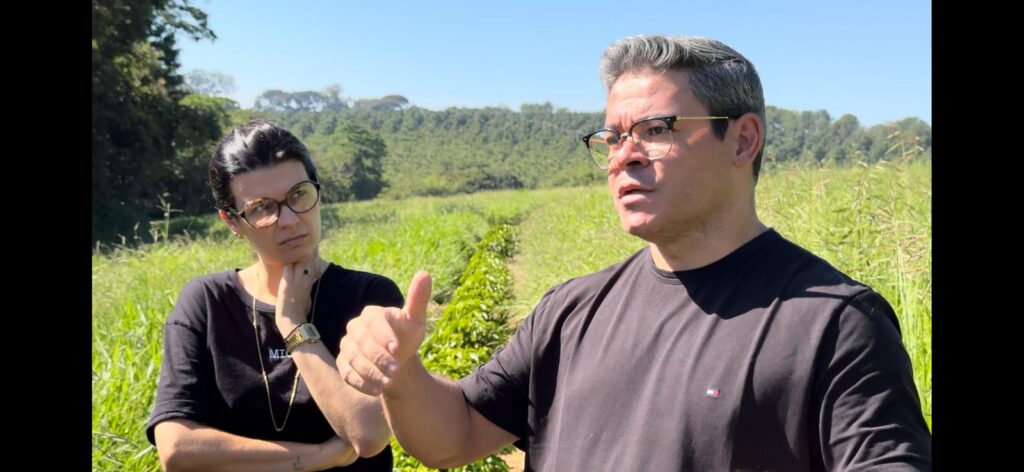
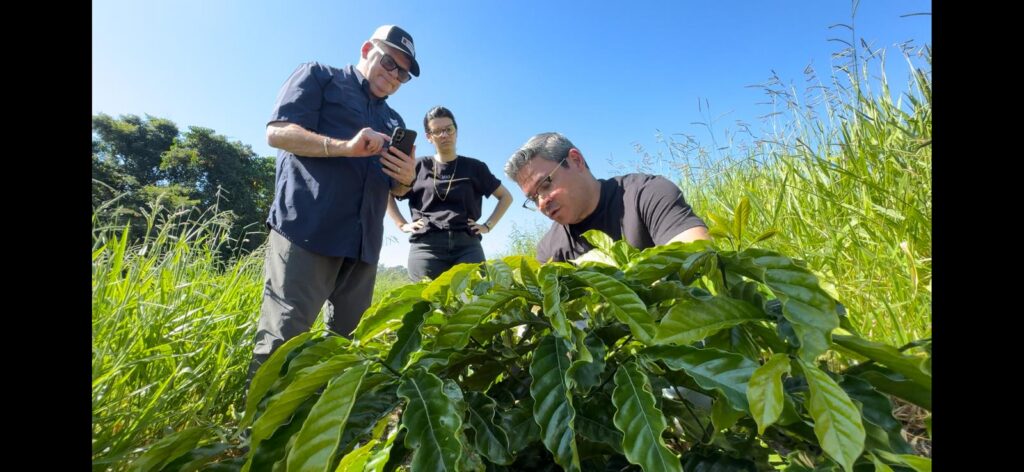
Lucas and Maísa are scientists. They see the world through controlled experiments to gain insights and understanding, and Mio is set up that way. Intentionality everywhere, careful measurement, innovation being proven in every field we visit.
They show us a field full of cloned plants, most of which died, but from the survivors came critical lessons about how coffee might be able to survive climate change.
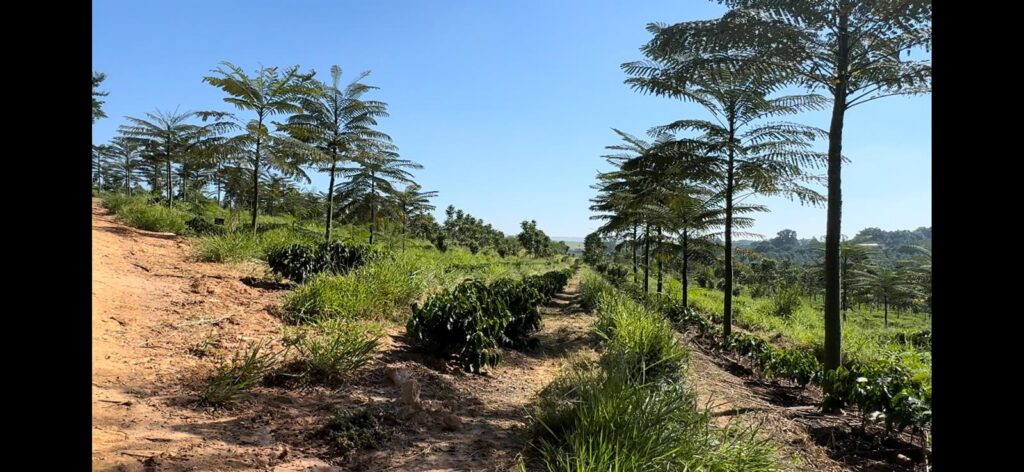
In a project called Sombra, they are trying to crack the nut on shade-grown coffee that can still be mechanically harvested. The goal is to prove this method and spread it throughout the country.
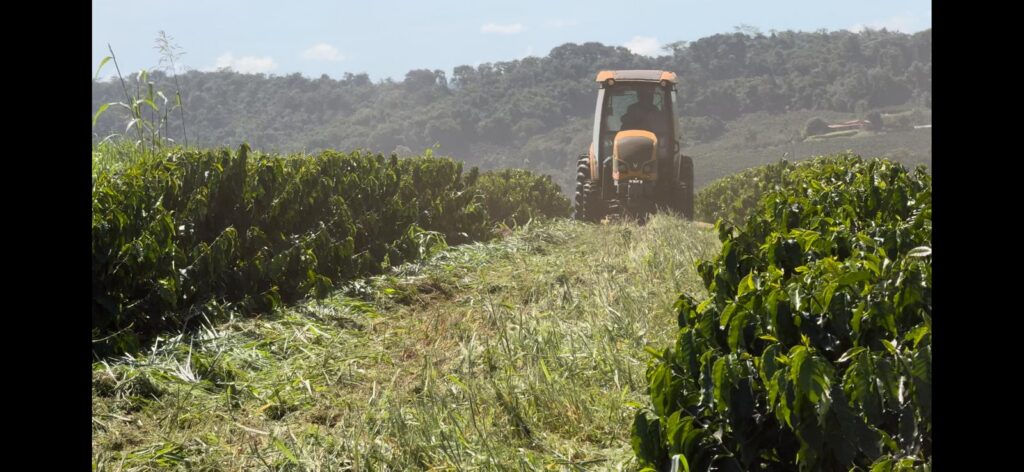
100% of the farm utilizes cover crops. This conserves water and benefits the soil. But here they’re also experimenting with microorganisms to help the plants be healthier, the coffee taste better, and keep agricultural challenges at bay.
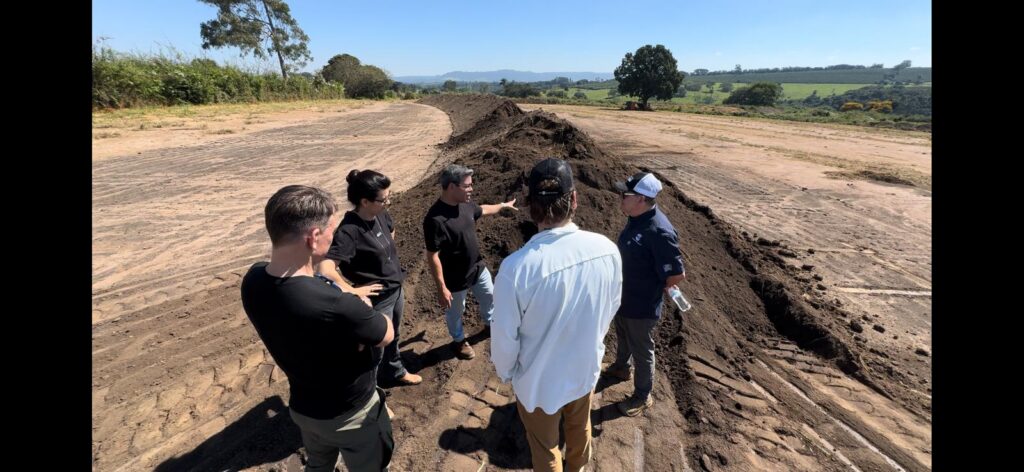
They’re composting at a scale we haven’t really seen before.
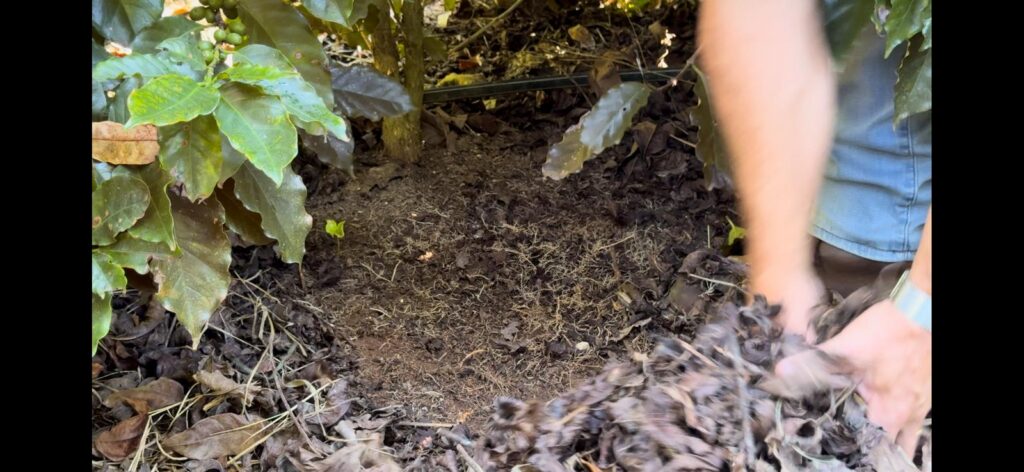
The soil is amazing.
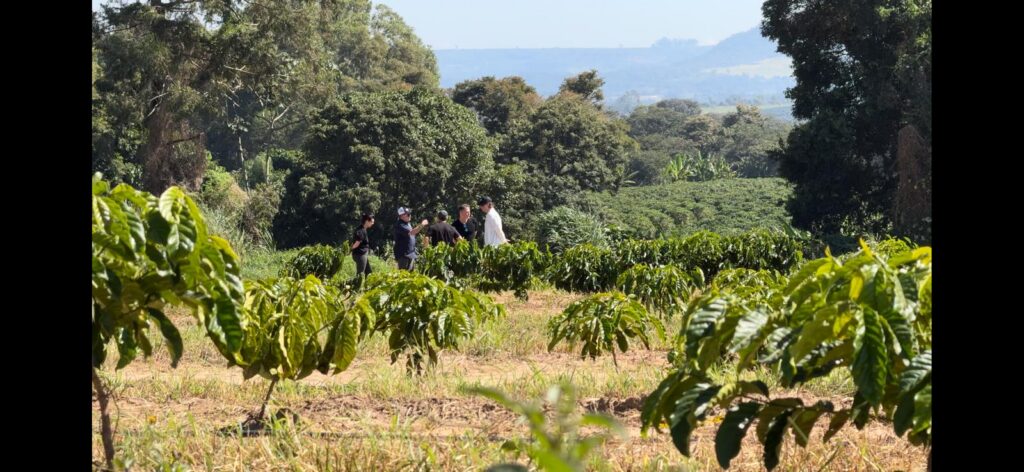
The time scale is slow and deliberate as it must be to figure out whether a theory will prove to be a viable innovation. They have 400 hectares in production now and 300 hectares of new plantings in various stages of maturity, all of it part of some kind of experiment.
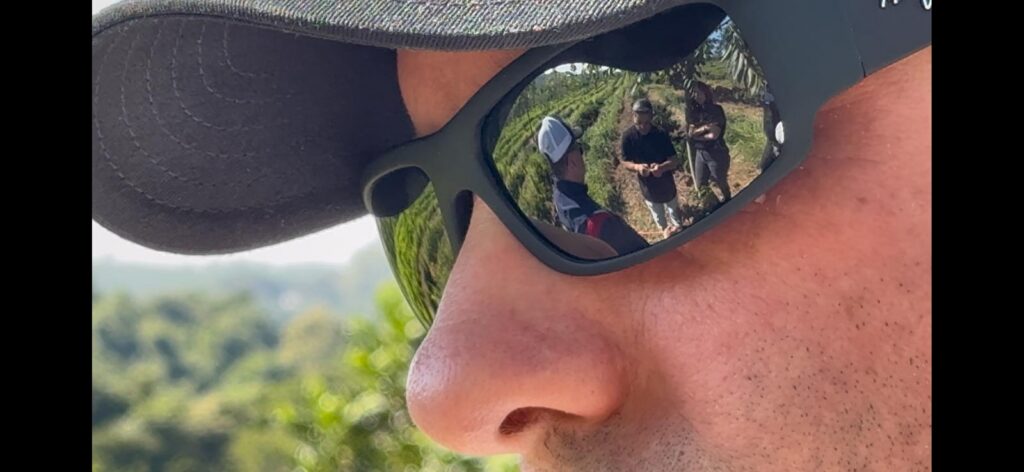
We watched, and we listened carefully. We all learned a lot.
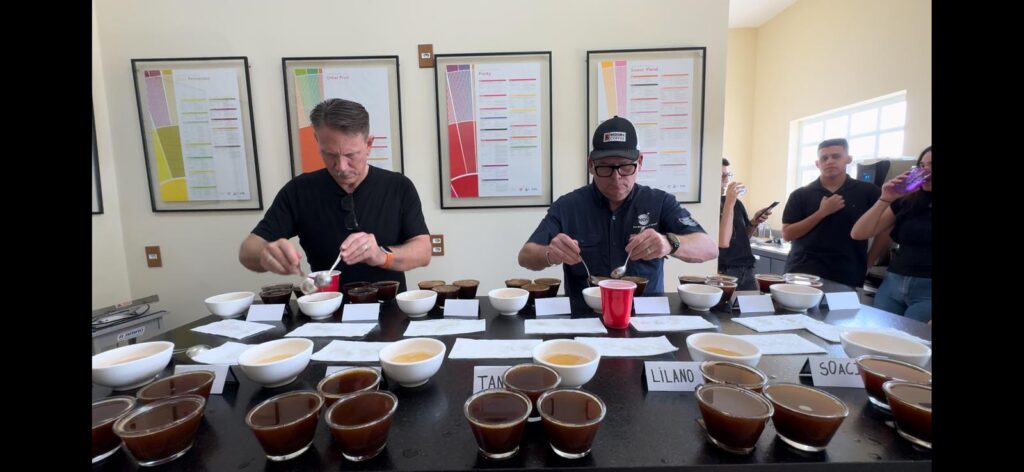
Next up, we toured the warehouse where the coffee is staged for export, and we did a cupping. Chad fell in love with one of the coffees, and the team found one to hate too. But love or hate an individual coffee, Mio is doing bold and exciting work from soil to cup.
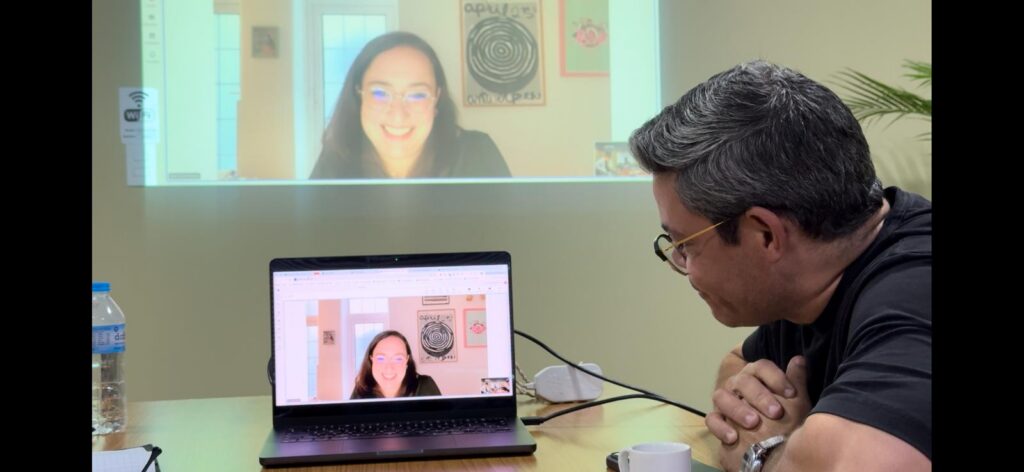
Mio is owned by the Pallicer family, and Ana Luiza, who is poised to take over the farm when her father retires. She joined us for a meeting via Zoom from London, where she lives.
Ana gave us a brief presentation, and we asked her some of the key OBIIS questions. There is more to learn, but there is some real potential here.
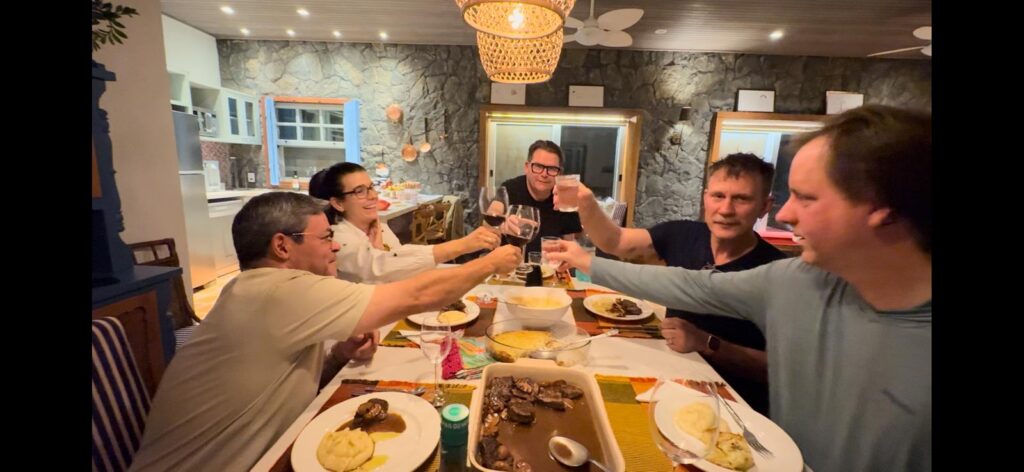
Over dinner, Bob asked the glyphosate question, and we were surprised to learn that Mio eliminated the use of glyphosate two years ago. We asked them about the challenges of mechanical harvesting, and they said they could solve those without any chemicals at all, but just cutting the ground cover very short before harvest.
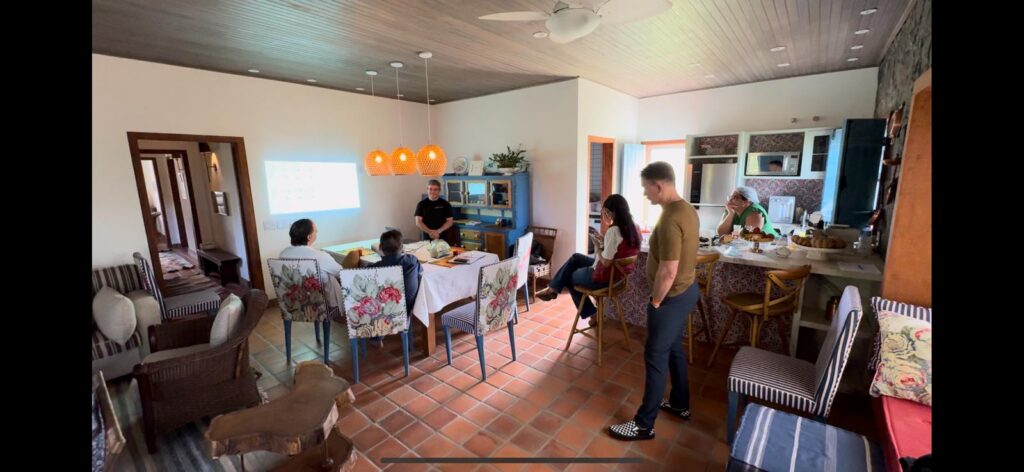
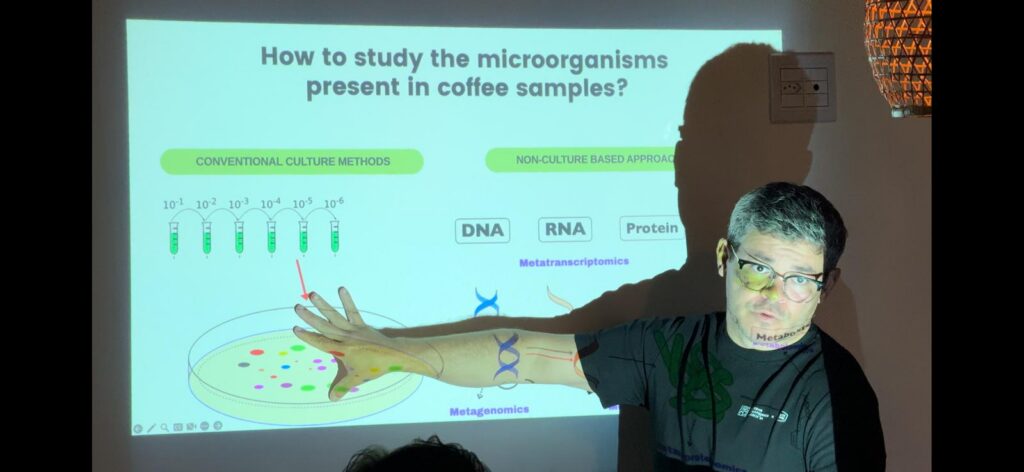
The next morning, Lucas gave us a presentation summarizing the scientific approach he is taking here. Over the past 11 years, he’s published nearly 100 scientific papers. The rigor of the science blew our minds.
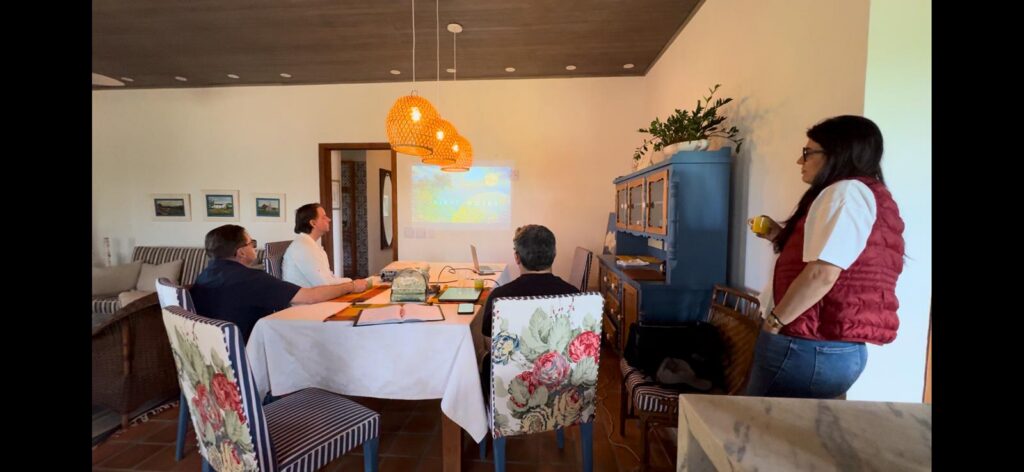
We took the opportunity to share some of our storytelling, including Behind the Coffee Curtain and the Field Notes episodes on Gorongosa and Full Circle. Lucas and Maísa were visibly moved. We had been feeling a real values alignment here, and after seeing the videos, it felt like they were too.
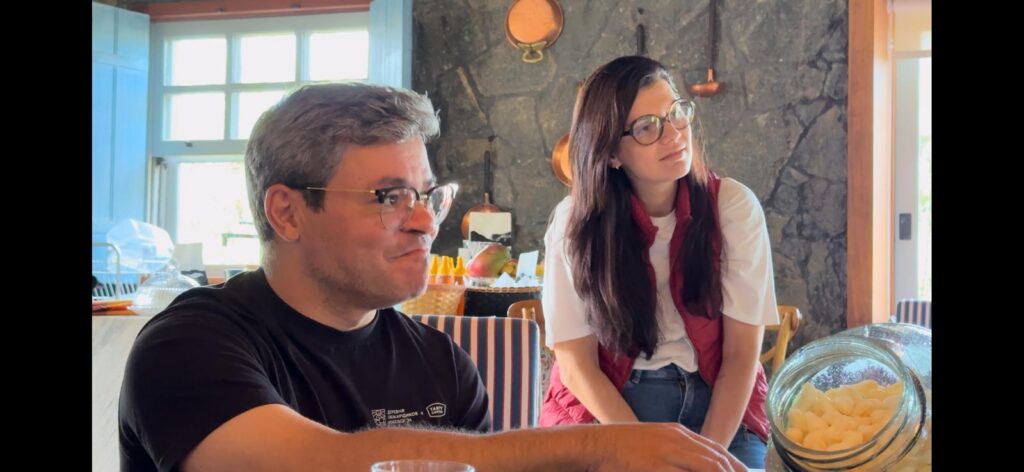
This is our first visit, and it’s too soon to tell if Mio will become an OBIIS partner, but as the meeting wrapped up, we had a feeling that we would return here. And possibly very soon.
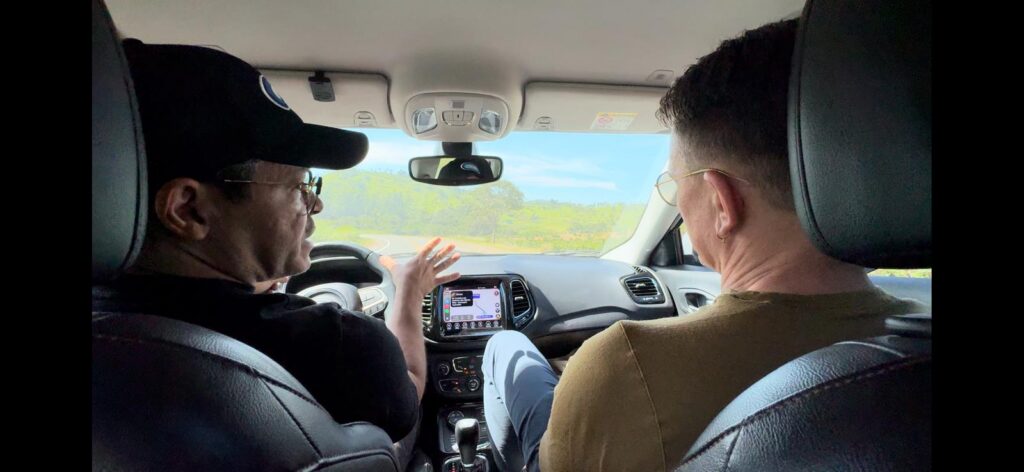
Our time at Mio was up. Fortunately for us, our next farm is only about an hour away, so Lucas and Maísa offered to drive us. On the way, Chad and Lucas continued the conversation. They discussed the finer points of coffee trading. Quality, screen size, processing, transportation, exporting, importing, payment terms, and on and on.
OBIIS and Mio are both trying to change the world. But good intentions are simply not enough. To be effective, you have to wrestle with the messy details: economic, biological, logistical, and even personal.
It’s hard work, but it’s the work that needs to be done.
Fazenda Ambiental Fortaleza
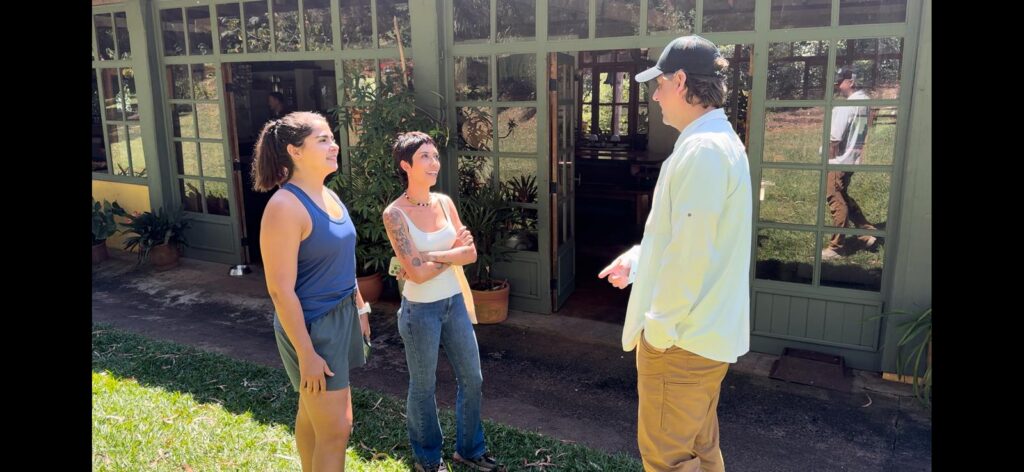
On Tuesday, the OBIIS team arrived at Fazenda Ambiental Fortaleza, or Environmental Fortress Estate, or FAF as it is known. The OBIIS team was here just six weeks ago for a first visit, and now we’re back this time with Rich and Chad for a second visit.
We were greeted by Gabi and Margarita, two of the amazing people who work here.
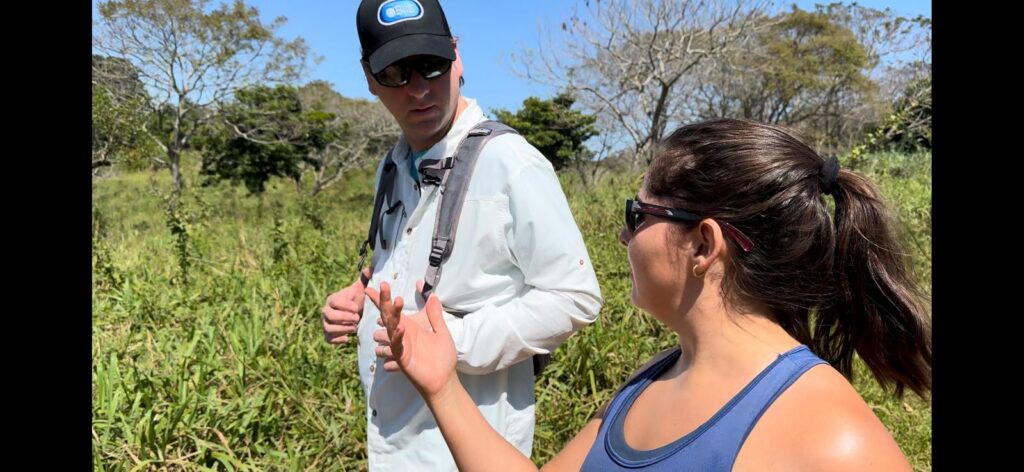
We had some time before lunch, so we set off to show Chad and Rich one of the highlights from our first visit.
As we walked and chatted, Rich began to get to know our hosts and take in some of the sights of the beautiful estate.
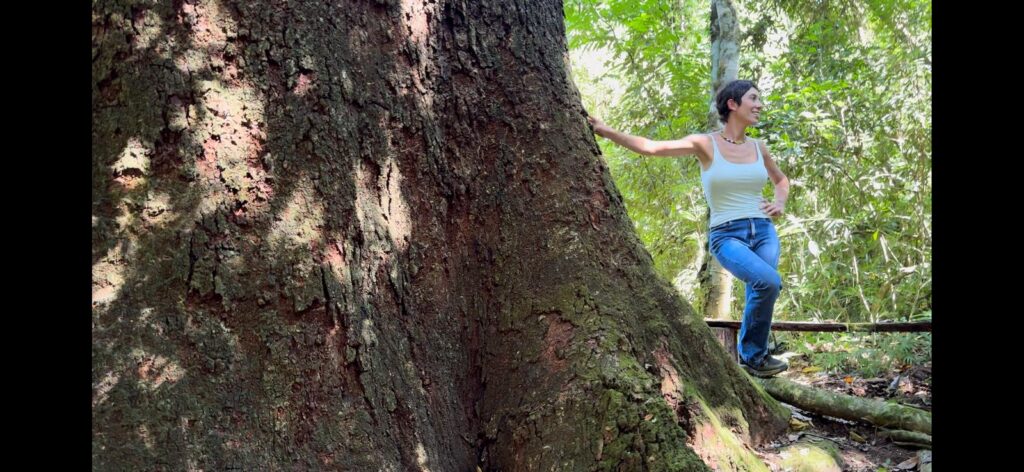
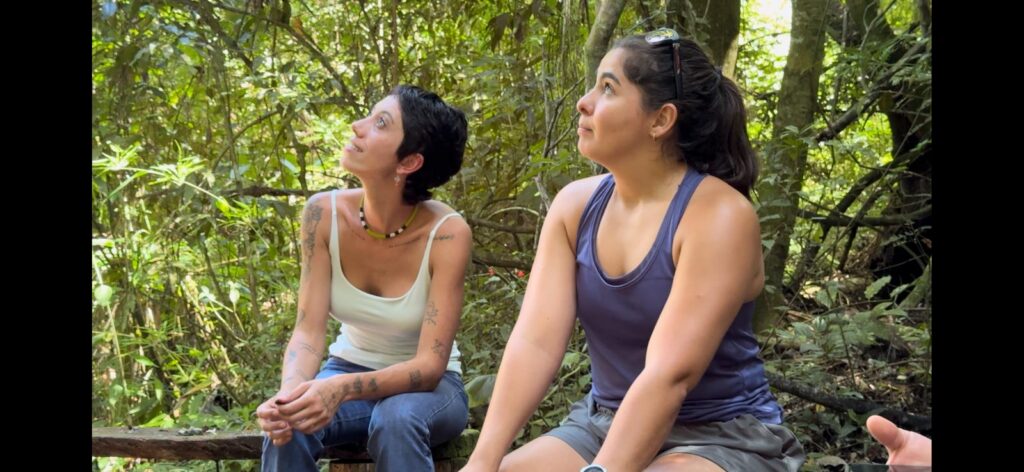
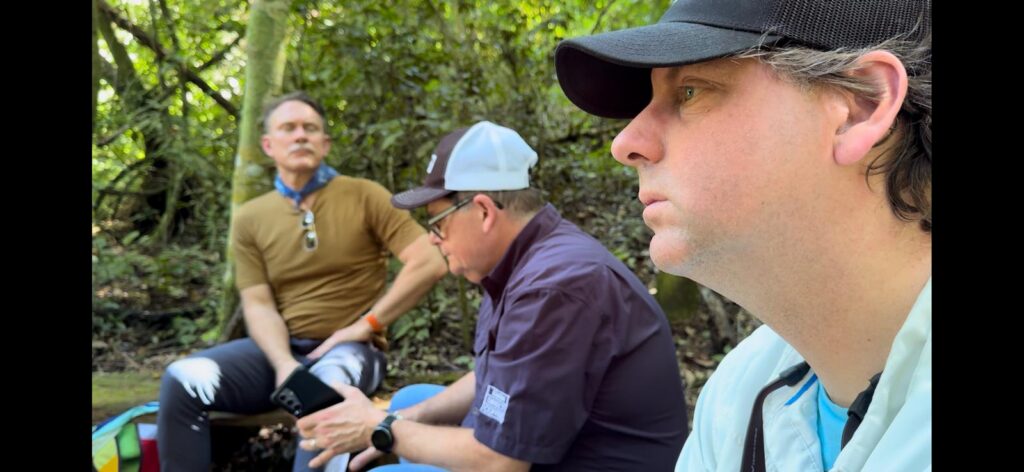
Soon, we reached our destination: a massive tree that is more than 1,000 years old. After Nathan crashed the drone a couple of times, we sat in silence and pondered what the world had been like when this tree sprouted sometime around the year 1,000.
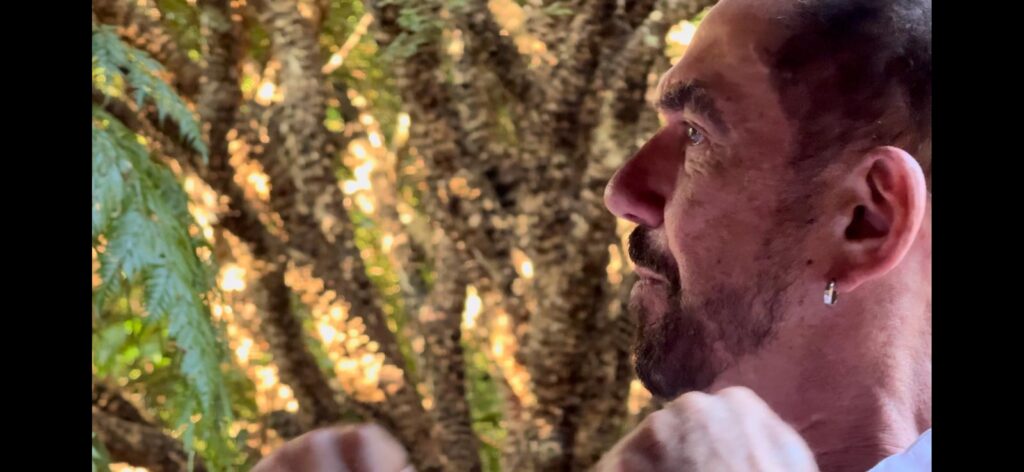
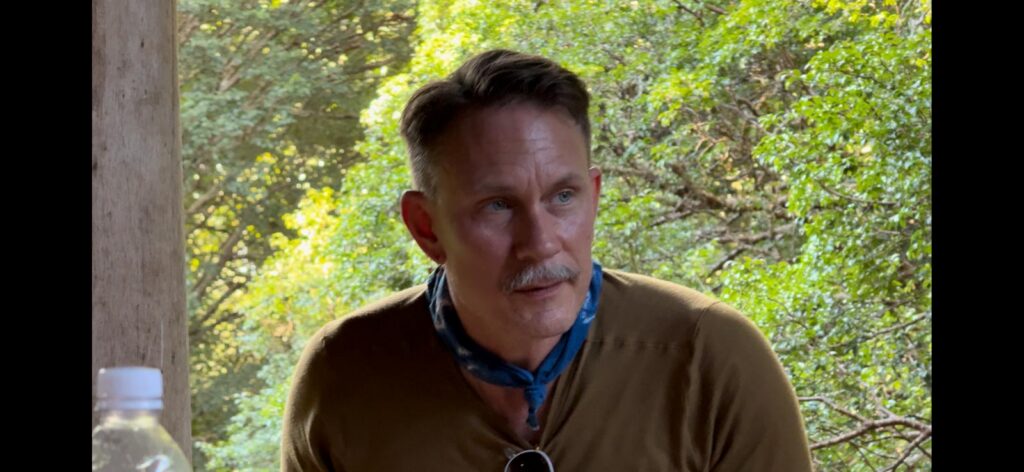
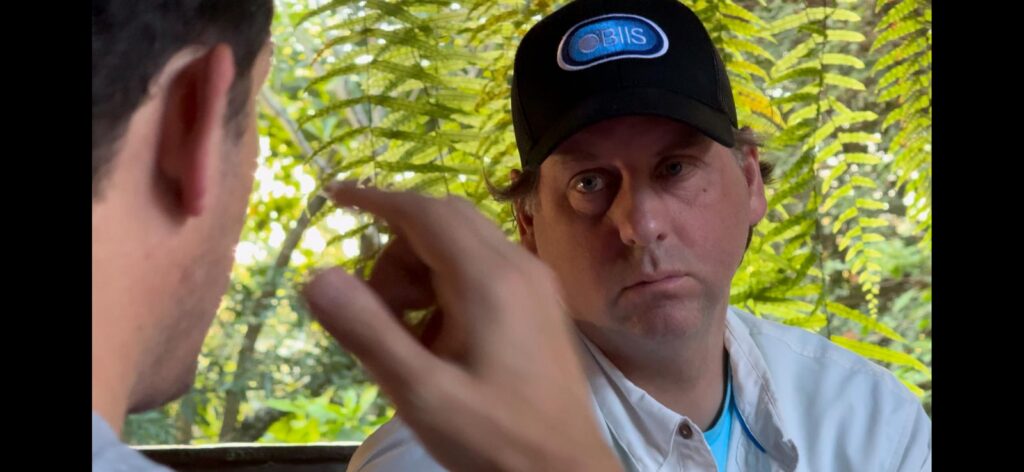
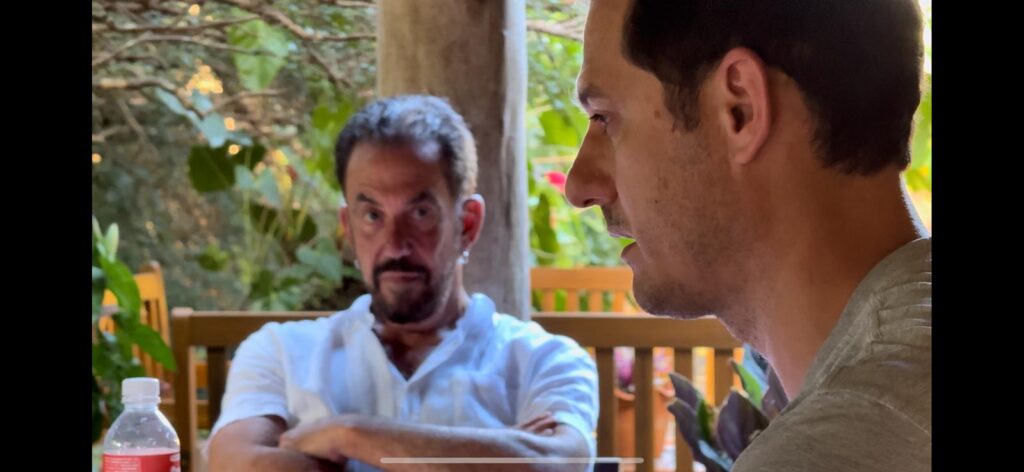
We returned to the farm and were joined by Felipe and his father, Marcos, who led the coffee business at FAF. We enjoyed an amazing lunch together and then settled in to pick up the conversation where we had left it six weeks before.
The topic of price was raised early, and it didn’t go well. Things got tense surprisingly quickly. It felt like trying to swim through thick mud as the OBIIS way of doing things bumped up against the FAF way of doing things.
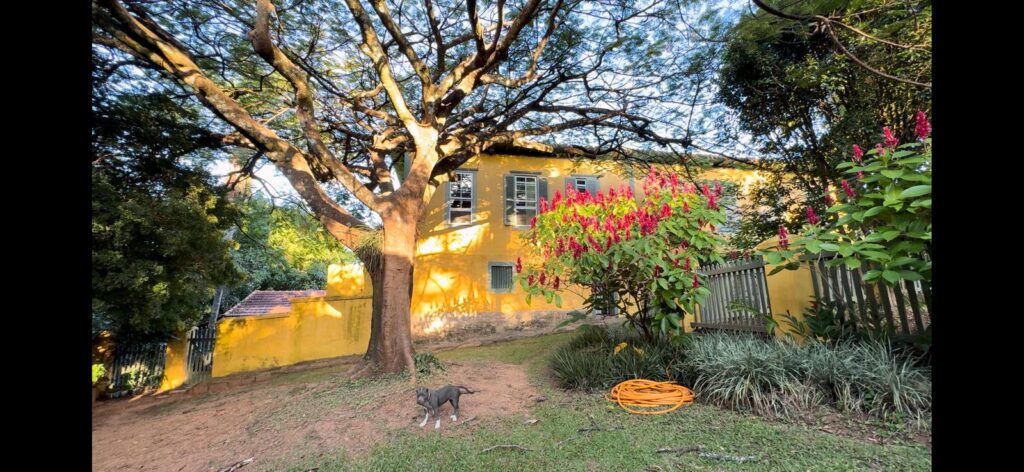
After the better part of an hour, Bob got up to take a phone call, and Marcos took a walk.
One point of levity in the whole thing was Paloma, the cute puppy that Felipe and his wife Julia bring with them to FAF.
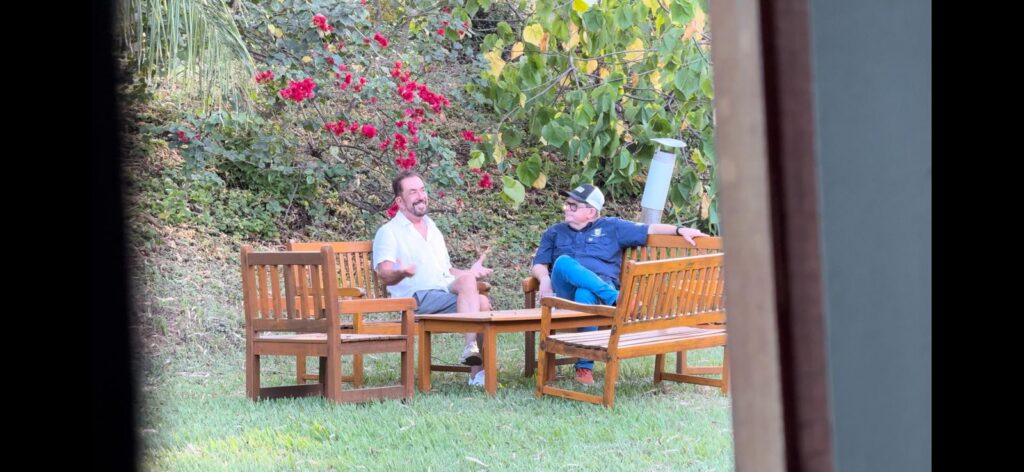
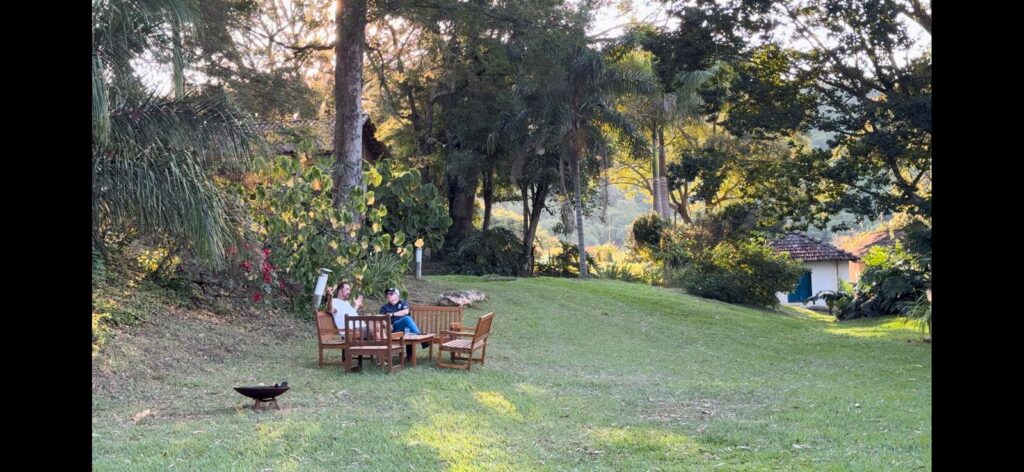
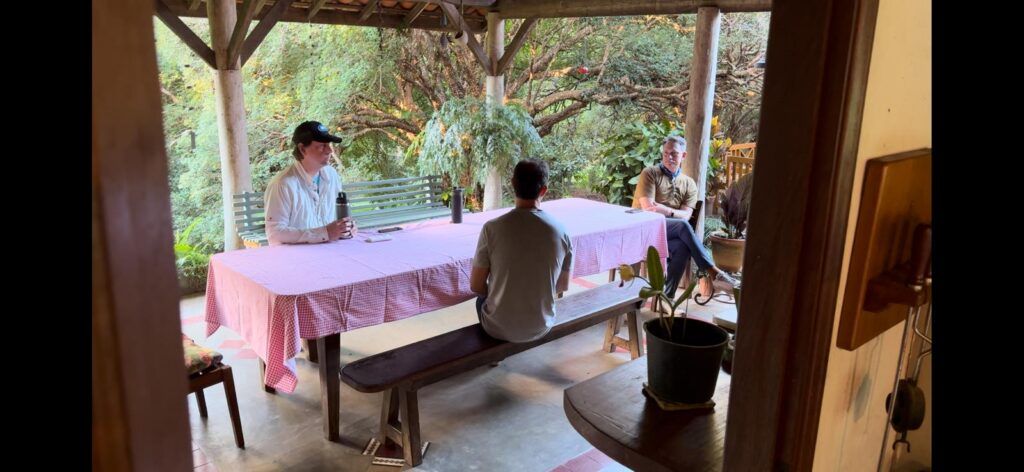
Soon, there were two conversations happening: Marcos and Bob in one place, and Chad, Rich, and Felipe in the other.
It was a kind of a reset, and things felt more under control, but it still felt like the conversation was on thin ice.
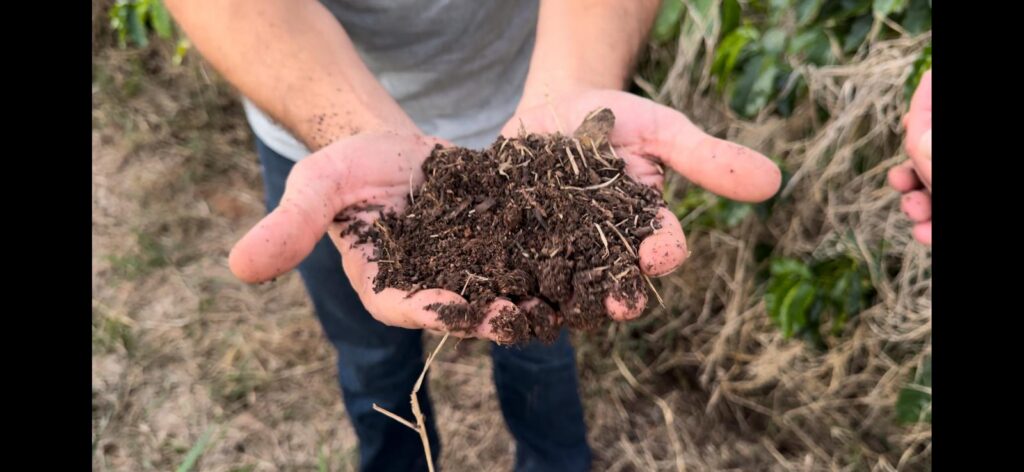
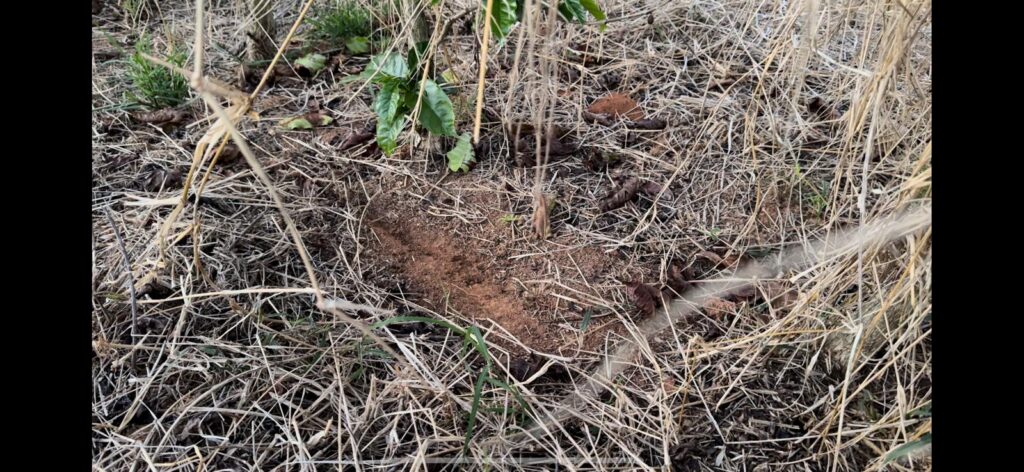
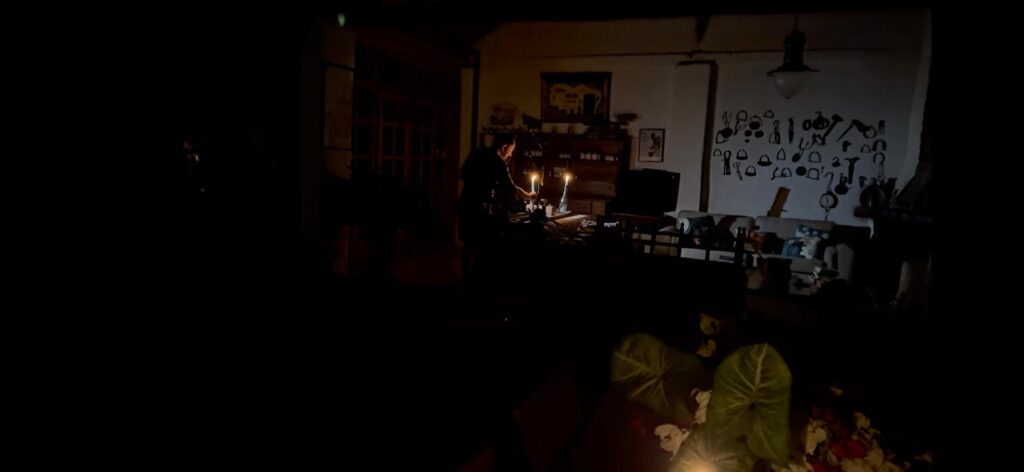
The sun set on us, and we walked back into the deepening darkness. We returned to our rooms to get ready for dinner and were again plunged into darkness as the power went out.
We found our way down to the kitchen, where Marcos was lighting candles. “Coffee is romantic, and now so is dinner,” he said with his beguiling smile.
And it sort of was. Rich and Chad got a chance to get to know Marcos and Felipe better, and by the time we said goodnight, the ice seemed to have thawed.
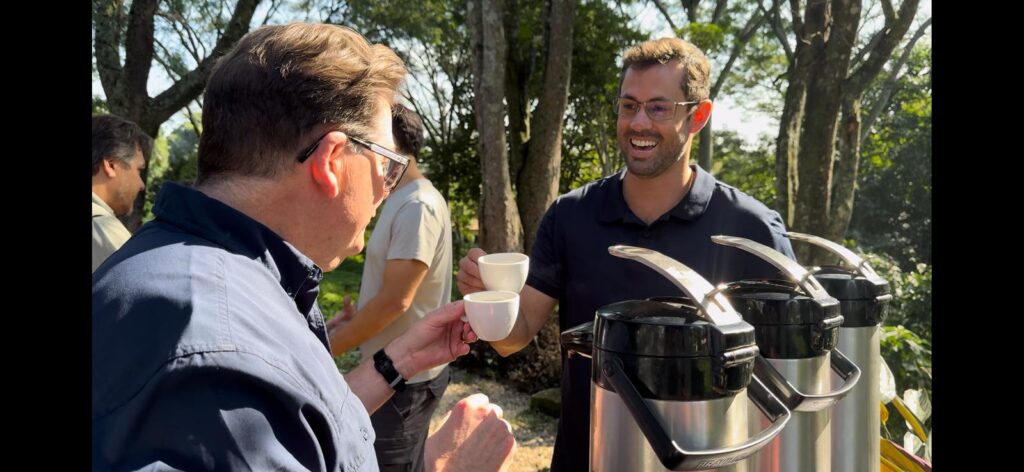
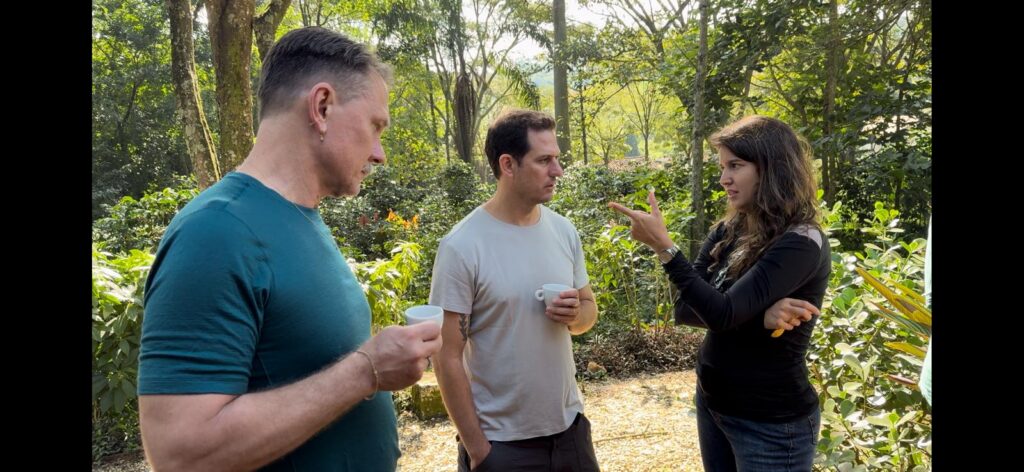
The next morning, around 20 people came to FAF for a Roundtable meeting with OBIIS. These folks are coffee producers who are following FAF.
OBIIS had met several of these people and visited their farms during the first visit. Felipe told us that we had made a favorable impression and that word had spread. Now they wanted to have a chance to meet.
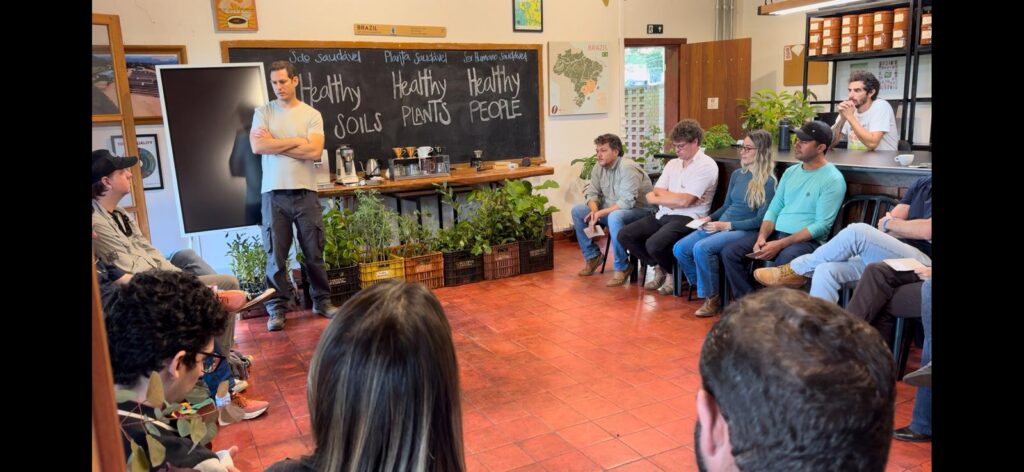
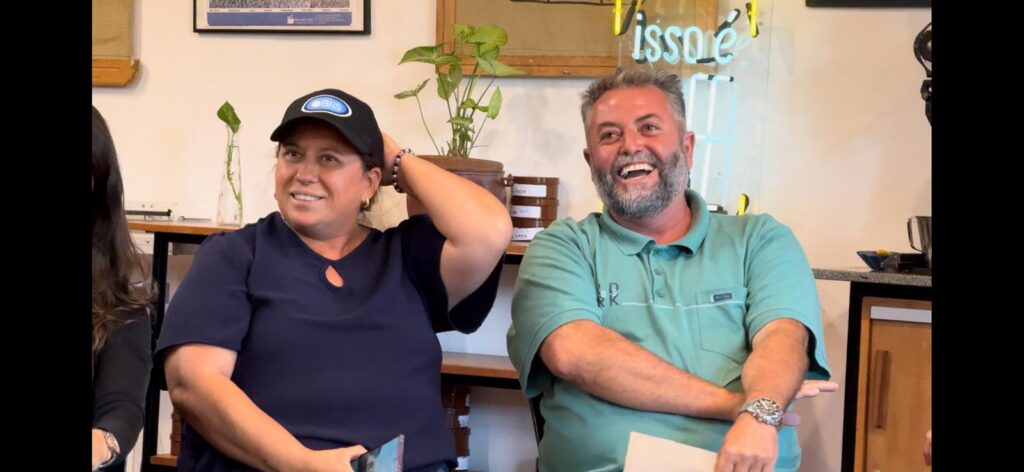
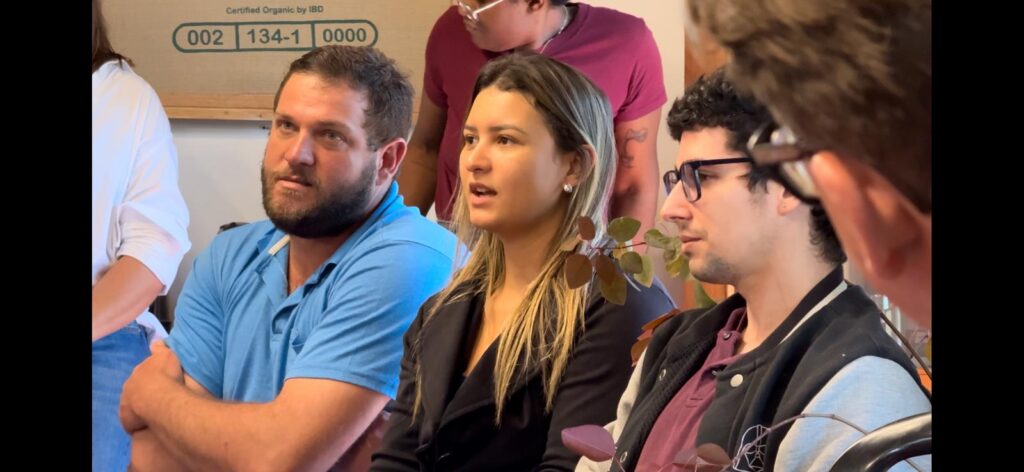
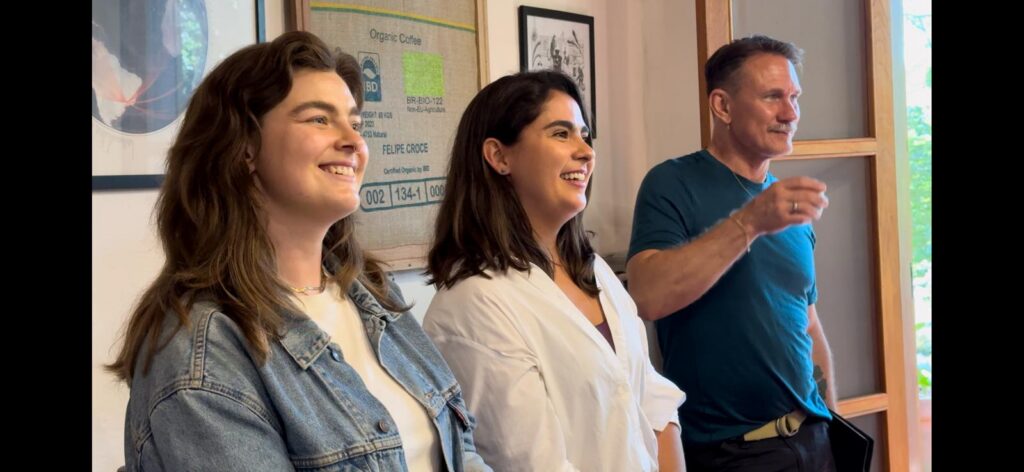
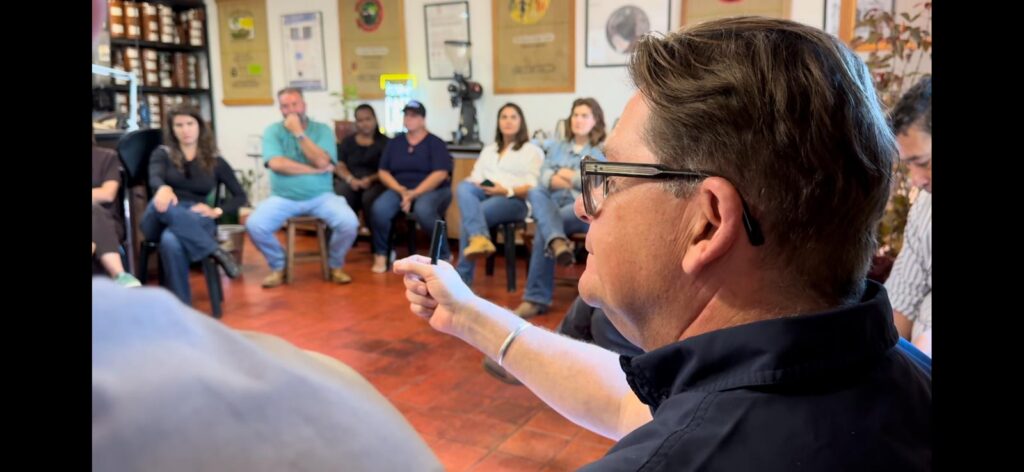
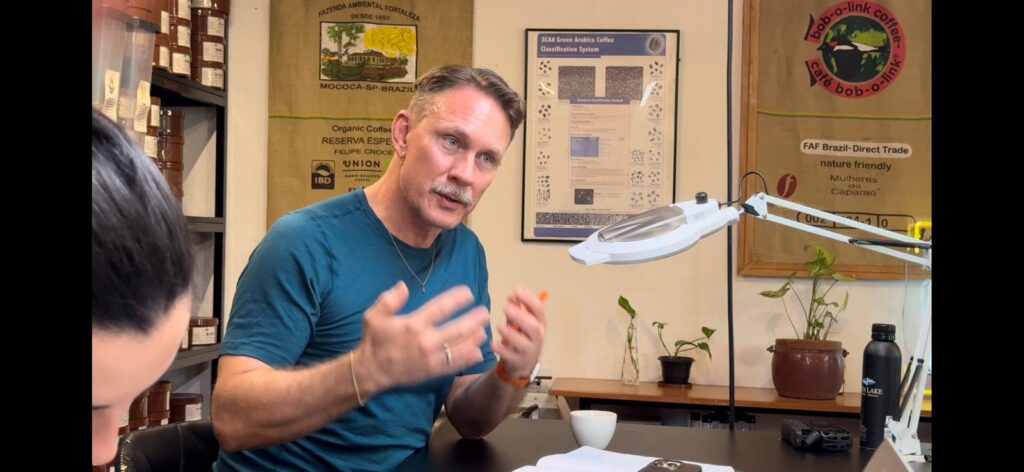
The meeting was set up in the FAF coffee lab. We all introduced ourselves, and Bob introduced OBIIS. He asked for feedback, and the conversation got going. There were a lot of questions about the specifics of the pricing model, and there were questions about the chemical policy. A lot of context was shared about what the producers are dealing with.
The OBIIS team fielded their questions, and we learned a lot. Time was running short, so Bob invited any producers that were interested in continuing the conversation to come and talk further.
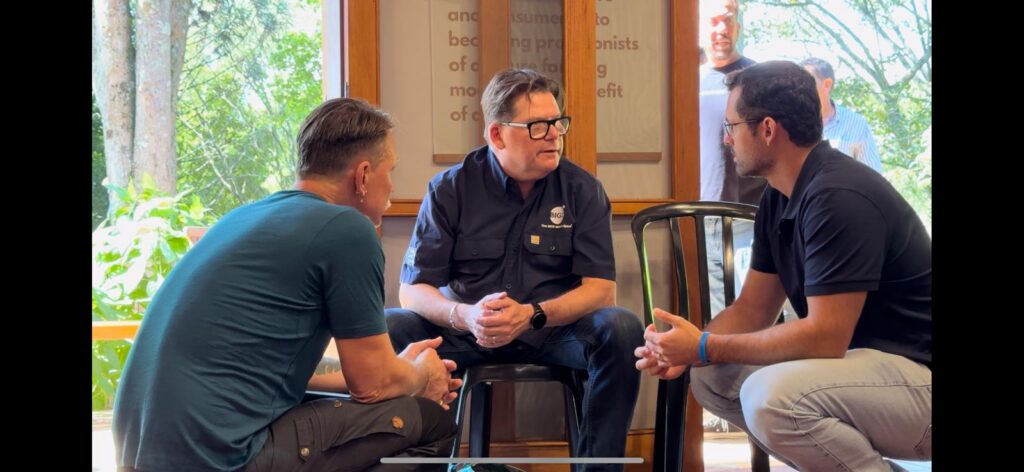
Gil, whose farm we had visited on the first trip, came over and said he’d like to proceed.
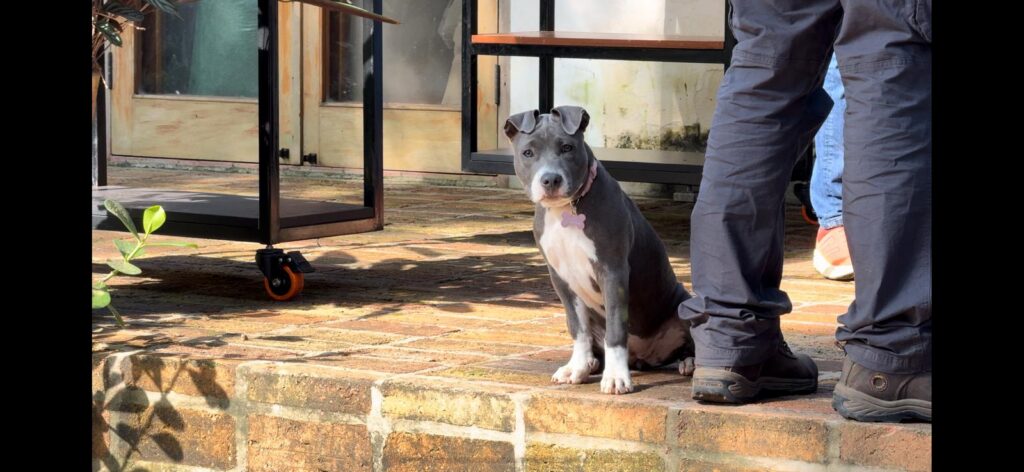
Here too, Paloma provided some great levity as she repeatedly stole Bob’s hat from under his chair and ran away with it.
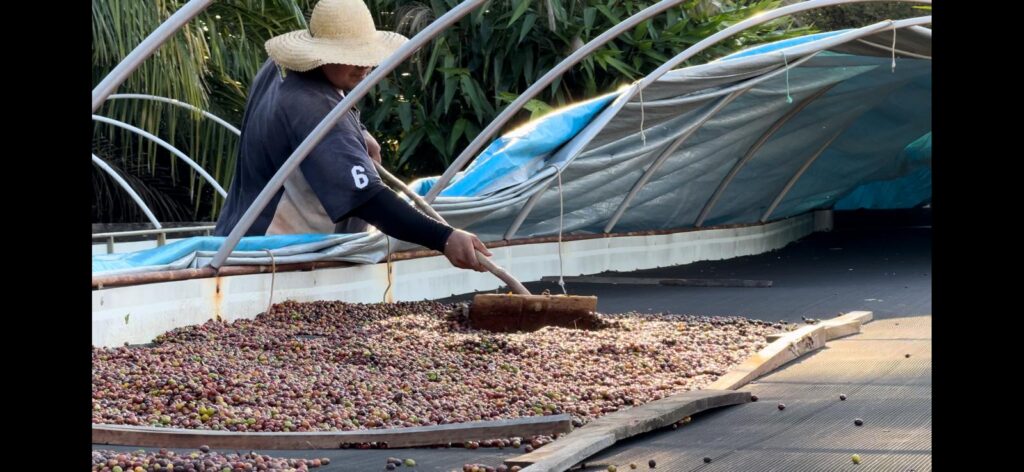
We had the afternoon and evening free. Bob and Rich strolled around the property. Chad found Felipe and continued the conversation to try to find a way to work together one-on-one. The harvest in Brazil starts in earnest next month, but some of the early cherries had already been harvested by hand and were drying on the beds. The economics of coffee is tricky in Brazil this year as producers who have enjoyed high prices for the last couple of years are holding onto their coffee, hoping that prices go up again.
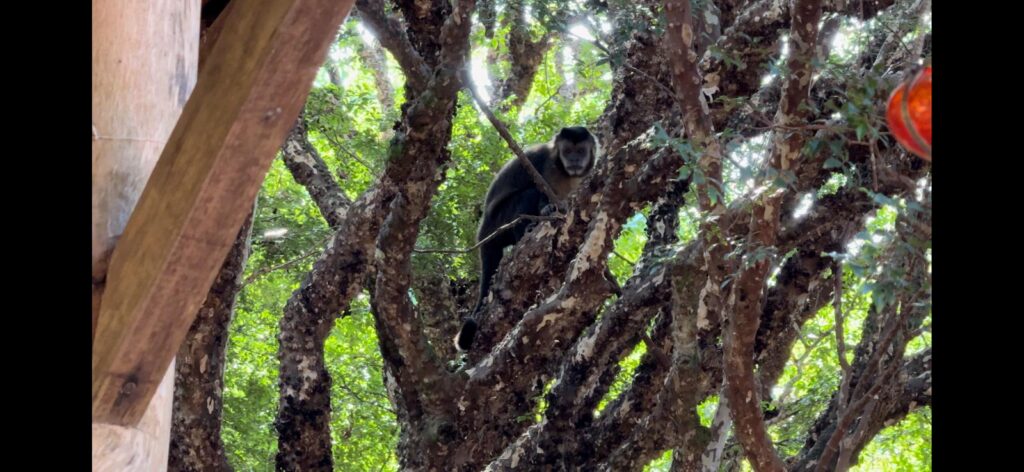
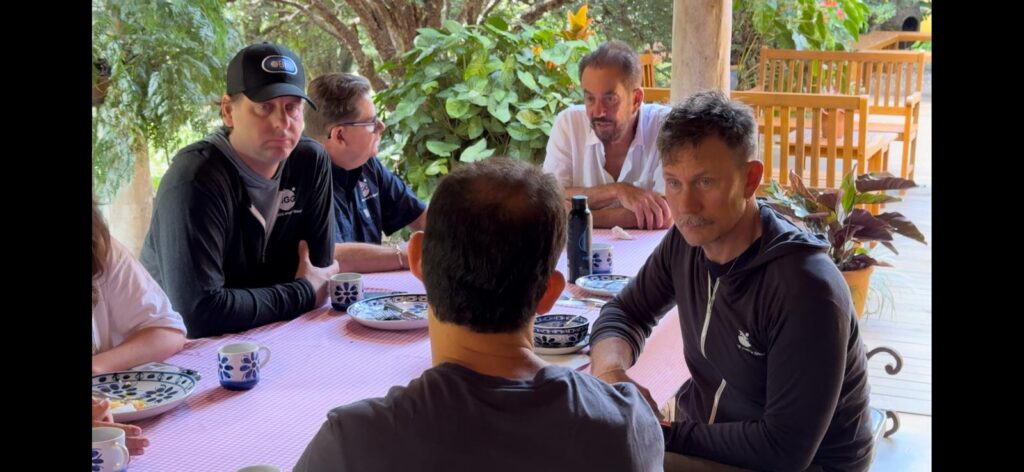
The next morning, conversations continued over breakfast while some monkeys awaited scraps of available food to be scattered in a tree nearby.
FAF has achieved some really incredible things, and the presence of monkeys is yet another example of how, in the middle of gigantic, chemical-intensive farms all around them, this place really is an environmental fortress, a kind of lighthouse for the future of agriculture, trying to warn us away from the proverbial rocks that threaten our way of life.
In the coming weeks, the OBIIS team will have more conversations with FAF and their producer partners, like Gil, striving for the long-term, stable, win-win that is so elusive in commodity marketplaces. It’s anybody’s guess how it will unfold.