Please Don’t Let This Just Be A Dream
By Maci Bennett
When you arrive home after a week in Chiapas, in Monterrey, in flight, everyone will say how glad they are that you are home safe and did you lose weight? Your face looks thin. This won’t be a compliment.
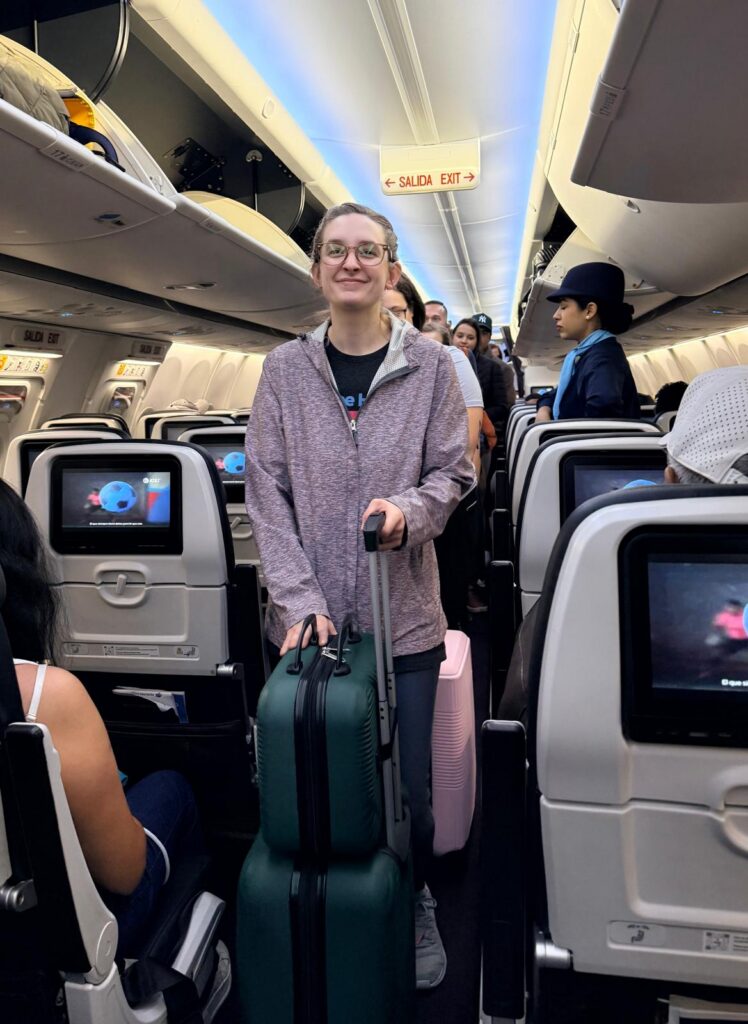
When you arrive home after a week in the sacred space of high altitudes and understory coffee crop farming, submerged in the language that has always meant home, you’ll tell yourself over and over, I have to return. Don’t let this week be just a dream. Please don’t let this be just a dream. (Is it possible to reincarnate across cultures?
While you are gone, your nine month old will learn how to pull himself up into standing position. While you are gone, your two year old will get a splinter, revert to old toilet habits, have pancakes for dinner with grandma and grandpa, play guns with abuela for god knows what reason, and be overall rather pleasant to his baby brother. While you are gone, your husband will miss you. And you will grind your teeth to think that you didn’t really feel the same.
Let’s blame this on the flood of information. On the demand for Spanish-to-English translations. On the pure joy blooming in your soul at being a part of something outside a basic family unit. On being useful for something other than wiping culitos, wiping deditos, cooking meals.
But really, let’s blame this on you having always prioritized maintaining an identity outside of motherhood and marriage. Sure, you asked for a pastel pink apron, and you have a sourdough starter, and you love your family, but you didn’t miss them because you knew they were safely tucked away, and one week in Mexico was never going to be enough, so you had to cherish every moment. Every single moment. Even the part when you vomit coconut chunks through your nostrils (let’s say a prayer in thanks for having large nostrils).
“What kind of person does that to a child?”
— Every cognizant individual ever
Before you depart home for a week in Mexico, the news headlines and anxieties stick to your thoughts like over-chewed gum.
You tell your husband to drive to work in his officer uniform. Just in case.
You say a prayer to HelloFresh discounts and stack meal kit deliveries for the week you’ll be gone. You won’t even need to leave the house. (And you hope he doesn’t because what would happen to the boys without your [white] social pass if someone decided to pick a fight with your [brown] husband? ICE has been circling Michigan for weeks, and papers don’t matter when racial profiling is the agenda.)
You make sure the boys have enough diapers wipes snacks. You stock up on fish food cat food litter.
Most importantly, you make a daily checklist—this is not micromanaging (but really, it is). Before you depart for a week in Mexico, you can’t help but think how unsafe your own country has become. We have all seen what this country does to brown fathers walking their brown children to school.
“Embrace your life. Everything else can, and will, wait.”
— Maria Esther Saut
When you arrive home after a week living outside predictable domesticity, the second thing people will ask you is how was your trip and what did you even do, drink some coffee?
And in not so many words, you will launch into a distilled version (because, let’s be honest, how many times have they already heard you talk about ethically sourced coffee, empowered financial stability, and environmentally conscious agricultural practices?); so what you say, in not so many words, is how Viviana is a mother of two young boys (like you) and she operates her own store, her husband Salomon is building her a beautiful new cocina, and they are creating more jobs in their community because they get to decide what they need.
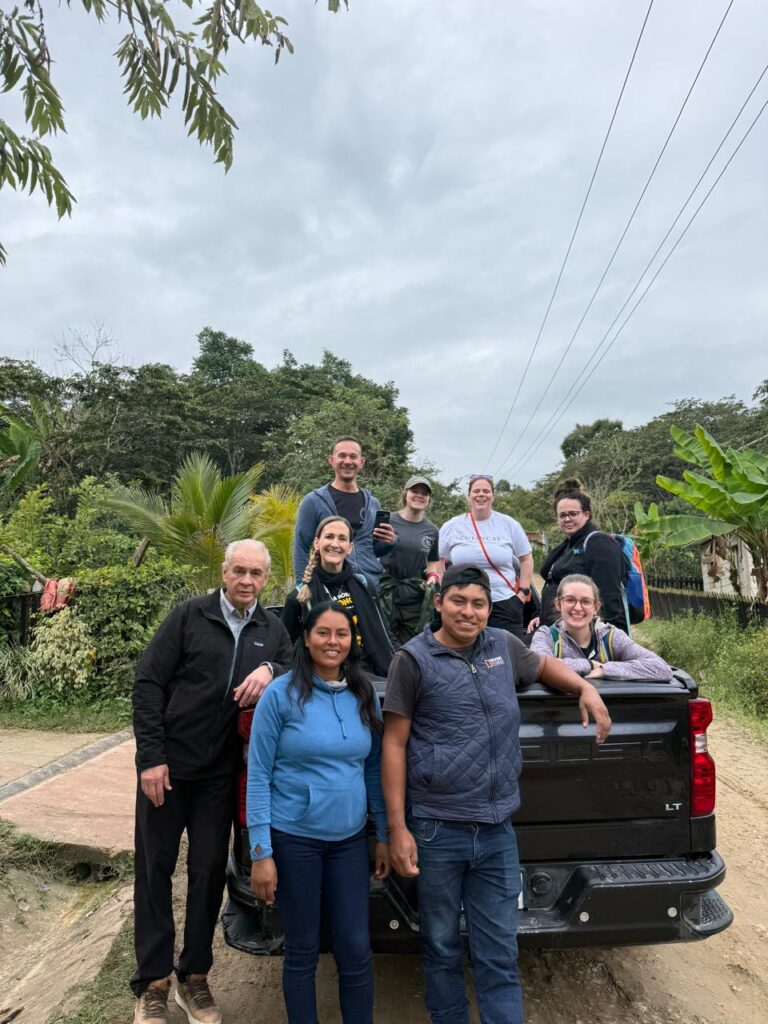
Visiting a small producer, Salomon y Viviana (pictured front and center)
You say Evelyn is pioneering breast cancer awareness, and it has already saved several women (and that she doesn’t care for Malinche, the indigenous woman credited with destroying the Mexica Empire by acting as translator for the conquistador Hernán Cortés, but you think most women in history are highly misunderstood—and who is more misunderstood than a translator?)
You say Martha is a quiet force to be reckoned with and how does she elevate her community while also raising two young hijos herself? (And thank god she didn’t remember meeting you in Detroit two years ago because you approached her speaking Spanish when really, her first language is Ch’ol.)
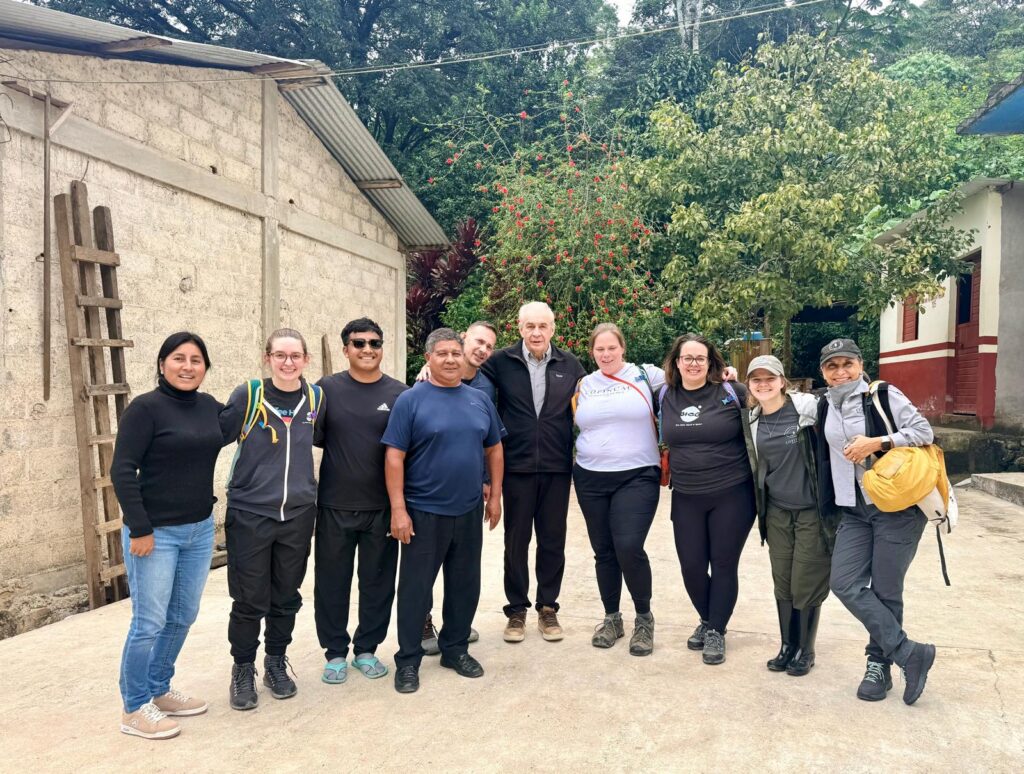
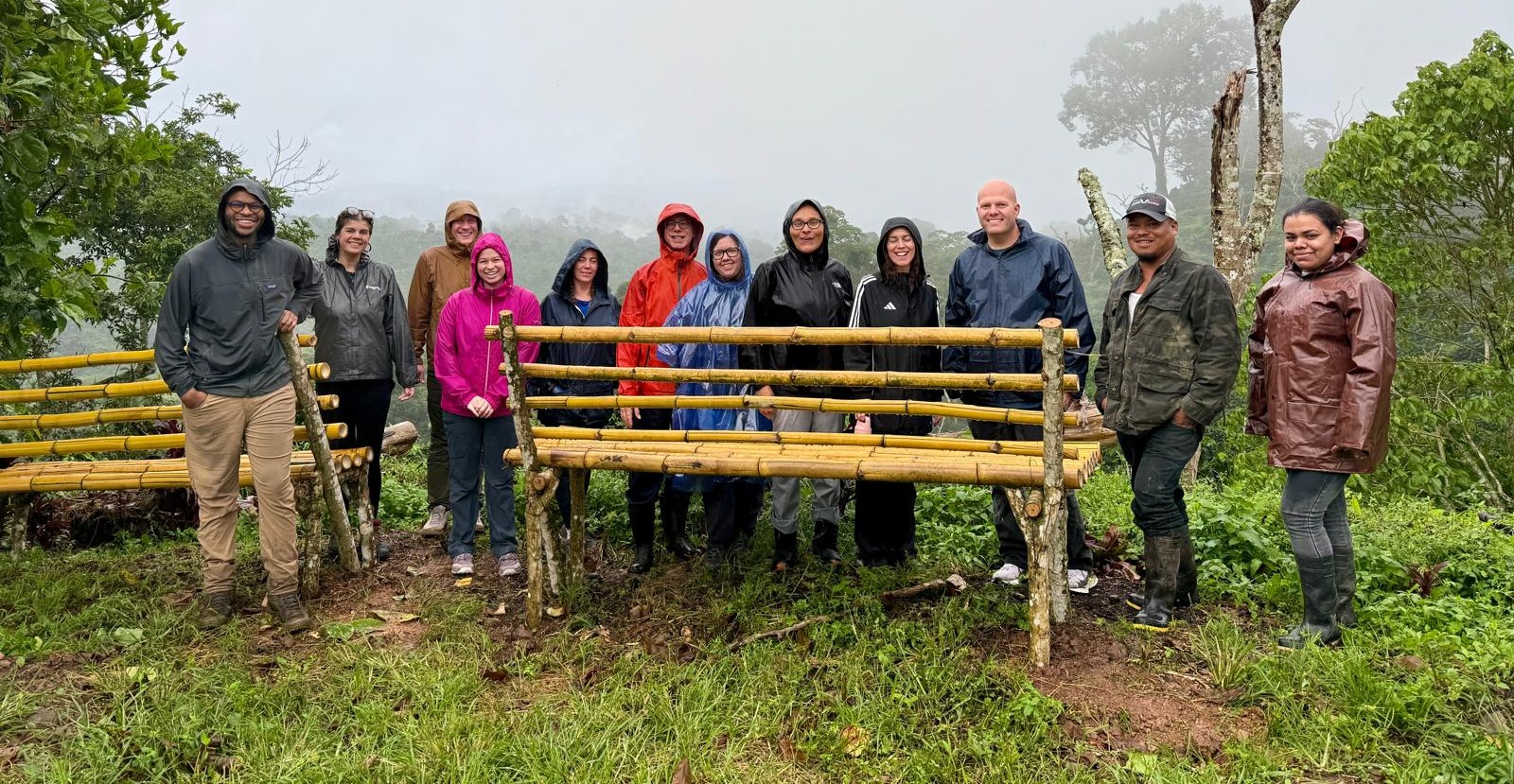
Picture left to right: Martha Vazquez, me, Benjamín, Pascual Hernández, Stephen Arellano, Pascual Castillo, Brie Roper, Robyn Hankiewicz, Rose Marchand, María Esther Saut.
You say María Esther Castillo’s desk lives in the open space between the cocina and the sala because not only is she managing the business of coffee with her husband, but she is also still managing the business of a household. (And encouraging Carmen to get her birth certificate so that she can apply for health insurance. And staying connected with José and his wife while they survive the loss of their baby. And supporting an all-female indigenous basketball team. And making sure each guest on the Farm Direct trip had everything necessary to be comfortable.)
The word chingona takes on a new meaning.
It is rare to meet change-makers, you think, and how is it possible to meet so many in such a short time? And damn, do these women make it look easy.
This is not to suggest the men aren’t also making strides. Except when you think of them, you contemplate their wives and children and the absence that evolves into their empty chairs at the dinner table. Into your own empty chair at the dinner table.
You consider Rigo and how he lives four hours from his family, but calls every day, and travels to see them once or twice a month.
You consider Pascual Castillo working in Chiapas while his wife and two children were a four hour car ride and a plane flight away.
Your own father commuting two hours each morning to make cabinets, and then all the years after of self-sacrifice when people no longer wanted hand-crafted cabinets but bills still needed to be paid. Your father-in-law immigrating from Mexico City to Texas, and how your mother-in-law listened to Volveré on repeat for a year while raising their first baby alone. How children do not replace a partner for companionship.
But these stories are not yours to tell—though how similar are they to where you landed after starting your own family. Until your week in Mexico, your husband has not taken a vacation. It has been almost three years.
All of this leaves you wondering, spiraling: what is the true cost of living?
“It’s a boy.”
— The Nurse you will never forget.
When you arrive home after a week in Mexico (if you say Chiapas or Monterrey, nobody knows where the hell that is), you will ponder this guilt of not missing your family for seven whole days. Revisit and rethink it. It will take several weeks to land on a conclusion to make sense of this discrepancy. And of course, siempre por siempre, it is because of Gabriel.
Because of him, your gauge for missing is broken, like a cracked wristwatch showing a time of death. And therefore, missing the living does not compute because the way back to them is not so hard as the way forward after losing a child.
Everyone seems to have a dead son, but nobody likes to talk about them. Or rather, it is impolite to talk about them. So you don’t really like to mention your living sons out of respect for your deceased one. (It is hard to say you only have two hijos when, in fact, you have three.) You will forever be missing Gabriel.
The best you can do is have an ofrenda. Keep cempasúchil on hand and bake your own pan de muerto para Día de Muertos. The best you can do is find comfort in looking at his pictures and accumulate various forms of currency because you’d rather be damned than have an hijo pobrecito in whatever life exists after death. You give him what you can. It is not so different from mothering the living.
When your son died in April 2024, you thought a lot about the federally endangered Mitchell’s satyr butterfly caterpillars you spent your senior year in college propagating in a special facility, in the hopes that some of these neon green larvae would survive. Survive to be released into their natural habitat and save the species from extinction. You think a lot about these caterpillars because despite the humidity and temperature and host plant parameters, despite the predator-free enclosures and the monitoring and the care you poured into them, they all died. All 199.
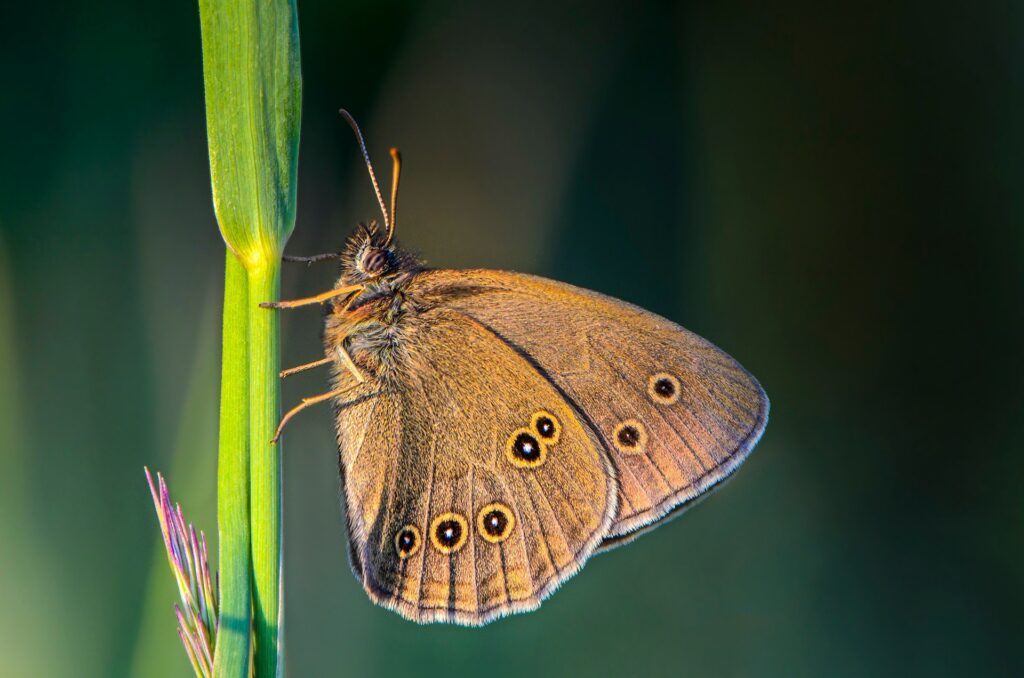
And so, in 2024, stuck with baby weight but no baby, things felt bleak. You recalled how those Mitchell satyr caterpillars would fall off their host plant at the slightest disturbance and lay in the soil, not moving, not even trying to get back to their food source. Maybe they all died because they knew, deep down, their species wasn’t going to make it. Maybe that is how a species dies with dignity: by choice.
And so, in 2024, stuck with a half-finished nursery and a tiny jar of ashes, you felt the hope deficit conservationists always warn about. Everything was too much, and yet nothing was enough. You weren’t enough. You were a weekends-only part-time barista at the local BIGGBY COFFEE. You were a grieving mother, a fragile wife, an estranged daughter, a disappeared sister.
Then, in August, arose an opportunity: Become the store manager? And would you possibly be able to attend the Biggby Nation Summit this September?
So you did, with no expectations, except that this new role gave less time and space for wondering about genetic mistakes and maternal absences. And it was there, seated at a circular table full of more bosses than you knew you had, that you learned about Farm-Direct. You saw the documentary-style Field Notes for Salomon and Viviana and it brought you back to the beauty in the word esperanza again. You felt hope. For them. For you. For all the insects that would benefit from sustainable agricultural practices—no mass spraying of pesticides, habitat restoration, ecosystem rehabilitation.
For the first time, you felt perhaps there existed a world that would outlive your great great grandchildren. Outlive generations for the better. Milagros en sus comunidades. And how could you ever explain to the Farm-Direct founders, Bob and Michelle Fish, what this means to you? (Nobody likes to hear about dead sons either.)
“Decirles gracias por venir.”
–Pascual Hernández
Two weeks after you arrive home from a week in Mexico, people will still ask you what you even did during your time there (because they still don’t get it, truly, how remarkable Farm-Direct is for the farmer, their community, the planet), you think about the objective scientific results you could share.
The conservation and restoration of a cattle ranch into a coffee farm (in a mere five years!). The native shadow plants that keep the coffee plants cool during the day. The arvenses decreasing soil erosion on the hillside, maintaining moisture and soil temperatures, and the symbiotic relationship between the arvenses root systems with those of the coffee plants. The return of the bromelias (15 different species!). And, my god, the lichens! Those beautiful bioindicators for air quality. With this bloom of native foliage, are the birds, the insects, the megafauna. The ecosystem. In conservation, large-scale success is rare.
These objective observations would be easy for the outsider to understand: look what fair, profitable coffee prices can accomplish!
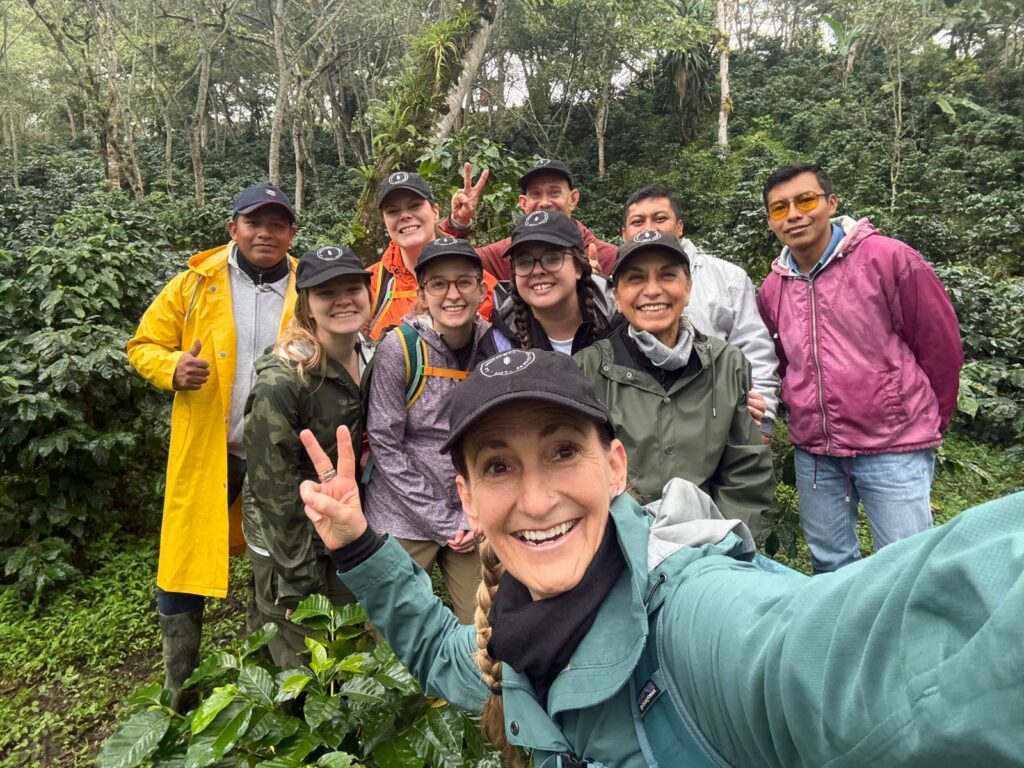
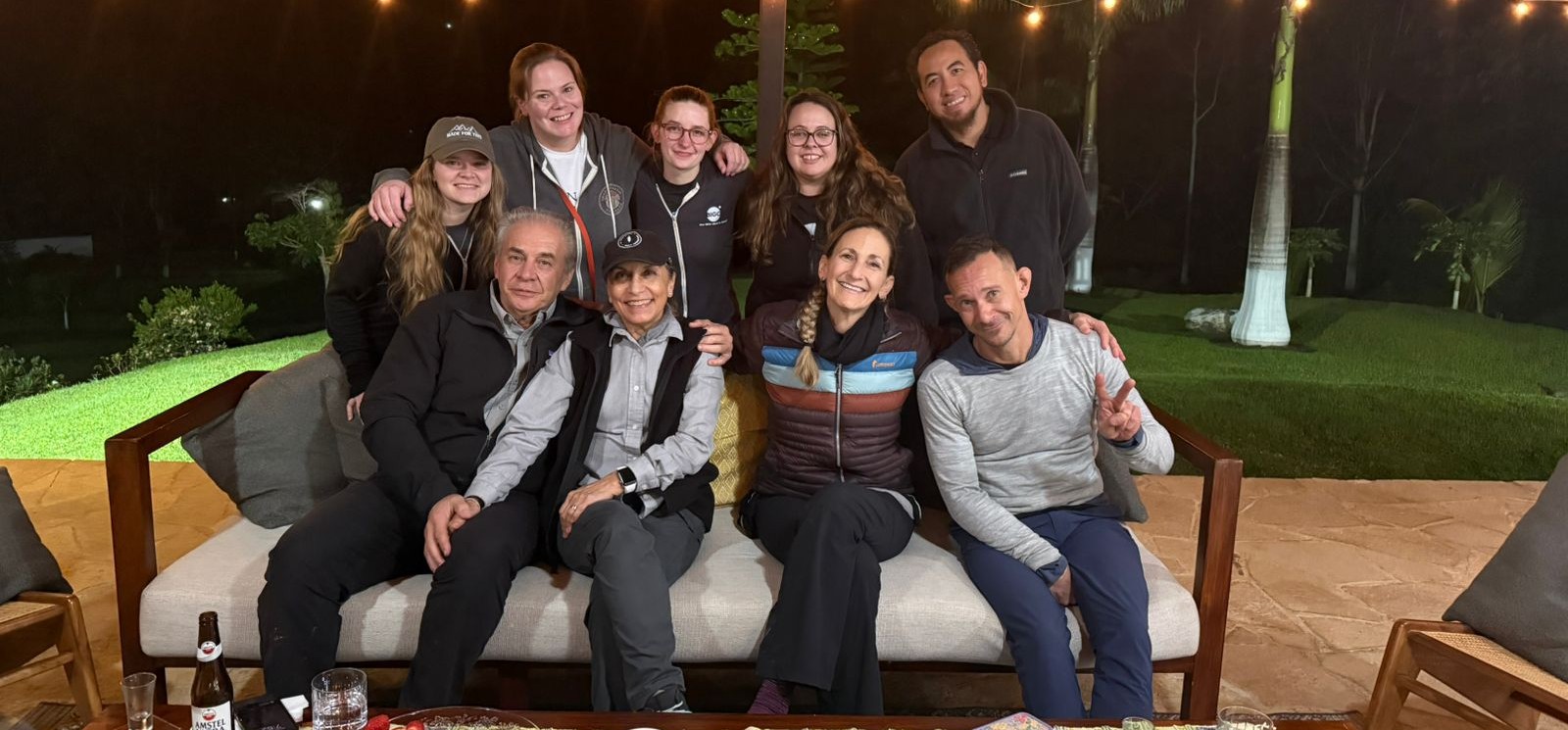
The sustainability team (sans Irma). Pictured from left to right, back: José Manuel, Brie Roper, Stephen Arellano, Giovanni, and Alex. From left to right, front: Rose Marchand, me, Robyn Hankiewicz, and María Esther Castillo. Photo captured by Michelle Shaw.
But what really comes to mind is when you met Pascual Hernández. At his casa, surrounded by his hijos y nietos, two of his daughters served a luxurious lunch in their brand new dining room and adjoining cocina (tienes los celos!). After everyone had eaten their fill of salchichas, tortillas, guacamole con chetos, and the tequila was flowing like water because this was a celebration, dammit, Pascual turned to María Esther for a translation, and you pricked your ears to hear him all the way at the other end of the table. And he said, “Thank you all for coming. Nobody—not even my neighbors—have come.”
A glance at the tears in his daughter’s eyes, and you took this comment to mean that nobody has visited since the passing of his wife several months ago. But to see the joy in his eyes—indescribable. You would jump on three planes, gasp through altitude sickness, and travel the winding curving mountain roads as many times as it took just to see that spark, a little light drowning out the blackest of grief.
You only just met this man—whose first language isn’t even Spanish but rather, Tzeltal, and so your Spanish carries little currency here, but you would travel to his home all over again because it meant that much. It means that much.
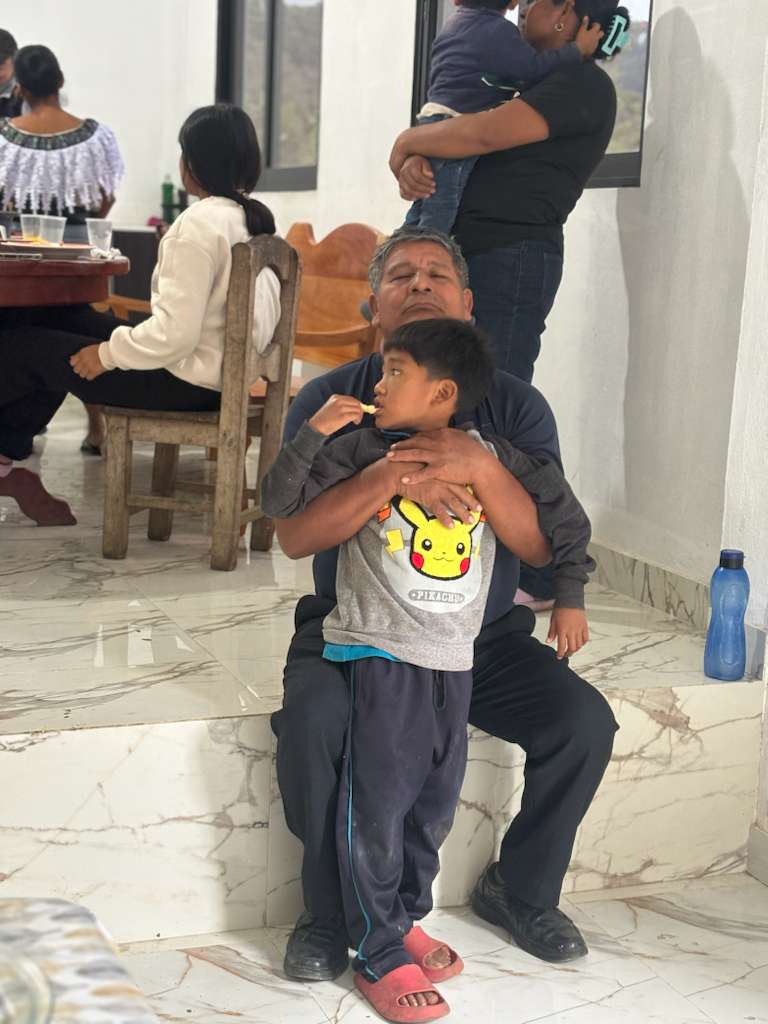
Pascual Hernández with his grandson, during lunch with the Hernández family.
So when you arrive home after a week in Villahermosa, Yajalón, El Chich, and Monterrey and people ask you what did you even do, drink some coffee? You say, Yes, but coffee is just the bridge. Forging relationships on the other side of that bridge is the real reason these trips exist.
In a culture intent on “othering” different ways of being, this is a difficult concept for some to grasp. But if the stoic Pascual Castillo can burst into laughter at a white lady from Michigan exclaiming “No mames!” at our first dinner together, then there is still hope.
Please don’t let this be just a dream.