
Five Things You Should Know About Coffee That You Don’t
By Bob Fish
You may not know this yet, but coffee has been in a serious crisis for at least a decade. Worldwide production of coffee has faltered, if not flattened. While worldwide demand has continued to rise. The consequence is that there is less coffee available at an ever-higher price.
There are two major reasons for the slowdown in production. The first is that the bulk today’s coffee farmers have not been able to make a living by growing and selling coffee. The second is that the impact of Climate Change has made growing coffee, something that is naturally challenging, even more difficult. There are many more reasons, and many nuances to these reasons, but suffice it to say, that farming coffee has been too difficult, and farmers worldwide are choosing to abandon growing coffee as a way of life.
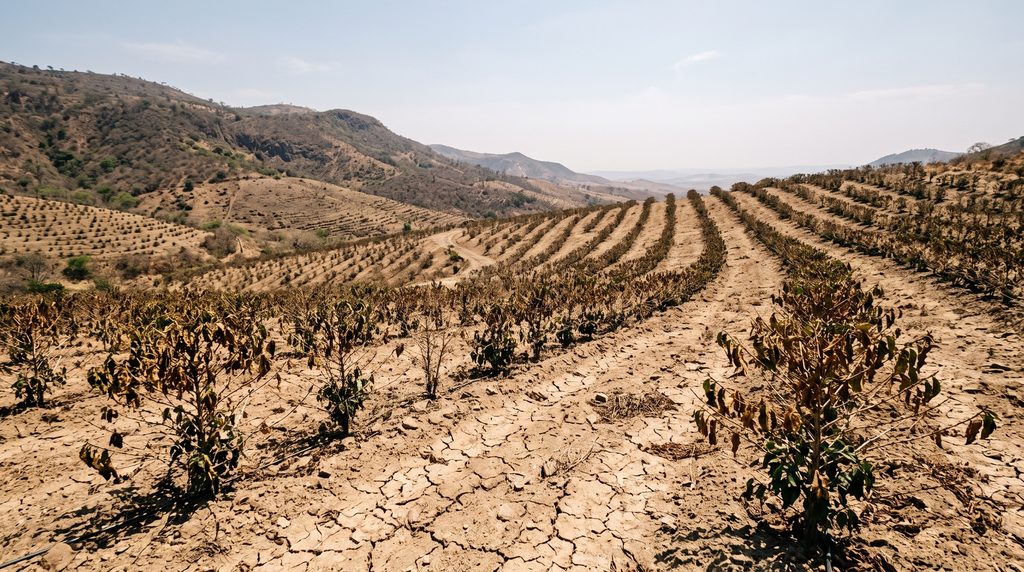
Drought-stricken coffee farm.
The increasing demand for coffee is driven by two factors. First is worldwide population growth. We are about 8.3 billion people and growing just under 1% a year. The second is 4.64 billion people from East Africa to India to China are switching from traditionally drinking tea to becoming coffee drinkers.
The conditions for the loss of production of coffee have been brewing for decades, and the foundation of the loss of production goes back centuries. We will save that conversation for another day. At this point, there is nothing to be done about the past, but to learn from it, and that we have done.
We believe in capital models that provide a solution to the problems of people and the planet alike. Early on, we found that coffee-buying marketplaces such as the C-Market had outlived their original purpose, become corrupted, and were making it even harder for coffee producers to earn a living. Our solution was to develop a Direct Trade buying model that purchases coffee at Farm Gate prices. Our reasons were practical: to secure a reliable supply of coffee at a stable price, which serves the interests of both our franchisees and our customers. In 2018 we named this initiative ‘OBIIS Farm-Direct’ and gave ourselves ten years to transition fully to the new model.
As of 2026 we are 70% of the way to our 2028 goal, and along the way we have learned a thing or five, and so here are the 5 things we think you should know about coffee, that you probably don’t.
1. Coffee should be traceable to a farm or specific community.
Traceability to the farm may be the single most important thing a consumer can know about their coffee. Our OBIIS Farm-Direct model promises ‘a name, a face, and a place for every cup or pound of coffee sold’, identifying precisely who grew our coffee and where. Without that information, every other question about a coffee’s social or environmental integrity is impossible to answer.
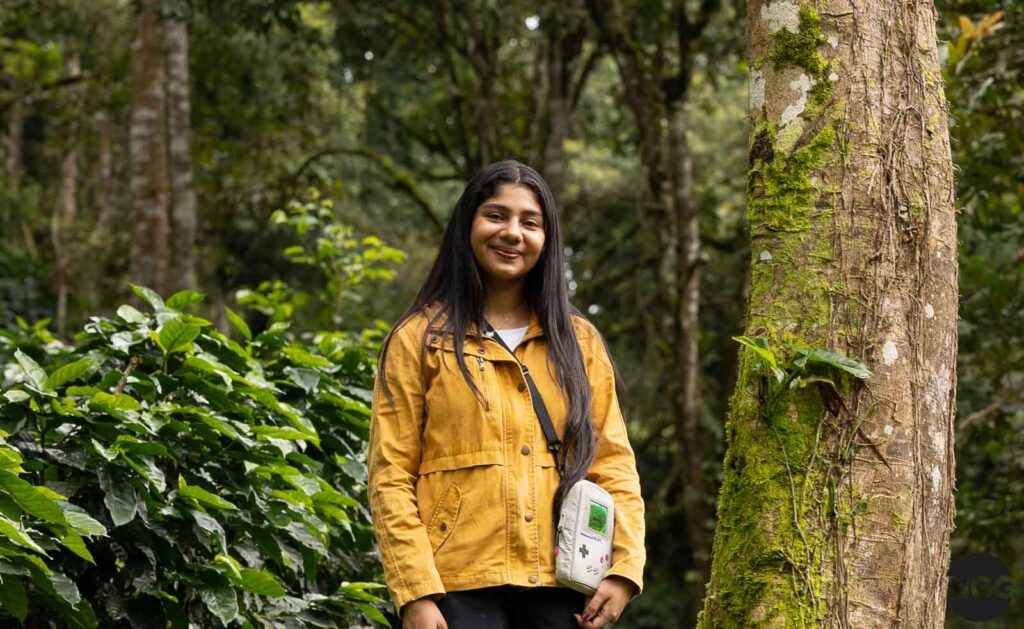
Sandra Rivera, a young coffee producer in Olancho, Honduras, who is a member of the Elevar Coop, standing in her coffee farm. Through OBIIS’s Farm-Direct Partnership with Elevar, we purchased our first container of coffee from the community in 2026.
Naming a country, a region, or even a town as the source tells the consumer nothing about how the coffee was produced. Flavor notes, altitude, and cupping scores may hint at taste, but they can’t tell you whether your morning cup holds the tears of children, mixed with a little weedkiller.
The heart of OBIIS Farm-Direct is the lasting relationships we build directly with each producer, their family, their community, and their land. We have no need for blockchain technology or ineffective certifiers to trace coffee on our behalf when we are walking the fields, staying in producers’ homes, and visiting many times each season, year after year. We are there to witness firsthand whether people, planet, and community are being treated right.
2. Knowing what a coffee producer gets paid for their coffee is important.
First, consumers should know that for many decades, coffee producers have been paid less than their cost of production 80% of the time. This chronic underpayment has led to extreme poverty, environmental degradation, and broken communities, and has driven many producers to give up farming coffee altogether.
Our OBIIS Farm-Direct model is built on direct relationships with producers, and those relationships are key to ending chronic underpayment and the social and environmental damage it leaves behind. Few buyers care to do what we do: sit down with each farm partner and walk through their production costs line by line. Once we both know what it truly costs to grow their coffee, we can set a price that lets them thrive, reinvest, and build for the future.
We call the final price we pay a producer the ‘Farm-Gate’ price: what the producer is actually paid as their coffee leaves the farm—what they put in their pocket, so to speak. The prices quoted to consumers in the media, such as C-Market Green and FOB, are confusing and misleading. They are never what a producer receives; they are what traders and exporters receive. Producers often get less than 50% of these prices, almost always below their cost of production. Coffee passes through many steps in the supply chain—farmer, miller, exporter, importer, roaster, and retailer—and each adds value and therefore price. Yet the least-known number in that chain, the Farm-Gate price, is the most important one to know if we want to keep enjoying coffee in the years to come.
Many in the coffee supply chain profit from processing, trading, and selling coffee. There is nothing wrong with that. In a capital model, we all expect to be rewarded for the goods and services we provide and the problems we solve. Price gives visibility into every segment of the supply chain except one: the coffee farmer.
Cultural norms, old narratives, and long-standing habits mean nobody knows what a coffee farmer earns. Yet that missing piece of information is exactly what needs to be resolved. Not knowing has made chronic underpayment of farmers accepted, perhaps even expected. Its symptoms are extreme poverty, environmental degradation, and broken communities. Many have tried to treat these symptoms with charity, certification, or legislation. But the mistake is treating the symptoms rather than the cause. The root of nearly all of coffee’s ills, including farmers’ refusal to keep working for less than nothing, is a price below their cost of production. If we want to preserve coffee as we know it, the only
3. USDA Organic coffee doesn’t mean what you think it does.
You might assume USDA Organic means your coffee is free of herbicides and pesticides. It doesn’t. In coffee-producing countries, organic certification is managed by intermediaries. These are often the very people who process or export the coffee. In other words, they financially benefit from the organic premium—a little too much ‘fox in the henhouse’ to be reliable.
An organic farm experiences yield losses of up to 15% during the first few years of transitioning from conventional agriculture. Farmers are promised a premium price for their organic crop. But that premium rarely makes up for the lost yield. It may never materialize at all, because it isn’t based on their cost of production. It’s a premium on the C-Market Green price which, in any given year, may already be below cost of production. The organic price then falls below the cost of organic production, and the farmer’s losses mount. Desperate, and with a ‘wink and a nod’ from certifiers, a producer may buy a neighbor’s non-organic coffee and blend it with their own to cover the shortfall caused by lower yields and a poor pricing model. Now the coffee is tainted.
This is where organic stops meaning what you think. Japan, the European Union, and parts of the Middle East test every container of organic coffee entering their borders to verify that it is 100% organic (uncontaminated). The USDA rarely, if ever, tests organic coffee entering the US. So, if you were an exporter with tainted organic coffee to unload, where would you send it? Not to Japan or Europe, where testing would catch it. Most likely, you would send it to the US, where testing is virtually non-existent. We can’t say that anyone using a USDA Organic label on coffee is serving tainted coffee. But they can’t say they aren’t, either. Knowing the system as we do, the probability that USDA Organic coffee is tainted is high—meaning unacceptable levels of herbicides and pesticides in your cup.
Our relationships with our OBIIS Farm-Direct partners are essential to solving this problem. First, we only work with producers whose values align with ours in treating the planet right: practicing regenerative agriculture, preserving the soil, protecting waterways, and safeguarding the natural ecosystem. We are upfront about our chemical-use policy long before we become partners. Multiple visits each year (boots on the ground) give us a firsthand view of how they farm. More importantly, those visits encourage learning, sharing, and collaboration, building real trust that both sides rely on.
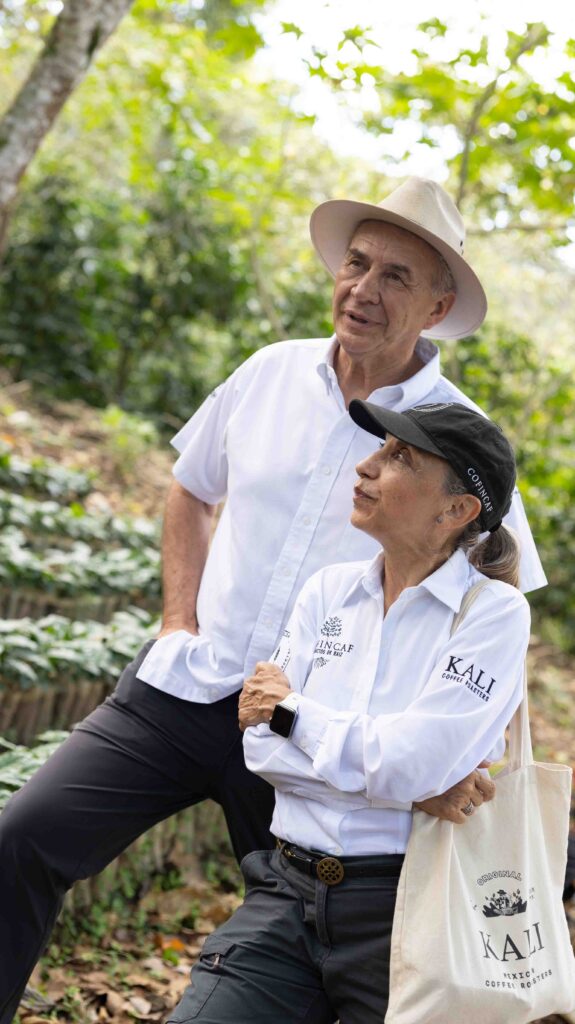
Maria Esther and Pascual Castillo, OBIIS’s Farm-Direct partners icreated an agroforestry coffee farm to teach and inspire small producers in Chiapas, Mexico.
Even so, we test and have tested for some time. Not because we suspect any of our farm partners of wrongdoing, but because, although we buy directly from producers, the coffee still passes through many hands before it reaches us. Each step in the supply chain is another opportunity for organic coffee to be cross-contaminated with non-organic coffee. For us, for you, and for them, we believe it is our obligation to test and find those contamination points.
4. Fair Trade USA coffee does not mean what you think it does.
Fair-Trade marketing materials always give the impression that coffee farmers are being paid a fair, sustainable price. Consumers are shown photos of healthy, smiling farmers happily picking or processing coffee on their farms. None of that marketing magic is real. Fair-Trade certifiers have no idea what a farmer is paid, or whether that pay covers their cost of production.
Fair-Trade boldly publishes what it pays, based on processing methods, variety, and quality. But that published price isn’t what a coffee farmer receives. Rather, it’s what a coffee exporter receives (you can look it up). We know this because their published price minimums carry the initials FOB. FOB stands for ‘Free On Board’, a term used only when coffee is packed in a sea container and sitting on a boat or in a boat yard. That is the language of a coffee exporter.
This can be confusing, so let’s clarify. In our OBIIS Farm-Direct program, the price paid to the farmer is the Farm-Gate price: the price paid as the coffee leaves their farm. The price quoted by Fair-Trade organizations is FOB, a term used only by exporters, not farmers. Between the farmer and the Fair-Trade exporter are many hands and steps, including cooperative administration, transportation, dry-milling, and sorting for quality. Those steps aren’t free and nowhere does Fair-Trade state what the farmer was paid, either in dollars or as a percentage of FOB.
Fair-Trade organizations also quote their FOB prices as a premium on the C-Market, which, as you may recall, has no connection to farmers’ cost of production. Even with the Fair-Trade premium, farmers have been paid less than their cost of production for many years. In effect, they have been paying the exporter to buy their coffee. Not very fair.
Lastly, Fair-Trade organizations were set up to protect the coffee farmer. In the beginning, we believe they largely did. Fair-Trade was the first to raise awareness of the chronic underpayment of coffee farmers and its harmful environmental and social consequences. Over time, however, these organizations were co-opted by coffee retailers and grocers, who often pressured them to keep published prices low under threat of taking their business elsewhere. Although Fair-Trade is a non-profit, like many certifiers, it still manages a top and bottom line, and it was not willing to sacrifice either over some silly ‘Fair’ principles. Today, the coffee farmer is no longer at the center of ‘Fair’, the ‘Trade’ is no longer with an actual farmer, and all that remains is hollow marketing of healthy, smiling farmers happily picking coffee in their fields. Fair-Trade has no idea what a coffee farmer is paid, or whether that price is above or below the farmer’s cost of production.
OBIIS Farm-Direct avoids all of Fair-Trade’s pitfalls by being open, transparent, and traceable about who we work with and how our Farm-Gate price is set. No shenanigans are necessary.
5. You get what you pay for in coffee.
The perennial wish list: No Deforestation – No Forced Child Labor – No Ground Water Contamination – No Harmful Pesticides – No Harmful Herbicides – No Harmful Fungicides – Biodiversity – Right to Organize – Regenerative Practices – Schools for Children –Shade Grown — Fair Treatment of Workers – Agroforestry Practices – Gender Equality
This list could easily go on, but these are the recurring themes we witness in coffee. These difficult issues have become the everyday language of watchdog groups, certifiers, legislators, and charities trying to make a positive impact on people, planet, and community in coffee-producing countries. But as mentioned, most of these organizations are treating the symptoms of an economic pricing model that is outdated, dysfunctional, and disconnected from the actual cost of producing coffee. That model is commonly known as the C-Market.
Because of the C-Market pricing model, coffee farmers worldwide have been paid less than their cost of production 80% of the time over many decades. That chronic underpayment IS the cause of most of these ills. Underpaid farmers are forced to cut corners wherever they can just to survive and put food on the table. You would too. Holding farmers accountable for farming in an environmentally and socially responsible way while underpaying them is a great travesty.
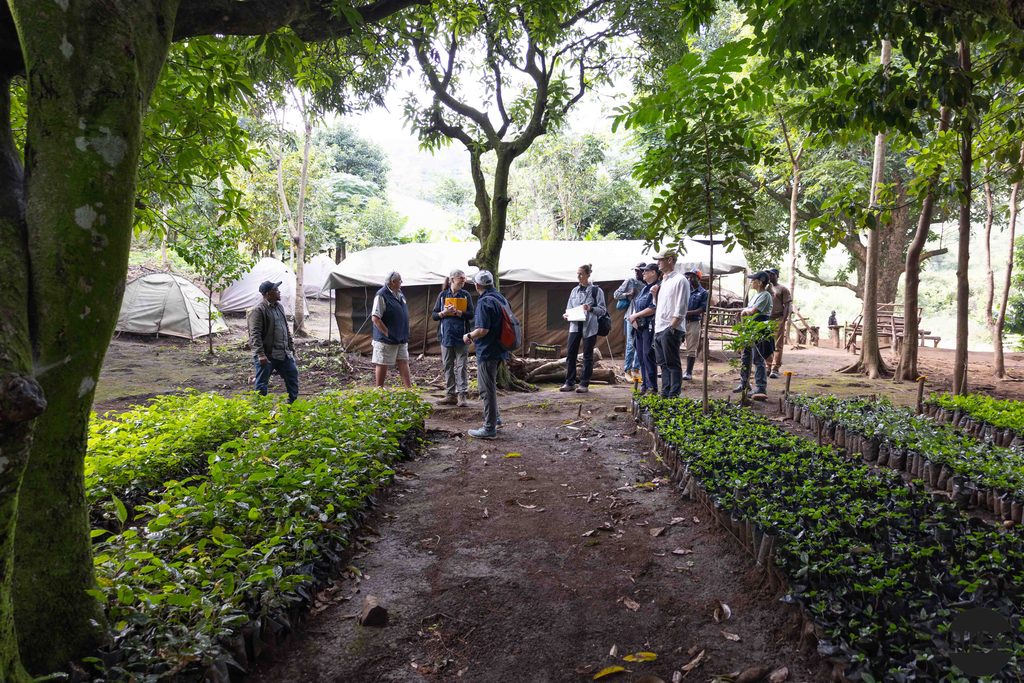
Walking one of the coffee nurseries with our partners at the Gorongosa Project in Mozambique.
Organizations have spent countless dollars pointing out everything wrong with how coffee is farmed in producing countries, while spending nothing to teach consumers that socially and environmentally responsible coffee comes with real costs. Forcing producers to farm as cheaply as possible while expecting an ethical, responsible, and clean outcome is simply ludicrous. Farming in a way that doesn’t create poverty or degrade the environment has tangible costs, yet to date those costs have been ignored. The C-Market pricing model has no way to account for them, and any organization that uses the C-Market as a baseline for attaching social or environmental premiums is equally misguided. The C-Market can’t know what a producer needs to be paid above their cost of production, because it never identifies that cost, let alone whether the coffee was produced ethically.
Our OBIIS Farm-Direct model resolves chronic underpayment because Farm-Gate pricing begins with a detailed examination of each producer’s cost of production, followed by a mutually agreed price at least ten percent above it. The examination is rigorous and measures all the costs of producing coffee in a way that protects people, planet, and community. Remember, our relationships begin with like-minded people who share those values and who choose to learn, share, grow, and collaborate. The OBIIS Farm-Direct system is built to protect coffee, the land, and the people into the future, for producers and consumers alike. We also recognize our obligation to teach both coffee retailers and consumers that they have a vote in whether they make a positive impact on the world of coffee. They cast that vote every day, with every dollar they spend. That vote could change the world.
OBIIS Farm-Direct… Getting what you pay for !!